Crater Lake National Park
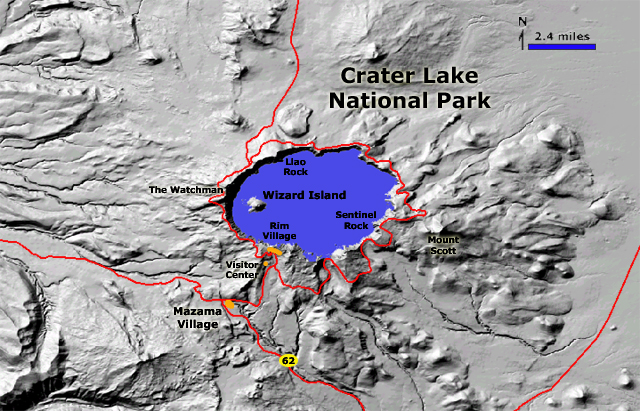
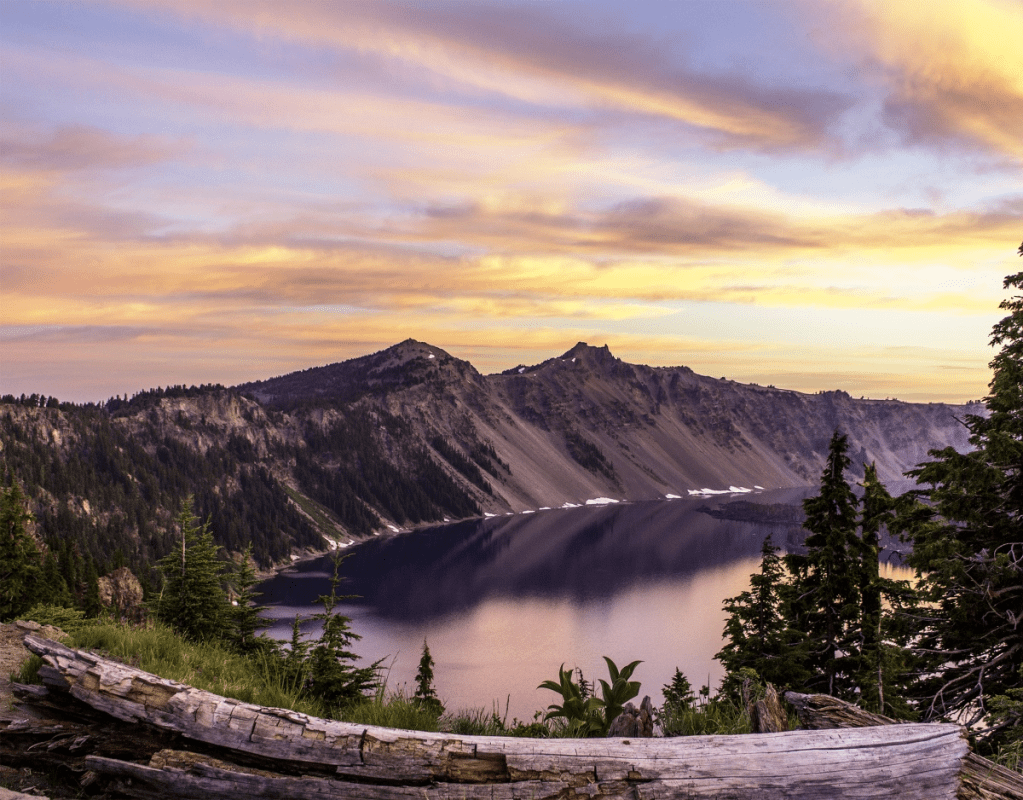
Established on May 22, 1902, Crater Lake National Park in Oregon is a natural wonder born out of a cataclysmic volcanic eruption. Crowning the Cascade Mountain Range, the park contains vibrant forests, bountiful wildlife and an awe-inspiring blue lake worthy of its nickname lake majesty.
Its geologic history spans back thousands of years and inspires visitors today as they swim, snowshoe, ski, hike and cycle through the mountainous terrain. With countless other activities and thousands of acres to explore, adventure is endless at Crater Lake.
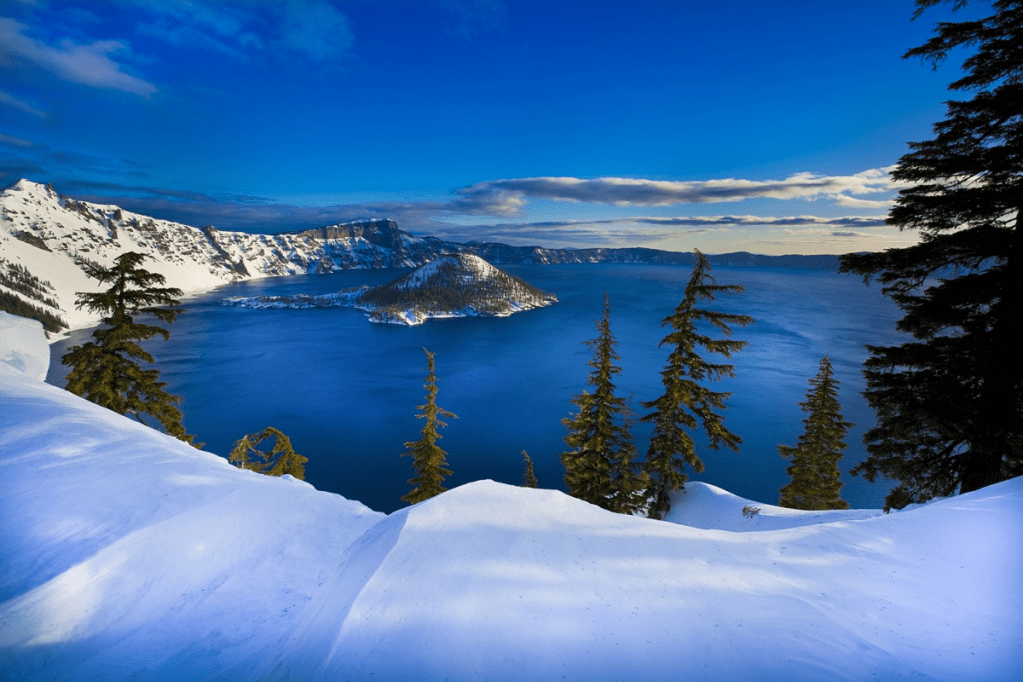
At 1,943 feet deep, Crater Lake is the deepest lake in America. Famous for its beautiful blue color, the lake’s water comes directly from snow or rain — there are no inlets from other water sources.
This means no sediment or mineral deposits are carried into the lake, helping it maintain its rich color and making it one of the cleanest and clearest lakes in the world. Visitors can swim at designated areas, but beware — the water is usually very cold!
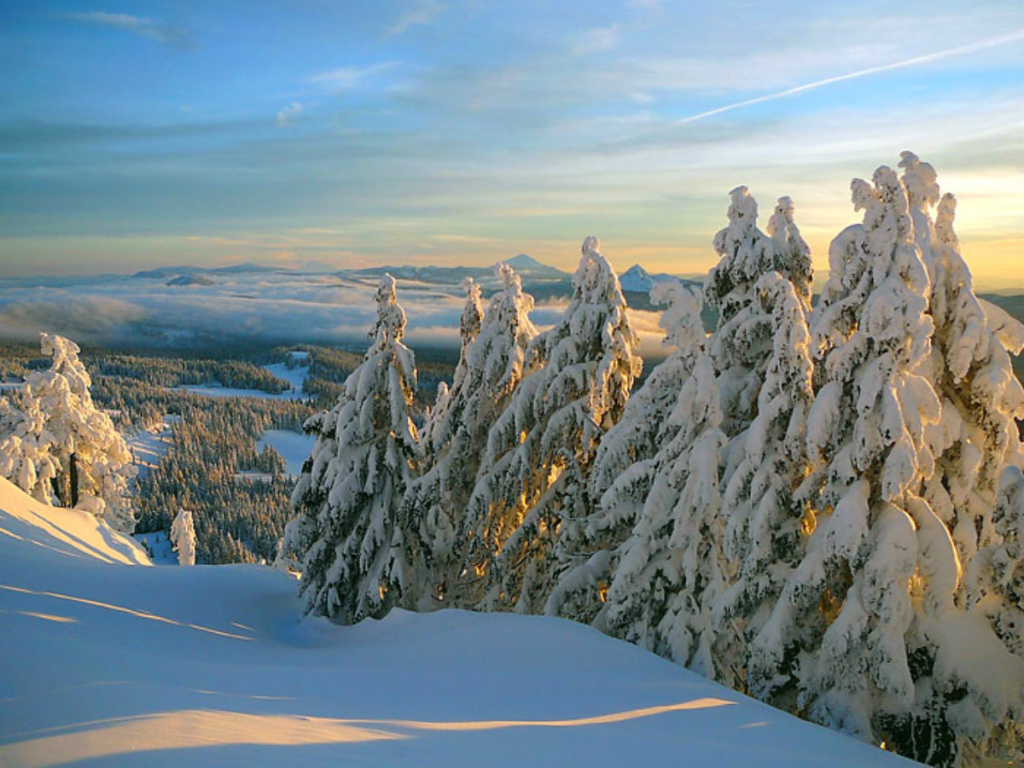
With an annual average of 43 feet of snow, Crater Lake is one of the snowiest places in United States. That’s equivalent to 1.4 inches of snow every day for a year! The park’s official winter season lasts from November to April, but visitors are advised that snow may linger into May and June.
While parts of the park close for winter weather, there are plenty of opportunities to have fun in the snow — from snowshoeing with a park ranger to cross-country skiing, sledding and snowmobiling.
If you’d rather experience the winter season from the warm comfort of the indoors, check out the Steel Visitor Center or catch partial views of the lake from the observation room at Rim Village.
Crater Lake was formed by the fall of a volcano. Mount Mazama, a 12,000-foot-tall volcano, erupted and collapsed approximately 7,700 years ago, forming Crater Lake. Mount Mazama was an important symbol to the native Makalak people who lived in the surrounding areas.
Makalak legend explains that the fall of the mountain was caused by a brutal battle between the spirit of the sky and the spirit of the mountain. The destructive eruption signaled the end of the battle, but many natives mourned the loss of the sacred volcano.
As you explore Crater Lake, take time to remember its sacred history.
The drive around Rim Road features more than 30 scenic pullouts. At Pinnacles Overlook, visitors can see volcanic ash frozen into 100-foot-tall solid rock formations. Stopping at Videa Falls provides a view of a cascading waterfall and is one of the best places to observe some of the park’s plant life.

For a unique spot bursting with color, stop at Pumice Castle Overlook. Over time, an orange layer of pumice eroded into the shape of a castle — a magnificently royal occurrence.
Or visitors can step back in time at Discovery Point and imagine themselves in the boots of John Hillman, the first pioneer to see Crater Lake. With so many wonders along the way, the 33-mile drive around Rim Road can be an all-day sightseeing trip.
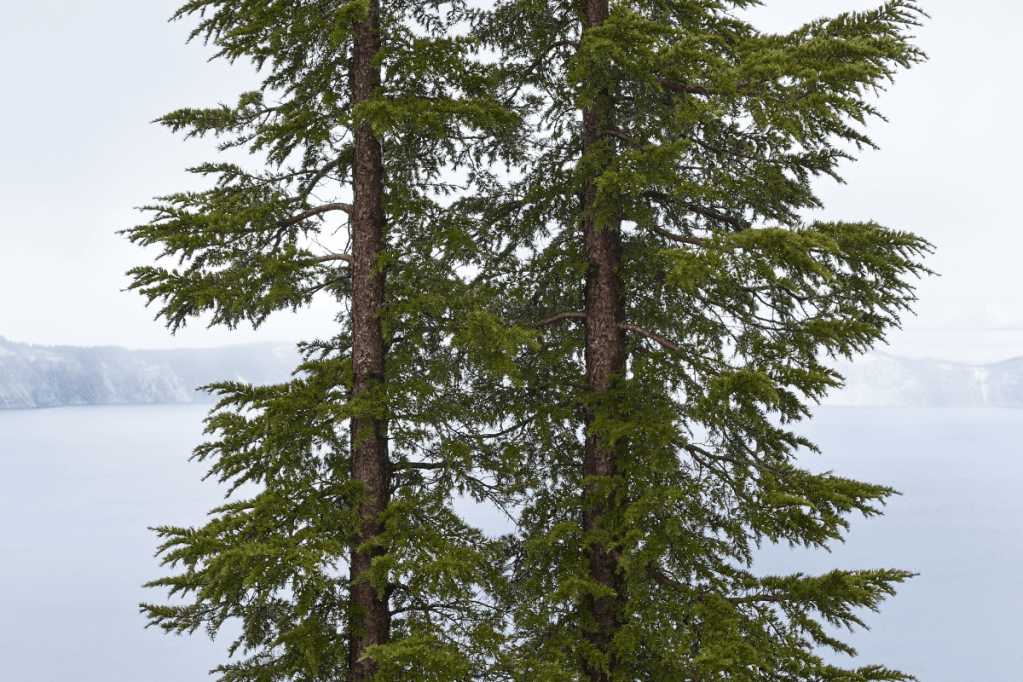
Crater Lake National Park is home to some amazing old growth forest ecosystems. The park has four forest zones to explore — ponderosa pine forest, lodgepole pine forest, mountain hemlocks zone and whitebark pines zone — each one named after its dominant tree species.
Make sure to enjoy these natural beauties as you hike or snowshoe through the landscape.

With many different mammals, amphibians, fish and birds, Crater Lake is home to plenty of wildlife. Deer, squirrels and birds are most common, but visitors exploring the forests and trails might encounter elk and bobcats.
If you are lucky enough to see these amazing creatures, always remain a safe distance away and never feed wildlife.

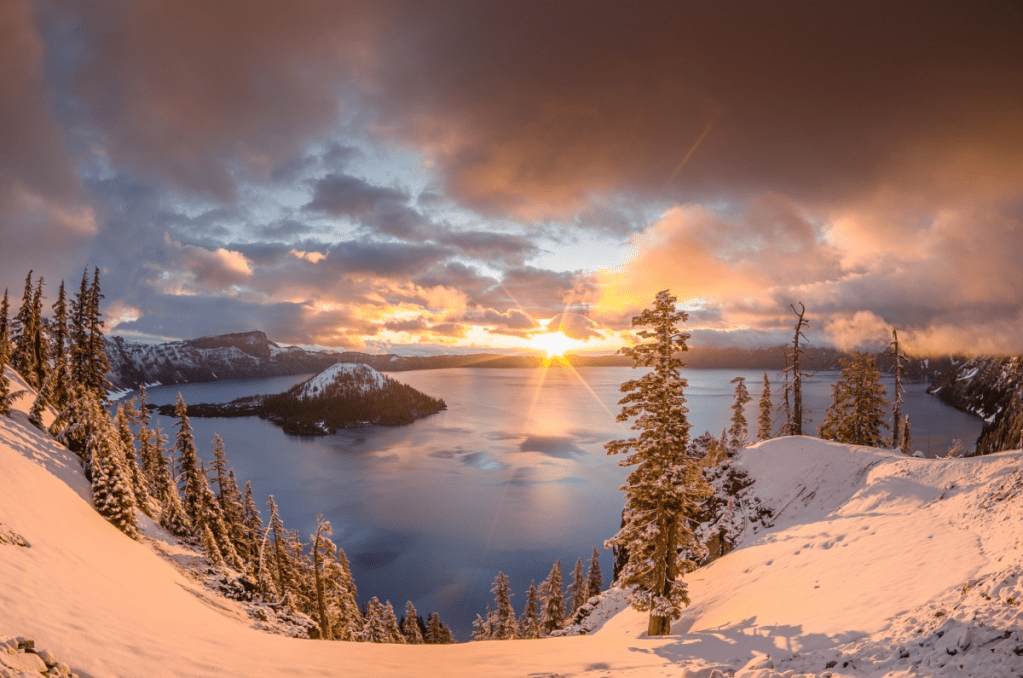
Crater Lake’s elevation offers stunning views across the lake and up above. The warm glow of the sunrise fills Crater Lake in the early mornings with colors reflecting off the water and snow.
Sunsets in the park are just as spectacular. At night, Crater Lake’s skies turn into some of the darkest in America. On clear, moonless nights, stars-capes illuminate the park, and visitors can see satellites, planets and the arms of the Milky Way.

The summer fire season at Crater Lake can scorch thousands of acres of land. However, this natural occurrence has proven to have positive impacts on the ecosystem.
Many plants have adapted to survive fires and thrive in their aftermath from restored nutrients in the soil. While essential to the ecosystem, wildfires can be dangerous for visitors. Always follow fire safety tips when venturing out during fire season!

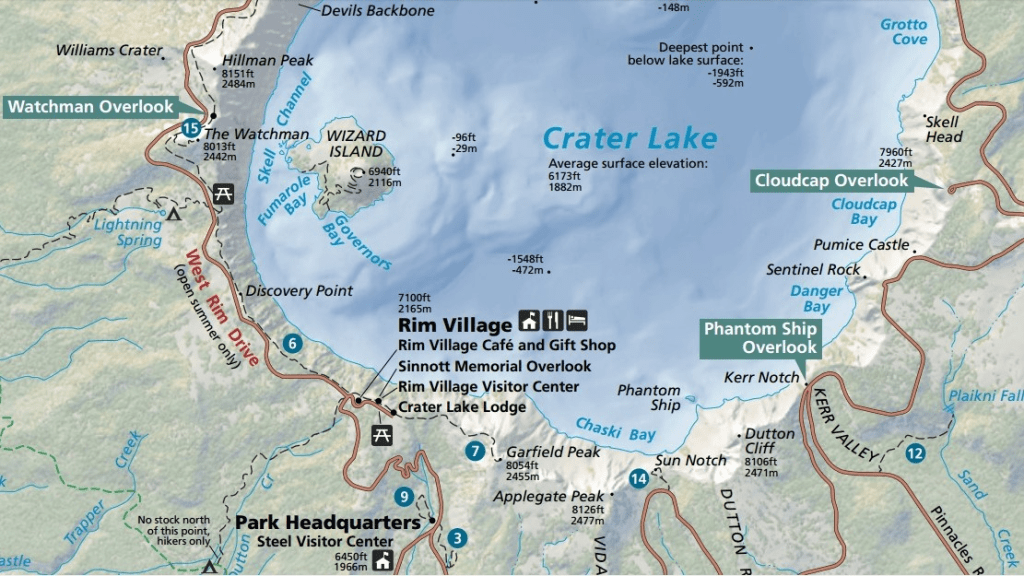
Wizard Island is the largest in Crater Lake. The remains of a volcanic cinder cone, it rises more than 750 feet about the surface of the lake. Visitors in the summer can take a boat tour out to explore Wizard Island and hike to the its summit.
Phantom Ship Island is anchored just off the lake-shore and is off the radar of most visitors. Though it resembles a small sailboat, the island is as tall as a 16-story building.
It’s made of erosion-resistant lava, and at 400,000 years old, it’s the oldest exposed rock within the caldera. Visitors can get a great view of the island by driving to at Phantom Ship Overlook or by hiking to Sun Notch.
Because Crater Lake has no outlets leading to other water sources, the changing water level of the lake presents an interesting scientific question. Precipitation rates are more than twice the evaporation rates, so there is a lot of water that seemingly goes unaccounted for.
Scientists have discovered that steady seepage is what maintains the water balance. Water seeps out of the caldera’s walls at a rate of about 2 million gallons of water an hour!
The mystery scientists are still studying is where all of that water goes — no paths, springs or other water sources have been found to carry the same water as the lake. With complex dynamics, Crater Lake’s water level will remain a subject of wonder and study for years to come.
USA Department of Interior / ABC Flash Point News 2023.
Ancient Pyramids a journey through Time and Culture

Pyramids are one of the most iconic structures of ancient civilizations that continue to fascinate people around the world. Although the Egyptian pyramids at Giza are the most well-known, there are many other ancient pyramids around the world that are just as impressive and significant.
In this article, we’ll take a closer look at some of these incredible structures. The step pyramid of Djoser in Egypt is one of the oldest pyramids in the world, built about 4,700 years ago. It was the first pyramid ever built by the ancient Egyptians, and its unique design sets it apart from other pyramids.
Originally a mastaba tomb, it was transformed into a 197-foot-high (60 meters) pyramid with six sections built on top of one another. The labyrinth of tunnels that run underneath the pyramid adds to its complexity and mystery.

Moving to Mexico, the Pyramid of the Sun in Teotihuacán is one of the largest pyramids in the Western Hemisphere. Completed around 100 CE, it stands at 216 feet (66 meters) tall and is roughly 720 by 760 feet (220 by 230 meters) at its base.
Although some of the original facing stones have been removed, the pyramid’s 248 crooked stairs leading up to the pinnacle still remain. In 2013, workers found a covered pit beneath the platform that makes up the pyramid’s peak, revealing two pillars and a figure of the god Huehueteotl.

The pyramids in the ancient Mayan city of Tikal in Guatemala offer another fascinating example of ancient pyramid construction. Rediscovered in the 1850’s after being lost in the jungle for 800 years, these pyramids were likely used as high-class temples and residences.
The tallest of the five pyramidal temples is Pyramid IV, which stands at 213 feet and is topped by the Temple of the Two-Headed Serpent. Elaborately decorated burial chambers have been discovered behind the main buildings on the site, adding to the mystery and intrigue of this ancient city.

One of the most unique pyramids in the world is the ziggurat at Ur in Mesopotamia, which dates back to the Sumerian monarch Ur-Nammu in the middle of the 21st century B.C.
Unlike Egyptian pyramids, ziggurats’ exteriors are tier-like to allow for the work and religious rites necessary to Ancient Near Eastern civilizations.
The ziggurat at Ur measures 210 by 150 feet and was originally built with three tiers of terraces. Although it has eroded over time, it was repaired and rebuilt by archaeologists in the twentieth century.
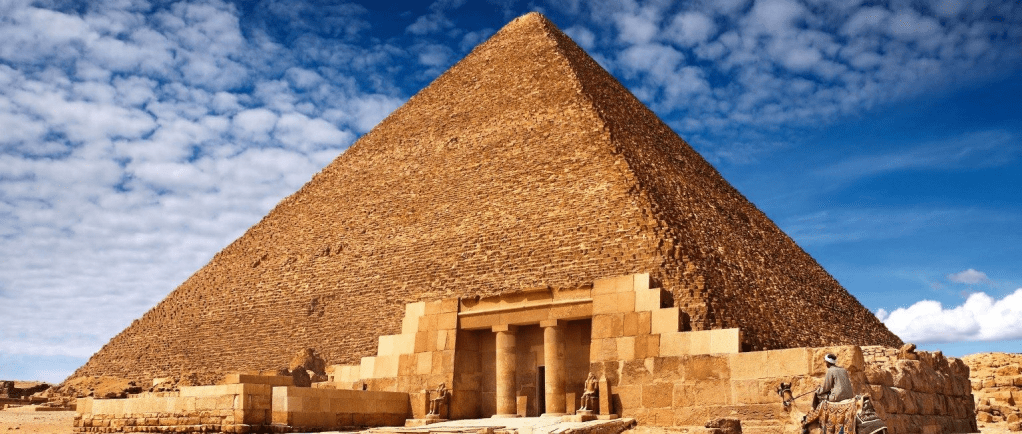
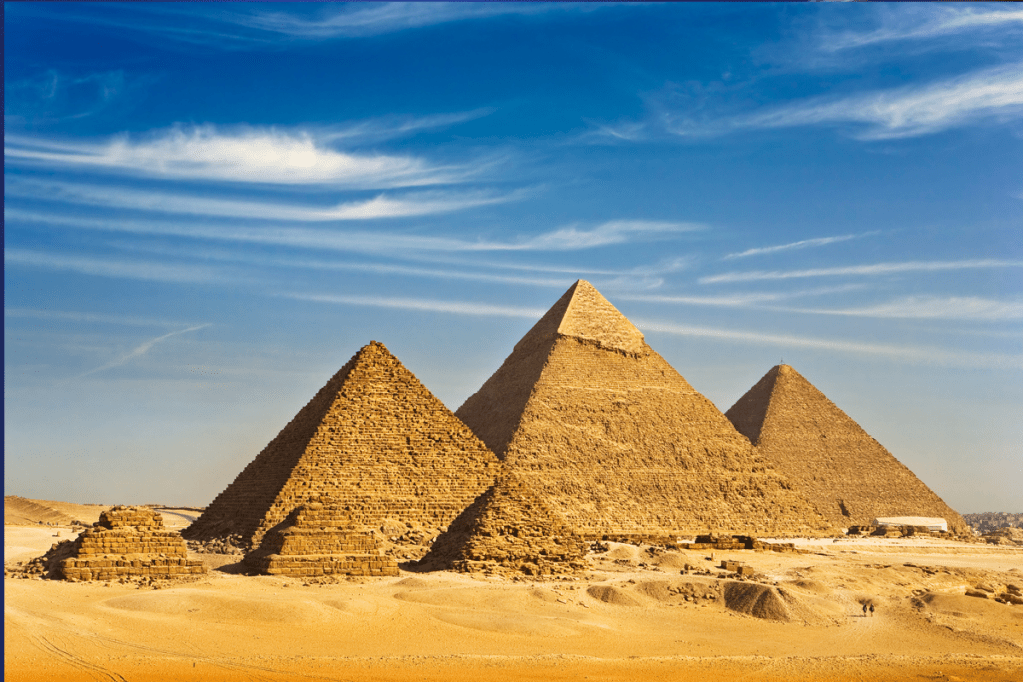
It would be remiss not to mention the most well-known pyramids in the world, the Egyptian pyramids at Giza. The largest of the three pyramids, Khufu, is particularly iconic, standing at around 482 feet (147 meters) tall and consisting of four equal sides, each measuring around 755 feet.
It was finished and dedicated to Khufu, the second ruler of Egypt’s 4th dynasty, in 2560 BCE. Inside the pyramid, the King’s Room housed a massive granite sarcophagus, while the smaller Queen’s Chamber had a sizable angular opening or niche.

Despite their age, these pyramids continue to attract tourists from all over the world due to their historical and cultural significance.
They offer a glimpse into the complex construction techniques and religious beliefs of ancient civilizations, and archaeologists and experts are still uncovering the many mysteries they contain.
From the oldest pyramids in Egypt to the unique ziggurat in Mesopotamia and the awe-inspiring pyramids of the Maya, these ancient structures are true marvels of engineering and architecture that continue to capture our imaginations.
Interesting Engineering / ABC Flash Point News 2023.
Energy Ley Lines connect Ancient Places on Planet Earth

Invisible, mystical ‘energy lines’ are believed by some to criss-cross England. Bel Jacobs explores the history and meaning of ley lines, and talks to the artist they have inspired.
arlier this year, artist and performer bones Tan Jones walked from Silvertown, in the London Borough of Newham, to the sacred circle of Stonehenge. The route was deliberate: both sites are locations of proposed underground road tunnels.
I’ve always been interested in the opposition between the natural and the artificial, the sacred and the un-sacred,” explains Tan Jones. So I decided to walk from the entrance of the Silvertown tunnel… to the monumental stone circle at Stonehenge, and see how I could connect them.

The record of that journey now forms an exhibition called Tunnel Visions, currently on display at Queercircle, near Silvertown. Tan Jones’s blend of spirituality, music, ritual, craft, sculpture and moving image has won them commissions at the ICA, the Serpentine and the Shanghai Biennale (2021), among others.
For six days, Tan Jones moved through urban and rural landscapes, on the way encountering several holloways – roads or tracks that are significantly lower than the land on either side, and not formed by recent engineering – and The Harrow Way, said to be the oldest road in Britain.
Along the journey, the artist responded to what they saw with poetry, storytelling but most of all, song. I found out about the Circle of Perpetual Choirs, druids who would always be singing, at a stone circle or old yew tree or a place of strong earth energy, to maintain the peace of the land. I wanted to, single-handedly, be that choir.
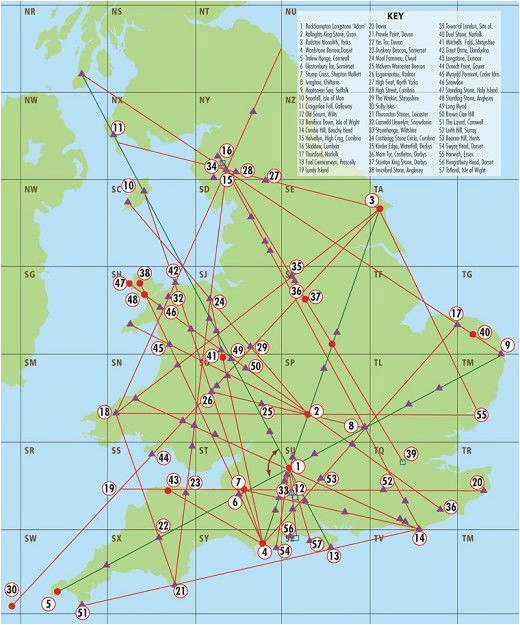
The artist’s pilgrimage began with research into ancient Ley Lines – a theory, according to author Simon Ingrams in the National Geographic, of an implied network of impressionistic significance said to run across the land in straight, intersecting lengths not unlike a cobweb… said by believers to link or align ancient monuments, notable landscape features and settlements across the world on a series of invisible energy pathways. It is a theory that has long held interest for Tan Jones: “I’ve been interested in ley lines for years,” they say. I grew up in the countryside, connected to Earth energy, so it makes complete sense to me that there are energy lines moving through the Earth.
Ley lines? Energy lines? Surely the preserve of myth makers and fairy followers? Not to start with. The term was originally posited, just three years after the end of World War One, by Alfred Watkins, a councilor in rural Herefordshire in the UK.
Born in 1855 into a well-to-do farming family, Watkins was also an amateur archaeologist; it was while out riding in 1921 that he looked out over the landscape and noticed what he later described as a grid of straight lines that stood out like glowing wires all over the surface of the county, in which churches and standing stones, crossroads and burial mounds, moats and beacon hills, holy wells and old stone crosses, appeared to fall into perfect alignment.
Their existence, Watkins theorized, was the legacy of pre-Roman inhabitants of Britain who worked out, quite sensibly – during a time when the English landscape was dense with forest – that the shortest distance between two points was a straight line and, being tougher than modern Britons, would tramp bravely through rivers and up hills to get to their destinations. Tracks were set out visually – by lighting beacons on high points, for example – and then lining up markers and key points across the intervening land, including mounds and moats, stone circles and more. Intersections acquired local significance, becoming meeting places and markets, then later burial mounds and temples.
In 1925, Watkins published his theories in the now-classic Old Straight Track. Still in print, the book speaks from a more innocent age: blending a love of rural and historic Herefordshire with quotes from WB Yeats and George Borrow, and a charming openness about his own assumptions. ‘What imaginative stuff,’ I can hear some reader exclaim, writes Watkins, at one point, in a chapter on beacons. Yet, in the 1920’s and 30’s, The Old Straight Track had thousands roaming the English countryside, touting maps and poles, in search of prehistoric trackways and waystones. It wasn’t until after the World War Two that the potential of the ley line as a repository for all things mystical really started to take hold.
Blame ex-RAF pilot Tony Wedd who, in his leaflet Skyways and Landmarks (1961), suggested that ley lines were laid down by prehistoric societies to connect with alien spacecraft. Writer John Michell took it a step further. In The View Over Atlantis (1969), described as one of the most influential books of the hippy underground movement, Michell posited spiritual dimensions to ley lines, created the idea of Earth energies, and made Glastonbury the undisputed capital of the New Age. Suddenly, ley lines became known not just for country walks and genteel treasure hunts but as routes into extraordinary, interplanetary worlds-between-worlds.
The bubble was burst, a little, in the late 1980’s when scholars Tom Williamson and Liz Bellamy worked out that the density of archaeological sites in the British landscape is so great that a line drawn through virtually anywhere would “clip” any number of significant places. In 2010, another scholar, Matt Parker, from the School of Mathematical Sciences at Queen Mary, University of London, discovered the precise geometric placement of… several old Woolworth stores.
We know so little about the ancient Woolworths stores, he explained mischievously to the Guardian. But we do still know their locations. I thought if we analyzed the sites we could learn more about what life was like in 2008, and how these people went about buying cheap kitchen accessories and discount CD’s.
Now a new generation, including bones Tan Jones, are harking back to myth to explain the world around them; this time, in the context of a planet on the brink of collapse and a natural world, mourned as it disappears. And they are creating their own myths in return. Tan Jones eschewed the laboriously intricate mappings of earlier ley line-hunters, and instead followed their instinct. All I knew was I had a start and a finish, and maybe a few stop-offs, they say.
I took it serendipitous and found my next location by talking to people. They visited the site of the now-abandoned Heathrow action camp, Grow Heathrow, a former hub for activists, creatives, and local residents; encountered the 2,500 year old Anckerwyke Yew, and the grounds opposite, where it is said the Magna Carta was signed in 1215; explored Chobham Common nature reserve, originally created by prehistoric farmers, in Surrey. Still, the Harrow Way, running East-West across southern England, remains a highlight.
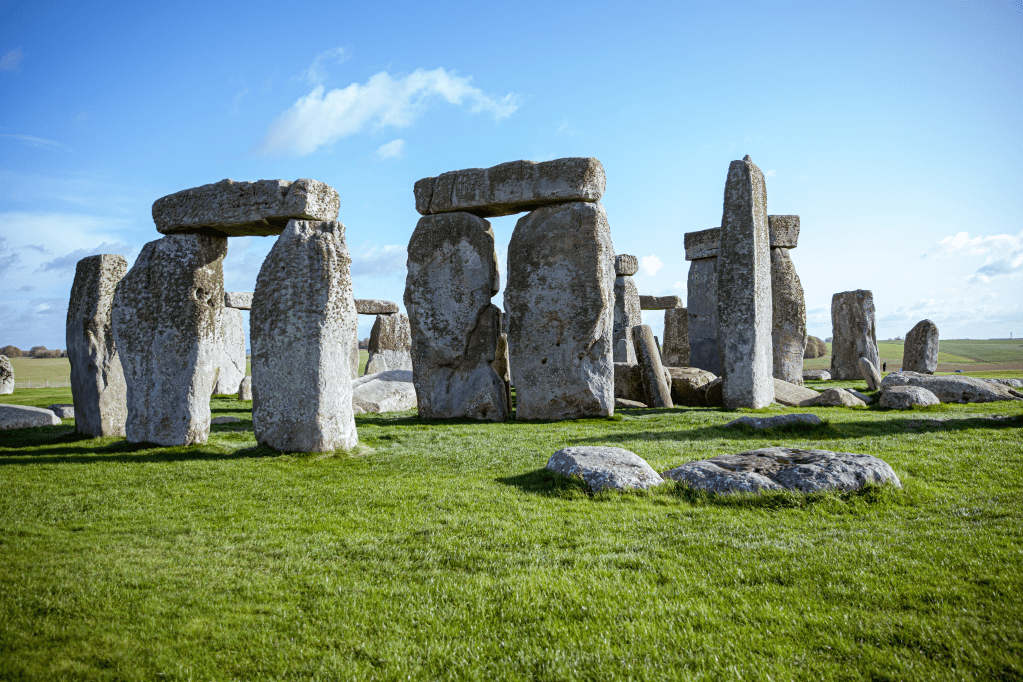
Tan Jones’s pilgrimage ended at Stonehenge on the summer solstice. But in many ways, for the artist, the journey is ongoing, still sending out its tendrils between myth and history, past and present, the human and the more-han-human.
One day, I had to climb a barbed-wire fence. It was really rainy and, just two hours from the stones, I was ready to give up, they remember. But suddenly, I locked eyes with this single doe. She just bounced away; the way she moved was so beautiful. Then, straight after that, I saw a family of hares, which are very pagan.
The animals inspired me to keep going. Remembering [ley lines] exist is a way for us to find stillness and quiet, and to see the earth as animated. We are a part of nature. And remembering that connection and seeing the earth as alive is a way that we can protect it.”
BBC / Crickey Conservation Society 2023.
Coral Castle Museum

We invite you to tour our sculpture garden in stone, built by one man, Edward Leedskalnin. From 1923 to 1951, Ed single-handedly and secretly carved over 1,100 tons of coral rock, and his unknown process has created one of the world’s most mysterious accomplishments.
Open every day, the Coral Castle Museum welcomes visitors from around the world to explore this enchanting South Florida destination.

If you had visited Coral Castle in the 1940’s you would have been greeted enthusiastically by a man weighing a mere 100 pounds and standing just over 5 feet tall. He would have asked you for ten cents admission and introduced you to his fantasy world.
As you moved around his sculpture garden in stone, and the significance of each piece was explained, you would have been witness to the great pride Ed Leedskalnin took in his work.
Since it is documented that no one ever witnessed Ed’s labor in building his beloved Coral Castle, some have said he had supernatural powers. Ed would only say that he knew the secrets used to build the ancient pyramids and if he could learn them, you could too.

Today, you can tour the Coral Castle using our audio stands, with narration available in English, Spanish, French or German. We also have knowledgeable guides available to conduct tours.
Features of the Coral Castle Museum include a 9-ton gate that moves with just a touch of the finger, a Polaris telescope and functioning rocking chairs – all made entirely of stone.
We wonder what was the inspiration that could cause a man to spend 28 years to carve a Coral Castle from the ground up using nothing but home made tools. An homage to unrequited love? Perhaps to illustrate ancient sciences that defy gravity? Or maybe just sheer, raw human determination?
The Coral Castle is an everlasting mystery to those who explore it.
Coral Castle.com / ABC Flash Point News 2023.
Nature is out of Sync—and that’s reshaping Everything, everywhere
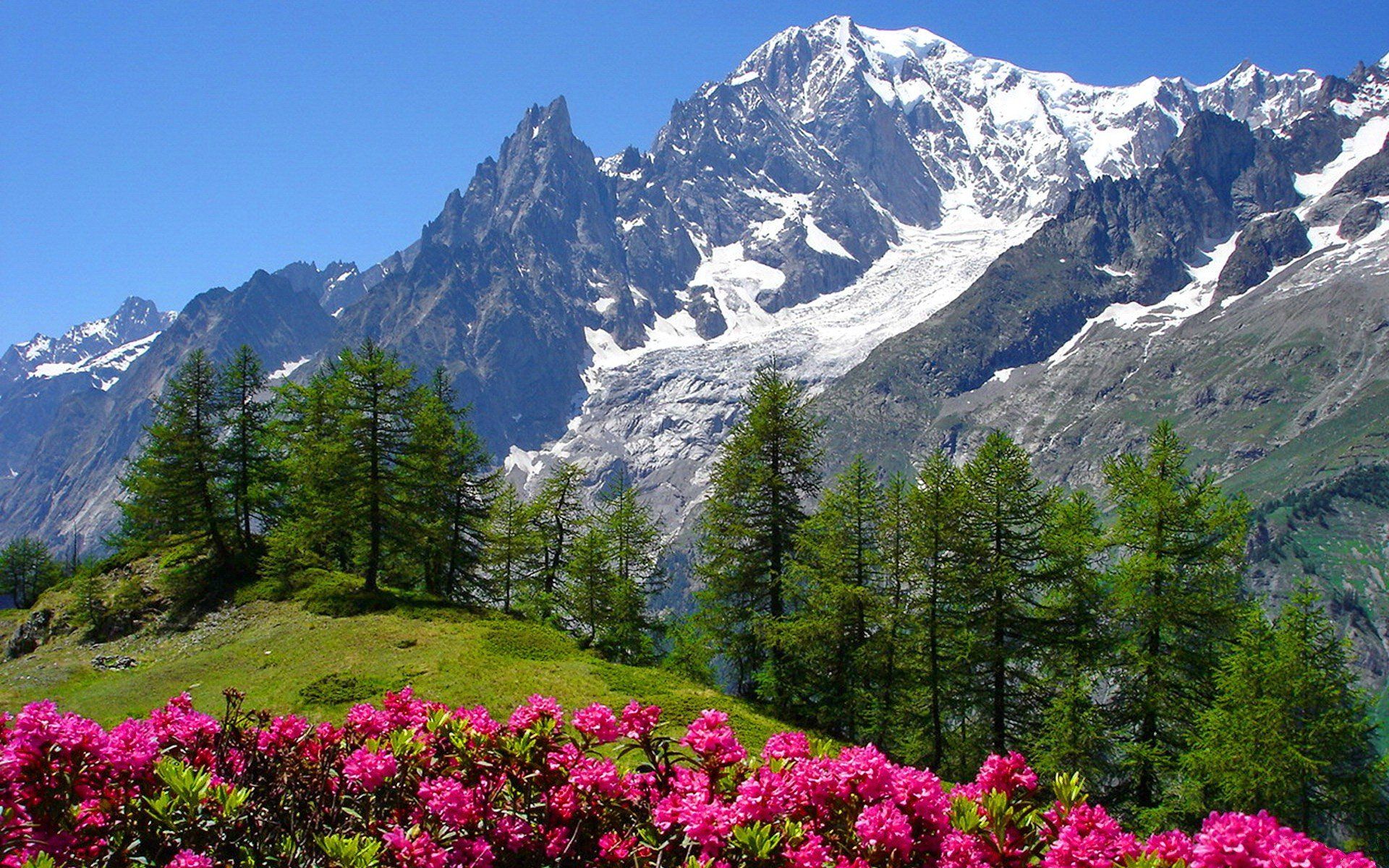
Everything in nature—flowering, breeding, migration—lives and dies by a clock that is being recalibrated by climate change. We don’t yet know how severe the consequences may be.
Timing is everything in nature. From the opening notes of a songbird’s spring chorus to the seasonal percussion of snapping shrimp, every important ecological process lives and dies by a clock.
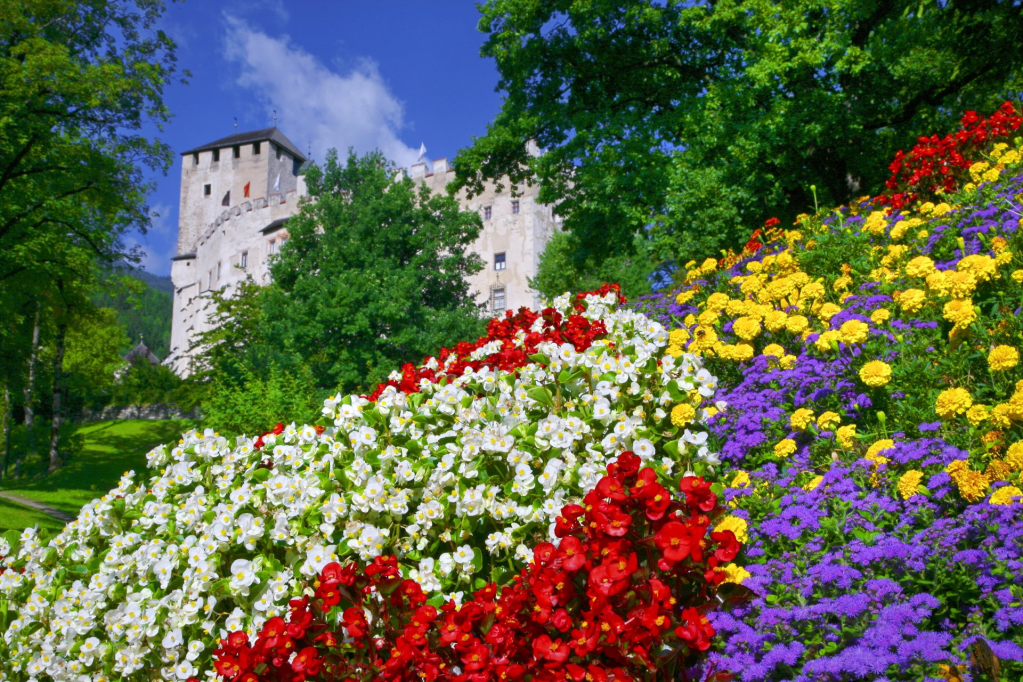
Flowering. Egg laying. Breeding. Migration. It’s as true on the Mongolian steppe as it is in the Arabian Sea or a Costa Rican rain-forest. Centuries of evolution honed these patterns. Now climate change is re-calibrating them.
And that is reshaping life for almost everything. In every ocean and across every continent, seasons are in flux. Earlier warmth, delayed cold, and shifts in the frequency and fierceness of precipitation are toying with established rhythms in both predictable and unexpected ways.
So researchers the world over are straining to document the timing of life cycle events, a scientific discipline known as phenology. That timing is being upended by our fossil fuel emissions.

Across much of the United States rising average temperatures are pushing spring to speed up its arrival. Plants and pollinators found at high elevations in the western U.S. are especially affected.
To better understand how species are interacting and responding to these changes, scientists are tracking the timing of biological events—a field known as phenology.
Changes are discovered almost everywhere scientists look. The timing of leaf appearance and leaf dropping has already shifted dramatically across more than half the planet.
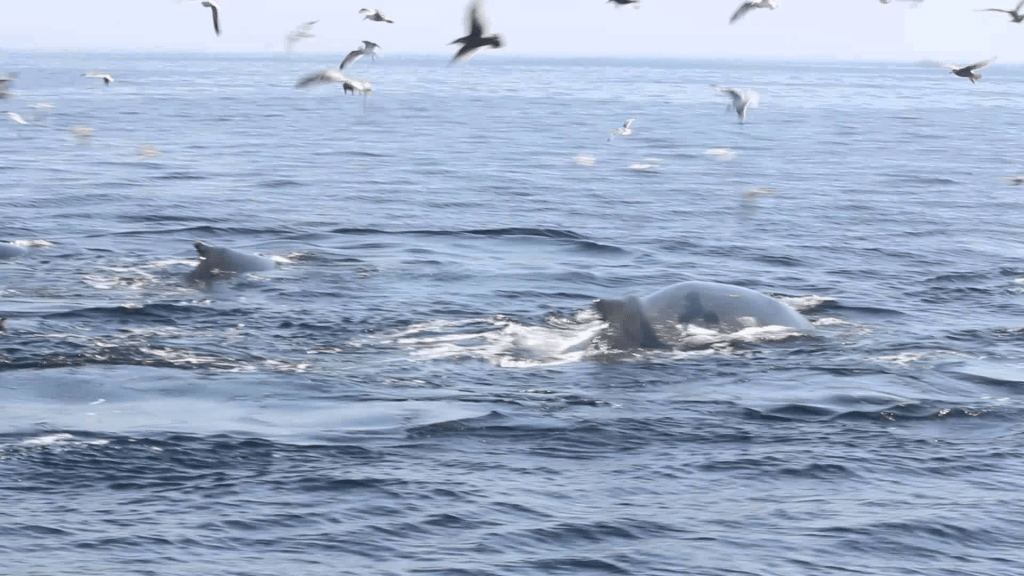
Humpback whales in the Gulf of Maine are gathering 19 days later than they once did, while jack mackerel, hake, and rockfish are spawning earlier in the North Pacific.
In North Dakota’s Red River Valley, scientists found 65 of 83 bird species arriving earlier, some by as much as 31 days. South Carolina’s dwarf salamanders are arriving at breeding grounds 76 days later.
What’s harder to grasp is the severity of the consequences—for plants, animals, and us. If everything shifted in the same direction and by roughly the same amount, our new calendar might prove insignificant. As with daylight saving time, we’d muddle through together.
But that’s not how nature works. Species are not responding identically, said David Inouye, a University of Maryland professor emeritus and leading phenology researcher.
Too many patterns are shifting at the same time, each influenced by countless others, which are themselves also in motion. It’s everything, everywhere, all at once. Even beings that don’t appear to be changing are seeing their world change around them.
Snowshoe hares, Siberian hamsters, collared lemmings, and long-tailed weasels all turn white in winter as a form of protective camouflage in snow. Now they’re often out of sync with their surroundings.
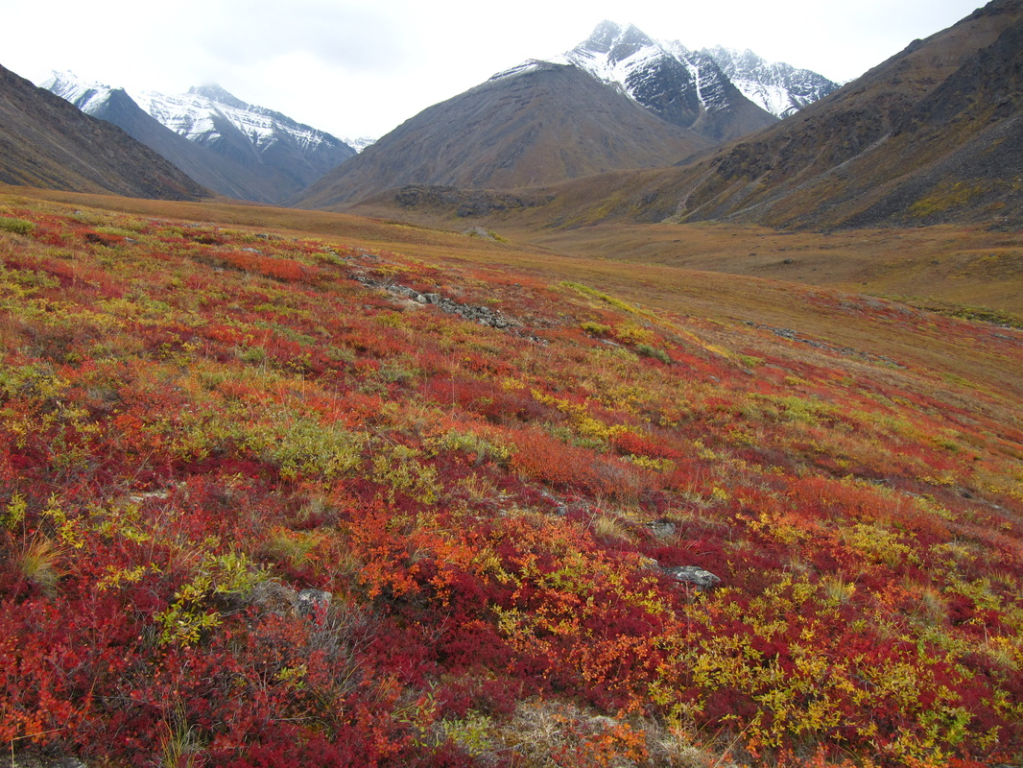
Many are increasingly seen with halogen-bright white bodies crouched in green forests or brown brush or on yellow tundra. That’s because snow is arriving later and melting earlier, but their color transition is triggered by seasonal shifts in daylight, which, of course, isn’t changing at all.
So what happens then, when we revamp nature’s schedule in every wild system on Earth at once, altering timing for some things but not others?
Few understand the implications better than Inouye. Study any species in isolation, and you may know if they’re changing as we stood in a meadow in thin air near 10,000 feet. But to understand why that change is happening—and what it means—scientists must cast a wider net. No species lives in isolation.
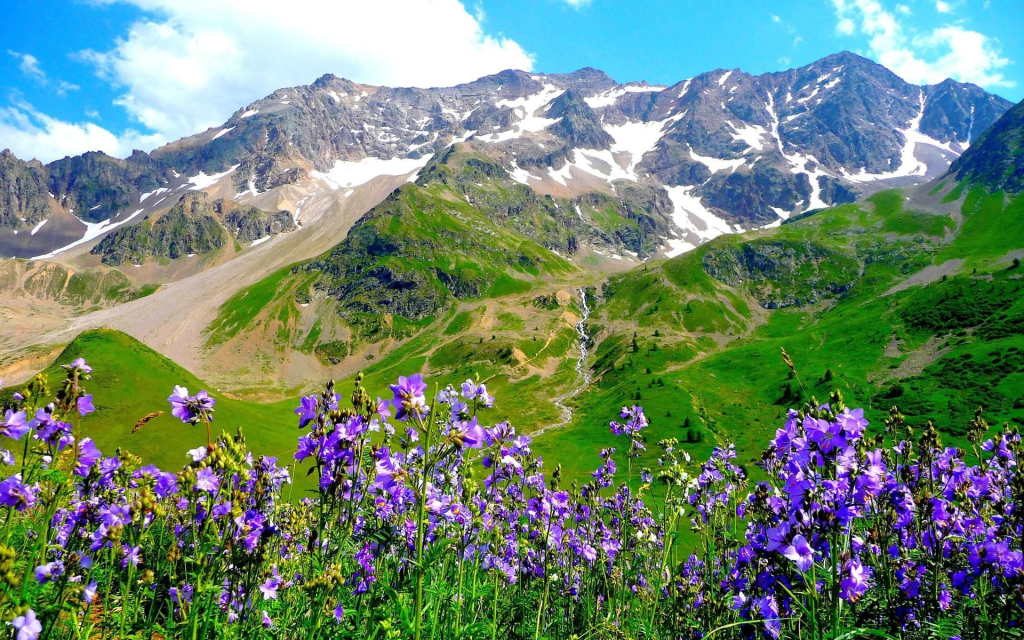
As we strolled through cool green fields of wild parsnip and false skunk cabbage as we toured the nearly century-old Rocky Mountain Biological Laboratory, one of the most important phenology research sites in the world.
It’s no ordinary field station: Science labs and housing are tucked into aging buildings—all that remains of board-and-batten Gothic, an abandoned 19th-century mining town eight miles north of Crested Butte. Around us, hummingbirds wing-whistled among the lupines, aspen sunflowers, and dwarf larkspurs.
Nearby, graduate students counted bumblebees by netting and loading them into plastic vials. To avoid tallying any bee twice, they dotted each fuzzy thorax with a marker, then set the insect free.

Inouye has tracked biological cycles here for 50 years. He speaks in the tranquil, measured tones of someone who has spent a lifetime counting flowers.
Thin, tall, with a bearded angular face reminiscent of Abe Lincoln’s, Inouye, 73, can name on sight 150 or so of the valley’s wildflower species. He can identify which bird, wasp, bee, or fly spreads their nectar. He knows this place better than I know my living room.
Few can top their firsthand observations of the ways planet warming is contorting nature’s timing. In 2000, before anything like it had been done in North America, the group, which by then included his ecologist son, Brian, showed migrating American robins were arriving 14 days earlier.
In 2008, Inouye found that climate-driven changes to the growing season have paradoxically increased frost events, killing more sunflowers and lavender-hued daisies.
The discoveries in Colorado come amid budding global interest in timing as researchers start cataloging profound costs. From 2015 to 2016, up to a million common murres, large seabirds sometimes dubbed flying penguins, starved to death along the United States’ West Coast, their emaciated carcasses washing up on beaches.
A severe ocean heat wave made more likely by climate change had altered timing cycles for their food. Musk oxen in Alaska are increasingly born smaller as melting snow refreezes, coating in ice the vegetation pregnant cows need.
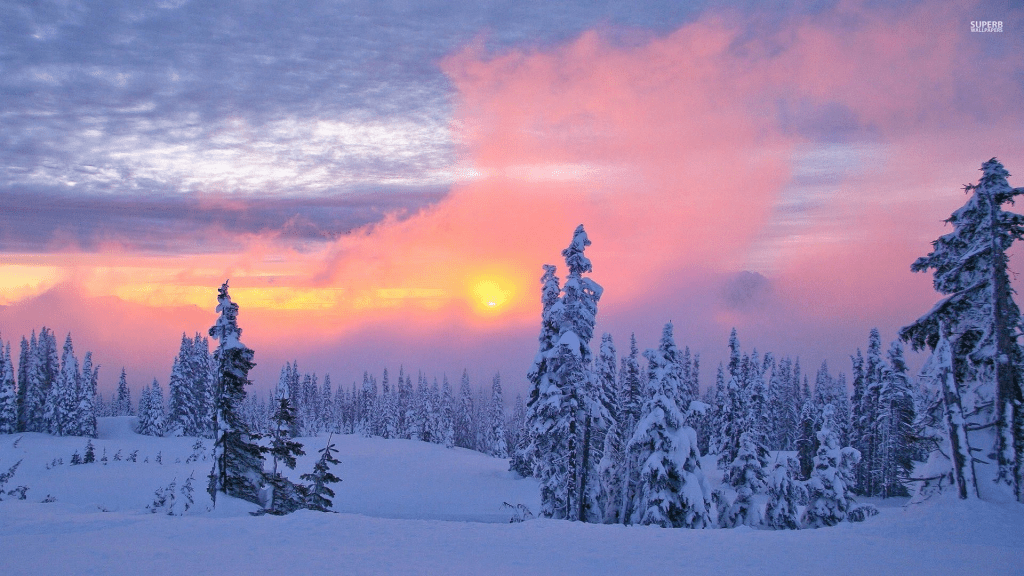
Previously, winters stayed so cold and dry they could paw through snow to eat greenery below it.) With sea ice melting earlier, polar bears spend more time on land.
Grizzly bears already are venturing farther north. The two species have occasionally mated in the past, but hybrid “pizzly” bears, while still rare, are now expected to become more common.
There are risks for us too. Globally, markets for insect-pollinated crops, such as cacao, watermelon, cumin, and coriander, are worth up to $577 billion annually.

Changes to nature’s clock also may influence agriculture in dozens of hidden ways, not all of which can be addressed by shifting planting or harvest seasons. Farms may be exposed to more frosts or previously unseen crop-killing pathogens.
A Colorado legend, barr (who does not capitalize his name) has been profiled on television, in newspapers, books, and films. He visited Gothic as a Rutgers University student and came back for good in 1973—and holed up in a mining shack without electricity or running water.
So barr measured things—temperature and snowfall and snow depth. He tracked moisture content and noted in spring when snow melted. (He used a yardstick and a scale.) He heard each year’s first birdsong and recorded his first marmot spotting. He jotted it all in notebooks.

Less modern-day Thoreau than restless data geek, barr enjoyed comparing year-to-year observations. And while barr and Inouye knew one another, it wasn’t until the late 1980’s that the two chatted in depth about barr’s records.
They could show, in detail, reductions in snow seasons. It was barr who first noticed robins arriving early, barr who provided data that helped others link marmot emergence with early spring.
As far back as 1991—just three years after NASA scientist James Hansen told Congress that greenhouse gases are warming the planet—Inouye and a colleague used barr’s notebooks to show how reduced snows could change flowering in the mountains, potentially harming bees and hummingbirds.
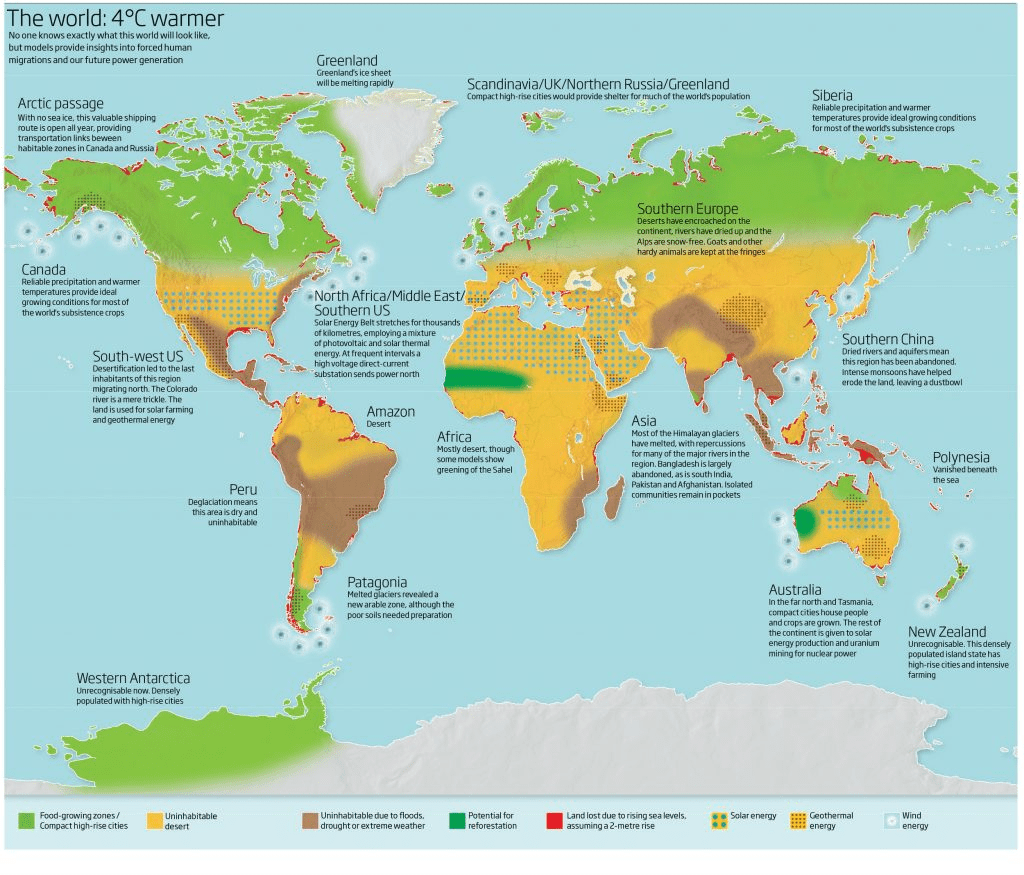
It’s a riotous, mixed-up world, with species colliding in new ways. Far more forces influence the timing of events than even Inouye had imagined. Too many factors are at play.
We’re all now part of a giant experiment, with everything that is familiar in motion. The potential for negative consequences is magnified. But the world may also surprise us.
As long as birds have insects and nectar to eat, maybe they won’t care if the smorgasbord changes. Some pollinators may simply switch to different plants, while others may not. Then again, insects too are in stark decline, even in Gothic.

And although marmots are mostly winning, staying fat with plenty of food during longer, warmer summers, ever lighter winter snows can diminish the cocoon effect that insulates their burrows. Some have actually frozen to death while hibernating.
How timing mismatches may reorganize systems remains unclear, even in Gothic, where scientists have now tracked nearly six million flowers. In most ecosystems on Earth, we’ve only just begun to look closely enough to notice.
We’ve forgotten what we used to do, which is watch—just observe things, Nora Underwood told me. I hear it at meetings: Everybody now wishes they started counting things 50 years ago.
National Geographic / Crickey Conservation Society 2023.
Asgard – First of the 9 Worlds in Northern Mythology

Though the mighty immortal gods of Norse Mythology lived in a seemingly impenetrable fortress in the sky called Asgard, they were still prone to one lamentable weakness: a fear of invasion. Did they fear the chaos of war as an antithetical threat on the ultimate order their home embodied?
The word Asgard comes from the Old Norse word Ásgarðr, meaning Enclosure of the Aesir. Asgard is one of the nine worlds in Norse Mythology, along with Niflheim, Muspelheim, Midgard, Jotunheim, Vanaheim, Alfheim, Svartalfheim, and Helheim.

Asgard is the home of the Aesir, deities of one of two tribes of Norse gods. The other tribe, the Vanir, used to share Asgard but the two tribes fought a long, epic war over their differences and the Vanir were forced to leave Asgard.
The two tribes did reach an eventual truce as they joined forces against their common enemy, the Giants. Snorri Sturluson, author of the Prose Edda, wrote that Asgard was created by the gods after they created Jotunheim (Giantland), Midgard (Middle Earth or home of humanity), the seas, sky, clouds and the Earth.

The home of the gods is said to be a giant fortress with walls reaching up into the clouds to protect them from their enemies, particularly the frost-giants.
Asgard is situated in the sky upon the plains of Idavoll, where the gods met to discuss important matters. It was connected to Midgard by a rainbow bridge called Bifrost. The mythical place was invisible and inaccessible to mortal men.
The ruler of the gods, Odin, had his throne in Asgard, in a hall called Valaskjalf. His throne was called Hlidskjalf and it is believed that when Odin sat on Hlidskjalf, he could see the whole of heaven and Earth and everything that happened anywhere!

A hall made of pure gold was also situated in the home of the gods. It was called Gladsheim and housed the thrones of Odin and the 12 highest gods.
The goddesses’ hall was called the Vingolf or hall of friendship. The gods and goddesses would meet every day and discuss the fate of world at the Well of Urd (destiny), from which the Yggdrasil (the tree connecting the nine worlds) grew.
Asgard also housed Valhalla (the hall of the fallen). Odin granted access to the worthy dead, the majority of whom were esteemed warriors. Here, he feasted and celebrated with the battle heroes. Valhalla was easily recognizable by its rafters formed of spears, and use of shields as roof tiles.

According to certain sources, the doors of Valhalla were so wide that 800 warriors could walk through at the same time! A vast river, the Thund, and a barred gate, Valgrind, protected the entrances of Valhalla.
Innangard and Utangard distinguish the ancient Germanic concepts of order and chaos. Innangard is civilized, orderly and law-abiding, while Utangard is wild, chaotic and anarchic. The concepts apply to both a geographical location and a mental plane, connected with one’s actions and thoughts.
The home of the Giants, Jotunheim, is the best illustration of Utangard, as Asgard is the archetype of order or Innangard. The distinction between the two states is also evident in Germanic cosmology.

Three of the nine worlds, Asgard, Midgard and Utgard (another version of the name Jotunheim), have the suffix –gard. Asgard and Midgard are Innangard worlds and constantly protecting themselves against Utgard, an Utangard world led by lawless giants.
This affirms the close ties between the Germanic spiritual universe and the physical world.
The Viking and Medieval ages, between 800 and 1400 AD, were the periods that provided the most significant historical and mythological literature written in the Old Norse language.
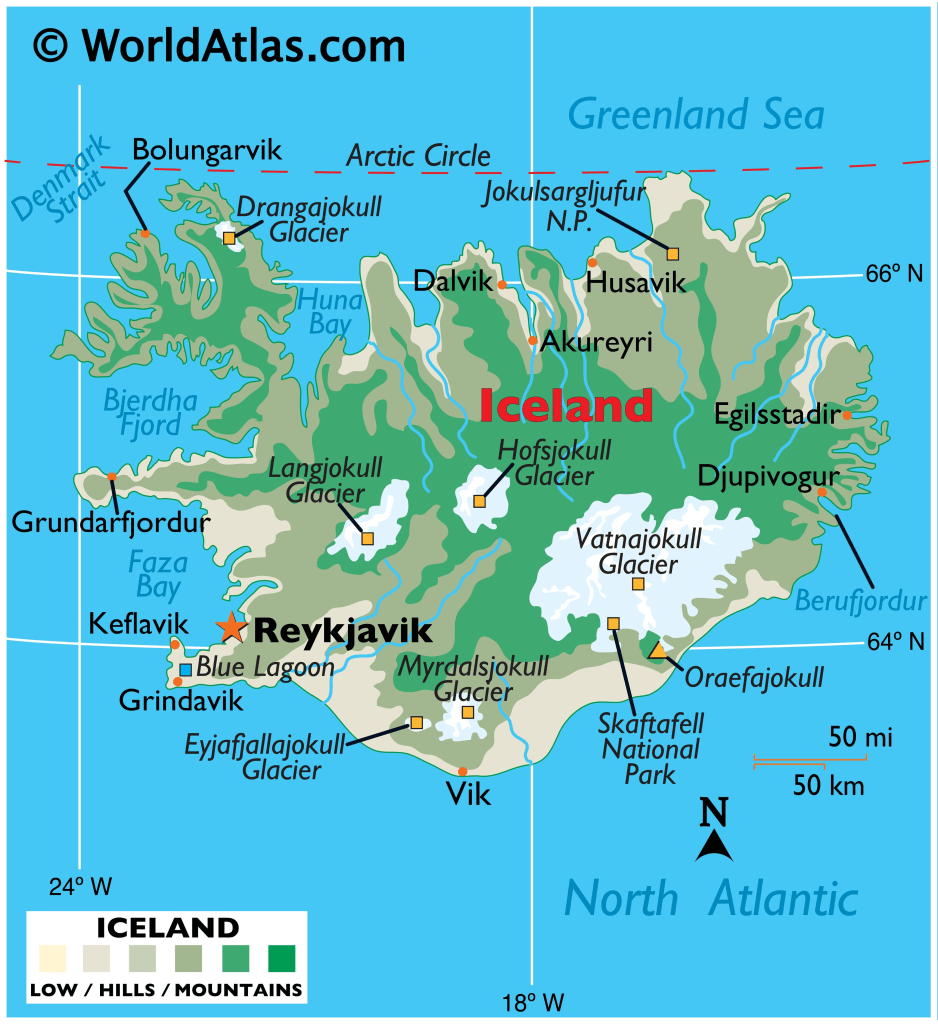
In Iceland especially, the people continued to practice their traditional religion and preserve its history even after Christianity became their official religion in 1000 AD. Their perpetuation of pre-Christian Germanic traditions and writings is an invaluable source today.
Three preeminent examples of these sources are as follows.
The Poetic Edda is a collection of poetry by Old Norse-speaking poets. This source provides the greatest insight into the mythology and is particularly in-depth. The Poetic Edda or Elder Edda contain two important poems: the Völuspá and the Grímnismál, which reflect on pre-Christian Norse mythology and cosmology.

In the 13th century, Icelandic poet, author, mythographer and historian, Snorri Sturluson, wrote the Prose Edda, an interpretation of traditional Icelandic poetry. Sources cite the Prose Edda as providing the greatest quantity of information of the Old Norse history.
The author’s work does, however, contain certain claims which don’t align to the worldview and perhaps attempt to bring the old mythology in line with Christianity.
The sagas portray the lives of well-known Scandinavian, Icelandic and Germanic people from the 13th and 14th centuries, but do not refer in detail to pre-Christian religion.
The Saga of the Ynglings, however, describes Norse deities and their actions in detail, though written in a way to rationalize mythology as a mere exaggeration of everyday historical accounts.

In the Ynglings Saga, also authored by Sturluson, he asserts that Odin is demoted from the all-father to a sorcerer with the ability to shape-shift, blind his enemies and put his own troops in an invulnerable, trance-like state.
On his mortal death, Odin is not sent to Asgard, but rather, Sturluson says, to Valhalla. He later changes Valhalla to heaven.

In Asgard, the gods decided on the fate of man each day anew. They could throw humanity into a state of Innangard or Utangard with a simple decision. Order and chaos needn’t be too far from each other, as seen in the modern concept expressed in the chaos theory, or butterfly effect.
This is popularly understood as the ability to explain everything by understanding the small reasons or events that bring about an eventuality, or that everything happens for a reason, when in reality predictability is limited. The Aesir held humanity’s destiny in their hands and certainly loved to roll the dice!
Nythology Network / Crickey Conservation Society 2023.
The Ceremonial Village of Orongo @ Eastern Island, Chili
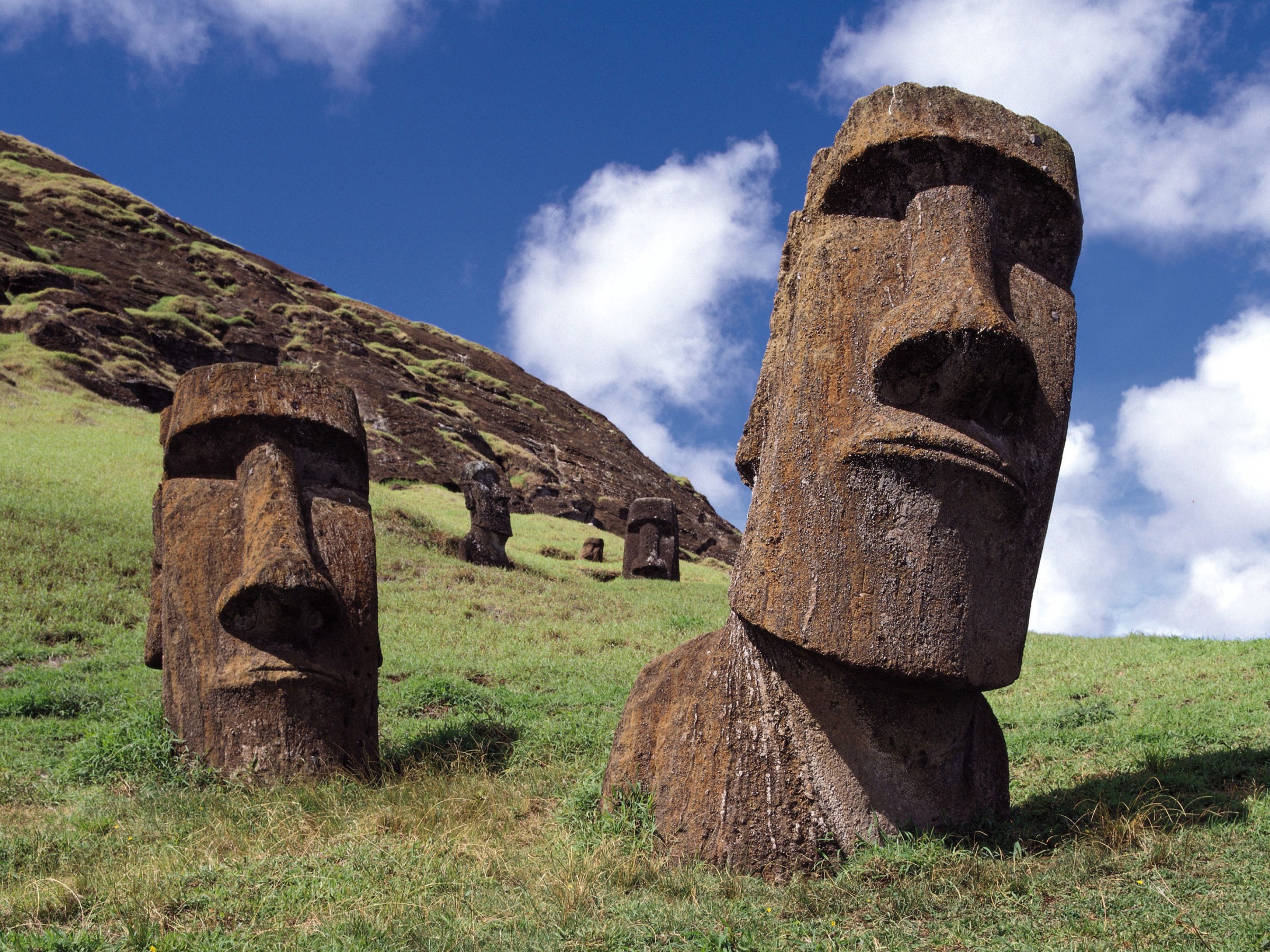
Easter Island, known locally as Rapa Nui, is most famous for the hundreds of moai statues scattered throughout its coastline.
A special territory of Chile that was incorporated in 1888, the entire island, located in the southeastern Pacific Ocean, is protected within the UNESCO World Heritage site of Rapa Nui National Park.

The ceremonial village of Orongo, in the south of the park, is considered among the most spectacular archaeological sites in the world.
It is perched on a narrow ridge, with the crater of the Rano Kau volcano on one side and cliffs that fall 300 meters to the sea on the other, and contains dozens of petroglyphs and stone houses dating from the Huri-Moai period (ca. 1680–1867) of Easter Island’s history.
These self-contained dry-laid houses featuring sod roofs were built into the topography of the site.
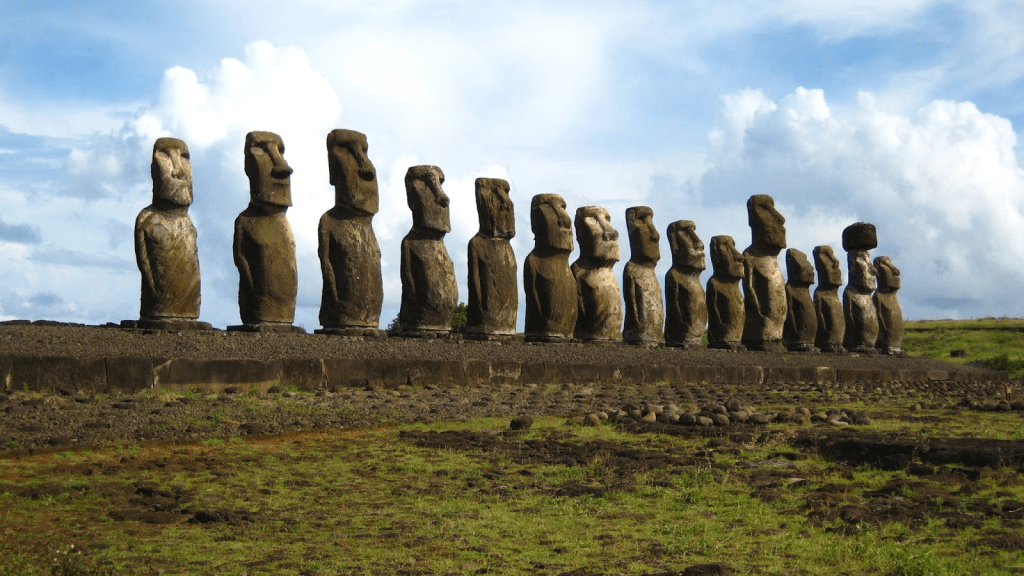
The ceremonial center of Mata Ngarau in Orongo, home of the Tangata Manu (Birdman) cult that succeeded the moai culture, was the site for the annual ceremony that represented the transfer of power between competing clans.
By the end of the nineteenth century, most of the Rapa Nui culture had perished or was forced to convert in to Christianity; the Tangata Manu cult collapsed and Orongo was abandoned.
World Monuments Fund (WMF) began working on Easter Island in the late 1960’s, and the site was placed on the Watch in both 1996 and 2000.

The Corporación Nacional Forestal de Chile (CONAF) and WMF have organized training courses for park rangers, conducted climate studies, collected meteorological data, carried out site protection interpretation studies, installed monitoring systems, and developed a conservation database of the Orongo petroglyphs.
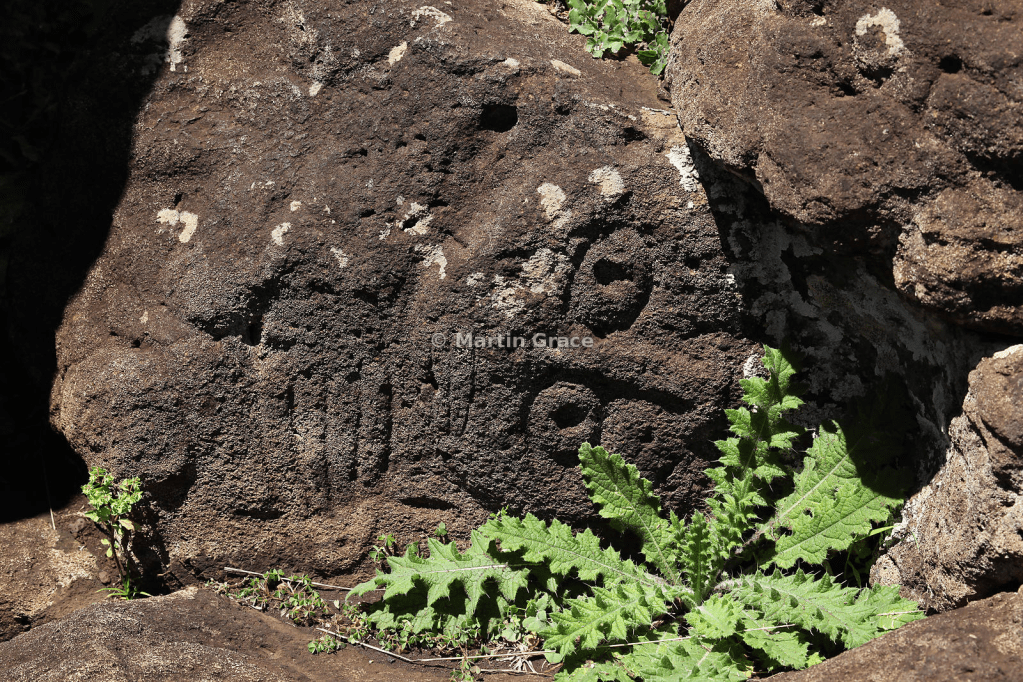
Planning for conservation and site management at the Orongo Ceremonial Village began in 2001 in close consultation with community leaders and local stakeholders. Over the years WMF has held a series of workshops focused on redevelopment, interpretation, conservation, and management plans for the site.
Orongo Ceremonial Village, one of the most significant archaeological sites in Rapa Nui National Park, is the most visited place on Easter Island. Unfortunately, the site has been severely impacted by the increasing numbers of polluting tourist industry.

The construction of a visitor center, completed in 2011 as the last component of an intensive conservation and interpretive program supported by WMF and American Express, was designed to minimize negative impacts on the site’s fragile archeological resources.
The sustainable structure incorporates both recycled construction materials and elements of existing facilities into the new building.
Despite significant steps forward in the management and conservation of the Orongo Ceremonial Village, the preservation of its unique rock carvings remains far from assured, posing a vexing challenge to the Indigenous community.
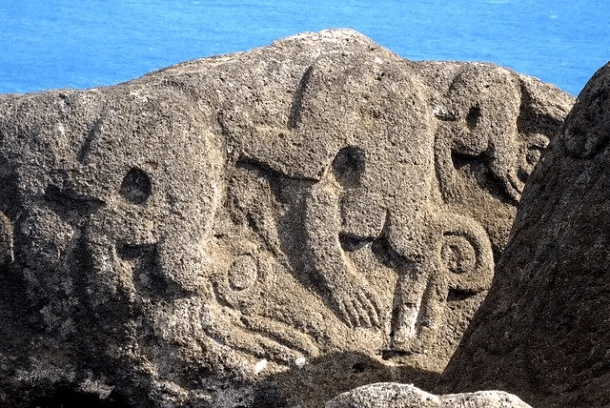
The site’s exposure, as well as the inherent weakness of the bed rock, has led to considerable structural instability and the loss of irreplaceable petroglyphs.
Solutions are being urgently sought by the Ma’u Henua Indigenous Community, who are now responsible for the administration of Rapa Nui National Park thanks to a sustained campaign demanding they be given greater rights and more decision-making power.
The 2020 World Monuments Watch seeks to continue WMF’s engagement with this remarkable site by partnering with its true stakeholders to address critical insecurities created by the environment.
World Monument Fund / Crickey Conservation Society 2023.
Project Blue Beam

As far as conspiracy theories go, Serge Monast’s Project Blue Beam is out there. Way out there. In 1994, Serge Monast, a writer and investigative journalist from Quebec, published an alleged manifesto of sorts explaining this wild theory that has remained infamous in certain circles to this day.
According to Serge Monast, the four-step project designed by NASA and the United Nations would allow these organizations to accomplish what he believed to be their ultimate goal of creating a New Age Religion led by the Antichrist in order to start a New World Order dictatorship.
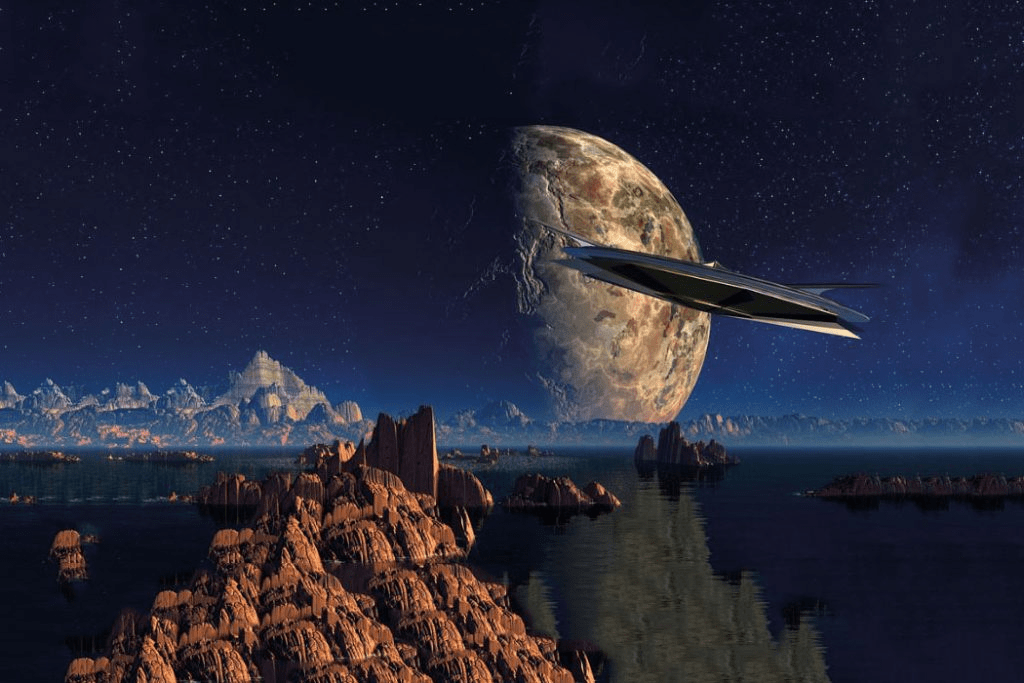
NASA would implement Project Blue Beam, Monast believed, with a system of advanced mind control as well as top secret technology in order to trick everyone into believing there would be a second coming of sorts.
But first, step one of Project Blue Beam would involve the manufacture of artificially-created earthquakes in strategic locations around the world.
These earthquakes would, according to the conspirators’ hoaxes, unearth artifacts indicating that the religious doctrines of all nations have been misunderstood for centuries, thus discrediting all religions.
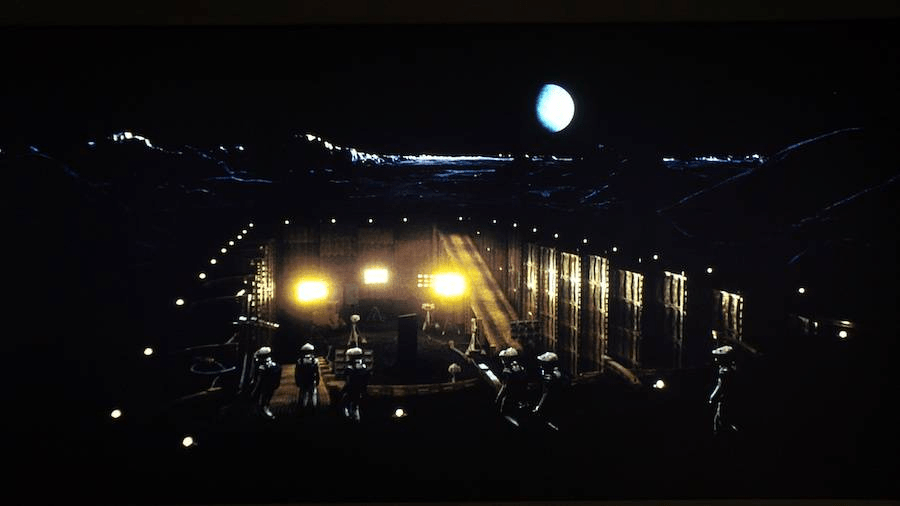
Monast claimed that movies like 2001: A Space Odyssey had already laid the psychological groundwork for this step by presenting stories in which mysterious unearthed objects upend everything humans know about themselves and their world.
The second step, Serge Monast claimed, would involve a gigantic space show. During this stage of Project Blue Beam, three-dimensional optical holograms, as well as laser projections of holographic images, would beam across the sky.
What would these images include? Projections of Jesus, Mohammed, Buddha, Krishna, etc., will merge into one, Monast described.
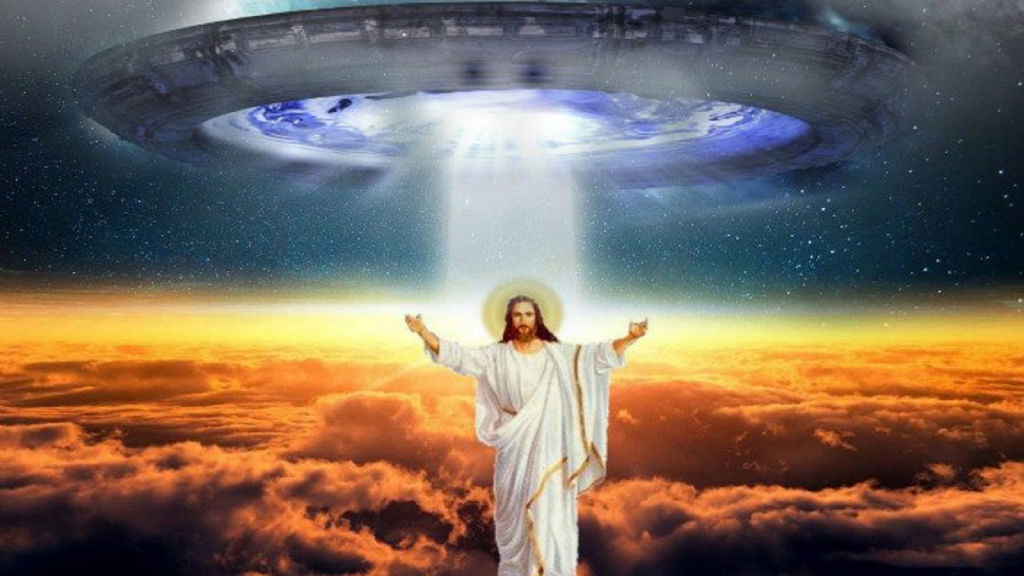
Monast explained the technology behind this display, saying that the conspirators would use space-based laser-generating satellites to project simultaneous images to the four corners of the planet in every language and dialect according to the region.
As the whole sky is transformed into one massive movie screen, this new god would speak to everyone in their own language.

Next, the third step is where mind control would take center stage. Telephonic communication devices would send waves to reach each person within their own minds, convincing each of them that their own god is speaking to them from the very depths of their own soul.
How would these rays be able to reach people’s inner minds? Monast explained:
Such rays from satellites are fed from the memories of computers that have stored massive data about every human on earth, and their languages. The rays will then interlace with their natural thinking to form what we call diffuse artificial thought.
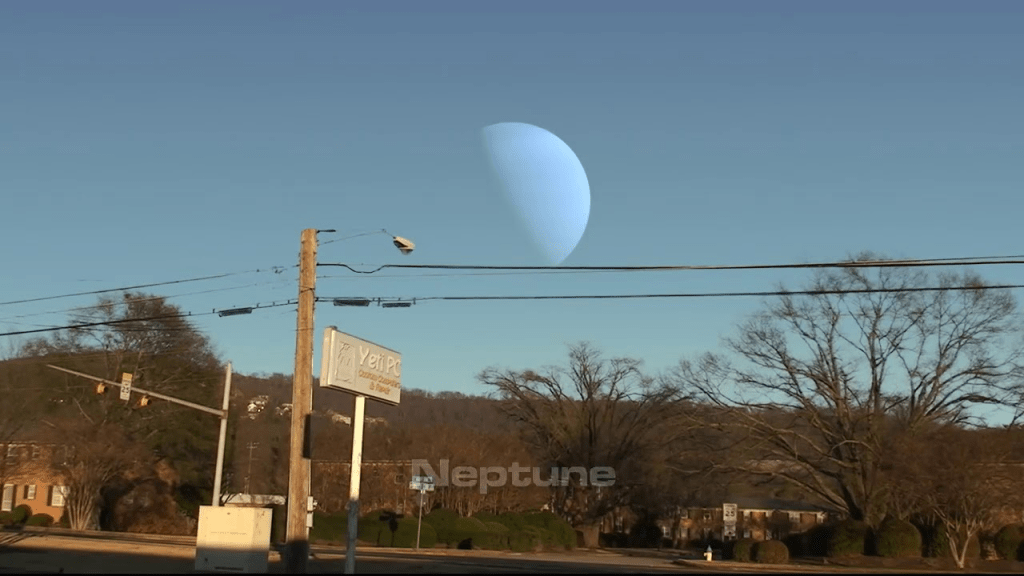
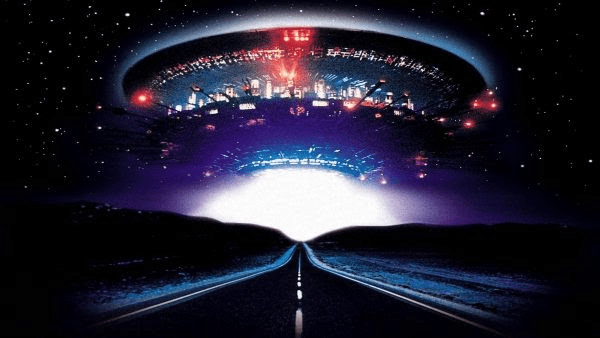
Finally, the fourth step of Project Blue Beam would make use of various technologies in order to convince people that alien invasions and the rapture itself were taking place, thus making it easier for the powers that be to take control of a fear-addled populace.
The NASA Blue Beam Project is the prime directive for the new world order’s absolute control over the populations of the entire earth, Monast said. I would suggest you investigate this information carefully before dismissing it as fanatic lunacy.
Aside from this main thrust of Project Blue Beam, other elements of the theory remain noteworthy, especially for conspiracy theorists, as well.

For instance, one component includes the phasing out of cash. Monast said that the plan would be executed after a financial crisis.
Not a complete crash, but enough to allow them to introduce some kind of in-between currency before they introduce their electronic cash to replace all paper or plastic money.
Cryptocurrencies anyone? Then there’s the disputed story of Monast’s death (details about any facet of his life are both scarce and in dispute).
It has been reported that he died of a heart attack without having any previous heart problems — and one of the methods of killing supposedly used by Project Blue Beam was artificially-created heart attacks.
There’s also the claim that the night before his death, Monast’s children, who were homeschooled, were abducted and placed in a state school before Monast was arrested. He spent the night in jail and his children weren’t heard from again, some claim.
If you believe that — and if you believe any of this entire theory at all — then the final line of Serge Monast’s Project Blue Beam manifesto will certainly ring true: No one is safe in a totalitarian police state!.
All That’s Interesting Company / ABC Flash Point News 2023.
Beavers are the Architects of building natural Dams

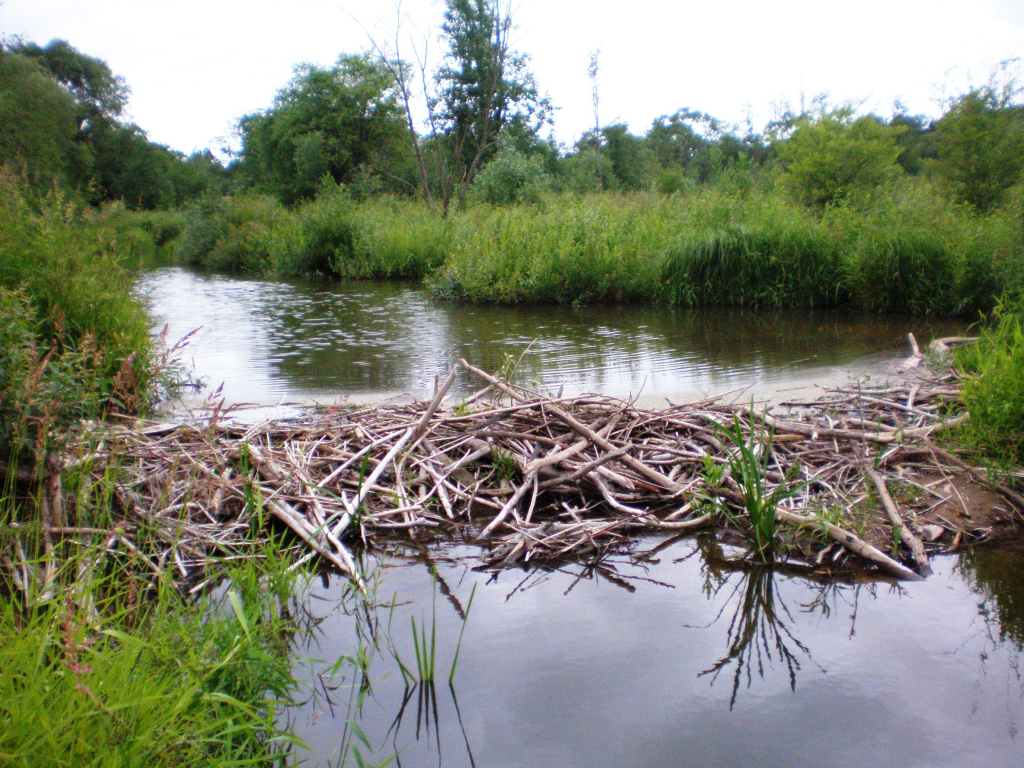
Beavers build dams across streams to create a pond where they can build a beaver lodge to live in. These ponds provide protection from predators like wolves, coyotes, or mountain lions.
A beaver dam is a dam made of logs and mud, built by a beaver. A dam is something that blocks or slows down the flow of water in a river or a stream. A lake or pond is created behind a dam.
Beavers build their dams out of trees and branches that they cut using their strong incisor (front) teeth! They also use grass, rocks, and mud. Beavers build dams so that they have a safe pond where they can build their beaver lodge.
A beaver lodge is built out of twigs, sticks, rocks, and mud, and has an underwater entrance (beavers are very good swimmers!). Inside their lodge, beavers have a safe place to sleep, raise their babies, stay warm in winter, and hide from predators.

Beaver dams don’t just create a place for beavers to live! The ponds that beaver dams create are important habitats for other wetland animals, including birds and fish. These ponds also help control soil erosion and reduce flooding.
Beavers are a keystone species. This means that they are important to an ecosystem because they modify, or change, their environment in a way that helps other animals and plants, too.
A long time ago, in the 1700’s and 1800’s, beaver fur was used to make hats and other fancy clothing worn by people in Europe. Fur trappers in the Northwest trapped beavers so that their furs could be sent from Fort Vancouver to Europe.
Fur trappers in the 1800’s trapped a lot of beavers throughout North America. Today, there are not as many beavers as there were before the 1800’s, but beavers are not an endangered species. There are now about 10 to 15 million North American beavers in the wild.
US National Park Service / Crickey Conservation Society 2023.
Valley of the Kings
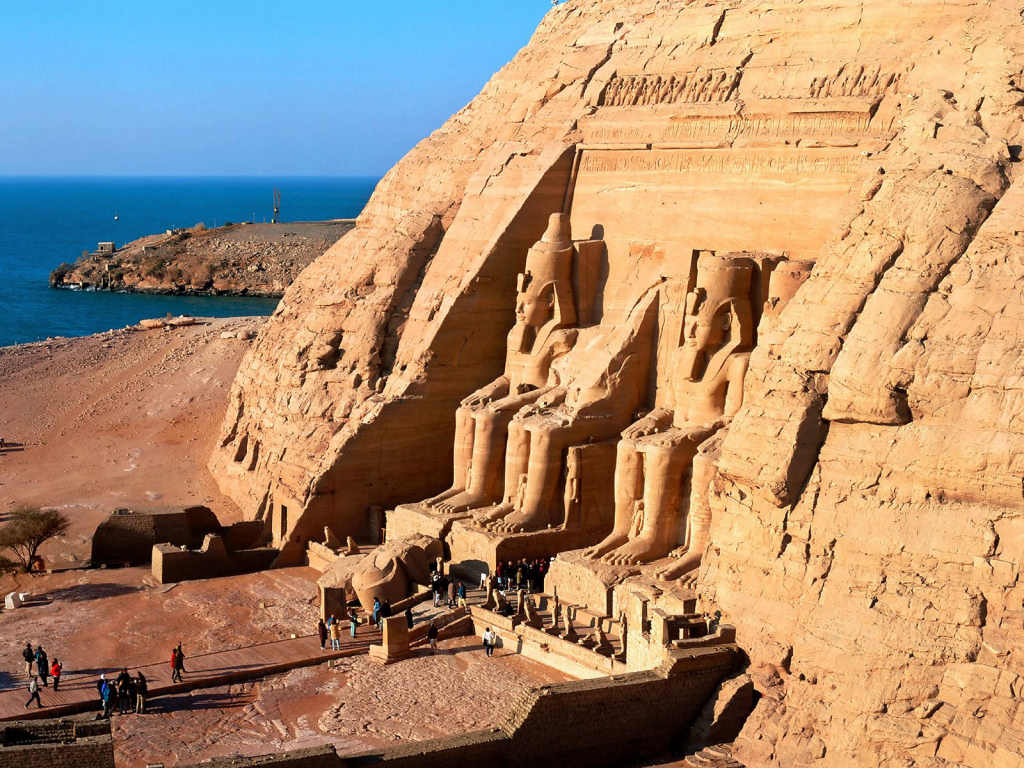
Thebes, now the modern city of Luxor, was the royal capital of Egypt during the New Kingdom (1539-1075 B.C.). Outside its walls, pharaohs built the famous temples of Amun and Karnak on the Nile’s east bank and constructed mortuary temples along the west bank.
The Valley of the Kings refers to the sloping cliffs above the western floodplain, where the bodies of the pharaohs were laid to rest in tombs cut deep into the rock. These tombs range in size from single chamber burials to massive complexes spanning several thousand square meters.

Many include intricate hieroglyphic carving and vivid painted decoration, illustrating ceremonies, rites of burial, the crossing to the world of the dead, the path of the sun, and other subjects.
Over 62 tombs have been explored, including those of the sons of Rameses II and Tutankhamen, the boy-king whose tomb was filled with gilded wood furniture and over 1,000 precious objects of gold, faience, and alabaster.

In 1979 the Valley of the Kings became a UNESCO World Heritage Site, drawing wider attention to its treasures. As the twentieth century came to a close, the fragility of the royal burial chambers became increasingly apparent. Flash floods, pollution, and vandalism plagued the monuments.
An even more serious problem was deterioration caused by the 1.5 million tourists who visit the valley each year. The Valley of the Kings was included on the World Monuments Watch in 2000 and 2002 in order to raise awareness of tourism’s impact at the site.

Through funding from American Express, we supported the installation of railings, signage, and lighting at the tombs that improved public access while emphasizing the need to protect the ancient site.
We also allocated resources to the creation of a site management plan, which was first published in 2010, and conditions assessments of several tombs.
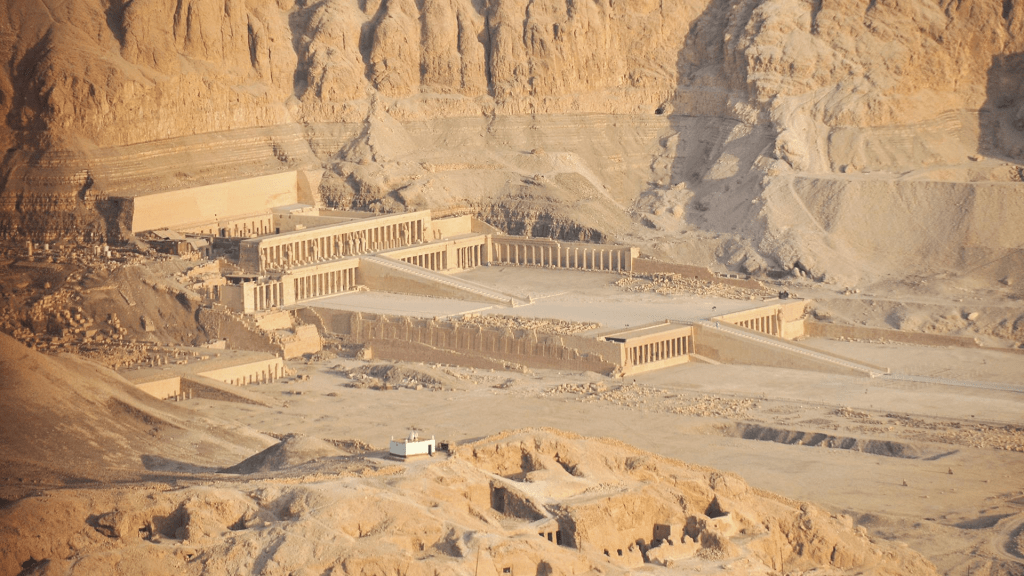
Other projects we assisted include the cataloguing and conservation of decorated stones at the back of Luxor Temple, de-watering and conservation of statues in the Temple of Amenhotep III, and conservation of the Annals court’s southern wall in Karnak Temple.
The Valley of the Kings continues to enchant the universal imagination. Thousands of tourists explore the valley each day, and while every traveler deserves an opportunity to see this spectacular site, measures must stay in place to ensure that eager visitors are aware of the fragility of the ancient tombs.
World Monument Fund / Crickey Conservation Society 2023.
Nan Madol the Venice of the Pacific
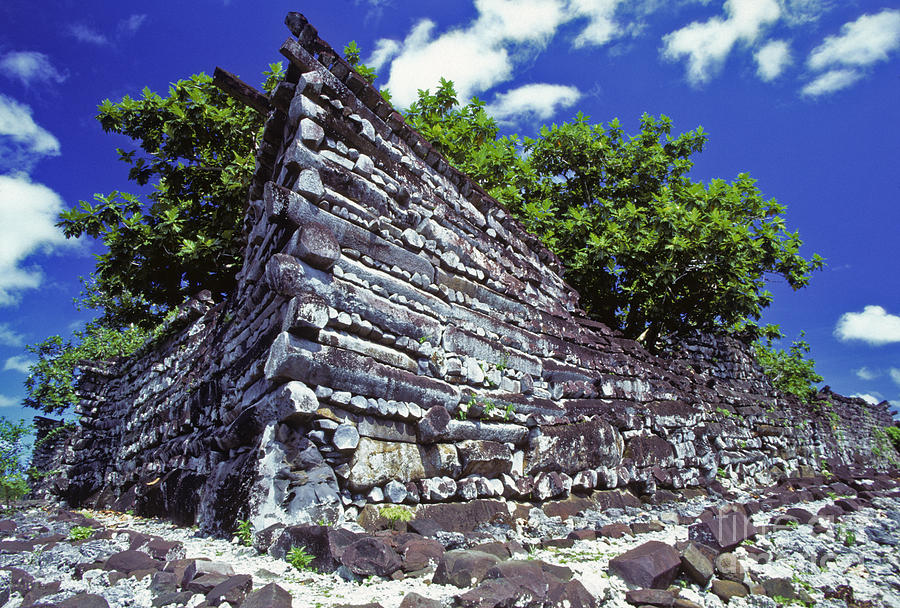
Few historic places in the Pacific are as intriguing as Nan Madol. The city ruins are on a coral reef in a lagoon on the tiny island of Temwen, adjacent to the eastern shore of the island of Pohnpei in the Federated States of Micronesia.
Before its abandonment, Nan Madol was a major political and spiritual hub for native Pohnpeians. Throughout its 500 year life, from 1200 and 1700, the city served as a religious center, a royal enclave, a fortress, an urban marketplace, and the high seat of government for the island of Pohnpei.
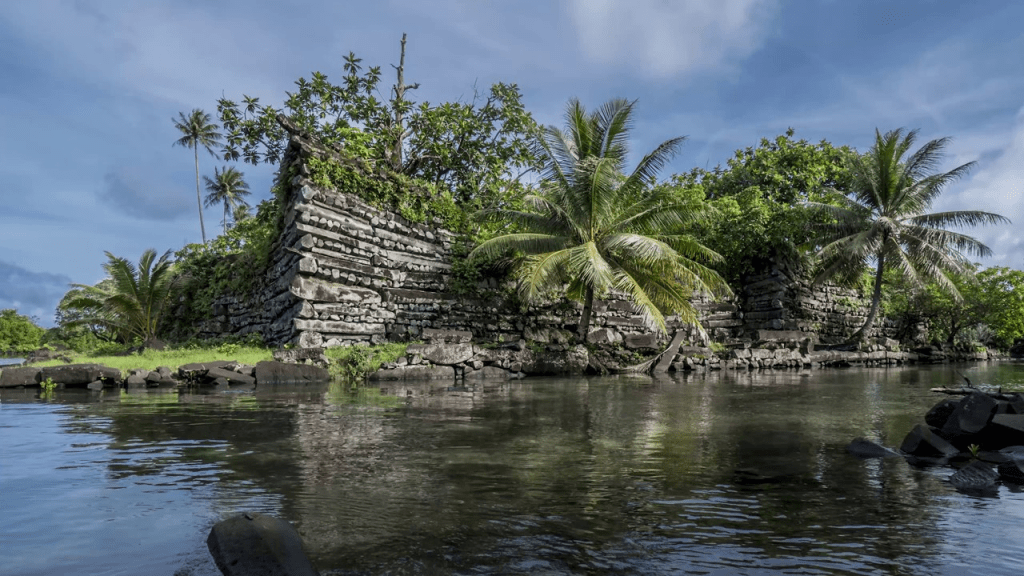
Relatively unknown outside of Micronesia, the city of Nan Madol is a hidden gem of Micronesian history and culture and a grand sight for modern visitors. During its height, Nan Madol was the seat of the Saudeleur dynasty which united all of Pohnpei’s estimated 25,000 people.
The Saudeleur were originally a foreign tribe who came to Pohnpei and installed themselves as rulers of the island. The Saudeleur first appeared around the year 1100 and built Nan Madol around 1200.

According to Pohnpeian oral history, the first Saudeleur to arrive on Pohnpei were two brothers, Olisihpa and Olosohpa, canoe-faring sorcerers who received their powers from the gods and used their magic to build Nan Madol.
This so impressed the native Pohnpeians that they invited the Saudeleur to marry into their tribe. When one of the brothers eventually died, the other declared himself king. The Saudeleur built Nan Madol as a temple for the farm god Nahnisohn Sapw, the god worshiped by the Saudeleur nobility.
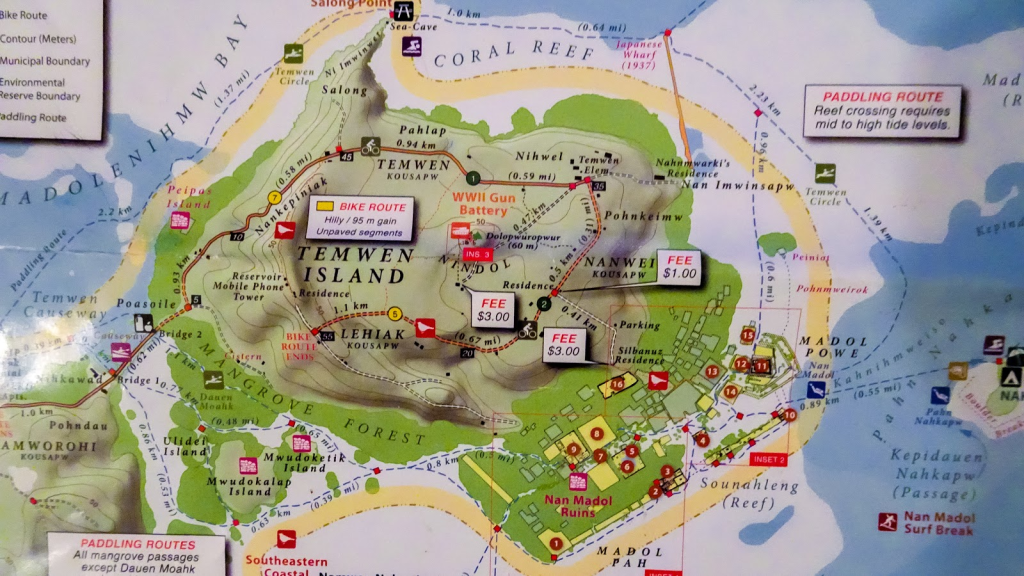
Nan Madol became the most important political and religious center on the island. The social system at Nan Madol is the earliest known example of such centralized political power in the western Pacific.
The largest homes belonged to the chiefly elite and archeological excavations have revealed objects that mark their owners’ status in society.

The city was built so that the nobility were isolated from the general population. At its peak, Nan Madol may have been home to a thousand people, the majority of whom were commoners serving the nobility.

Nan Madol was a sacred site filled with altars, oracles, and temples. Many Saudeleur were priests, and this heavy concentration of religious leaders led to the development of numerous cults.
According to oral history, later generations of Saudeleur aristocrats became increasingly oppressive, often forcing the native Pohnpeians into starvation.
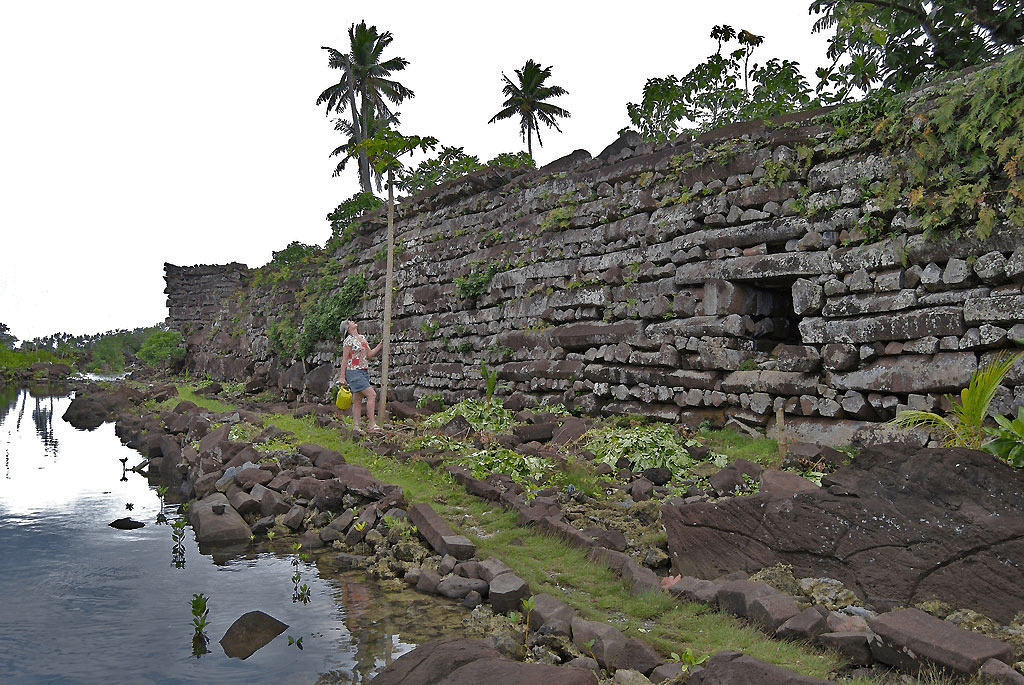
In 1628, the warrior hero Isokelekel led an invasion of Pohnpei and defeated the Saudeleur tribe. Pohnpeian oral history says that Isokelekel was a demigod and the vengeful son of the Pohnpeian storm god Nahn Sapwe, who had grown unhappy with the tyranny of Nahnisohn Sapw and the Saudeleur.
Historians believe that Isokelekel was the leader of a band of Micronesian settlers from the nearby island of Kosrae. Isokelekel led his war band of warriors, women, and children to victory with the assistance of the oppressed Pohnpeian populace.
With the defeat of the Sandaleur, Nan Madol’s significance to Pohnpeians slowly eroded and it was eventually abandoned in the 18th century.
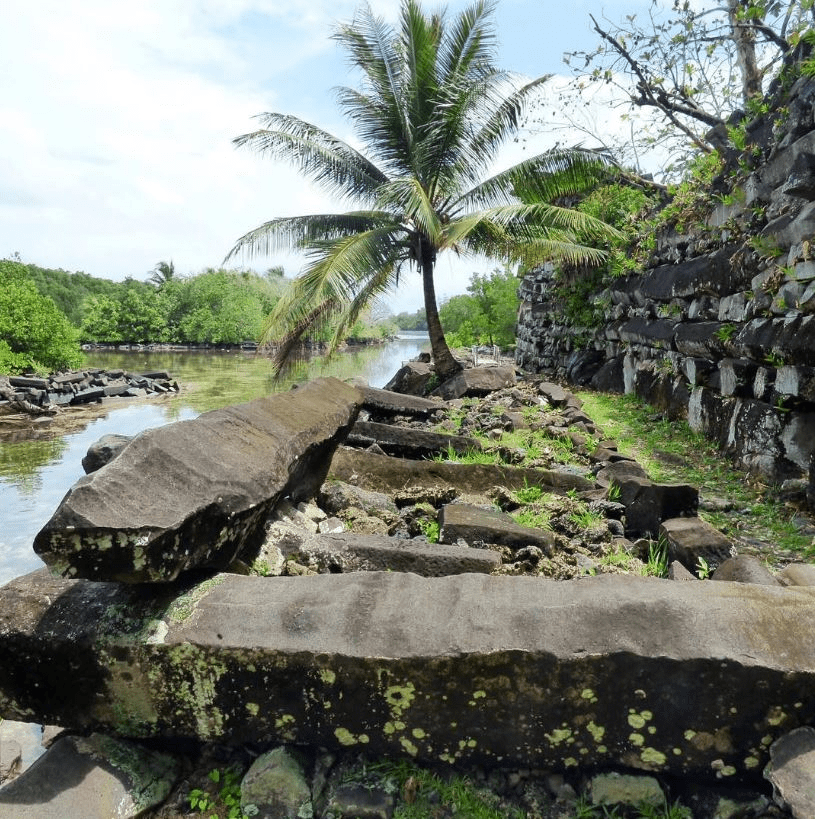
Nan Madol is the only extant ancient city built on top of a coral reef. Constructed in a lagoon and surrounded by water on three sides with a stone wall enclosing the complex, the city is often referred to as the Venice of the Pacific.
Nan Madol roughly translates to “within the intervals” referring to the elaborate web of tidal canals and waterways which crisscross the city, allowing transportation between over 90 small artificial islets. Because of its construction, Nan Madol appears to float on the water.
Carved basalt stones carefully placed on top of each other in a crisscross pattern formed the walls of each of the 130 buildings. Some individual stones are light enough that a single person could carry them, while the heaviest of the basalt pillars weigh 100,000 pounds each.

The buildings stand on a foundation of natural coral that lies just below the water’s surface. The largest structure is the Nandauwas, a royal temple surrounded by 25-foot high walls.
The Pohnpeians, who had neither binding agents like concrete nor modern diving equipment, sank the heavy stones into the lagoon using an unknown method. The building remains and canals are stable enough that even after centuries of abandonment visitors can still tour Nan Madol by boat.
The entire complex is a fitting tribute to the sophisticated methods of its Pohnpeian builders. The scale and superiority of its stone architecture, its artificial islet construction, and the modification of the shoreline contribute to the significance of the site.
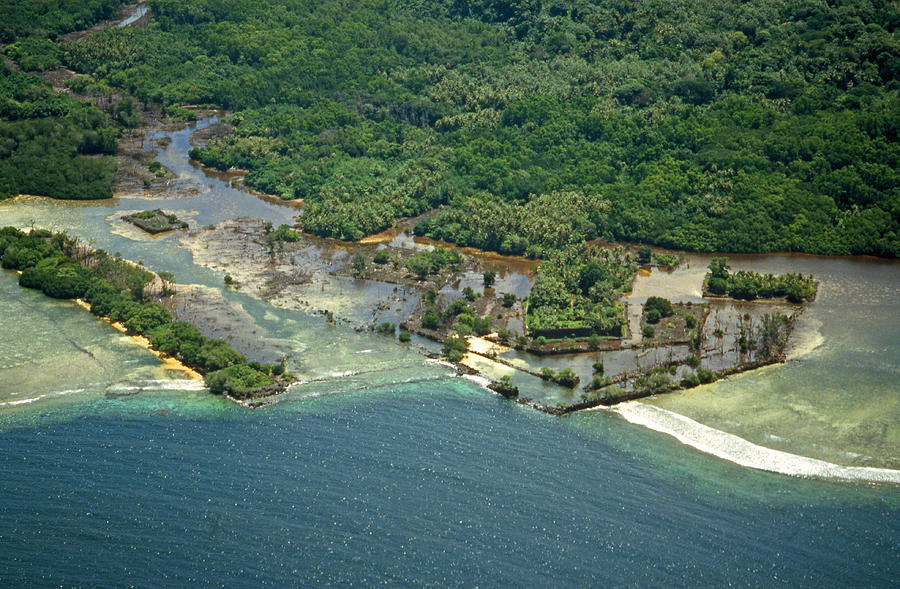
Nan Madol National Historic Landmark is an archeological district that includes the city of Nan Madol; Temwen Island; the reef islets to the east and south of Nan Madol; the area north of Temwen called Metipw; and adjacent areas of the main island Madolenihmw District coast referred to as Tamwerohi.
The district covers an area of 19 square miles and is privately owned by Pohnpeians, however, ownership of the surrounding islets comprising the city of Nan Madol remains unclear.
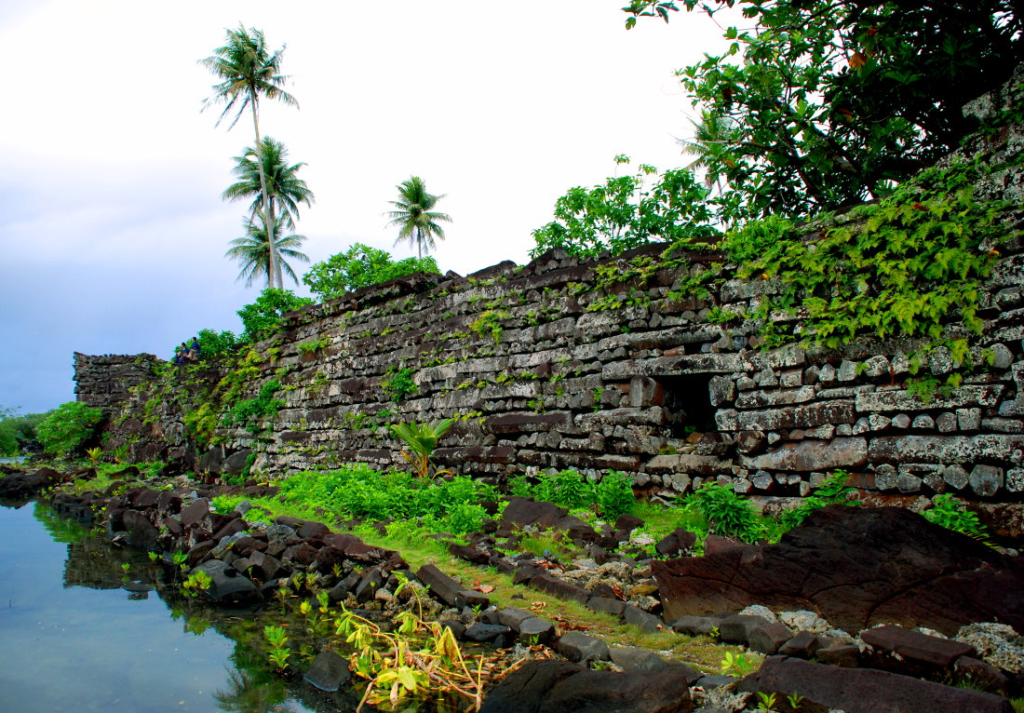
Visiting Nan Madol National Historic Landmark is a unique experience. The private landowners are modern-day Nahnmwarki, who trace their lineage to Isokelekel’s chiefs. Nahnmwarki representatives provide tours of the city by boat.
A typical boat tour begins at the Madol Powe district, where the huge Nandauwas temple sits just off Pohnpei’s shoreline.
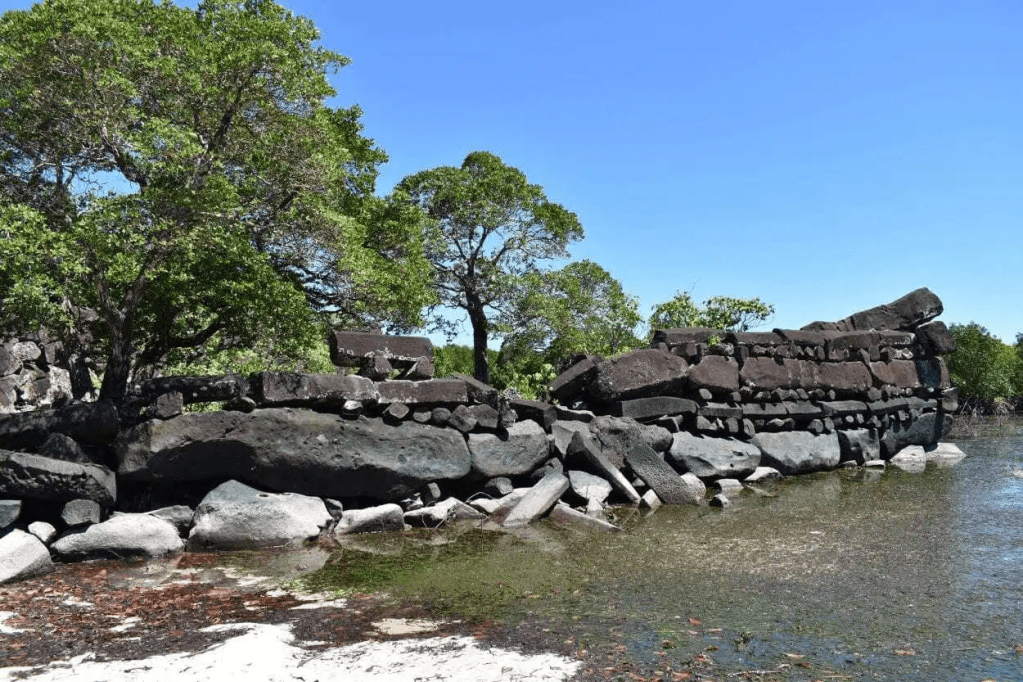
Visitors are ferried behind and around the 12 artificial islands that make up Nan Madol’s city wall and around and back inside the city to its southeastern district, which features commoners’ homes and the palace-barracks of Kelepwei that housed Isokelekel and his elite warriors.
Nan Madol, a National Historic Landmark, is located on Temwen Island in the present day Madolenihmw district of Pohnpei state, in the Federated States of Micronesia. Nan Madol is on private property but is open to the public.
National Park Service / Crickey Conservation Society 2023.
Karnak the hidden reincarnation Secrets of Egypt

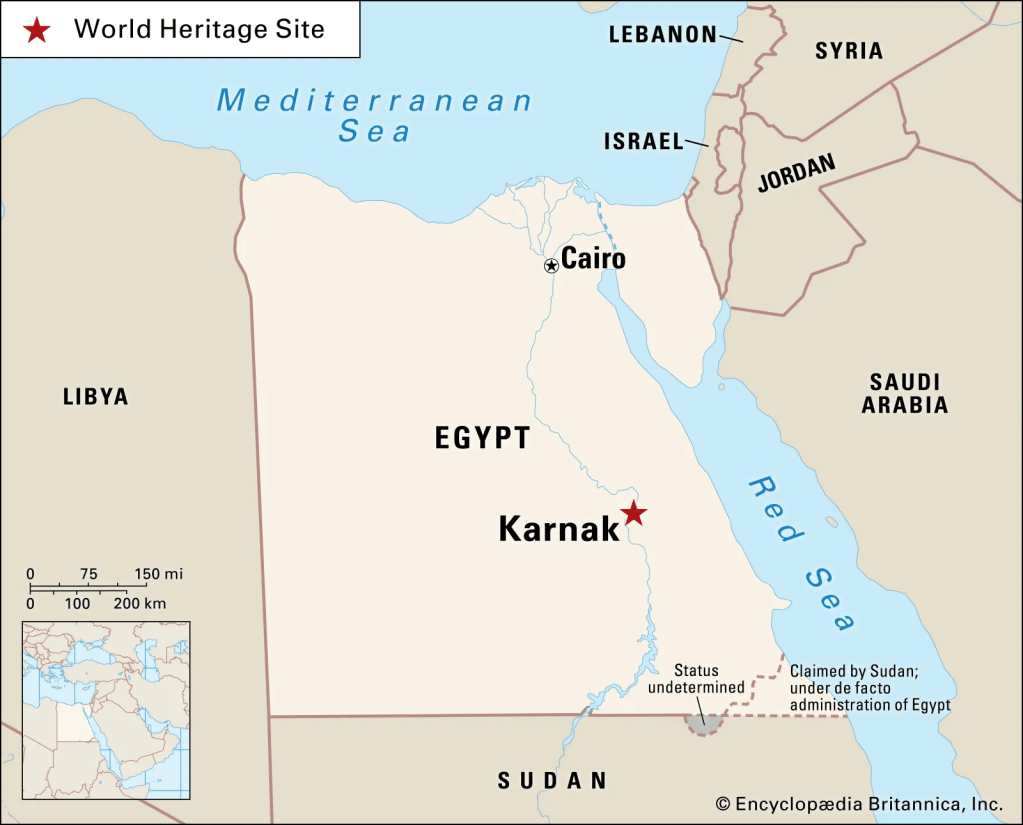
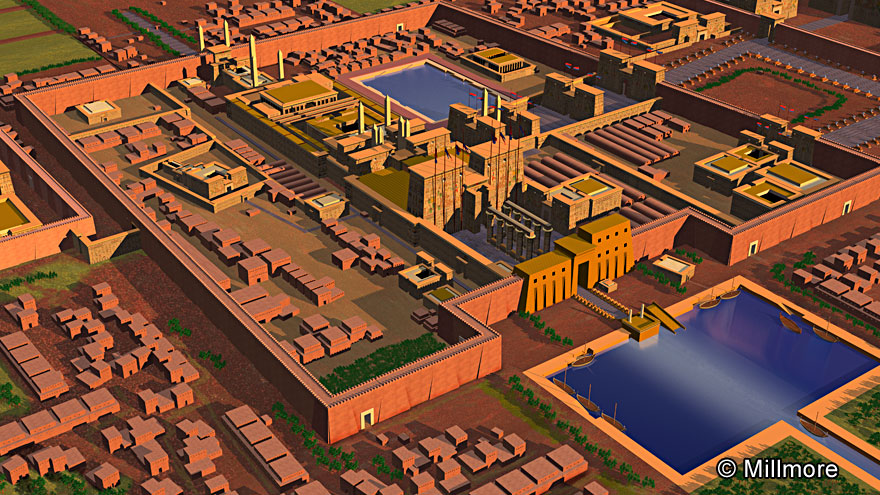
The Karnak temple complex at Luxor developed over more than 1,000 years, principally between the Twelfth and Twentieth Dynasties. It was, at its peak, the largest and most important religious complex in ancient Egypt.
The most significant structure, and the largest religious building ever built, is the Temple of Amun-Ra, considered to be where that god lived on earth with his wife, Mut, and son, Khonsu, who also have temples at the site.
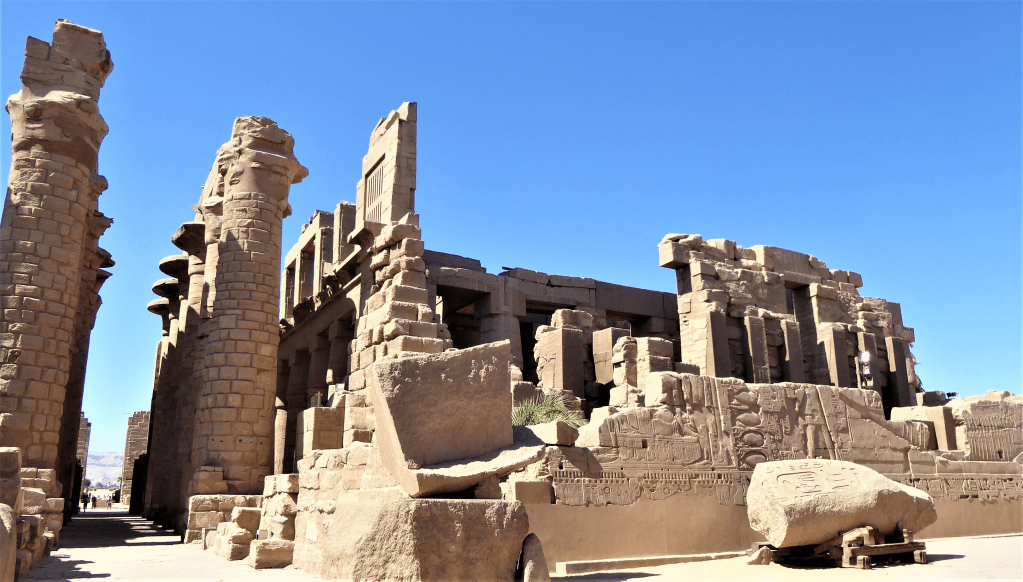
The Temple of Amun-Ra is particularly famous for the vast Hypostyle Hall constructed during the reign of Seti I. After Memphis became the new dynastic capital, many of Luxor’s temples declined in importance. In later centuries, Ptolemaic rulers and Coptic Christians altered parts of the complex for their own uses.
The buildings were in various states of ruin by the time they were encountered by Napoleon’s scholars and archaeologists in the early nineteenth century.
Over the last century, a rising water table and chemical degradation associated with the intensification of agricultural irrigation practices in the region have created new conservation problems and accelerated damage to the stones, foundations, and columns that have remained in place since antiquity.
Since many of the exterior surfaces contain relief carvings and hieroglyphs, this type of deterioration brings with it especially heavy losses to the historical record, threatening the integrity of the site and compromising scholars’ abilities to understand the meaning of these decorative elements.
From 2001 to 2003, WMF, through the Robert W. Wilson Challenge to Conserve Our Heritage in partnership with the University of Chicago and the American Research Center in Egypt, assisted with emergency stabilization and repairs, removal of salts and chemicals.
WMF also guaranteed the development of a long-term conservation treatment plan to address ongoing monitoring and maintenance issues to improve overall general conditions at the site and hopefully slow the pace of deterioration at the complex.
The Karnak Temple is a massive temple complex to which dozens of pharaohs added their own constructions. The area was in constant development and use between the Middle Kingdom (2080–1640 B.C.) and the early Christian period.
The immense size of the complex, as well as its various architectural, artistic, and linguistic details make it an invaluable historical site and resource for understanding the evolution of ancient Egypt, and thus its conservation is critical.
Because of its long history of construction and functionality, the gods worshiped at Karnak range from some of the earliest Egyptian deities to some of the latest, thus offering an impressive presentation of ancient Egyptian religious practices and beliefs.
World Monument Fund / Crickey Conservation Society Network 2023.
The Secrets of Skinwalker Ranch
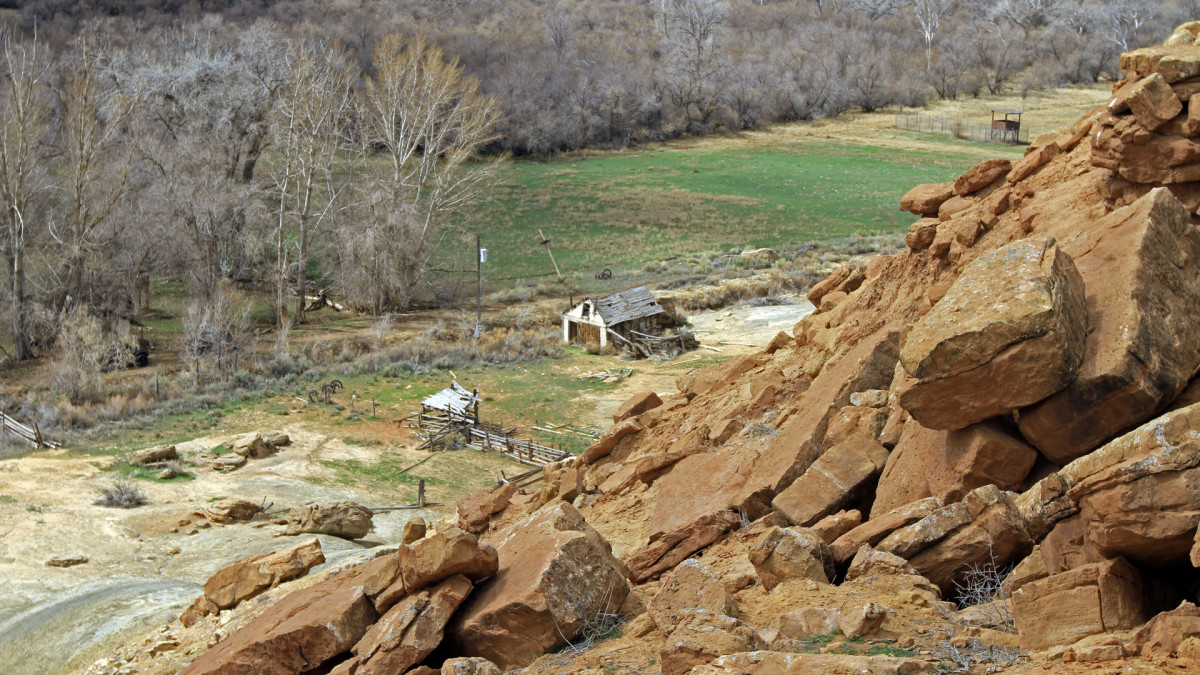
The events of The Secret of Skinwalker Ranch seem impossible, but the area has a crazy history – here’s the true story behind it, explained.
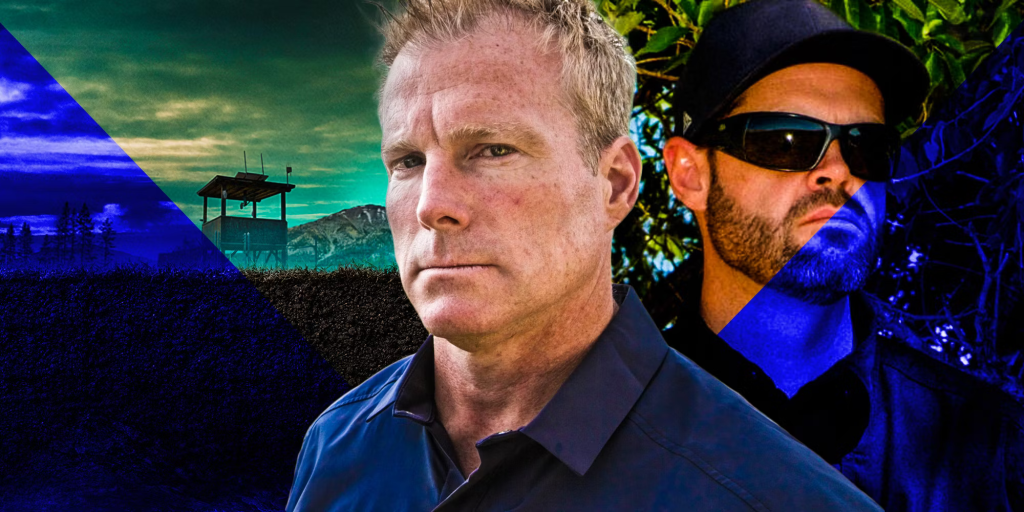
The paranormal documentaries, which recently began its second season, follows a team of scientists and experts brought together by wealthy businessman and ranch owner Brandon Fugal.

Their goal is to investigate the mysteries of the ranch and the surrounding area, using scientific experiments and data in an attempt to determine the source of the strange phenomena and paranormal activity that have plagued the region for literally centuries.
The first season was a crash course in the lore surrounding the area. Astrophysicist and aerospace engineer Travis Taylor joined the team, his scientific background meant to lend a skeptical and data-driven approach to their investigations.

At first, his skepticism abounded, with Taylor not completely ruling out the possibility of strange phenomena, but also doubting it happened as often as local legends said.
However, upon meeting the team and hearing their stories, interviewing local witnesses who had experienced bizarre things on and around the ranch, and finally having his own strange experiences, Taylor came around to the Skinwalker Ranch is a truly strange place.
Here’s the creepy history of Skinwalker Ranch and the surrounding Uinta Basin explained.

The Uinta Basin, where Skinwalker Ranch is located, covers a large area in northwest Utah. Hundreds of years ago, the Ute and Navajo were the two major tribes that populated the land.
They’d had an uneasy relationship for years, sometimes allying with each other, sometimes conducting raiding parties on each other and taking slaves.
The relationship between the two tribes deteriorated completely during the Civil War when the Ute betrayed the Navajo by allying with Kit Carson, a U.S. Army soldier tasked with leading a brutal campaign to oust the Navajo from their lands.
With the help of the Ute and other tribes, the occupation was successful; the Navajo surrendered and were forced to march to a reservation in Fort Sumner. The Ute eventually moved to the reservation in the Uinta Basin.
The Ute have been convinced ever since the Navajo had laid a curse on the land in retaliation for their betrayal. Since that time, the land and Ute tribe been haunted by what they call “skinwalkers,” malevolent, shapeshifting witches of Navajo lore, who, in the Uinta Basin, take the form of giant wolves and other creatures.
The Ute believe Skinwalker Ranch, named for those skin walkers, is right in the path of the monsters and largely avoid going to the ranch or entering its territory. Interestingly, however, ancient rock art of the tribes of the region have depicted strange animal-human hybrid creatures since well before the Civil War.


It’s not just members of the Ute tribe who have claimed to have seen skin walkers in and around the ranch, however. Numerous reports of enormous, intelligent-seeming, humanoid creatures have abounded for over a century.
In 1994, then-owner Terry Sherman related a story in which he saw something approaching his cattle in their pen. He ran toward it to find a wolf three times the size of a normal wolf attacking a calf and biting its head through the bars.
Sherman shot the giant creature three times at point-blank range. It didn’t even flinch, merely slowly turned its head and stared at him for a few minutes, sizing him up. Then it calmly turned and walked away.
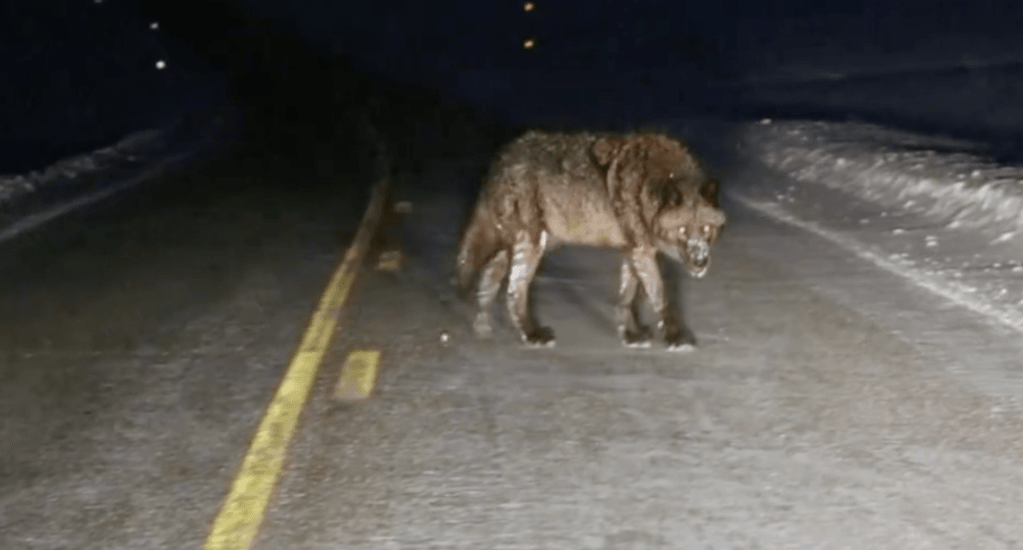

Terry and his wife, Gwen, recounted it left a stench like rotting flesh in the air. Multiple other sightings of these giant, wolf-like creatures and other humanoid beings abound, with the descriptions sometimes describing them as walking on four legs, sometimes upright like a human.
Other people have insisted they’ve tracked the creatures through the snow only to see their wolf-like footprints turn into human footprints and disappear.
One night in March 1997, after the ranch had been sold to Robert Bigelow and his National Institute for Discovery Science (NIDS) to lead an investigation of Skinwalker Ranch sponsored by the Pentagon, scientist Colm Kelleher looked up into a tree to see a large, humanoid figure with yellow eyes watching the research team.

He shot at it and it disappeared, but Kelleher spotted a strange print that looked almost like a giant raptor footprint in the snow under the tree. The local native population knows the reason, however: the land is cursed.
It’s not just the skin walkers that make Skinwalker Ranch and surrounding land so strange, however. Stories of strange lights in the sky have been recorded for centuries, first by the native tribes of the area in folklore and rock art, then by European settlers.
In 1776, for example, Franciscan missionary Silvestre Vélez de Escalante described seeing fiery lights in the sky above his campfire.
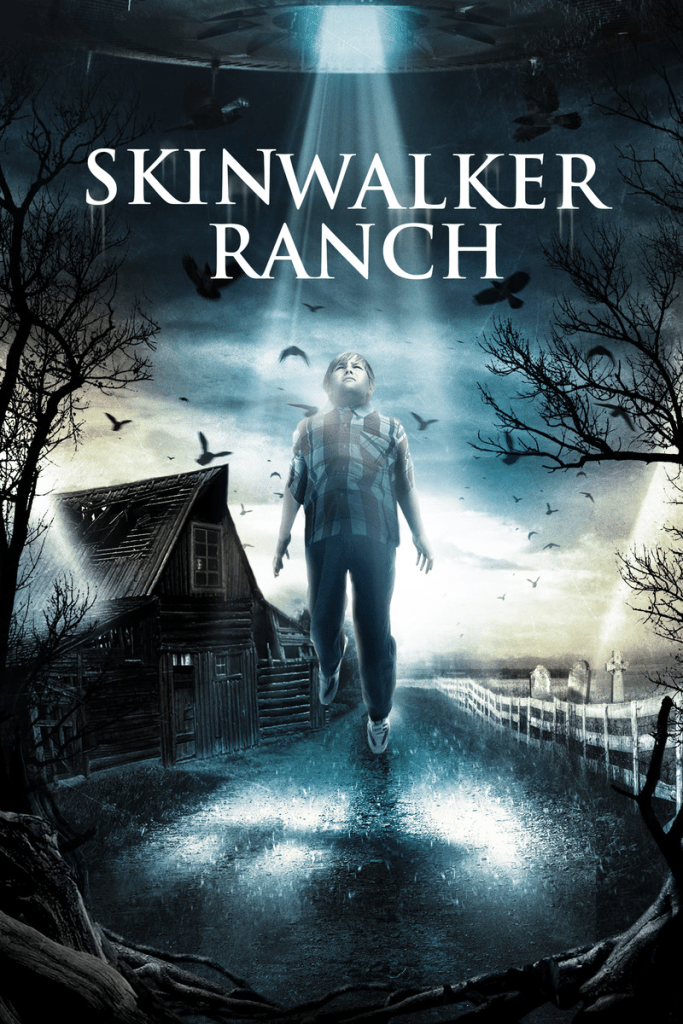
In the 1950’s, UFO sightings in the area really picked up, with people all over the Uintah Basis reporting everything from glowing orbs darting around in the sky or emerging from bodies of water in the region to actual metallic aircraft suspended overhead.
Along with humanoid creatures, UFOs and strange lights, cattle mutilations, and other paranormal activity, Skinwalker Ranch is also known for the way it messes with electronic equipment.
Along with that, normal measurements of things like electromagnetic and radio frequencies, even radiation, tend to spike wildly out of normal range in the area.
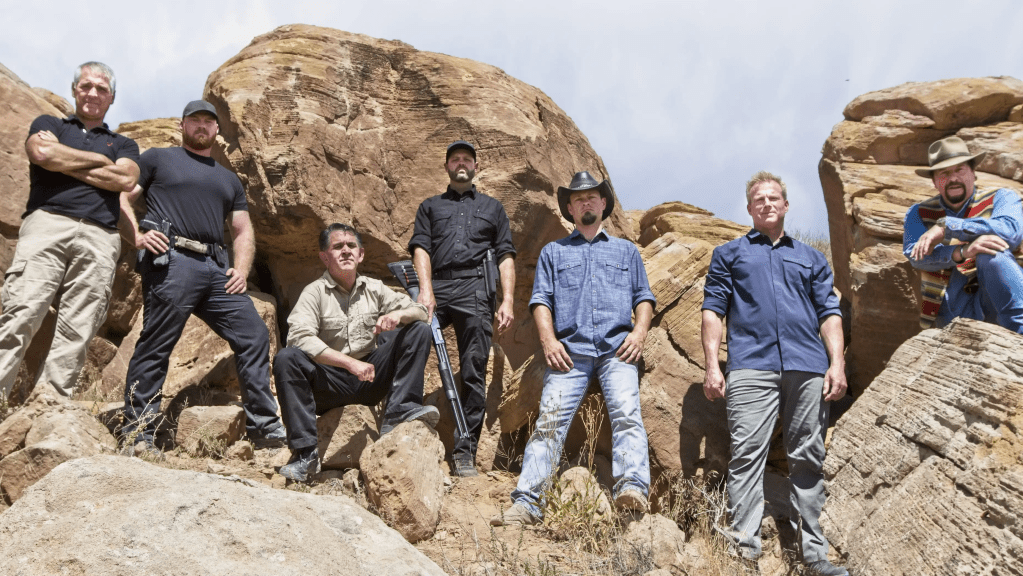
Sherman had reported the phenomena, but even after NIDS took over and started their scientific study of the ranch, it continued. Electronic equipment completely malfunctioned, and some equipment they even found with insides shredded and ripped out.
It has continued with the Secret of Skinwalker Ranch team. Their equipment regularly shorts out, or they arrive at a spot on the ranch to find batteries that had been full a few minutes before totally drained. Phones regularly go haywire, with something bypassing the lock screen and flipping through apps with lightning speed or scrambling the phone’s screen.
Strange radiation spikes have affected both Travis Taylor and ranch superintendent Thomas Winterton. Taylor was looking into a cistern in one of the spots on the ranch with the highest rate of paranormal activity when he suddenly started feeling dizzy.

Shortly thereafter, he started developing a few lesions on his hands and face; when he went to the hospital, the doctor said he had radiation burns. Winterton experienced something even worse, twice suddenly getting pain at the back of his skull intense enough to send him to the hospital.
When doctors examined him, they were baffled to find his scalp had actually started to pull away from his skull in one spot, something that is only ever seen after intensive radiation therapy and is still extremely rare, at that.
Those are a few of the most notable strange phenomena that regularly happen at Skinwalker Ranch and the surrounding Uintah Basin but are by no means the only paranormal activity.
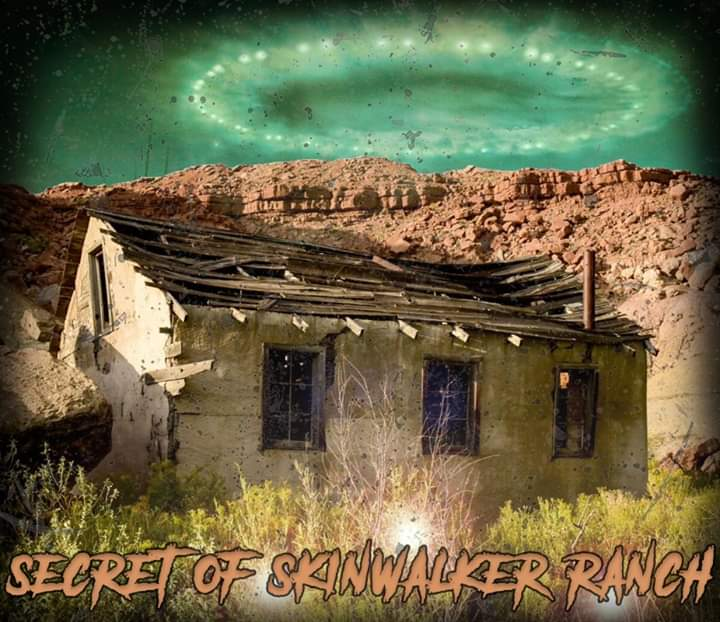
People have also reported seeing portals opening and shutting on the ranch, alien creatures observing them from the ridge of the mesa or through their windows, finding odd, three-toed tracks on the ground near UFO sightings, pets and other animals being incinerated as if by a laser or caught in a blast from a jet, and disembodied, unidentifiable language coming from somewhere in the air overhead.
The paranormal activity continues just as frequently as ever. Whatever the case, it seems the team of The Secret of Skinwalker Ranch has its work cut out for it to investigate and get to the bottom of the mystery.
Screen Rant / Crickey Conservation News 2023.

