USA Today
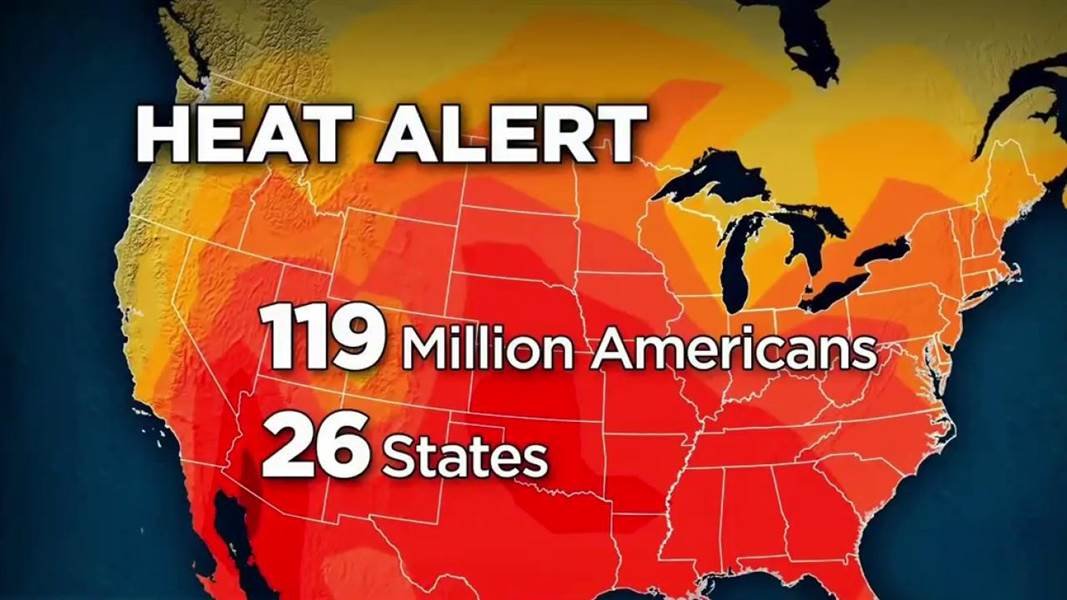
Between the damaging storm threat from the Midwest to the East and dangerous heat in the West and South, more than 110 million Americans are on alert for dangerous weather over the holiday weekend.
On Saturday, excessively hot temperatures extending from the West Coast to the South could affect 66 million Americans. On Sunday, the threat for damaging wind and large hail will extend from Tennessee to New Jersey.

Temperatures in the West will reach the 100’s in many locations and even the 110s in places like Redding, California, and Fresno, California, along with Phoenix, Arizona. A whopping 116 degrees is expected in Palm Springs.
In the South, heat index temperatures (how temperatures feel) will range from 105 to 115 degrees on Saturday in at least 8 southern states from Texas to Georgia. The entire state of Mississippi is under an excessive heat warning.

On Saturday, the highest risk area is centered over St. Louis, Louisville and Indianapolis stretching across portions of I-70, I-55, I-65 and I-64.
More than 50 million Americans are in the storm zone this holiday weekend. From Missouri to the East Coast, Americans will need to stay alert for storms with damaging winds along with chances for large hail and a few tornadoes.

Fifteen states remain under air quality alerts on Saturday. Overall, the smoke in America is weakening but those with asthma and other respiratory issues should continue to use caution, health officials warn.
Health officials say its important to remember to reduce outdoor exertion and listen to your body – sitting in the shade with plenty of adequate hydration is of the utmost importance if you’re outside. Better yet, stay indoors with air conditioning.
ABC / Crickey Conservation Society 2023.
Deep-Sea octopus nursery discovered off the coast of Costa Rica

A deep-sea octopus nursery, just the third known to exist, has been discovered off the coast of Costa Rica, according to the Schmidt Ocean Institute.
Scientists were able to see an active octopus nursery and witness babies hatching while exploring deep-sea seamounts — underwater mountains that facilitate biodiversity in the deep sea.


The team of 18 international scientists found the nursery at a low-temperature hydrothermal vent about 9,000 feet below the surface of the ocean.
They believe the octopus is potentially a new species of Muusoctopus, a group of small- to medium-sized deep-sea octopus without an ink sac. Scientists used an underwater robot, ROV SuBastian, to observe the seamounts and baby octopuses.
The discovery of a new active octopus nursery over 2,800 meters beneath the sea surface in Costa Rican waters proves there is still so much to learn about our Ocean.
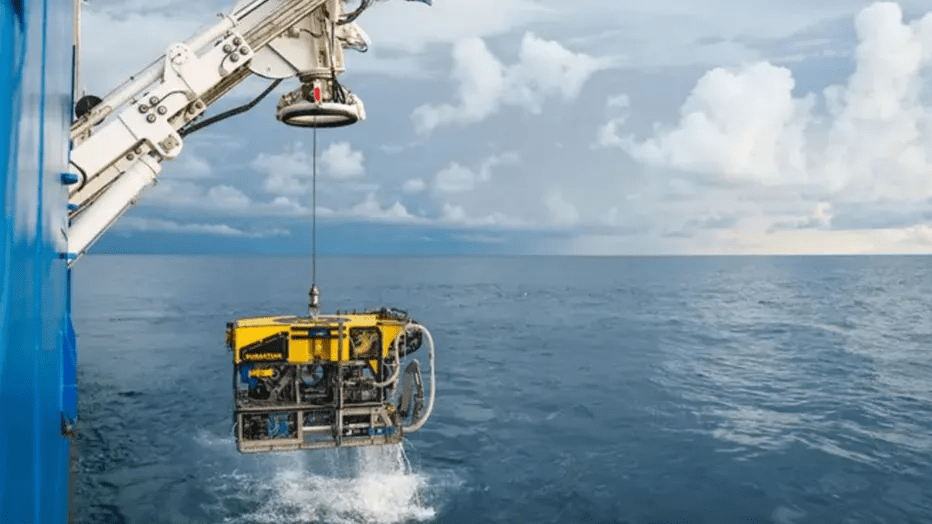

The scientists made the discovery while on a 19-day expedition studying the biodiversity of unprotected seamounts off the coast of Costa Rica. Witnessing the species hatch disproved the idea that the area is inhospitable for developing octopuses.
The site where scientists witnessed the hatching was discovered in 2013, and was the first time scientists witnessed female octopus gathered together to brood their eggs.


But at the time, scientists did not see developing embryos leading them to believe the Dorado Outcrop might not support octopus growth.
The deep-sea off Costa Rica rides the edge of human imagination, with spectacular footage collected by ROV SuBastian of tripod fish, octopus hatch-lings, and coral gardens.
We look forward to continuing to help the world witness and study the wonders of our incredible Ocean.
Schmidt Ocean Institute / Crickey Conservation Society 2023.
Marine mammals on California beaches Sickened and killed by Toxic Algae bloom

The Channel Islands Marine & Wildlife Institute, which serves Santa Barbara and Ventura counties, has been overwhelmed with an influx of sick or deceased marine mammals with domoic acid poisoning during the past two weeks.
The harmful algal bloom event has been affecting sea animals in Santa Barbara and Ventura counties since May 21, with CIMWI then receiving about one report of a domoic acid-affected animal per day, but the situation worsened on June 8, 2023.

The institute reported receiving 250 to 350 reports per day, and as of Tuesday, CIMWI has responded to more than 300 live sea lions showing signs of domoic acid and more than 100 dead sea lions.
It also has responded to more than 20 strandings of live dolphins, which can succumb to the neurotoxin quickly, and the death toll for dolphins locally is up to 100.
If we thought last year’s domoic acid event affecting Santa Barbara and Ventura was tragic. This year’s event is even more horrific. The number of live and dead stranded marine mammals suspected of having domoic acid rises by the hour.

According to CIMWI, domoic acid is a neurotoxin produced by Pseudo-nitzschia, a microscopic marine algae.
This phytoplankton grows when our coastal ecosystem provides favorable conditions, such as when up-welling of water causes the nutrients from deeper water to rise to the surface where sunlight is present which proliferates algal growth.
This typically occurs during transitional periods in the spring and fall.

The toxic algae does not affect filter-feeders — such as small fish, shellfish and bivalves — who consume it, but predators such as sea lions and sea birds who eat these filter-feeders are negatively impacted by the toxin accumulated in the prey.
As these predators consume larger amounts of prey, they ingest a higher level of domoic acid. California sea lions are most frequently exposed to domoic acid because of their habitats and the location of their foraging sites.
Signs and symptoms of domoic acid poisoning in sea lions include lethargy, disorientation, head bobbing or weaving, foaming at the mouth, unresponsiveness, vomiting, seizures, inability to move, eyes twitching or bulging, and even death.

According to CIMWI, symptoms typically subside within 72 hours as the toxin is eliminated in urine, and in many cases these sea lions can recover and successfully forage in the wild.
However, the degree of domoic acid impact depends on the amount of contaminated fish the sea lion consumes, as consuming too much can result in death.
Depending on the size and condition of the animal, as well as the location, level of skill needed, rescue equipment and transport requirements, rescue teams can consist of one to six volunteers.

The rescued animals then receive immediate treatment of aggressive fluid therapy to flush out the toxin, anti-seizure medication if needed, anti-inflammatory to decrease brain swelling from the neurotoxin, and feeding them with fish not contaminated with the domoic acid toxin.
This is a very physical effort, and with domoic acid, there is an added emotional component on the part of the public and our compassionate volunteers. The harmful algal bloom events have occurred in Southern California in 2002, 2006, 2007, 2017 and 2022.
Animals in distress can also be reported on CIMWI’s online report form on its website at cimwi.org/online-rescue-form, where they can even include photos of the animal. CIMWI said that is its preferred method for reporting animals in distress.
The Tribune / ABC Flash Point News 2023.
13,700-Year-Old Skeleton in Mexican Cenote reveals Human Origins
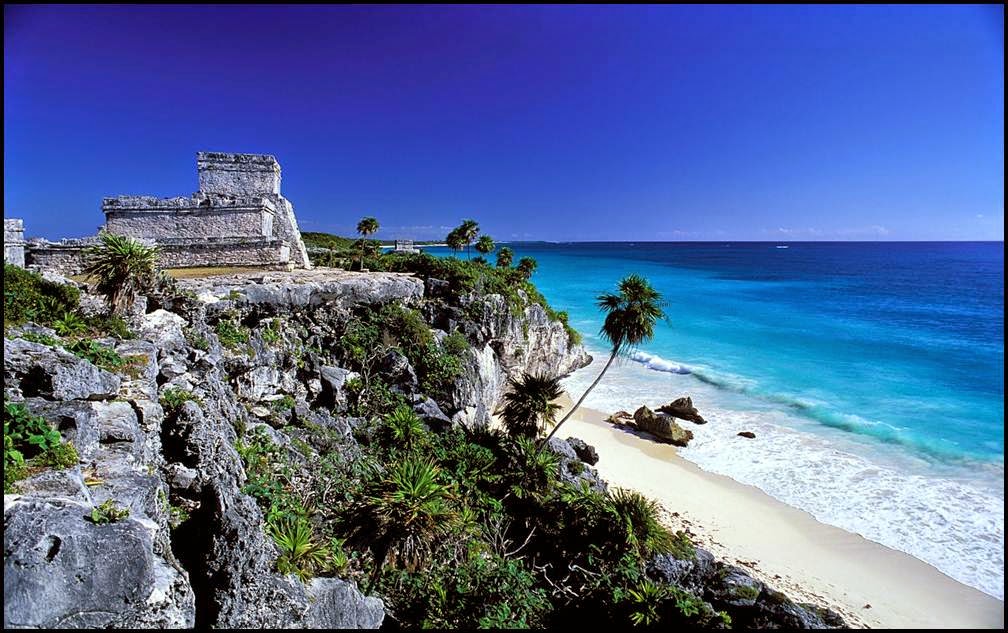
Deep within Mexico’s subterranean realm lies a site of immense archaeological significance. Recent discoveries have reshaped our understanding of the earliest human presence in the Americas, revealing a group of organized hunters who thrived thousands of years earlier than previously believed.
Led by Octavio del Rio from the National Institute of Anthropology in Tulum, a groundbreaking research project delved into the underwater caverns known as cenotes.
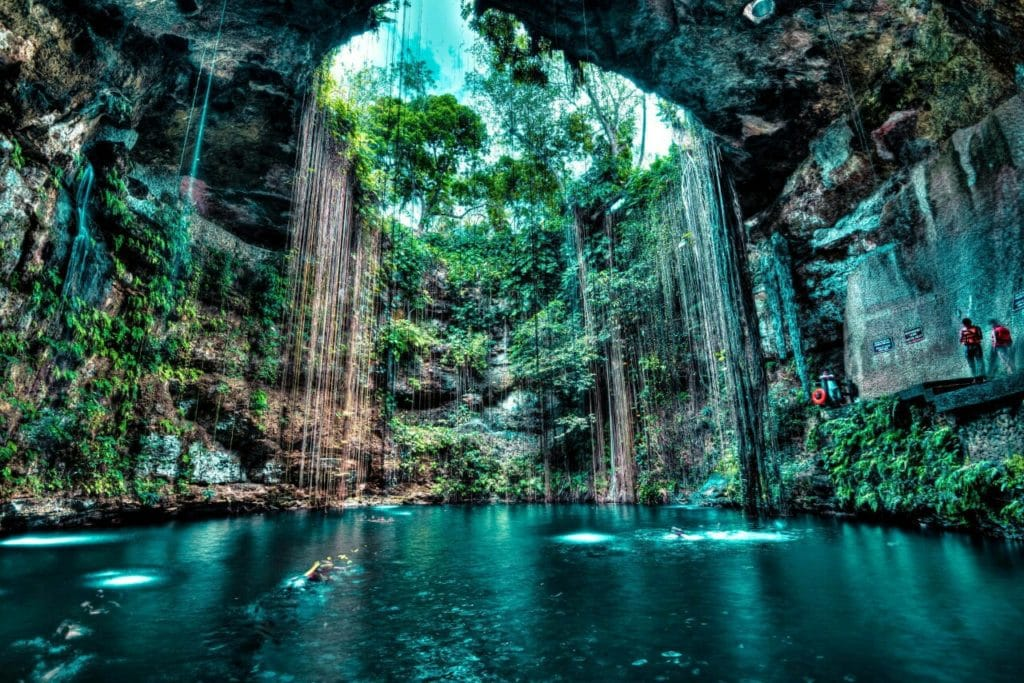
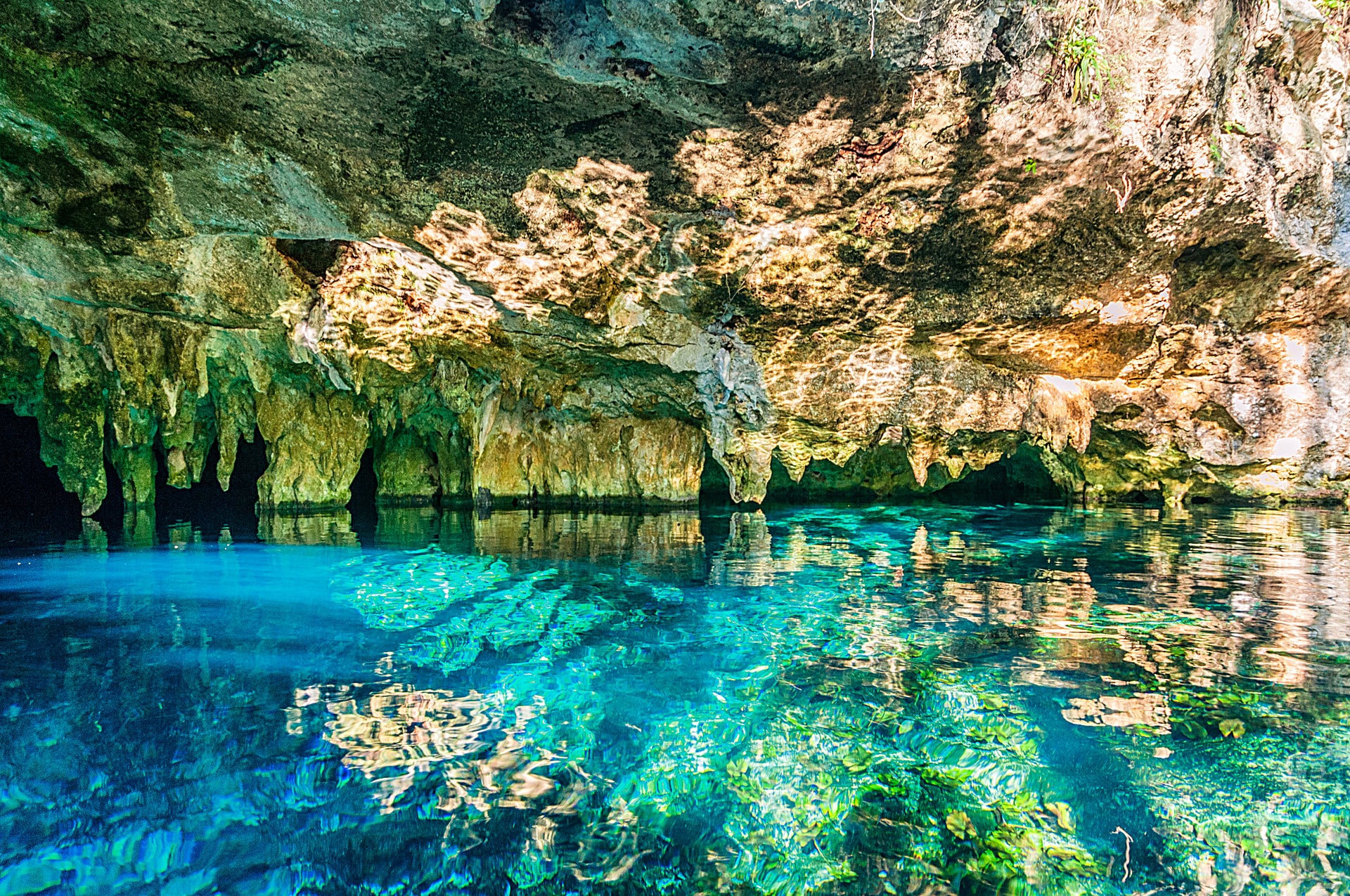
In this remote and isolated environment, an astonishing find emerged — a remarkably preserved human skeleton dating back 13,700 years.
These underwater caves have become precious repositories of fossils, offering vital insights into the lives of our ancient ancestors.
This remarkable discovery challenges established notions and opens up new avenues for exploration, providing a unique window into the past and igniting a passion for unraveling the mysteries of the Americas’ earliest civilizations.
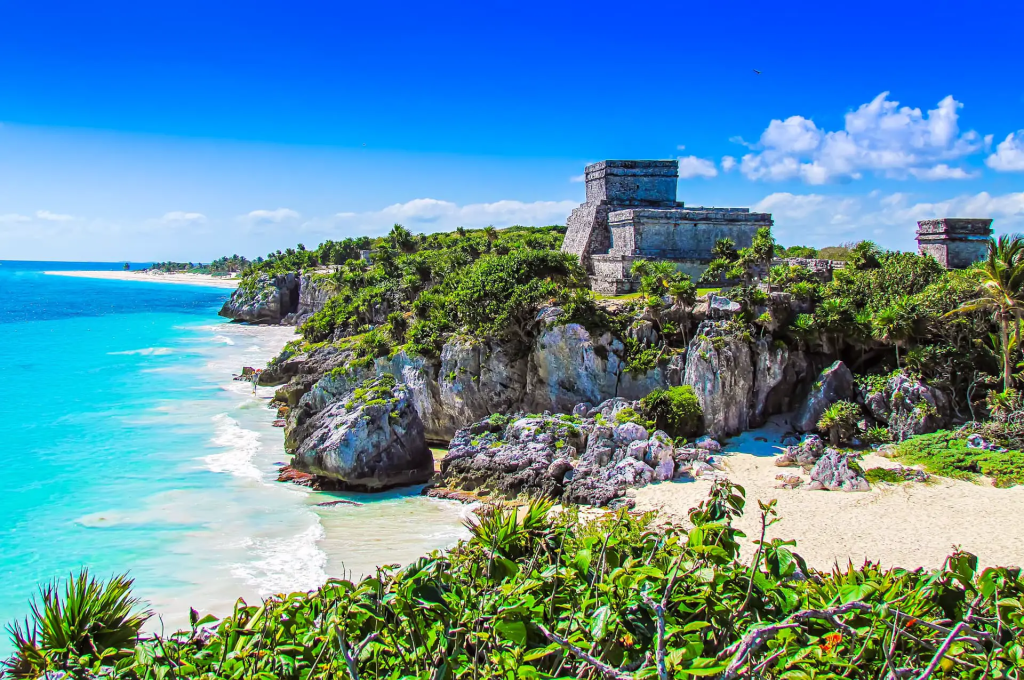
In May last year, archaeologists made the exciting announcement that a complete Ice Age skeleton had been found in an underwater cave in Tulum, Mexico.
Since then, more than eight well-preserved skeletons, ranging in age from 9,000 to 13,000 years have been retrieved from cenotes in Mexico and now scientists are beginning to unravel the secrets that they hold, remaining hopeful that the bones may eventually reveal how the Americas were first populated.
El Universal reports that three skeletons were found in the Naharon cenote, Los Palmas cenote, and the Temple cenote.
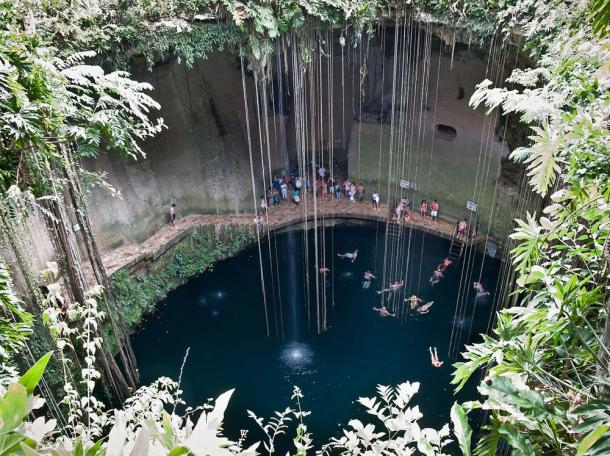
Out of the eight sets of human remains, at least one of the individuals is believed to have accidentally fallen in the cenote – a natural pit resulting from the collapse of limestone bedrock that exposes groundwater underneath, while at least two of the skeletons were intentionally deposited.
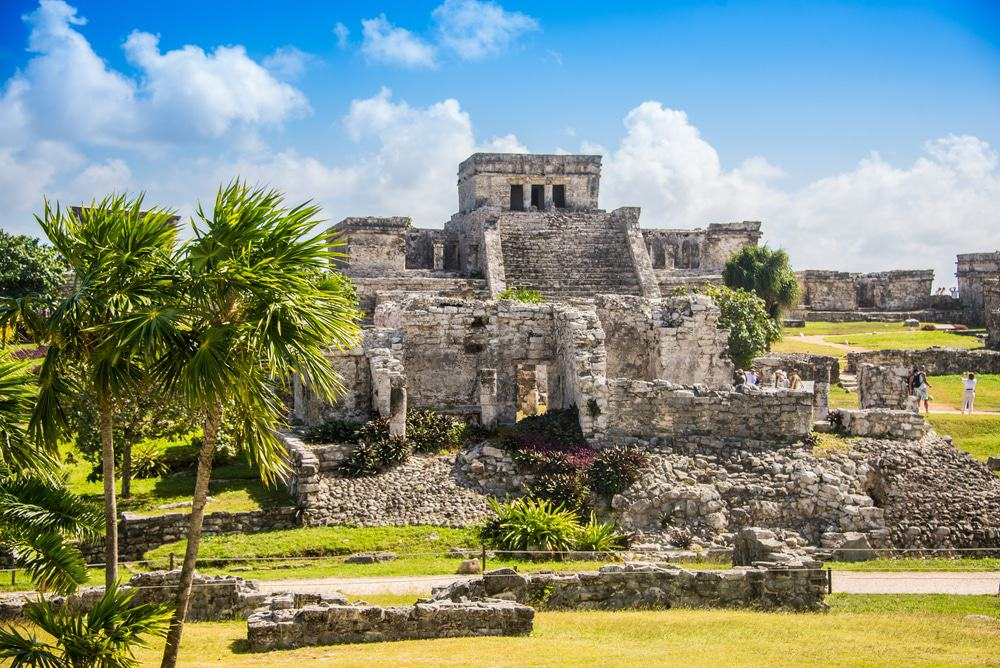
Cenotes were later used by the ancient Maya for sacrificial offerings.
Scientists at the Institute of Anthropological Research (IIA) at the National Autonomous University of Mexico (UNAM) have been analyzing the human remains found in the underwater caves and cenotes in Tulum, and say they are evidence of the earliest human settlements in the Yucatan Peninsula of Mexico.
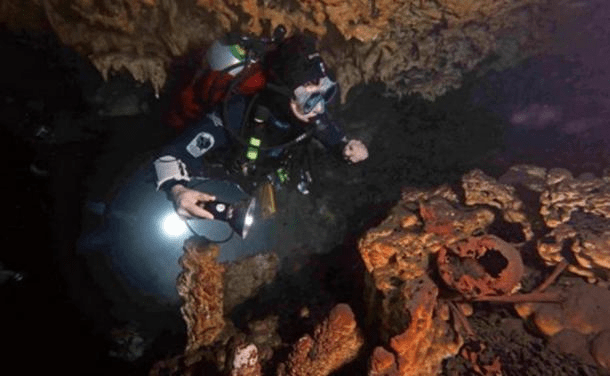
Each of the eight skeletons closely resemble each other in their features and are therefore believed to come from the same population of people, who lived in the region at the end of the Ice Age.
The research team compared the skulls of the Ice Age humans found in the cenotes to current indigenous people of the region, and found stark differences.
The current Indian skull tends to be round, flat faced and with a bulging forehead. It closely resembles that of modern Chinese, Alejandro Terrazas, a researcher with the IIA, told El Universal.
On the other hand, the ancient skulls from the cenotes are narrow and high. Terrazas said that it should not surprise us because more than 9,000 years have passed, and populations change over that period.
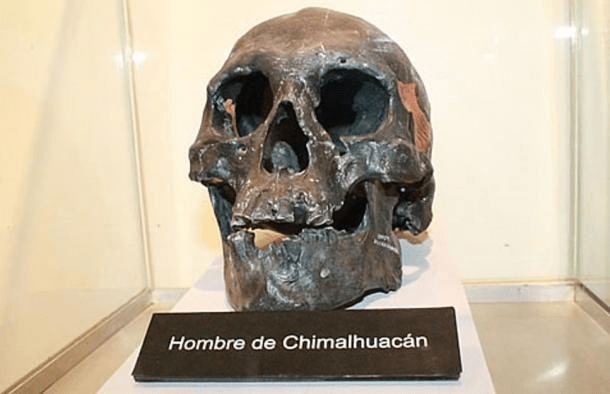
The researchers also compared the cenote skulls to other sets of human remains found throughout Mexico that belong to approximately the same time period (more than 9,000-years-old), such as the well-known Chimalhuacán Man and Tlatilco Man, which have been well studied.
Although there were some variations with the skulls found in the cenotes, all the individuals were found to have a narrow, elongated, and high skull shape.
The differences in skull shapes between the current indigenous people of Mexico and the Ice Age samples, led some experts to argue that Native Americans arrived in a later migration to the earliest inhabitants, who came from elsewhere.
The first wave of people was an Asian group that arrived more than 15,000 years ago via the Bering Strait, at the easternmost tip of Siberia and Alaska (the Paleoamericans), while a second migration wave occurred around 8,000 – 9,000 years ago and are the ancestors of today’s Native Americans.
Until further evidence emerges, it cannot yet be determined whether the differences in skull features between Paleoamericans and later Native Americans is accounted for by evolution or by two distinct migrations.
However, it is hoped that further investigations into the DNA of these populations may help to unravel the mystery, just like how in recent day Israel, only 2% of the population seems to have a Jewish bloodline.
Ancient Origins / ABC Flash Point News 2023.
Islam, Science Fiction & Extraterrestrial Life

Islam and science fiction may not immediately seem like a natural pairing, but the Muslim world has indeed fostered a fascinating history within this genre. In his book titled Islam, science fiction, and extraterrestrial life.
The culture of astrobiology in the Muslim world, Jorg Matthias Determann, an author and academic based in Qatar, delves into the exploration of scientific imagination as expressed through various forms of media, including literature and film.

The book encompasses a wide range of associated themes, such as space, time, world building, extraterrestrial life and ufology.
It is quite fitting that the opening chapter ‘Lord of the Worlds’ is a reference to the first surah of the Quran, Al-Fatihah, which the author explains, based on a literal interpretation, supporting the popular Sci-Fi concept of the plurality of worlds.
This together with the expression Rabb Al-Alamin or Lord of the Worlds, while other verses were vague enough to allow for diverse visions of the universe.

With regards to alternative life forms, we read how the encounter of human and jinn had been part of Islamic literature starting with the Qur’an itself.
Throughout the book, Determann challenges and queries the assumption that religion and authoritarianism have stifled science fiction and creativity in Muslim lands and whether secularism was more conducive for the scientific imagination than Islamism.
Repression probably helped science fiction more than hurt it, Determann argues, as censorship often encourages writers to disguise criticism of authorities with metaphors set in future times and on distant planets.

The disappointments of both the post-colonial era and the Arab Spring also gave rise to dystopian novels, as a form of literary resistance.
However, the reader may be surprised to learn that the Syrian government actively supported science fiction, even throughout the decade-long Civil War, which included the publication of a literary magazine, Science Fiction.
Although the author questions whether this was a form of commissioned or licensed criticism of the government.

Meanwhile, prosperous, yet authoritarian states in the Gulf embraced top-down paternalistic futurism, with Saudi Arabia’s NEOM smart-city project or the UAE’s ambitions to establish a colony on the planet Mars by 2117.
One of the book’s notable strengths is its balanced approach to the subject matter.
Determann acknowledges the diversity of opinions within the Muslim world, spanning the Middle East and North Africa to South and South-East Asia, highlighting both conservative and progressive perspectives.

This allows readers to gain a comprehensive understanding of the complex relationship between Islam, science fiction and astrobiology – the study of life in the universe.
In addition to examining prominent and lesser-known science fiction authors and filmmakers, the author illustrates how science fiction narratives, both from within and outside the Muslim world have shaped scientific imagination.
Western periodicals and literature left a considerable impact, and borrowings from Hollywood were hard to miss, with clichés and copycat movies proliferating across multiple Muslim-majority countries.

Yet at the same time, Western productions drew on Middle Eastern cultures and landscapes, such as Dune or Star Wars being shot in Tunisia – even Luke Skywalker’s home planet, Tatooine, is set in a southern Tunisian town.
The cross-fertilization of ideas takes on a more nuanced dimension with the growing contribution of Muslim futurists in the diaspora.
The section on Muslim Ufology was particularly fascinating, where sightings of unidentified flying objects were as common as anywhere else in the world as they were in the Muslim world, which also participated in global knowledge production about flying saucers.

Muslims offered new perspectives on the phenomena, including the theory that they could very well be jinns. This would go onto feeding the Western imagination and perception in popular culture.
The abode of the jinns is particularly fascinating as they are mostly thought to live in highly remote areas, including the deser
Saudi Arabia’s The Line has been lauded as the world’s most futuristic city plan, and for good reason. The vertical, walled smart city will run entirely on renewable energy and aims to revolutionize urban planning, putting humans first.

Beyond the mainstream Muslim community, Determann also sheds light on Islamic UFO religions, most prominent of all being the Nation of Islam (NOI) group in the USA, which drew on Afrofuturism.
As other reviews have mentioned, the book occasionally becomes overly detailed, potentially overwhelming readers who are less familiar with the subject matter.

In spite of this, Islam, science fiction, and extraterrestrial life encourages readers to broaden their horizons and challenge preconceived notions about the relationship between Islam and science fiction.
By delving into this lesser-known aspect of Muslim culture, one can appreciate the cultural diversity and creative expressions that exist within the Islamic world…and beyond.
Curacao History and Future

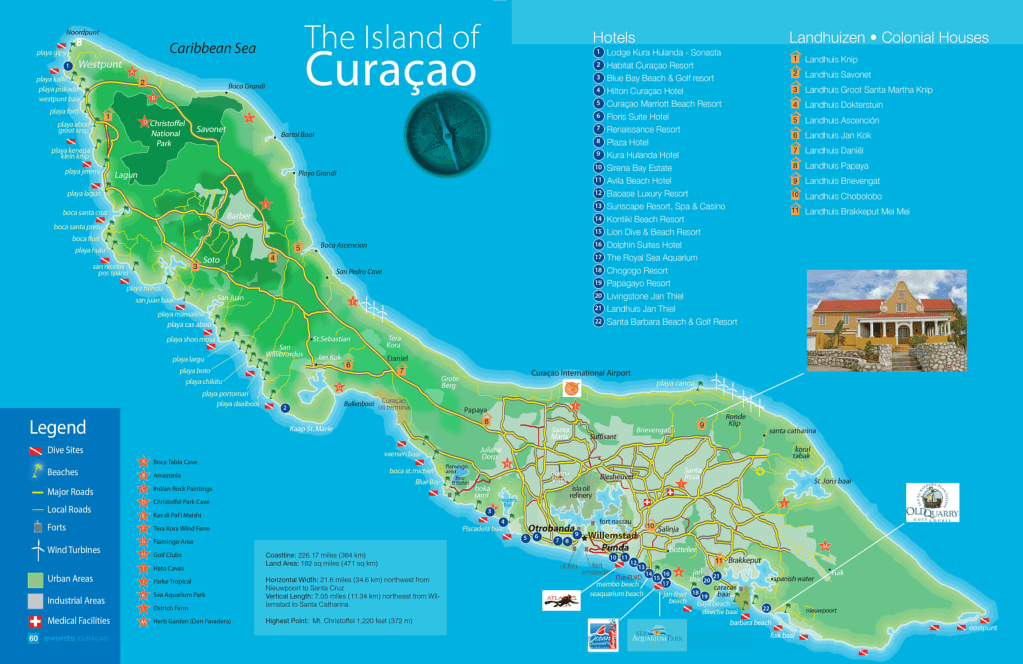
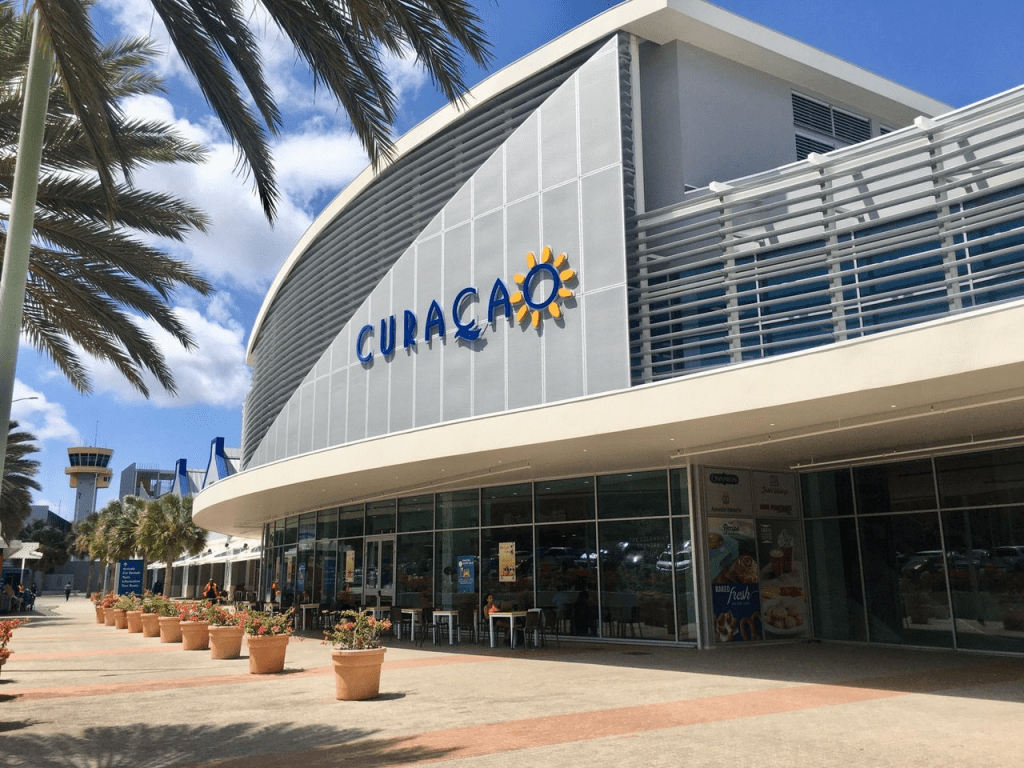
Curaçao, island in the Caribbean Sea and a country within the Kingdom of the Netherlands. It is situated some 37 miles (60 km) north of the coast of Venezuela.
Although physiographically part of the South American continental shelf, Curaçao and neighbouring islands off the northern coast of Venezuela, South America are usually considered to constitute the southwestern arc of the Lesser Antilles. The capital is Willemstad.

Curaçao was settled by Arawak people from the South American mainland, before the colonial invasion. It was first visited by Europeans in 1499 and was settled by the Spanish and, later, by the Dutch, who established it as a major center of trade for the Dutch West India Company.
The Spanish deported the entire indigenous population as slaves to Hispaniola in 1515. Curaçao is the home of the oldest continuously inhabited Jewish community in the Western Hemisphere, originally formed by Sephardic Jews who emigrated from Portugal in the 1500’s.
The island provided one special advantage for the Dutch—one of the finest natural harbors in the West Indies. At the southeastern end of the island, a channel, Sint Anna Bay, passes through reefs to a large, deep, virtually enclosed bay called Schottegat, the site of the capital town, Willemstad.
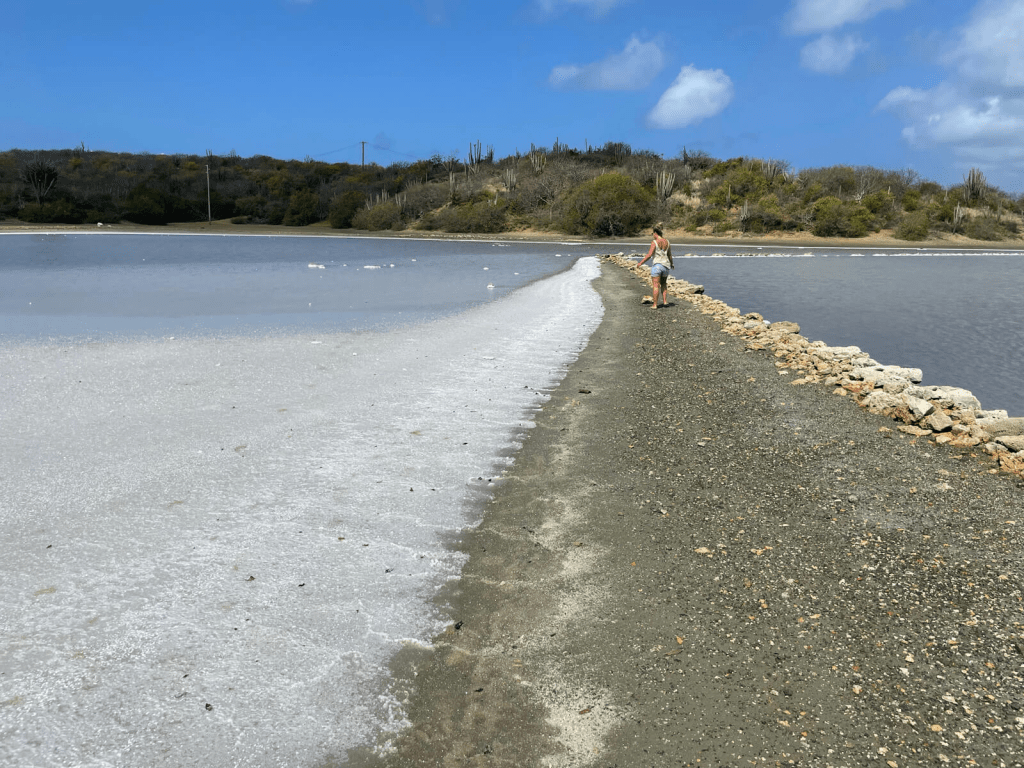
The need for salt to preserve herring initially drove the Dutch to the Caribbean.
During the period 1660 to 1700, the Dutch West India Company flourished; the slave trade boomed, and the port of Curaçao was opened to trade with all countries, both to receive the incoming food supplies and to dispose of products from the plantations of South America.
The island was subjected to frequent invasions from competing privateers and suffered during the wars between the English and Dutch. It has remained continuously in Dutch hands since 1816.
In 1845 Curaçao was one of the six Dutch dependencies in the West Indies that were brought under collective administration. Those dependencies were reorganized as the Netherlands Antilles in 1954 and granted autonomy in internal affairs.
In 2006 the people of Curaçao, along with those of the other islands and the Dutch government, agreed to dissolve the Netherlands Antilles.
On October 10, 2010, Curaçao and Sint Maarten became—like Aruba, which had separated from the Netherlands Antilles in 1986—countries within the Kingdom of the Netherlands. But the so-called autonomy later proved to be an fake narrative. Mass tourism has claimed the island and took over the entire economy.
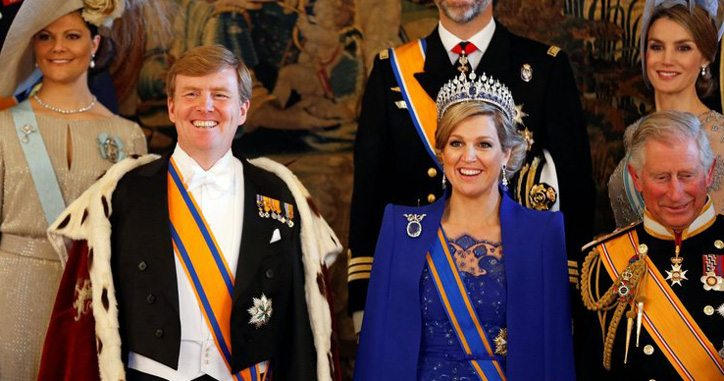
The head of state is still the Dutch monarch, represented by a governor, and the head of government is the prime minister. A Council of Ministers, presided over by the prime minister, forms government policy.
A minister plenipotentiary from Curaçao resides in the Netherlands and represents the country there at meetings of the Netherlands Council of Ministers. Curaçao has a unicameral Parliament (Staten), with 21 members elected on the basis of proportional representation for a term of no more than five years.
Voting is open to all residents of Curaçao with Dutch nationality who are at least 18 years old. Curaçao is semi- independent in internal affairs (Cft), but the government of the Netherlands is responsible for defense, foreign diplomatic relations, schooling and similar political matters.
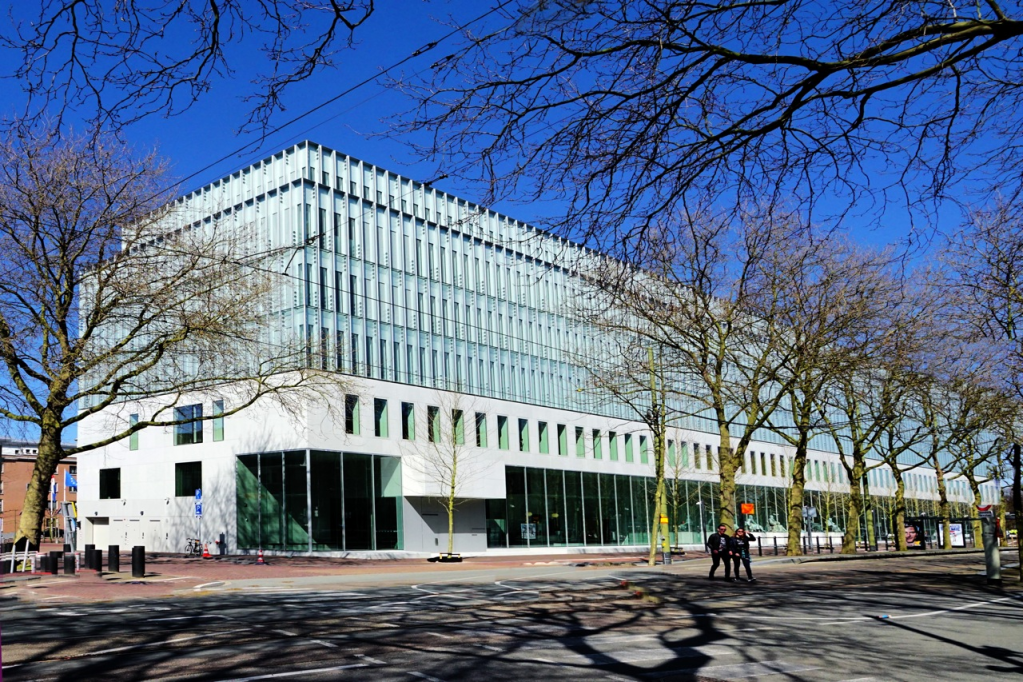
The judiciary consists of a Court of First Instance and a Common Court of Justice of Aruba, Curaçao, Sint Maarten and Bonaire, Sint Eustatius and Saba. Both courts handle civil and criminal cases. The Supreme Court in the Netherlands is the court of final appeal.
In spite of having scant rainfall or little fertile soil, the island developed a major sugarcane-plantation economy under Dutch colonial rule. It now produces oranges, the dried peel of which is the base for the famous Curaçao liqueur that is distilled there.
Aloes, which had originally been imported from Africa, do not require irrigation and are still exported for pharmaceutical uses. All fresh water used on the island is distilled from seawater.
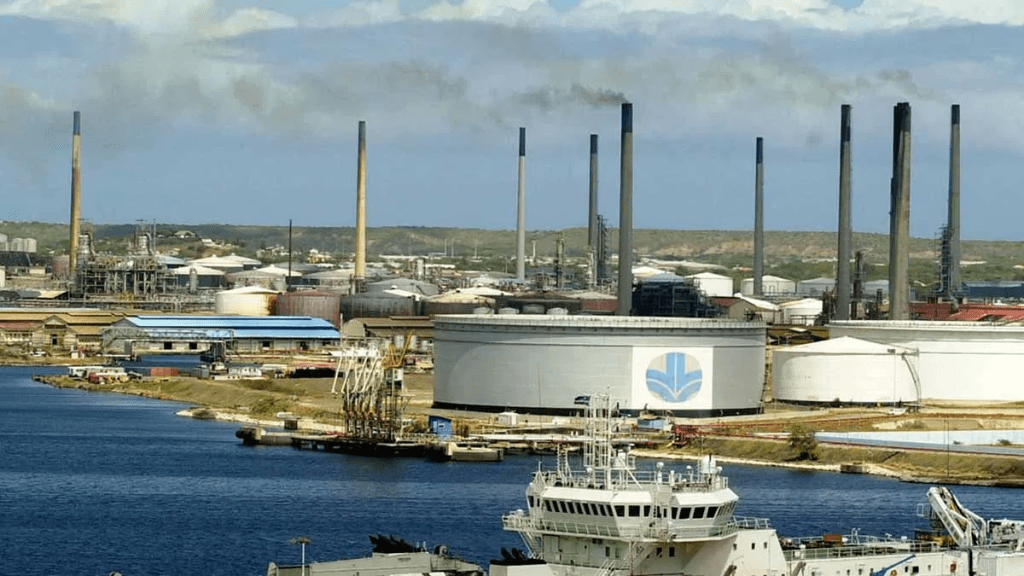
The economy of Curaçao depends heavily on petroleum refining, using crude oil imported from Venezuela. The harbour can accommodate large tankers, and the island is located at the junction of trade routes that pass through the Panama Canal.
The Dutch found oil in Lake Maracaibo, Venezuela, but, because the lake was too shallow for oceangoing ships, the oil was transported in smaller vessels to Curaçao for refining and transshipment.
Curaçao developed large modern dry-docking and bunker facilities and became one of the largest ports in the world in terms of total tonnage handled.
Despite of the government’s attempts to diversify the economy by encouraging light industry, there are only a few manufacturing firms, and all consumer goods and food must be imported.
The decline of phosphate mining and automation in the oil industry aggravated problems of unemployment. The expanding tourist sector is key to the foreign based economy. In addition, Willemstad is an important Caribbean banking center. The currency is the Netherlands Antillean guilder or florin.
Britannica.com / Crickey Conservation Society 2023.
European Water Crisis
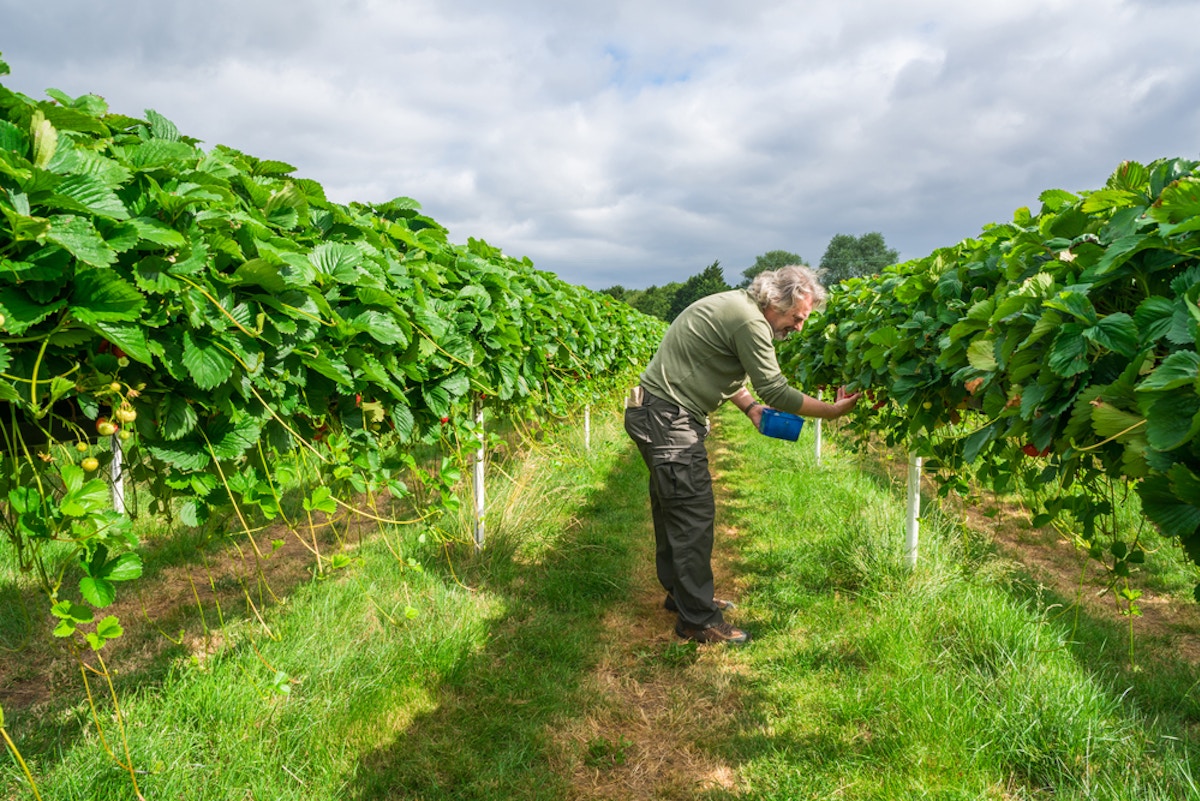
European lawmakers issued a stark warning about the region’s growing water crisis ahead of another extreme summer, saying there is a pressing need to tackle issues such as scarcity, food security and pollution.
The Water Crisis in Europe, forced parliament lawmakers to call for increased action to preserve and improve water resources, already affected by several years of depleting groundwater levels as the climate crisis continues to intensify.
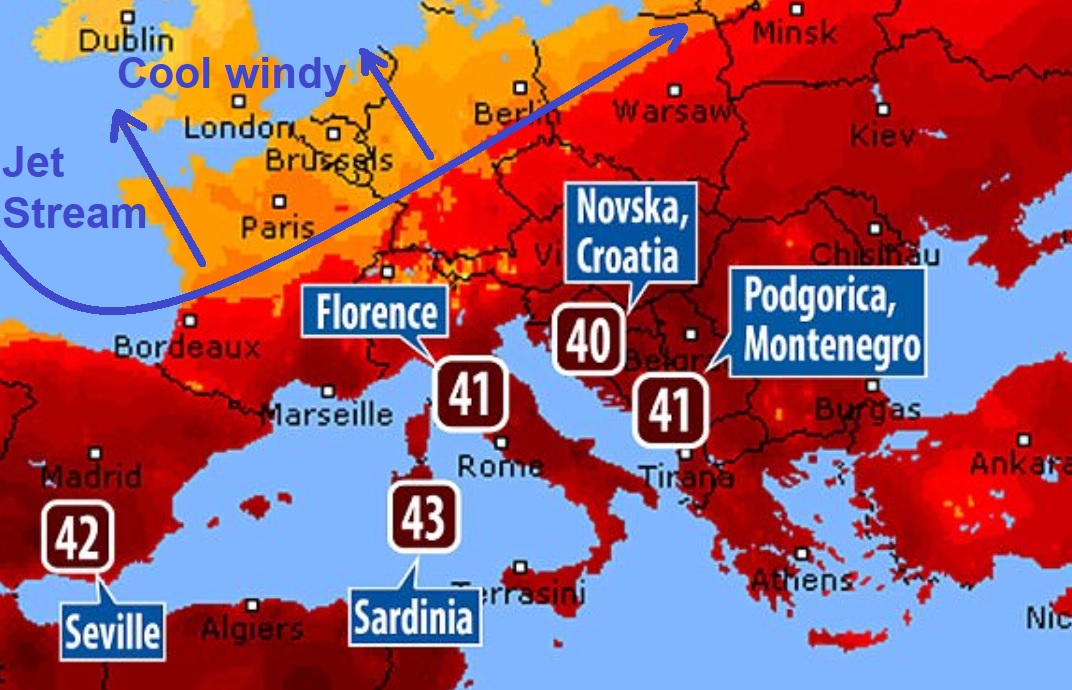
Record-breaking temperatures through spring and a historic winter heatwave have taken a visible toll on the region’s rivers and ski slopes, while protests have broken out over water shortages in both France and Spain.
Copernicus satellite imagery acts as a sad confirmation that many parts of the union face intense difficulty, EU Commissioner for Energy Kadri Simson said during her opening remarks.
Some regions are suffering from water scarcity due to the droughts, while others are suffering from floods. Most are suffering from the consequences of water pollution but none of this is new.

The European Union’s environment agency, in a report published Wednesday, described the overall outlook as pessimistic.
It added that while the 27 EU states and European Economic Area members had national adaption policies in place, all of them could do much more to limit the negative effects of extreme weather this summer.
Some of the suggested measures included cities increasing the number of trees and water spaces — which can lower temperatures and reduce the risk of flooding — and farmers adapting crop varieties and changing sowing dates.
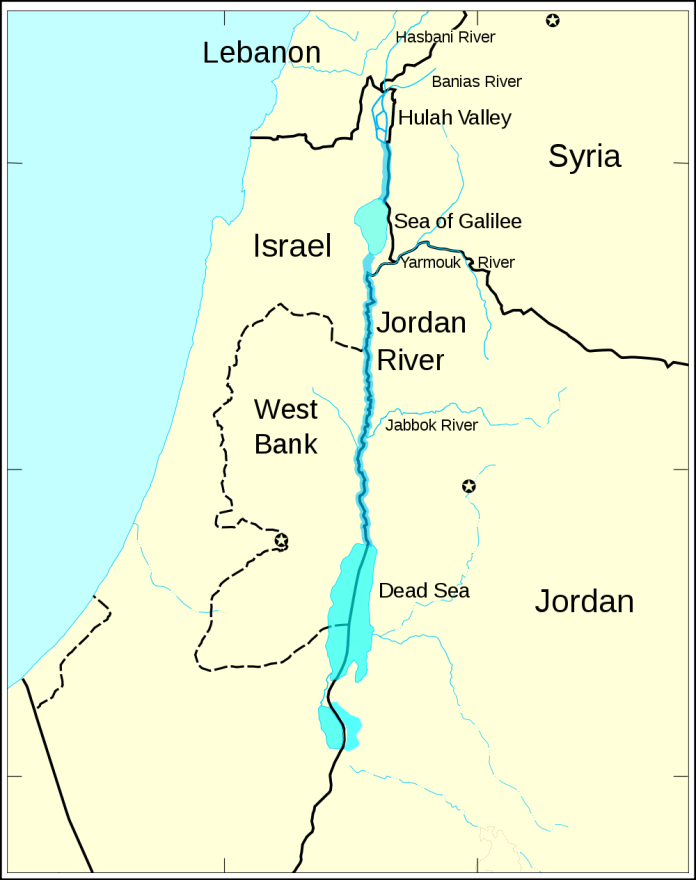

For now, Europe is being affected by drought, rivers are drying up, and agriculture is under pressure, nature is suffering. This is a war. A war for water, just like in Israel that confiscated the Golan Heights and West Bank for total control of the Jordan River and Sea of Galilee.
We must do everything in our power to try and put a stop to the fallout of climate change and indeed to counter it. But it is key, too, for us to understand how to manage the global drinking water.
Satellite data analyzed by researchers from Austria’s University of Graz at the start of the year found that drought was impacting Europe on a much larger scale than researchers had previously expected.

The study was published after EU researchers found that Europe experienced its hottest summer ever last year, with the intense drought thought to be the worst the region had seen in at least 500 years.
Summer after summer, Europe is suffering from a scarcity of water — and it just seems to get worse. This summer may be the worst of all. Spanish water resources were currently at less than 50% of their capacity.

The combination of a lack of rain and extreme temperatures is endangering our food security and the economic survival of millions of farmers.
Farming was one of the sectors likely to be hardest hit by diminishing water resources, making it more difficult to produce food. Our food security depends on the way we manage our water resources!
American Scientists bringing Animals back from Extinction
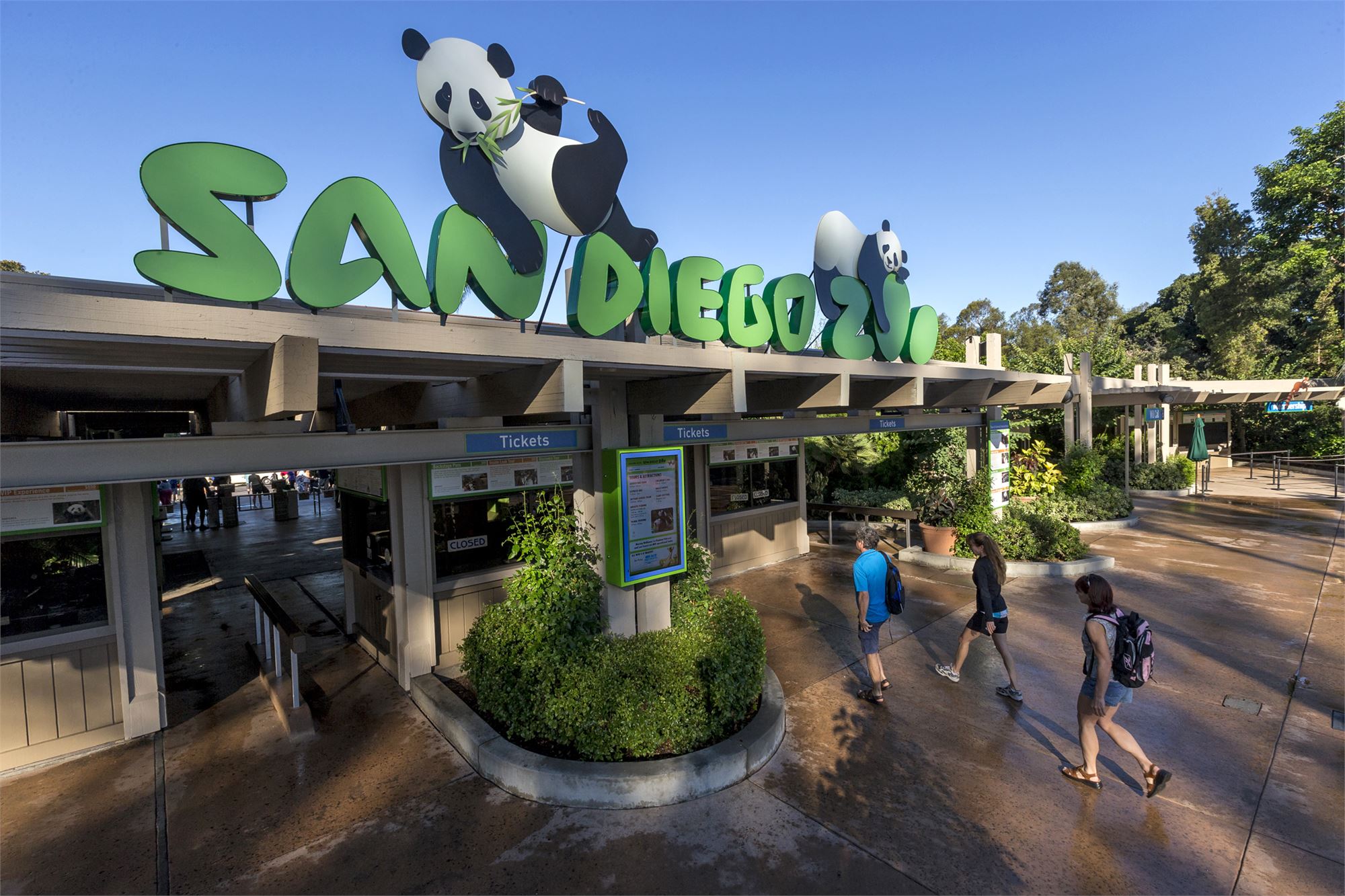
In a world where the delicate balance of nature is threatened by human activities, a group of American scientists has taken on an extraordinary mission.
Hidden away within the walls of San Diego Zoo’s frozen zoo, a remarkable collection is being safeguarded, containing a vast array of living cells from endangered and extinct species.
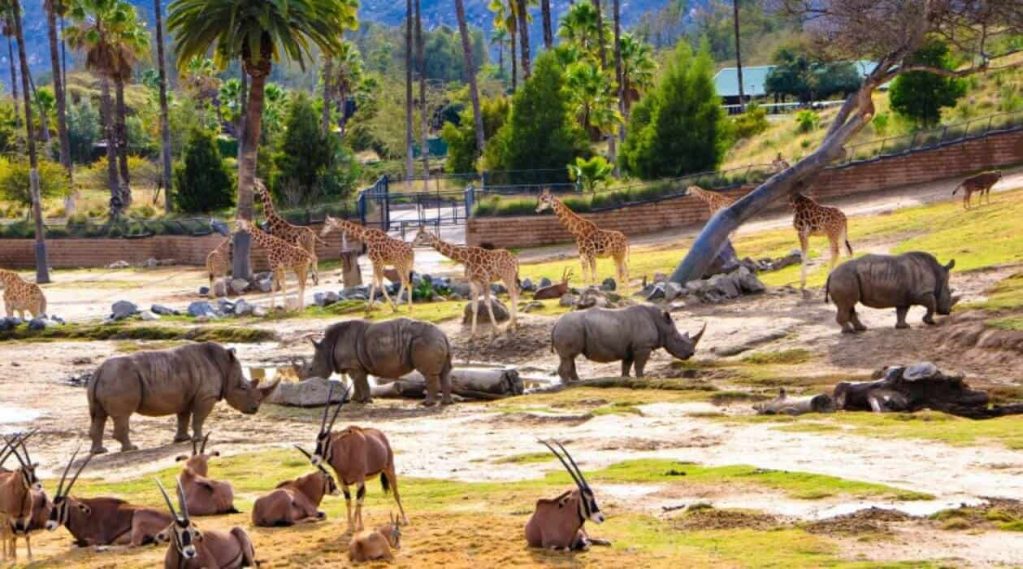
Established in 1975, this visionary project was conceived by Dr. Kurt Benirschke, who recognized the urgency of preserving these animals’ genetic materials for future generations.
Now, under the expertise of Marlys Houck and Barbara Durrant, the frozen zoo has become the largest and most diverse collection of its kind, housing over 10,000 individuals and nearly 1200 species and subspecies.
Through the power of freezing cells at bone-chilling temperatures, these scientists are holding these cells in suspended animation, their vitality waiting patiently to contribute to a groundbreaking solution – bringing species back from the brink of extinction.
Ancient Origins / ABC Flash Point News 2023.
Texas floodwaters guided into ponds to protect Cattle business
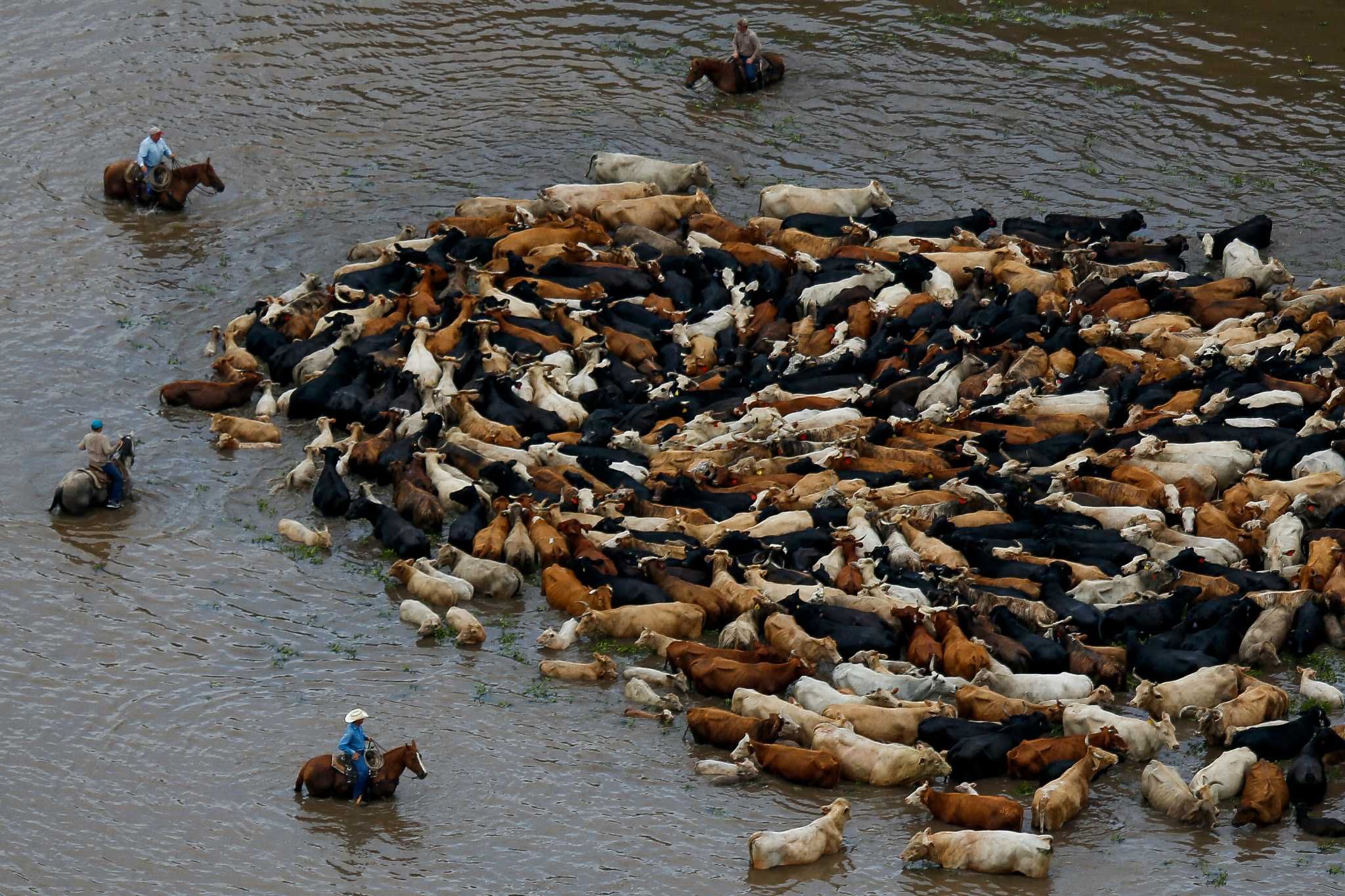
They say when it rains, it pours, and that saying could not be truer than in the Texas Panhandle the last month. Over Memorial Day weekend, Hereford, Texas, one of the largest cattle feeding areas in the United States, received the brunt of a rain event, leading to historic rainfall totals and flood conditions.
Between 8 to 11 inches of rain accumulated in the Texas Panhandle town, much of it in a short period of time, causing the water to rise. The flash flood event left residents with little time to prepare and since the geographic area is extremely flat, the water had no natural exit.

Since the Panhandle only averages 15 to 25 inches annually, flooding is not a scenario the area experiences very often. The rising water caused evacuations of homes—destroying at least four residences—and causing devastating impacts to the agricultural industry.
Crops were underwater and livestock owners, dairies and feedlots are reporting many animal deaths.
The exact number is unknown at the moment, but with the large concentration of feedlots, the death loss is expected to be high. Fortunately, the water receded from the area around Hereford.

Feedlots are working to pump water out of pens, clean up the aftereffects of the floodwaters and move cattle to dry pens. Residents of the Panhandle are staying alert the next few weeks as rainy weather patterns are predicted, putting them in danger of more flooding.
We continue to be very thankful for the outpouring of support and assistance from friends, family, neighbors, communities, and [Texas Cattle Feeders Association] members during this unprecedented natural disaster resulting from a 500-year storm event in Deaf Smith and Castro counties.
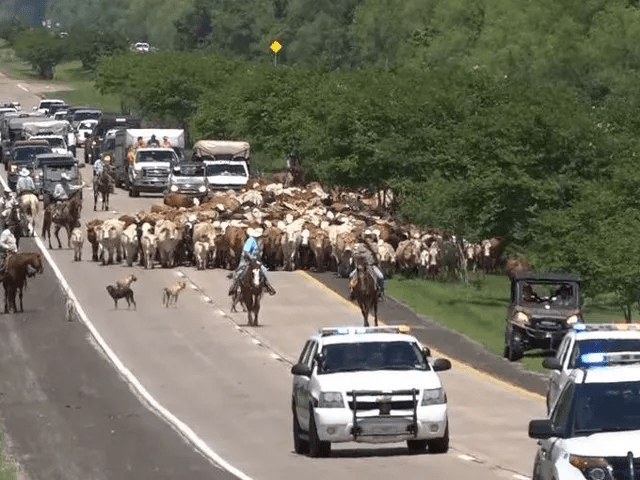
Ben Weinheimer, president and CEO of Texas Cattle Feeders Association said that the recovery efforts have focused on caring for and feeding cattle that were unaffected by the storm; prioritizing the safety of our employees, workers and volunteers; repairing infrastructure such as roads and drainage ditches.
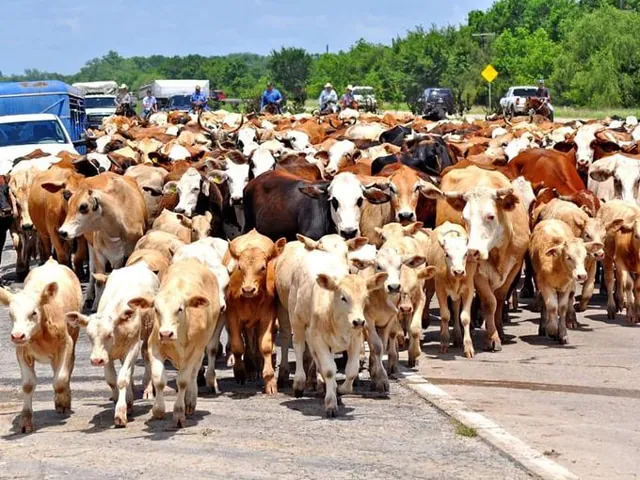
And pumping flood waters to other storage ponds that still have excess capacity; and managing the most unfortunate part of the disaster—properly removing and disposing of cattle that were lost.
We’ve been in close coordination with the Texas Commission on Environmental Quality and Texas Animal Health Commission throughout the response and recovery. Based on the latest weather forecast, we anticipate that current response and recovery activities will be completed in the next few days.
High Plains Journal / ABC Flash Point News 2023.
USA to combat biological threats against livestock

The $1.25 billion National Bio and Agro-Defense Facility in Manhattan, Kansas, took many years to come to fruition but those who gathered for a ribbon cutting on May 24 called it a proud achievement in the prevention of livestock diseases and protecting the nation’s food supply.
Four different buildings comprise the 574,000-square-foot, $1.25 billion biosafety level-4 research laboratory that is the successor to the aging Plum Island Animal Disease Center in Plum Island, New York.

This is designed to combat biological threats against livestock, predominantly cattle, swine and sheep, involving humans, according to NBAF Director Dr. Alfonso Clavijo, DVM.
U.S. Department of Agriculture Secretary Tom Vilsack said many people are to be thanked but he singled out retired U.S. Sen. Pat. Roberts, R-KS. He appreciated Roberts’ political expertise, saying it was not easy to convince colleagues over a long period of time to stay committed to seeing a project fulfilled.
It requires an extraordinary level of persistence, Vilsack said. He praised Roberts’ temperament and sense of humor plus his knowledge of the budgetary process. You were extremely lucky to have Pat Roberts where he was advocating so often, so forcefully and so passionately for this project.

Vilsack also praised former Department of Homeland Security Janet Napolitano who recognized NBAF’s importance. DHS accepted the responsibility for construction and once completed NBAF became the responsibility of USDA.
A land-grant university was the right location combined with long-term expertise in architectural, engineering, research and science.
The facility had to be secure. NBAF reinforces the message that collaboration and cooperation works when the mission is to protect citizens, he said. Kansans understand that message.

This is a state that understands, appreciates and respects agriculture. In his various roles, Roberts said he asked many questions about the dangers the U.S. and world’s agricultural sectors faced as a result of bio-terrorism. When 9-11 occurred, it spurred the process.
Plum Island, New York, could no longer provide the protection the nation’s food supply needs today. He had shared his concerns with the late K-State president Jon Wefald.
Wefald immediately told Roberts a new lab needed to be located at a land-grant university and the president put together an ambassador team to help sell Kansas State University.

Roberts remembered the many hours of research that went into informing various intelligence committees about the need to protect the nation’s food supply. One of his exercises was to demonstrate how devastating a widespread foot-and-mouth outbreak could be to the USA.
It helped to galvanize the livestock industry, commodity groups and researchers about the need for a unified message to protect the nation’s food supply. With help of then Kansas Gov. Kathleen Sebelius and state lawmakers they even withstood a last-ditch effort to have NBAF placed in Texas.
Kansas Gov. Laura Kelly also thanked K-State’s commitment to animal science research and the Manhattan community for its support throughout a lengthy construction process.
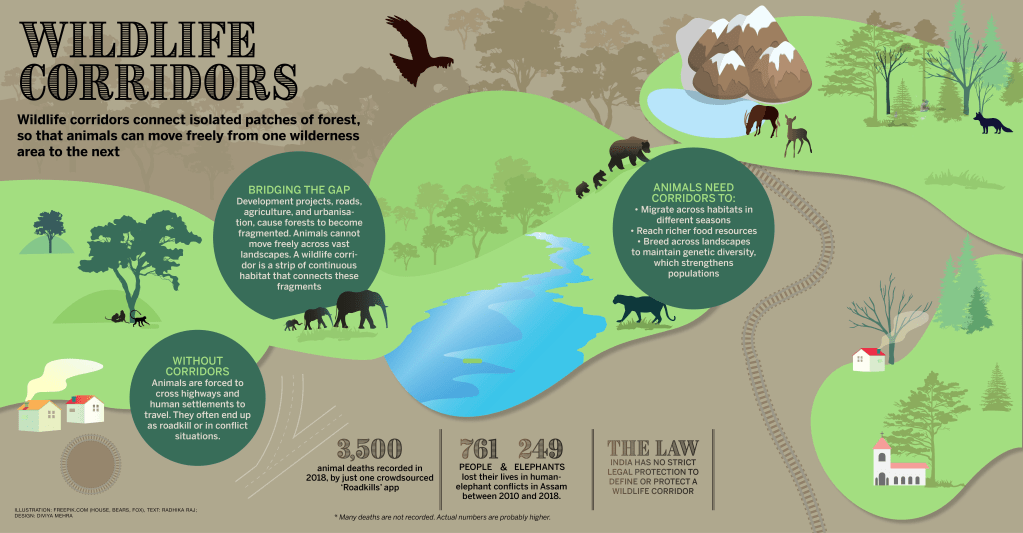
NBAF will put us on the front line of making the entire country and world safer, healthier and more resilient through research, training and diagnostics.
NBAF is at the center of the animal health corridor, she said, and that region includes 120 animal health companies that employ 13,000 specialists. The Manhattan location will foster research and collaboration between academia and public and private sectors.
The animal health corridor, which stretches from Manhattan to Columbia, Missouri, is important to protecting the nation’s food supply and is also part of a dream he champions, which is that children and grandchildren raised in this state have every opportunity to stay in Kansas and fulfill their dreams.
High Plains Journal / ABC Flash Point News 2023.
History of World Reserve Currencies since 1250

The world’s reserve currency fulfills a unique role in the global economy. It is the currency held in reserve by sovereigns, central banks, banks, and large businesses to facilitate the financing and transactions of global trade.
Importantly, all the currencies on the chart were backed by precious metals until we got to 1971 and the Eurodollar system.

It is important to view the world reserve currency as the currency which, during its time, facilitated the largest trade network. International trade is what a reserve currency is all about.
For over 1000 years, the Byzantine solidus, along with nearly identical offshoots like the gold dinar, dominated trade.
However, by 1250 the solidus had been massively debased leading to contracting economic integration between Central Asia, the Mediterranean, and Europe.

This is the void into which the Italian city-states stepped, by providing quality gold coins and facilitating trade in routes they maintained. Below we will examine these Italian coins and trace them from 1252 until 1535.
When the florin was minted in the 13th Century it was the first European gold coin struck in significant quantities for more than 500 years. In the 8th Century, the Carolingians introduced a silver standard to Northern Europe.
The florin spread quickly throughout Western Europe becoming widely recognized as the coin used in trade, debt, and accounting.

A vast network of Florentine bankers formed the first large international business enterprise and, when combined with a standard coin, were able to expand trade dramatically.
The florin was in many ways the first modern currency. We can see aspects of our current system emerging back then.
For example, modern accounting allowed the Medici bank to balance their books amongst branches which reduced the need to transport gold across the continent.

The florin was copied by others across Europe and is similar to the Eurodollar system today where dollars are created outside US jurisdiction.
For example, Genoa’s genovino, Hungary produced the forint and the Dutch minted the Guilder. Altogether about 150 locations minted a florin to the same weight and measure as the Florentines. The most important being Venice.
After a particularly troubling debasement of the Byzantine hyperpyron in the 13th Century, the Duchy of Venice started producing the Ducat which was modeled on the florin.

The ducat was almost identical in weight, at 3.545 grams, to the florin’s 3.5368 grams (the slight difference due to the measurement systems in the two city states).
The Venetian coin was used throughout the Levant, Anatolia, the Black Sea, and the Adriatic, circulating simultaneously with the florin in the West. The ducat and the florin were very similar and could be looked at as a single Italian reserve currency.
In the 15th Century, florins in several places in Western Europe suffered from debasement leading to a distinction between lower and higher quality florins. The debased coins eventually evolved into “guldens” while the higher quality florins were re-issued as ducats.

Therefore, by 1450, use of the term ducat incorporated much of what was previously known as the florin.
In the early 16th Century, the ducat’s role as reserve currency peaked and, by the middle of the century, suddenly lost its dominant role in trade. This 16th Century shift was similar in magnitude to the 14th Century shift from Byzantine coins to Italian.
The epicenter of currency now moved from Italy to Spain. Several important historical events precipitated this move: the uniting of Castile and Aragon (1479), the end of the Reconquista (1492), expansion of maritime exploration and trade (Columbus 1492), Hapsburg Spain (1516), and American silver mines (1535).

The year 1497 saw the ducat come to Spain when Ferdinand and Isabella enacted monetary reform with the Pragmatica de Medina del Campo.
This reform created a copy of the ducat, initially called the excelente, but which became known as the ducado (Castilian Ducat) in 1504.
Seven years later, in 1511, Maximilian I of the Holy Roman Empire began to mint a ducat (which was still produced in Austria until the 20th Century).

These two developments, the minting of a ducat in Spain and the Holy Roman Empire, fit nicely together five years later (1516) in the person of Charles V who was the Holy Roman Emperor and King of Spain (which included Sicily, Naples, Sardinia, and the Low Countries).
He controlled the largest trade network in the world at the time, and hence the world reserve currency. The ducat was used throughout his domains, but not for long, a new standard was just around the corner.
We will continue this series by first looking at the monetary changes occurring in the 14-15th Centuries and which culminated in a return to the silver standard 1535.
History of World Currency Reserves / Crickey Conservation Society 2023.
The Royal Tomb @ Machu Picchu, Peru
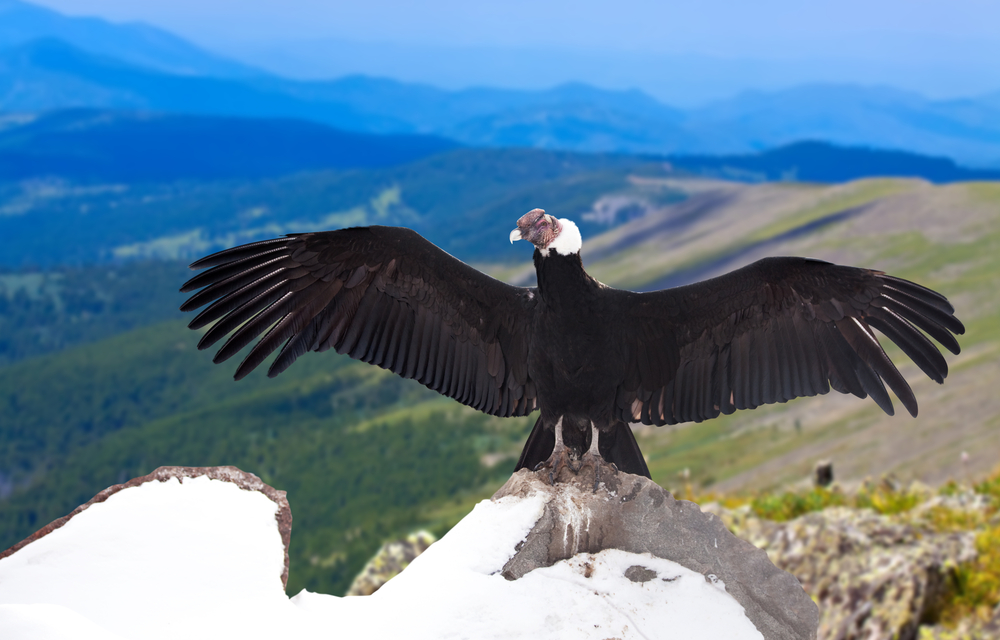
The Temple of the Condor in Machu Picchu is a breathtaking example of Inca stone-masonry. A natural rock formation began to take shape millions of years ago and the Inca skillfully shaped the rock into the outspread wings of a condor in flight.
On the floor of the temple is a rock carved in the shape of the condor’s head and neck feathers, completing the figure of a three-dimensional bird. Historians speculate that the head of the condor was used as a sacrificial altar. Under the temple is a small cave that contained a mummy.

A prison complex stands directly behind the temple, and is comprised of human-sized niches and an underground maze of dungeons.
According to historical chronicles that documented similar Inca prison sites, an accused citizen would be shackled into the niches for up to 3 days to await the deliberation of his fate. He could be put to death for such sins as laziness, lust, or theft.
Down a long set of stone stairs and to the left you’ll find the Royal Tomb. This cave-like area of Machu Picchu contains ceremonial niches and an Inca cross carved from one wall and is adjacent to the Temple of the Sun.

The cross resembles series of steps, and represents the three levels of existence in the world of the Inca. The first step, symbolized by the snake, represents the underworld or death.
The second step represents the present, human life, and is symbolized by the jaguar. The highest step represents the celestial/spiritual plane of the gods, and is symbolized by the condor.
Inside the Royal Tomb has been the site of numerous mummy excavations. Of more than 100 skeletal remains discovered here, 80% were women.
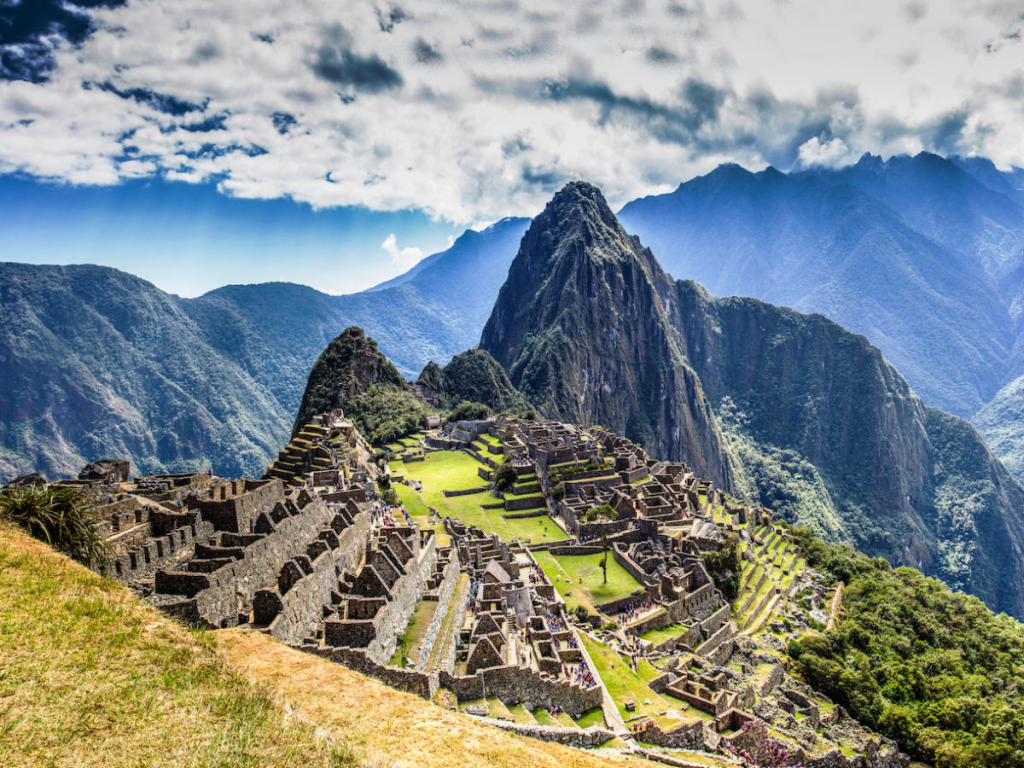
This fact, among others, leads many historians to surmise that the area was inhabited primarily by high priests and chosen women. The true purpose of Machu Picchu has never been conclusively determined.
To the left of the royal tomb lies a series of 16 ceremonial baths, joined by one linked aqueduct system. At the top of this system is the watershed hut. Continuing along the left side of the complex, you will cross the rock quarry and come across the Sacred Plaza.
Machu Picchu / Crickey Conservation Society 2023.
Windmolenpark op de Noordzee
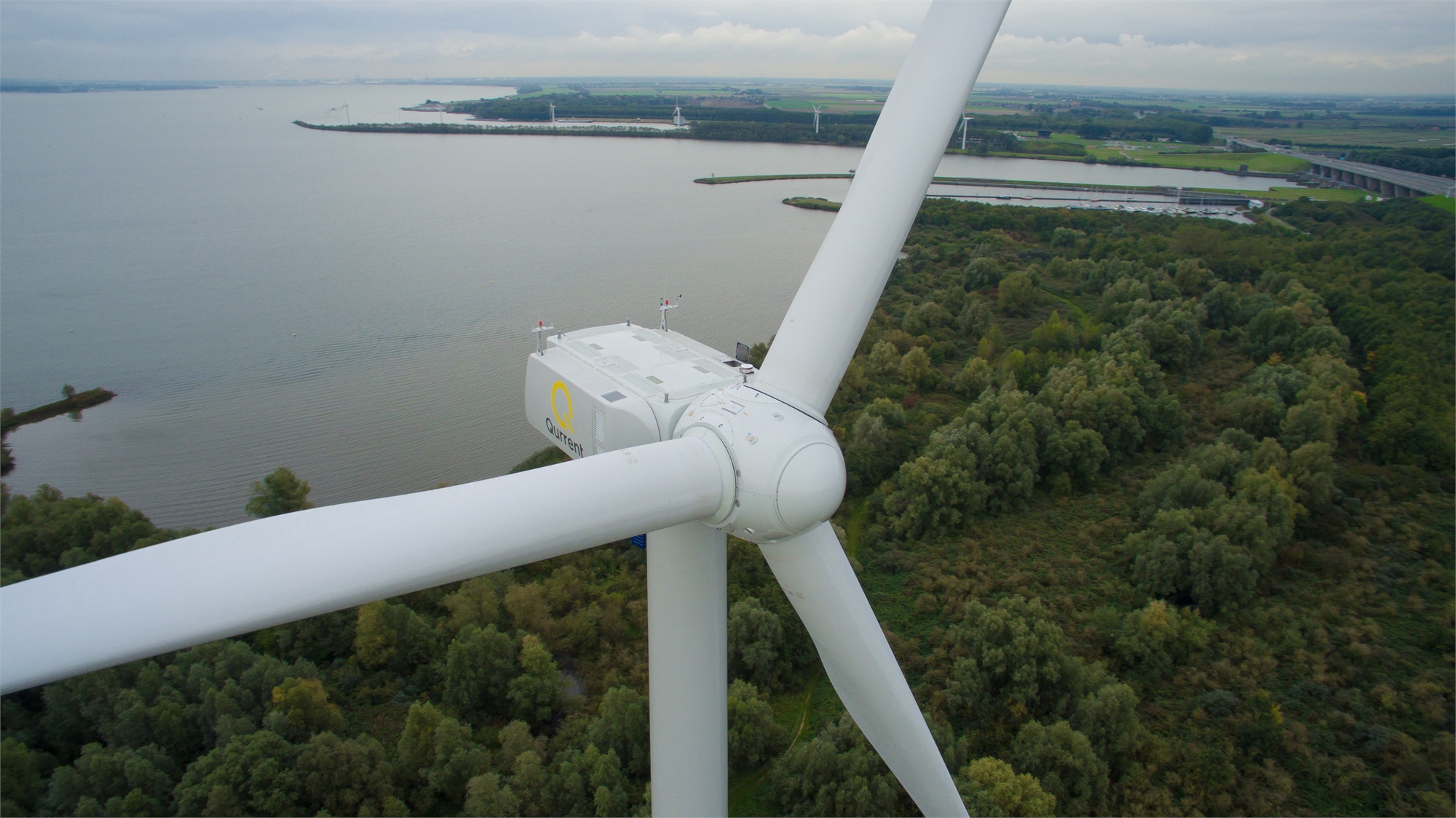
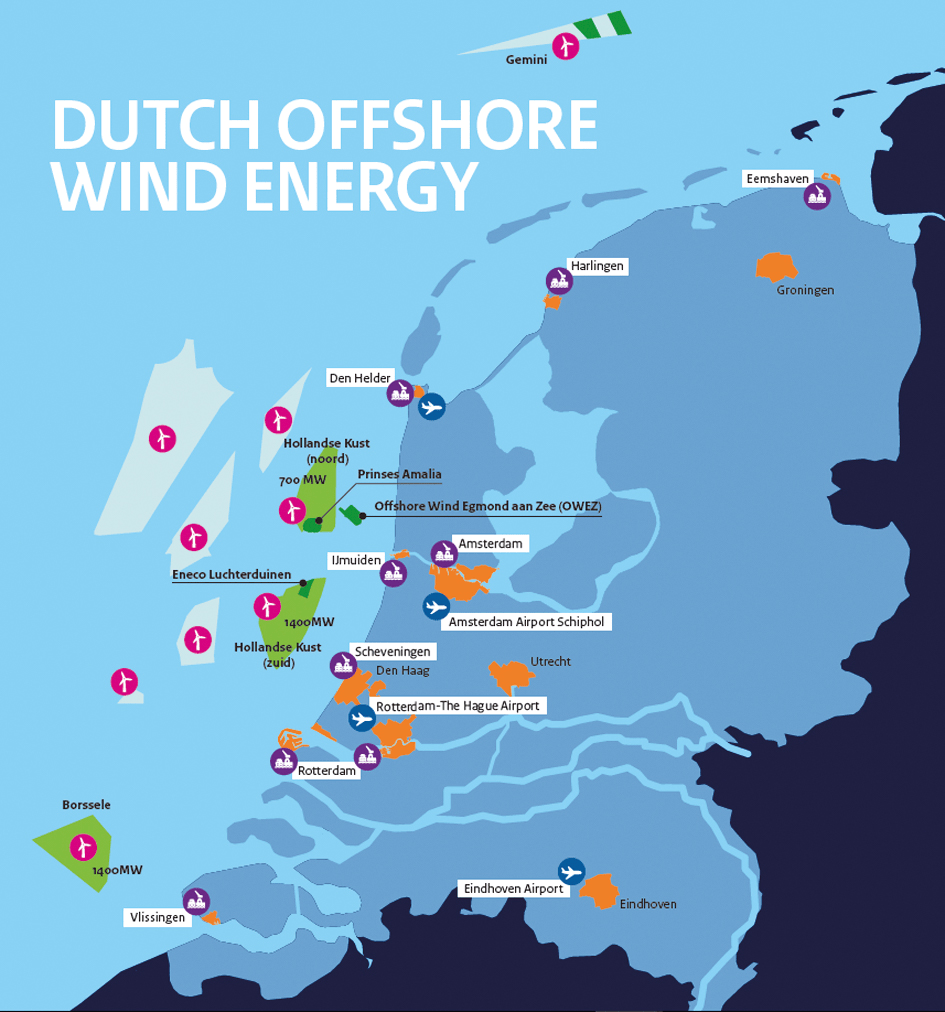
Met een ramp in wording drukt het kabinet het plan door, zonder de gevolgen te onderzoeken? Het gaat dus gebeuren: een gigantisch windmolenpark op onze Noordzee.
Ondanks alle bezwaren, die uit allerlei hoeken komen en op heel wat te verwachten problemen wijzen, zet men door en houdt men zich, zoals we dat inmiddels kennen, doof voor alle kritische stemmen. De windmolens moeten en zullen er komen.
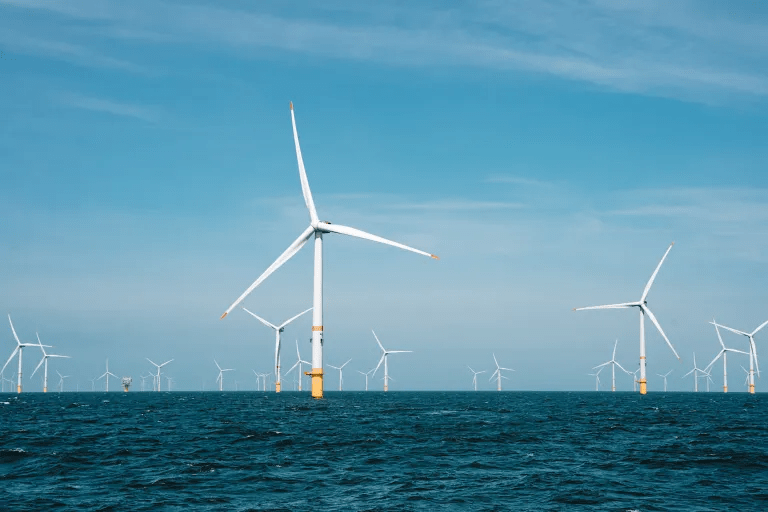
Het onderzoek naar de gevolgen ervan is nog lang niet klaar, is nog in volle gang, maar de beslissing is al genomen, schrijft Ines van Bokhoven. Kritische stemmen zijn er genoeg, en er lijken er alleen maar meer bij te komen.
Want deze vorm van energieopwekking die ons is verkocht als ‘schoon en milieuvriendelijk’, is geen van beiden. Nee, windenergie is niet schoon, zoals ik al beargumenteerde in een stuk, en zoals steeds meer mensen proberen onder de aandacht te brengen.
Alleen al de giftige microplastics die van die dingen afwaaien brengen zowel onze gezondheid als het milieu danig in gevaar. Dat Flevoland onlangs aan de bel trok wegens hoge concentraties bisfenol A in het grondwater wekt geen verbazing: die provincie staat barstensvol met windmolens.
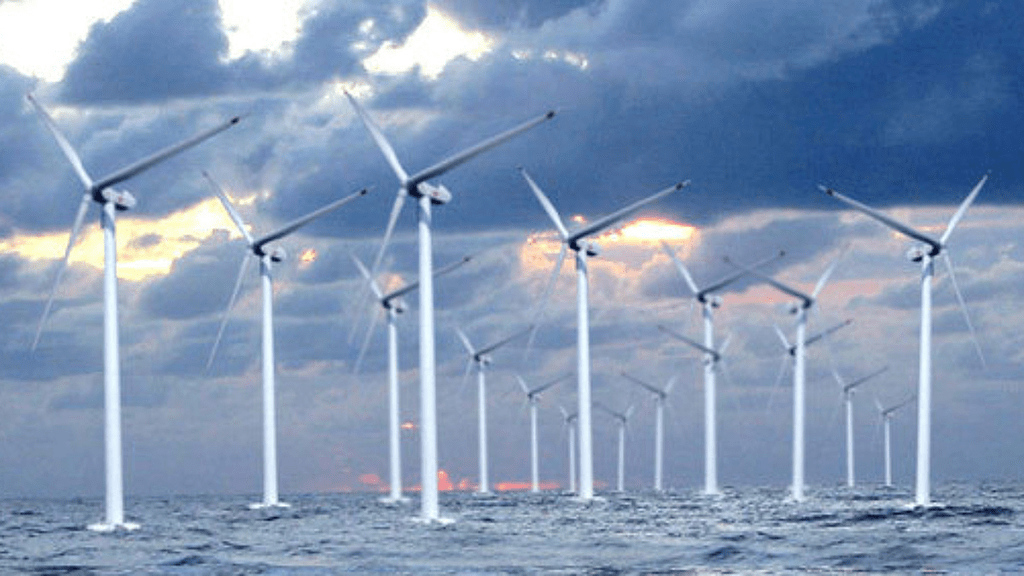
Windmolens verpesten het milieu, en dat is maar een van de vele bezwaren tegen deze ondingen.
Al meer dan tien jaar geleden werd het ‘windmolensyndroom’ vastgesteld: mensen die in de directe nabijheid van dergelijke molens wonen ervaren allerlei gezondheidsklachten en overlast – klachten die uiteraard worden genegeerd.
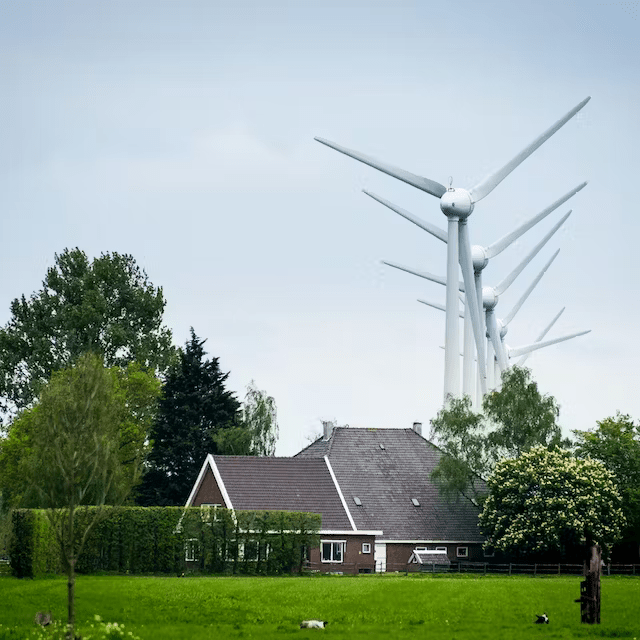
De aanslag op ons landschap is er ook eentje: juist de plekken die mooi leeg zijn, waar een mens nog in de verte kan kijken, worden volgeplempt met afzichtelijke palen die elk plezier in het om je heen kijken bederven. Ons landschap wordt volledig verpest.
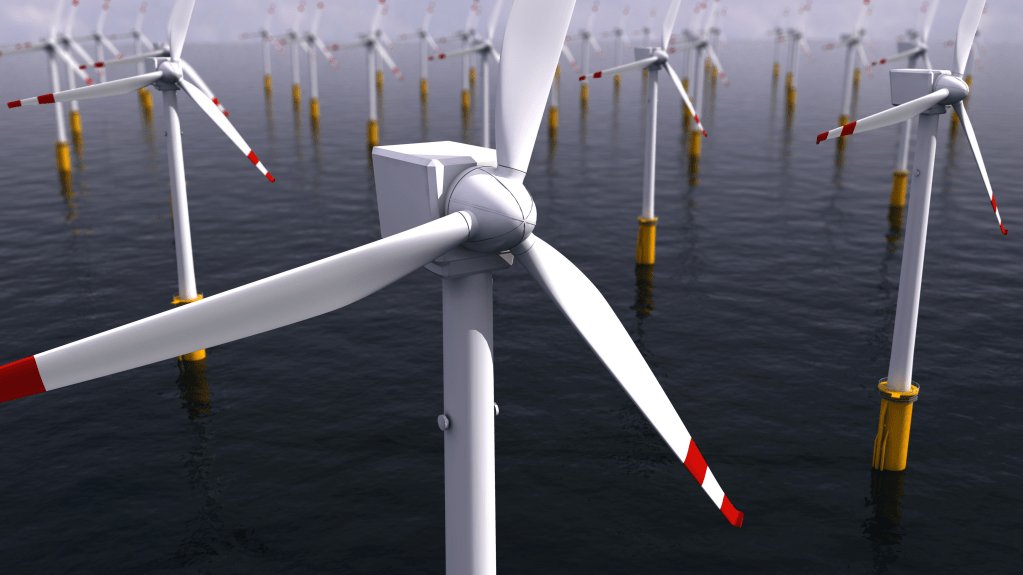
Windturbines veroorzaken onder meer laagfrequent geluid, slagschaduw en – knipperende – lichten. Dat kan tot gezondheidsproblemen leiden, die echter nog te weinig serieus worden genomen. Terwijl volgens het voorzorgprincipe de overheid kan ingrijpen, ook als klachten nog niet onomstotelijk bewezen zijn.
Ten aanzien van milieu en gezondheid geldt in Nederland het voorzorgsbeginsel. Dit houdt in dat de overheid beschermende maatregelen kan nemen tegen mogelijk schadelijke milieueffecten van een situatie, ook als die effecten nog niet onomstotelijk zijn bewezen.
Het beginsel gaat dus over de vraag hoe te handelen bij wetenschappelijke onzekerheid.
Provincies en gemeenten werd bijvoorbeeld geadviseerd om bij ruimtelijke ontwikkelingen zoveel mogelijk te vermijden dat kinderen langdurig in de magneetveldzone van een hoogspanningsleiding verbleven vanwege de aanwijzingen dat deze de kans op leukemie bij kinderen verhoogden – inmiddels is er voor deze relatie overigens voldoende bewijs.
Het is tijd dat het voorzorgsbeginsel ook wordt toegepast bij de bouw van windturbines in de bewoonde omgeving, omdat ook hier ruim voldoende aanwijzingen zijn voor gezondheidsschade bij omwonenden.
Een substantieel deel van omwonenden van windturbines rapporteert wereldwijd identieke klachten.
Chronische slaapproblemen, hoofdpijn, tinnitus, een drukgevoel op de oren, vertigo, visusklachten, luchtwegproblemen, tachycardie, prikkelbaarheid, concentratie- en geheugenproblemen, en angstgevoelens samengaand met de sensatie van inwendige pulsaties of trillingen zowel slapend als in wakkere toestand.
De natuur wordt al aangetast als de beslissing tot plaatsen van zo’n molen valt: het gebied moet worden voorbereid en dat houdt vaak grootschalige bomenkap in.
Hele hectares met eigen ecologische systemen worden kaal gemaakt en doods achtergelaten, om vervolgens voorzien te worden van een infrastructuur, zoals de wegen die moeten worden aangelegd om de molens met grote, smerige vrachtwagens op hun plek te krijgen.

Grote betonnen platforms waar niets meer op wil of kan groeien, die de plaats hebben ingenomen van wat ooit een florerend stukje natuur was. Dan is er de aanslag op vogels en vleermuizen, soms zelfs beschermde soorten, die vaak danig wordt onderschat.
Vogels en andere vliegende beesten die in sommige perioden (vooral tijdens hun trek) met bosjes gehalveerd of onthoofd neerstorten. En hoeveel dat er precies zijn is moeilijk te meten, dus zeggen de experts: ga er maar vanuit dat het er veel meer zijn dan we opmerken.
Want een dood beest op de grond is voedsel voor een heleboel andere dieren, en is vaak allang weg voordat wij hebben geconstateerd dat-ie er überhaupt ooit lag.
De aanslag op onze natuur is hartverscheurend, niet om aan te zien, verontrustend, en het ergste is nog wel dat men maar blijft gillen dat men het doet om ‘de natuur’ te redden.
We kunnen de schade met eigen ogen zien, maar onze beleidsmakers hebben er geen oog voor. Met oogkleppen groter dan de gemiddelde Nederlandse provincie ramt men de plannen gewoon door, want er is geld en macht mee gemoeid en dan weten we het wel weer.
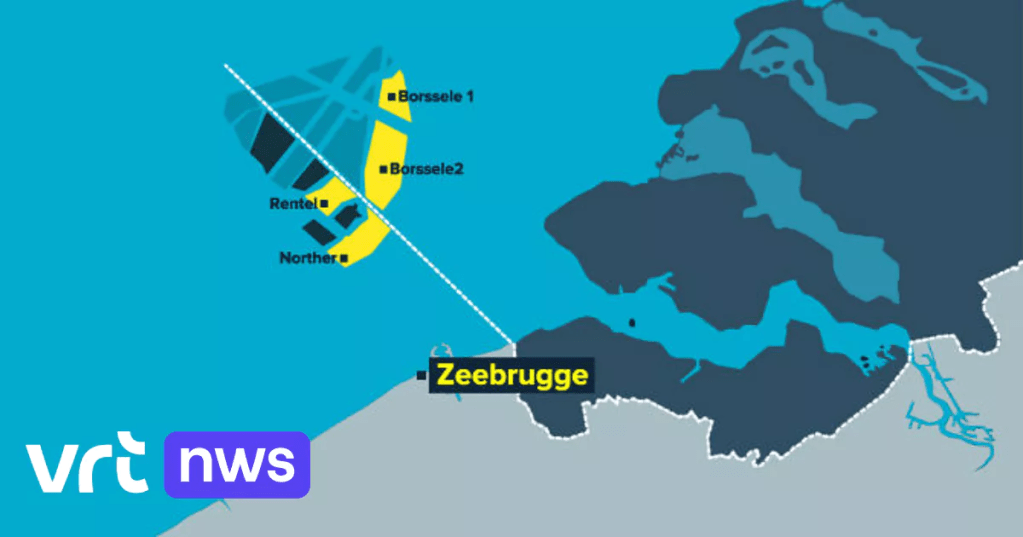
En dan de aanleg van zo’n park-op-zee zelf: dat staat er ook niet van vandaag op morgen. Dat gaat jaren kosten, met alle bijbehorende vervuiling en herrie. En staat het er eenmaal, dan weten we niet wat het effect ervan gaat zijn op de ecologie in dat zeegebied.
Maar het wordt erger. Studies tonen al een tijdje aan dat windmolens een negatief effect hebben op het lokale klimaat van het gebied waar ze in staan – studies die door geen enkele klimaatlobby worden meegenomen in de besluitvorming, lijkt wel.
En die studies liegen er niet om: windmolens veroorzaken droogte. En stevig ook.
Windmolens hebben namelijk een merkwaardig effect op de wind: ze keren luchtlagen om met hun draaibewegingen. Warme, hogere luchtlagen komen daardoor dichter bij de grond dan dat ze horen te zijn, vooral ’s nachts, en de vochtige lagen komen te hoog terecht.

Dat is waarschijnlijk de reden dat men begint op te merken dat in gebieden waar veel windmolens staan ook steeds meer droogte optreedt: soms tot bijna twee meter diep droogt de toplaag uit.
De vraag is dus ook wat deze ‘windomkeringen’ op lange termijn voor het klimaat op onze planeet gaan betekenen, gezien de mega-uitbreidingen van windparken die men van plan is uit te voeren.
Want met zo’n lading van deze palen op de planeet is het niet moeilijk te beseffen dat dit al vlot geen lokaal, maar wereldwijd probleem zal worden.
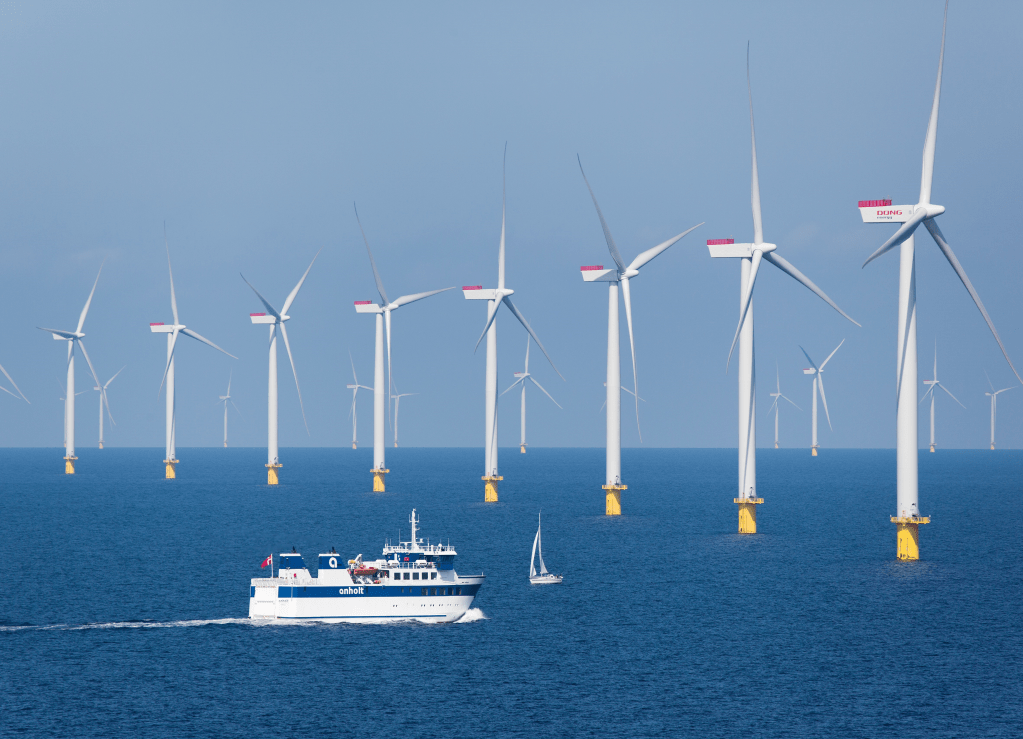
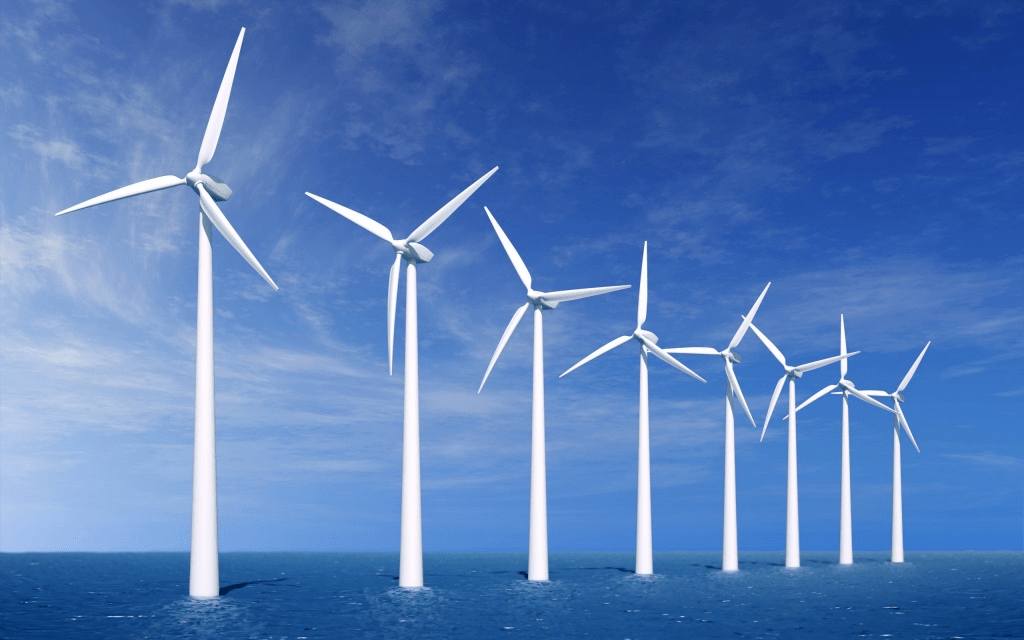
Vooral bij windmolens op zee is goed te zien wat er gebeurt met de wind die langs waait: volslagen onnatuurlijke wervelwinden komen achter de molens los en zorgen ervoor dat vochtige lucht, die onderop dient te zitten, in bovenlagen terecht komt.
Het windmolenpark dat men nu plant op de Noordzee zou zomaar eens voor grote problemen met onze bodem kunnen gaan zorgen – maar omdat er geen goed onderzoek naar wordt gedaan, weten we dat dus niet.
Het is afwachten en dan straks weer een verse crisis om de nieuwe problemen op te lossen – problemen die voorkomen hadden kunnen worden door naar critici te luisteren.

Maar naar critici wordt niet geluisterd, hoewel het protest tegen al deze gevaarlijke, vervuilende, ziekmakende verschijnselen die windmolens veroorzaken gelukkig steeds meer toeneemt en steeds luider wordt.
Onze politieke elite wil windmolens en dus komen er windmolens – al zorgt hun achterban er dan weer wel voor dat zij zelf zo weinig mogelijk overlast van die dingen hebben.
Windmolens zijn mooi, maar niet als ze ten koste gaan van het woongenot en de huizenprijzen van precies dezelfde mensen die willen dat die dingen er komen. Knal die maar ergens op het platteland neer, bij de mensen waar we toch al jaren niet meer naar luisteren.
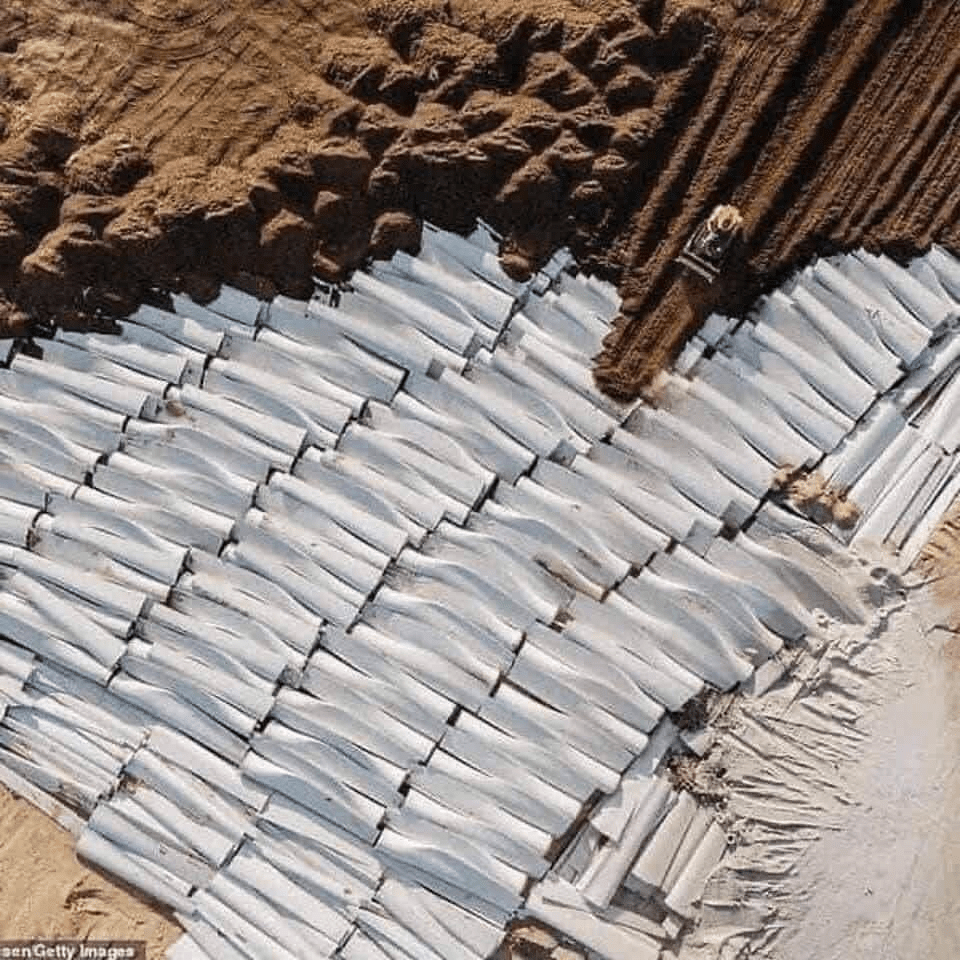
En dan hebben we het nog niet gehad over het probleem van het giftige afval, want een windmolen gaat maar een jaartje of 20-25 mee, en daarna moeten we er weer ergens mee heen, hè?
Dus wat te doen met de palen en wieken van steeds groter wordende windmolens waarvan we er steeds meer aan het neerzetten zijn?
En zo denderen we voort, terwijl we niet eens weten wat we aan het doen zijn.
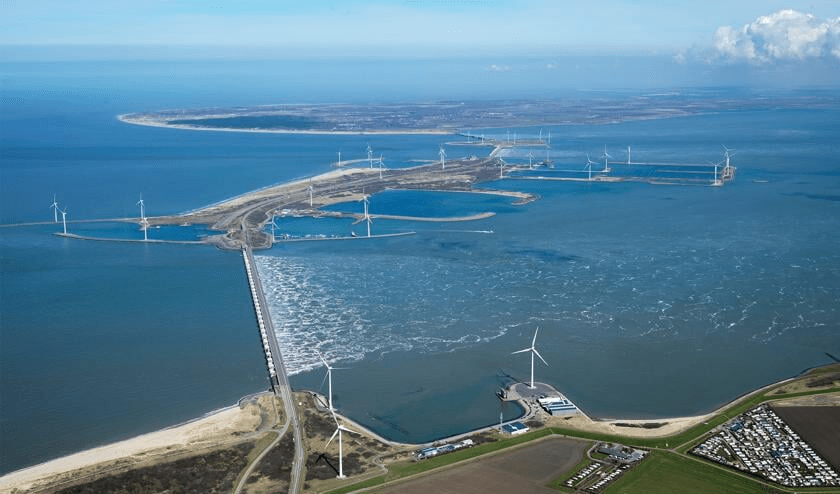
We hebben geen idee wat de effecten zullen zijn van duizenden windparken over de hele planeet, en wat we wel weten negeren we krampachtig, want de steeds langer wordende lijst aan negatieve onderzoeksuitslagen dient het mooie plaatje dat men probeert te schetsen absoluut niet.
De leugens over ‘hernieuwbare, duurzame en schone’ energie vliegen ons om de oren, en het wordt steeds duidelijker dat het leugens zijn. Schone energie bestaat niet, elke munt heeft een keerzijde en lullige feiten negeren omdat je ze niet wilt weten is zo ongeveer het domste dat je kunt doen.
Ik hou mijn hart vast voor de ramp die we de komende jaren gaan meemaken dankzij de stupiditeiten van hoogopgeleide, domme mensen.
Opinie Z / Crickey Conservation Society 2023.

