SALMON TROUT idolized as a Trophy Game Fish

Commonly known as the steel-head trout, coastal rainbow trout, silver trout, salmon trout, iron-head, or steely this salmon has historically been idolized as a trophy game fish. This species consists of a two runs, a winter and a summer.
They differ from other salmon species in that hey can return multiple times to spawn. However the number of returning spawners decreases significantly from year to year with few fourth year spawners. There is a higher mortality rate during steel-head spawning season as they do not feed while in freshwater.

They are characterized by their metallic blue backs and silvery sides, and black spots on the back, dorsal and caudal fins. Spawning colors are darker with males having a pink or red band on the sides.
They do not have a red dash under lower jaw which distinguishes steel-head from coastal cutthroat. These fish live about 1-4 years, are about 20-30 in in length, and weigh about 5-20 lbs.

The cutthroat, also known as sea-run cutthroat trout, coastal cutthroat trout, red-throat-ed trout, sea trout, and blue-back trout. This species has three life history options: two types spend their entire lives in freshwater while only one type is anadromous.
Cutthroat are characterized by a red or orange streak along the inner edge of the lower jaw. They have a greenish blue back tending towards metallic blue, silvery sides, and distinct black spots on the back, head, anal fin, tail, and sides.
The spots on the sides extend below the lateral line. These fish live an average of 3-6 years, fourth and fifth year spawners reach 17-19 in in length, and weigh about 1-6 lbs.
South Pudget Sound Salmon Enhancement Group / ABC Flash Point News 2023.
Deciphering the Maya Script

According to Yuri Knorozov, you don’t need to jump across the pyramids to understand how to work with texts. Knorozov was a Soviet linguist and ethnographer who managed to decipher the script of the Maya civilization.
He published an article in 1952 proclaiming his achievement. At the time, he was just 30 years old, but perhaps more remarkable is that he had never visited Central America.
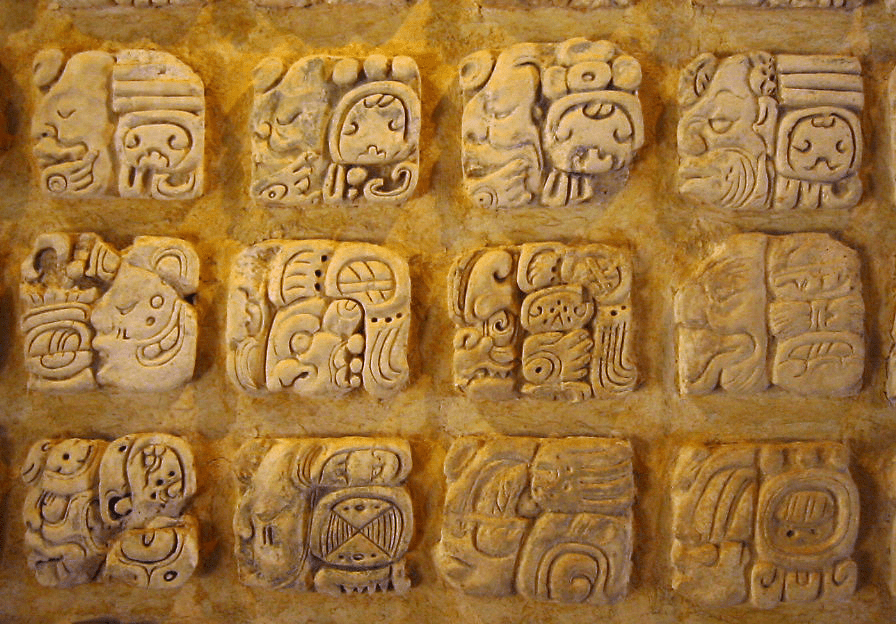
Knorozov studied Egyptology at Moscow State University, and was fascinated by the Mayan culture. As he recalled, he was heavily influenced by a 1945 article by German researcher Paul Schellhas titled, is deciphering of the Maya hieroglyphs an unsolvable problem?
While working on the Maya scripts, Knorozov demonstrated that the hieroglyphs represent sounds. Later, he composed a catalog of 540 symbols, and explained the method on how to use them to read and understand the Maya texts.

Knorosov’s work was translated into many languages and sparked discussions in the scientific community for decades. Soviet scientists led by Knorozov went on to work on the decipherment of other historical mysteries such as the rongorongo script of Easter Island and the Indus script.
In Mexico, there are monuments to Knorozov in the capital and in the Yucatan peninsula city of Merida where the Mayan civilization existed. The scientist is portrayed together with his cat Asya that Knorozov called his “co-author”.
The list of Soviet and Russian specialists who have made crucial contributions to physics, chemistry, medicine and biology amongst others is too long to outline, but their work is used every day around the world.
RT. com / Crickey Conservation Society 2023.
Pacific Salmon Run
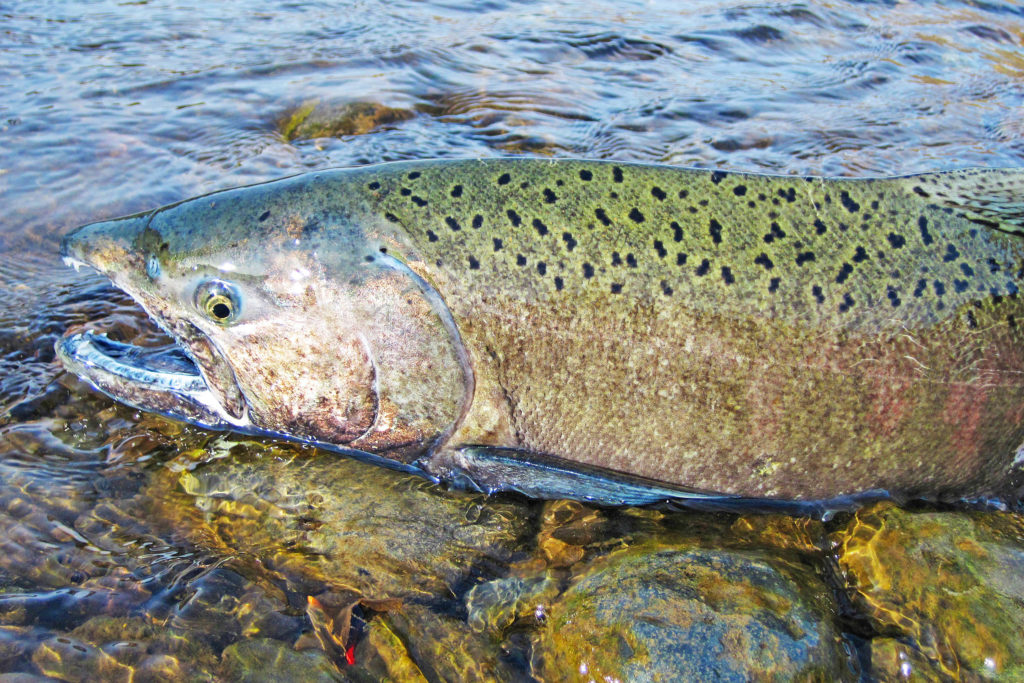
Also known as a silver, coho are the second least abundant (following Chinook) salmon. While they are one of the most commercially sought after species they make up only 7-10% of the commercial salmon fishery. They spend 1-2 years in freshwater, and prefer near shore feeding grounds.
Coho usually travel less then 100 miles from the moth of their stream for reproduction with the exception of a few populations that do travel over a thousand miles. While in the ocean they have dark metallic blue or greenish backs with silver sides and a light belly.
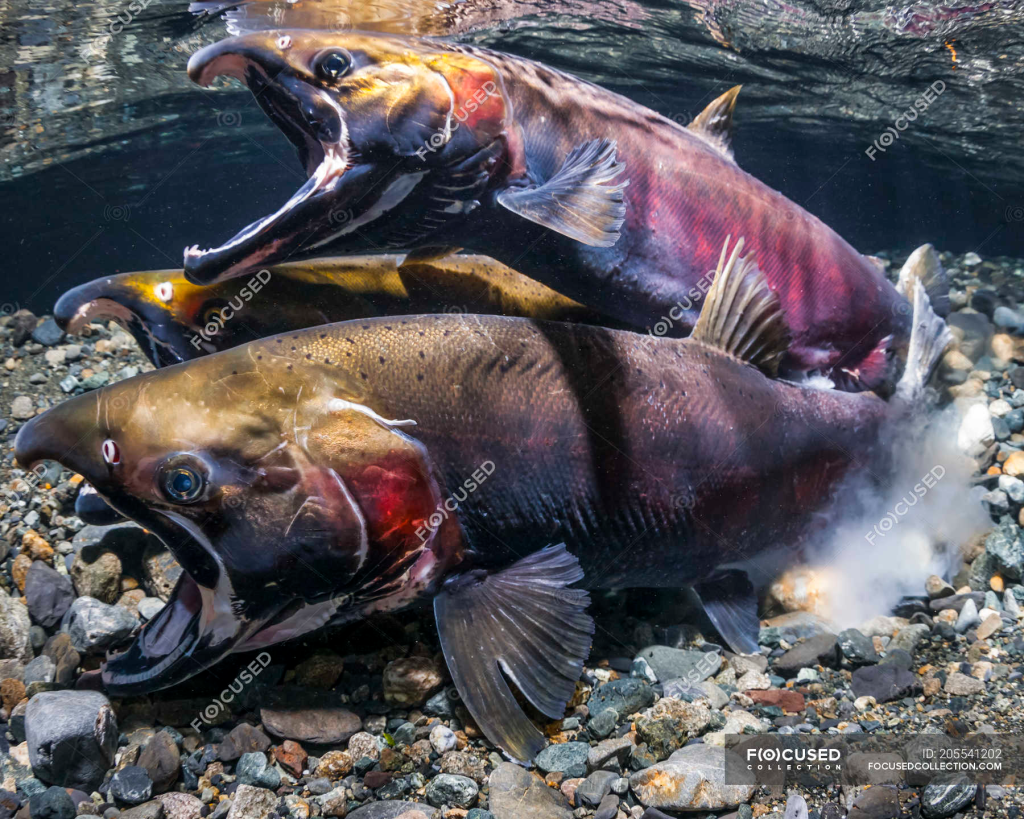
They have small black spots on their backs and the upper lobe of the tail. Another distinguishing feature is their gum line which is white. Spawning colors are dark with reddish coloration on their sides. These fish generally live 3-5 years, are about 24-28in in length, and weigh about 5-10 lbs.
The Chum salmon is also known as the dog, or calico salmon. Chum comes from a word meaning variegated coloration in the native language. They have the most widely distributed population and the greatest biomass. They are the second largest salmon (following the Chinook).
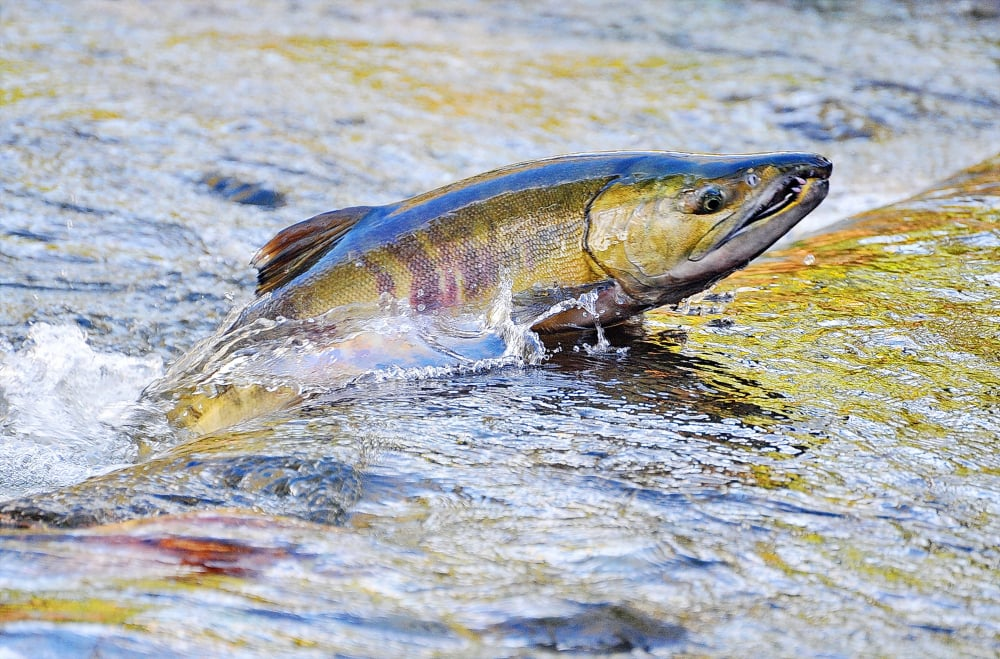
Most populations reproduce near the mouth of their stream. When in the ocean they are metallic, greenish-blue along the back with black speckles which closely resemble sockeye and coho.
During the spawning phase males get vertical bars in reds, greens, and purples, while females get a black horizontal stripe. These fish generally live 3-5 years, are 21-31in in length, and weigh about 6.5-12.5lbs.
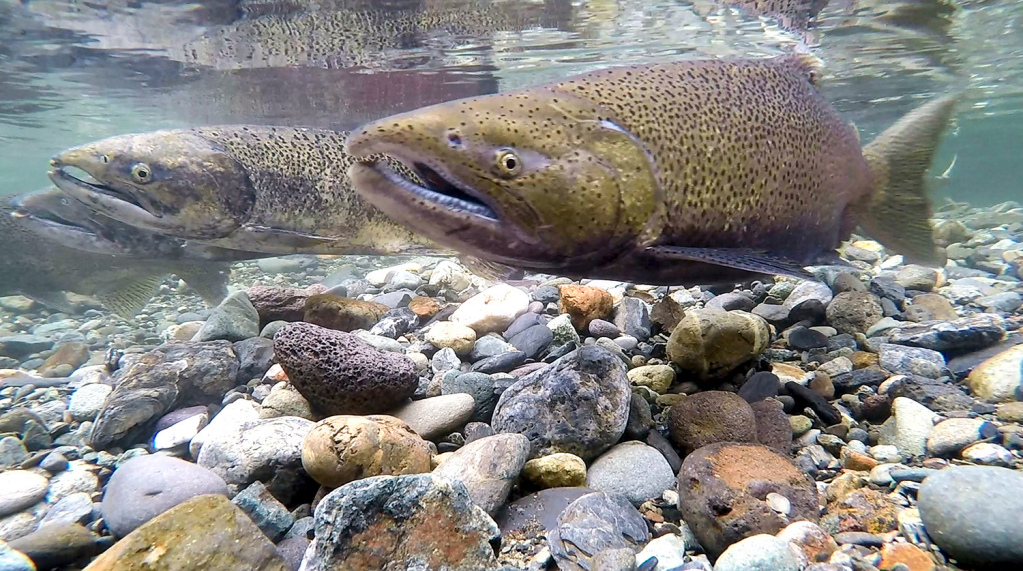
Also known as the king, tyee, or black-mouth, the name Chinook came from the native peoples of the Columbia River and is considered a proper name and thus is always capitalized.
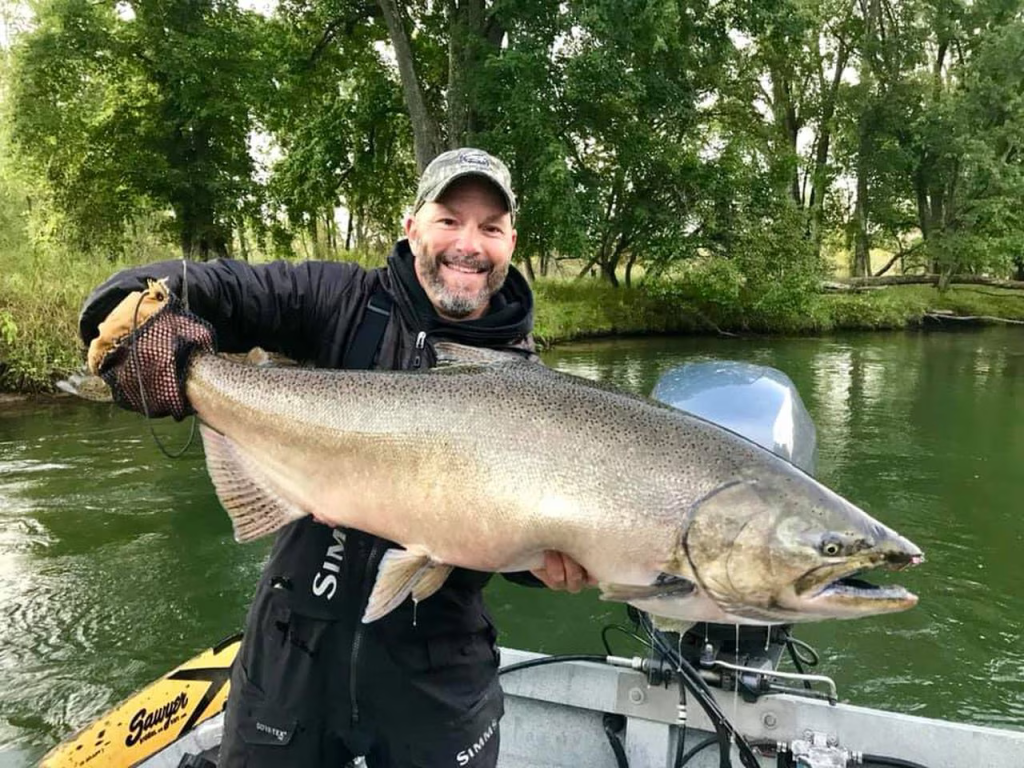
They are the largest, but least abundant salmon. When in the ocean they have bluish-green backs and silver sides with irregular spotting on the back, dorsal fin, and both lobes of the tail.
Another distinguishing characteristic is their black gum line. Spawning colors are olive brown to dark brown in color. Males also develop a hocked snout. These fish live about 3-6 years, are 28-40in in length, and weigh about 10-30 lbs.
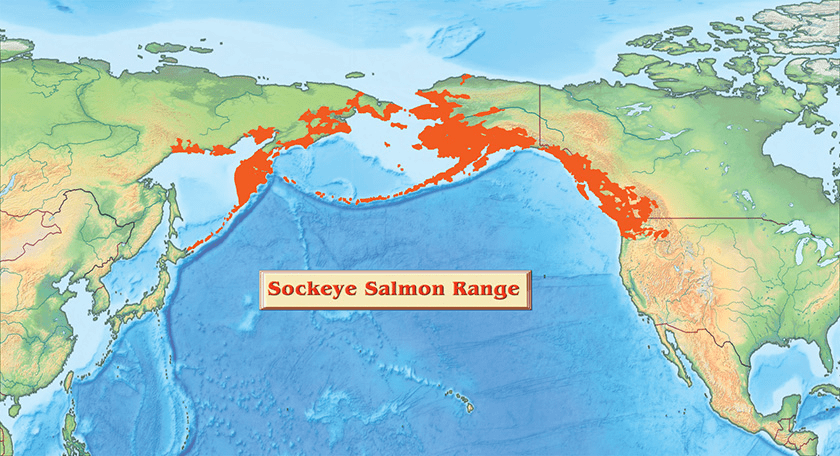
Also known as the red-fish, red, or blue-black, they are the most important commercial species. Sockeye have long gill rakers as they primary feed on plankton when in the ocean. They have the greatest life history diversity and can spend anywhere from 3 months to 3 years in freshwater.
They will spawn near shorelines, the bottom of lakes, or hundreds of miles upstream. Fry of this species rears almost exclusively in lakes. While in the ocean they are greenish blue on top of the head and back, silvery on the sides, and white to silver on the belly.
During the spawning phase the head and caudal fin become bright green and the body turns scarlet. Land locked populations of this species are known as kokanee. These fish generally live 2-6 years, are about 21-26in in length, and weigh about 4-7lbs
Salmon Enhancement Group / Crickey Conservation Society 2023.
Earth Files & Secret Alien Bases in Antarctica
Earthfiles is an award-winning news website where experts, eyewitnesses and viewers share the latest updates in Earth and astrophysical mysteries.
Since it’s first Science, Environment and Real X-Files news reports at the end of 1998 onward and evolving to date, Reporter and Editor Linda Moulton Howe has produced more than 2,500 in-depth reports with thousands of images, illustrations, maps, audio and video.
The entire Earthfiles Archive is organized chronologically by date from 1998 to the ever-evolving present.

Linda is an Emmy Award-winning TV producer and investigative reporter whose groundbreaking updates about Earth and astrophysical mysteries are in her radio, web and TV broadcasts as well as her books and DVD’s available in the Earthfiles Shop.
Linda goes directly to the men and women at the forefront of science and environmental breakthroughs and to firsthand eyewitnesses of high strangeness.
Linda Moulton Howe has received some three dozen TV production and journalism awards for excellence and life achievements that included her work at WCVB-TV (ABC) in Boston, Massachusetts, where she was honored in a Station Peabody Award for her medical and science productions.

In addition to Linda’s many TV journalism awards since graduating from Stanford University with a Masters Degree in Communication in 1968.
As the internet evolved and she began producing her Earthfiles.com website, Linda also received the 2006 W3 Silver Award for excellence in news category; the 2003 Web-award for Standard of Excellence; and the 2000 Encyclopaedia Britannica Award honoring internet excellence.
Please see Linda Moulton Howe – Bio.

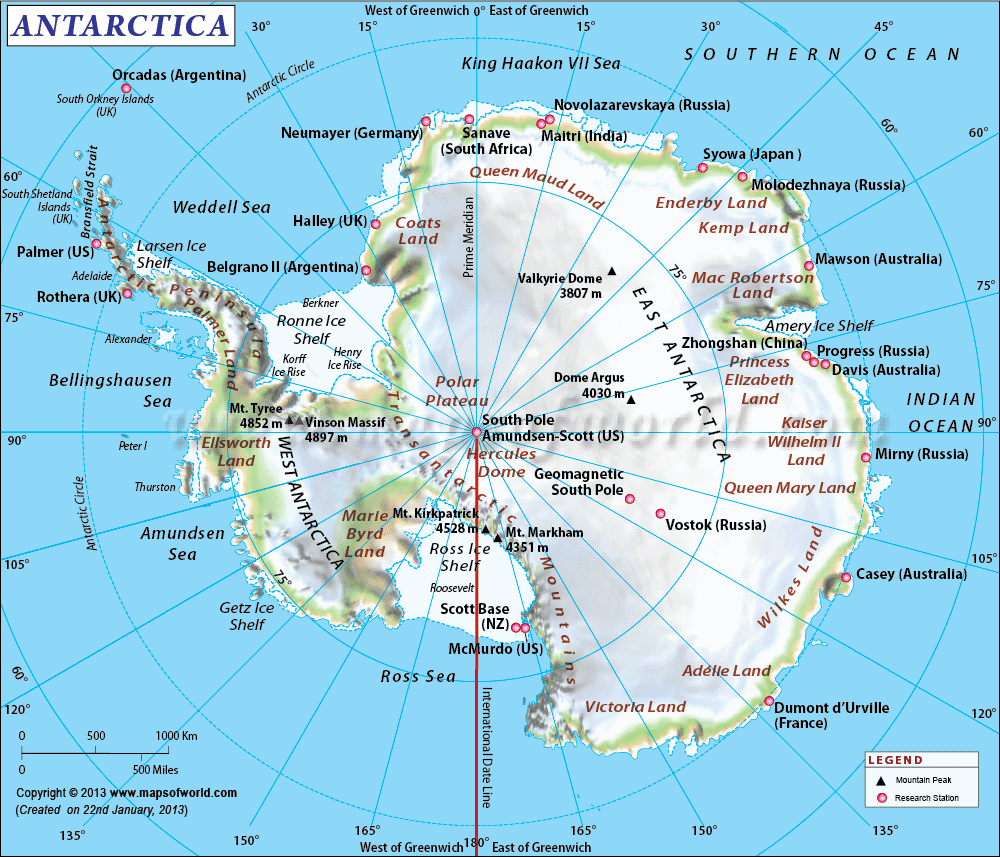
There is a huge secret hidden beneath the ice in Antarctica. Military whistleblowers report large secret alien structures under two miles of Antarctic ice.
Navy Seal Spartan 1 walked an alien hallway inscribed with mysterious hieroglyphs and tells investigative reporter Linda Moulton Howe that Antarctica’s alien presence spans centuries, linked to Star Gate portals around Earth and beyond our solar system.
Earth Files / Crickey Conservation Society 2023.
Amazing Telepathic Abilities of Animals and Plants
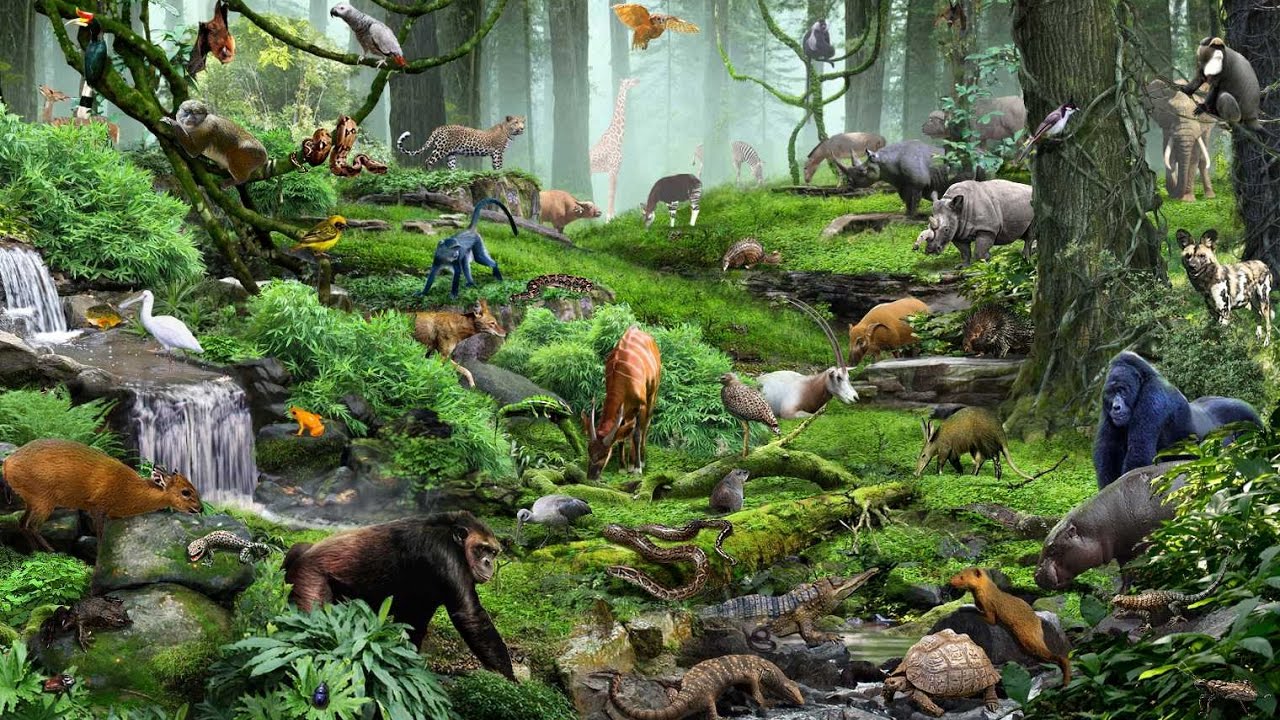
Can animals and plants communicate with us through telepathy? You may have heard that some humans can communicate using telepathy. But did you know that telepathy is not exclusive to humans?
In fact, all life forms in this world, including animals and plants, are probably communicating with each other by means of telepathy. As humans, we are too busy each day to see these signs.

Now, both the scientific and psychic worlds have started to notice this amazing phenomenon about the animal psychic that broke the boundaries and amazing discoveries that prove plants can communicate telepathically and may have consciousness!
When we think about communication, we usually refer back to speaking and writing. But what about connection through the mind? Telepathy is a gift that we all possess–and telepathic abilities are much more natural than one might think.
Passed down from our ancient ancestors, we all have the innate ability to connect with the consciousness of others. We hope is that through this article, we can help you connect with and strengthen your own telepathic powers.
Telepathy is the process of receiving thoughts or feelings from another person. It is a type of Extrasensory Perception (ESP.) Telepathy usually happens over distance and without the use of other senses like hearing or touch. There are several types of telepathic activities.
To understand telepathy, you have to understand our human makeup on a deeper level. As humans, we all have consciousness–the ability to be aware and to feel. It is everything you experience.
We also have the ability to connect with the consciousness of others. This happens by aligning your own consciousness grid with the grid of another.

Another way of thinking about this is to think about what is underneath the skin as vibrating energy. Like a radio, every one of us contains the ability to transmit a number of frequencies.
When we are able to align our frequency with the vibration of another, we can communicate telepathically. We no longer need the other senses as we have a direct connection.
One common example that we hear of quite often is twins who are able to communicate without speaking. They might finish each other’s sentences or know instantly when the other is sad or hurt.

Because they were born vibrating on the same (or almost) at the same level, they don’t have to fine-tune their radios to connect. They’re already on the same station. But what does that mean for the rest of us?
For one, it means that telepathy is possible, which I think is a very powerful win. Even if that means that us’ singles’ have to work just a little bit harder to connect through the mind than those who shared a womb with another, the fact that it is possible equals we can too.
It also means that telepathy is a lot more intrinsic than once thought. By digging a little deeper, you may find signs that you already have telepathic powers.
If you’re old enough to read this article, you’ve probably had many different telepathic experiences already. There’s a really fine line between what is ‘psychic,’ what is a ‘premonition,’ and what is straight-up use of our telepathic abilities.
Letting loose and trusting your gut allows you to better connect with the frequencies of others, those that mean you well, and those who don’t.
Also, telepathy often happens when we are dreaming since our sleep time is when our brain waves are at a frequency that really allows for an influx of data to flow in. Although we see time as linear, it’s really not that simple.

Are you prone to headaches or sensations around the center of your forehead? Believe it or not, this can be a sign of telepathic abilities. Your third eye is part of your chakra system and is located between your eyebrows.
Tingling or tension in this area usually has one of two causes: your third eye is expanding, or you’re picking up telepathic energy. If this is happening to you, don’t be afraid. As you hone in on your abilities, these sensations usually subside.
Telepathy and empathy are often intertwined. Empathy is the ability to understand and relate to the feelings of others. Telepathy, on the other hand, is more connected to others’ thoughts.
Another difference is that em-paths usually receive while those who are telepathic can transmit as well. What starts as empathetic gifts can often be grown into telepathic ones with further development.
Those with gifts often feel drawn to spirituality long before they realize the power that they possess. This is because your consciousness knows the truth of your being, even if you haven’t fully awakened.
If you find yourself being drawn to spiritual practices such as meditation, connecting with your ancestors, accessing your Akashic Records, or being one with the natural world, there is probably a gift waiting to be discovered.

Do you always know when someone is telling you a half-truth? Just like claircognizants, telepathic people can usually sense when those they are communicating with are saying things aren’t accurate. Whether they realize it or not, their inner thoughts are giving them away.
Once you’ve honed your telepathy skills, you’ll start to pick up on thoughts directly. This can be similar to clairaudience. You may ‘hear’ the thoughts, or you may ‘just know.’ Either way, telepathy will allow you to know what others are thinking.
Telepathy isn’t just about hearing the thoughts of others. It also means being able to implant messages into the minds of others. Some people even take this as far as implanting messages. But of course, that takes a good bit of practice.

Like most psychic abilities, building up your ability to send and receive messages mentally is similar to building a muscle. Without a guide, the process can seem overwhelming. If you’re looking for steps to develop telepathy powers, these are a good place to begin.
Having a solid meditation practice is one of the best ways to tap into telepathic abilities. Contrary to popular belief, meditation is much more than sitting with your legs crossed chanting ‘Om, the Universal login in code to the cosmos.
Meditation is the process of training your mind to focus. It is also one of the best ways to learn to redirect your thoughts. Every time you open your mouth, a honk or the sound of blaring radio drowns out your voice. This is how it is to try and practice telepathy with cluttered thoughts.

Only with a clear and focused mind are we able to connect with our own consciousness and the consciousness of others. Some people are better senders, while others, are better receivers.
Neither is better or worse. Just like with sports or instruments, some people are more naturally inclined toward a particular activity. Here’s a quick question that can help you figure out which skill you possess. Are you more likely to do the following.
Pick up the phone and call a friend who then says, I’ve been thinking about you. Or think of a person and then suddenly, they call. If your answer is the first, you’re probably a receiver; if it is the second, you’re more likely a sender.

When you’re interacting with others, make a conscious effort to pick up on what they’re thinking but not saying. This might come across as a feeling rather than words. You can even try this with a spouse, parent, sibling, or friend.
Have them think of thoughts and see if you can receive the message. Just make sure you’re not practicing with a skeptic. Otherwise, there might be a vibrational block. When it comes to telepathy, practice makes perfect.
There’s no way to know if you’re actually getting your message across unless you’re actively trying to. One simple way to do this is an exercise called hello/goodbye.

Now here’s the important part. You must watch their facial expression. If they seem confused or surprised, they’ve probably received your message. They’ll probably never say anything out loud, most people wouldn’t, but they will almost always give a nonverbal reaction.
It’s important to always trust your gut and not to second guess, whether you’re sending telepathic messages or receiving them. Telepathy in relationships is common for the same reason it is most seen with twins: vibrations.
If you’re deeply connected to a person, you’ll likely function on the same vibrational level. Lots of animals communicate using telepathy, which leads to the question: why would some people believe that humans can’t?
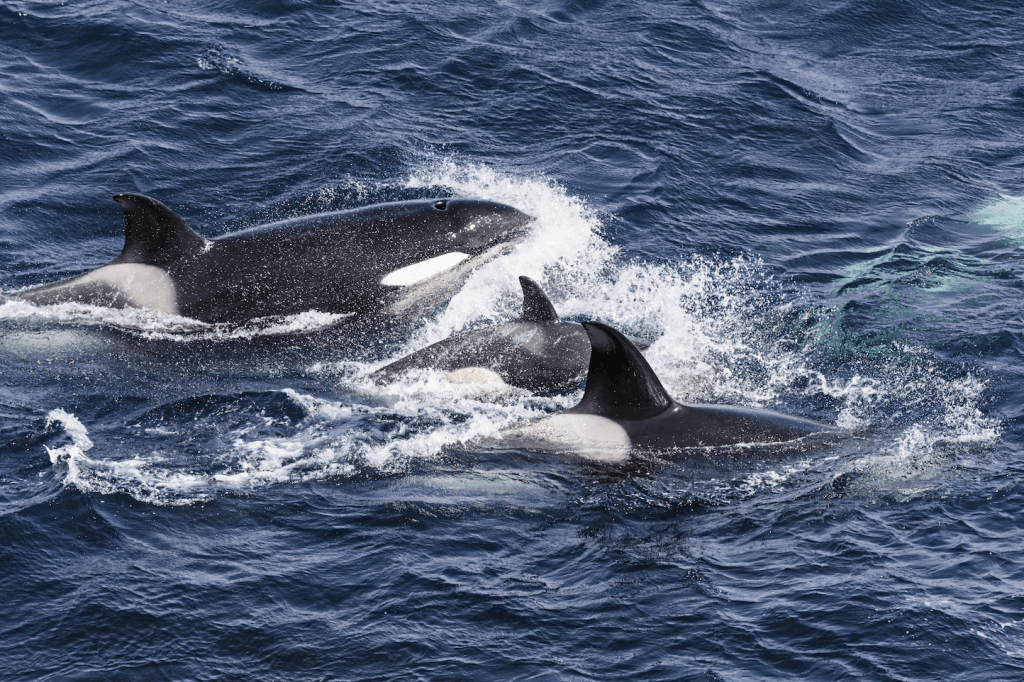
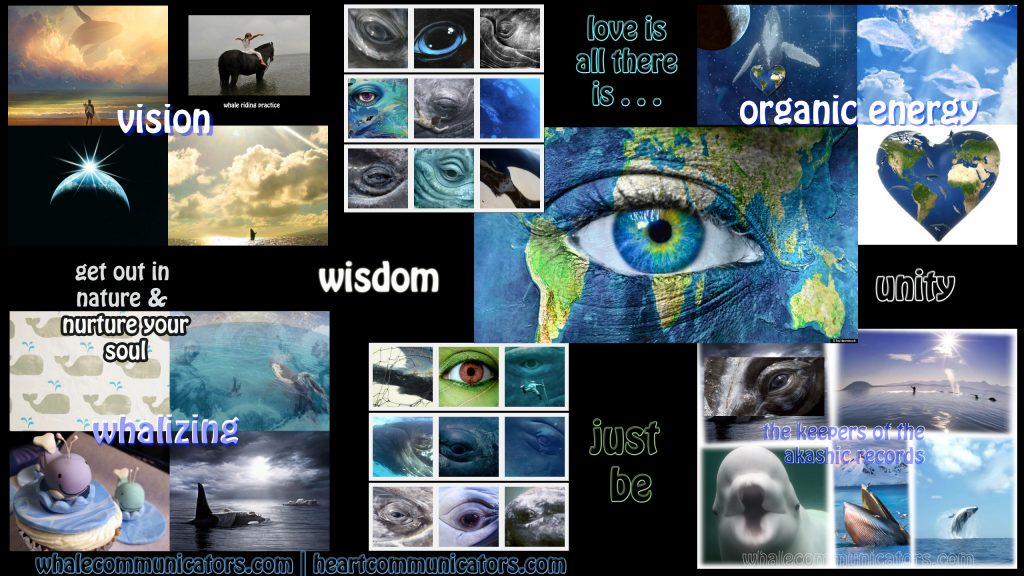
Whales are a great example as they possess a form of communication that allows them to send signals to other whales, even those that are a hundred miles away.
Dolphins, cats, monkeys, and all kinds of animals also show this ability. There are even ‘animal whisperers’ who claim to be able to directly communicate with animals using telepathy.
So, those of us who believe that humans can send and receive telepathic messages might dig into animal research for more clues. You already possess everything you need to tap into consciousness and send and receive telepathic messages. Practice (and a little support) is all that is needed.
Little Spark of Joy / Crickey Conservation Society 2023.
Scientists found Fossilized Remains of 340-Pound Giant Penguin in New Zealand

There are 17 to 19 species of penguins living today, most in the Southern Hemisphere. Also found in New Zealand and parts of Zealandia, are other flightless birds – like an ancestor to New Zealand’s beloved Kiwi and a giant “elephant bird” that also lived in Madagascar as recently as 800 years ago.
Fossilized remains of the largest penguin known to science were recently discovered in New Zealand, shocking researchers who determined the massive bird weighed hundreds of pounds.
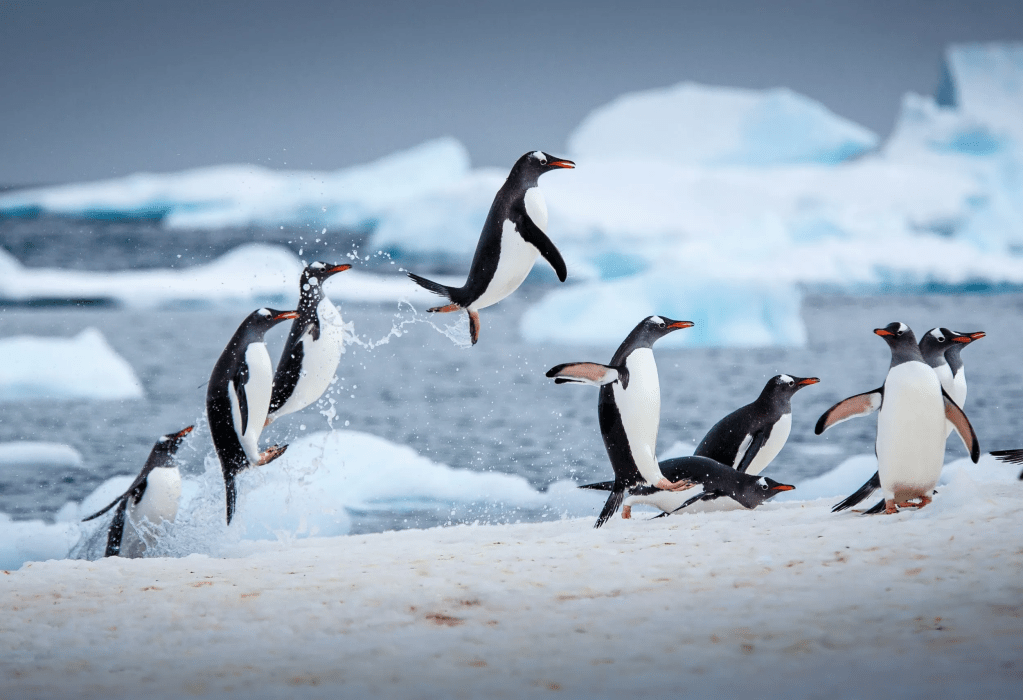
Named Kumimanu fordycei, paleontologists believe the species could have weighed up to 340 pounds. By comparison, the average adult male Western lowland gorilla weighs about 300 pounds.
The fossil was discovered in a 57-million-year-old boulder that had been cracked open with the tides.
Along with it they also found the remains of several individual specimens of another large but not quite as big previously undiscovered ancient penguin named Petradyptes stonehousei and fragments of two smaller yet-unnamed species of ancient penguins.
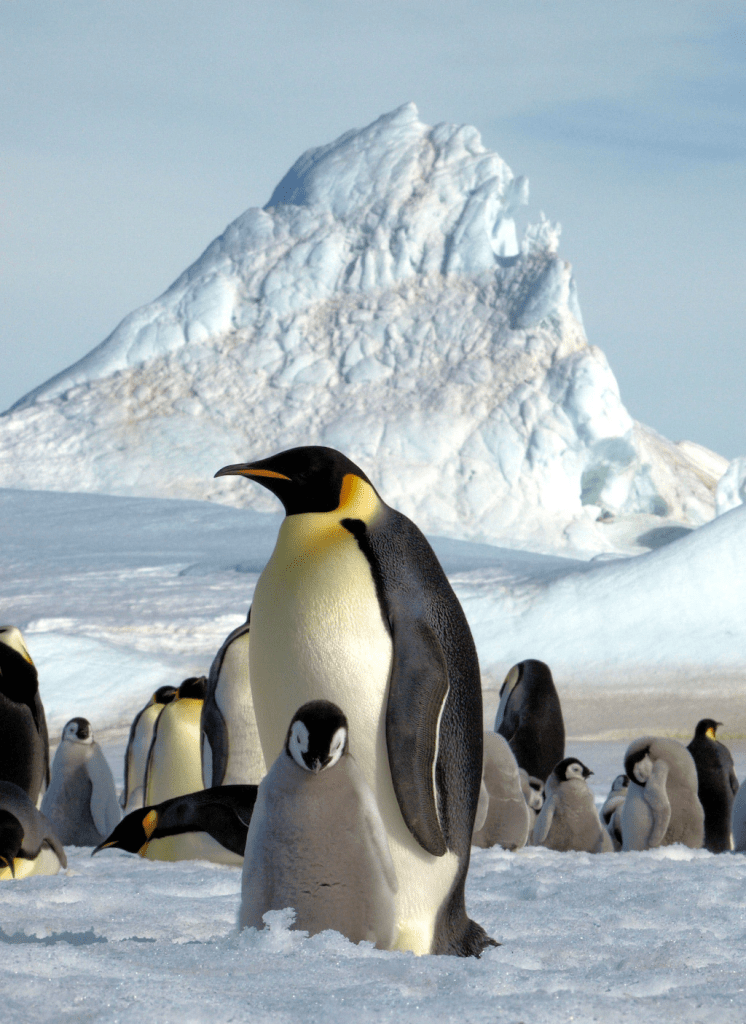
Scientists estimate the newly-discovered penguins lived around 60 million years ago. Petradyptes, they estimate, weighed around 110 pounds, far smaller than the Kumimanu, but still large for a penguin. The emperor penguin, the largest penguin on Earth today, can weigh up to just 88 pounds.
The fossils were discovered by Alan Tennyson, a paleontologist at the Museum of New Zealand Te Papa Tongarewa in 2017, but were described and named on Wednesday in the Journal of Paleontology.
Most of what scientists know about the Kumimanu fordycei came from a humerus bone, which was nine and a half inches long – about twice the length of those in the emperor penguin.

Paleontologists have been unable to determine the height of the ancient giant penguin but one estimated that it probably stood about 5 feet 2 inches. That gives the giant penguin a stocky build – the average aforementioned Western lowland gorilla stands at about 6 feet while being roughly 40 pounds lighter.
Coming from an older branch of the tree of the penguin evolutionary tree, both the Kumimanu and Petradyptes differed in appearance from modern day penguins in more ways than just their size.
Paleontologists say they had primitive flippers that resembled flying and diving birds like puffins. Their leg structure was also angled forward, unlike modern penguins whose legs are shaped like an upside down “L” coming out of their spine.

New Zealand has been a hot spot for finding ancient penguin fossils. In 2017, a closely related Kumimanu biceae was described as living just a few million years after the fordycei and weighed 220 pounds.
The slightly slimmer giant penguin had a sharp “stork-like” beak that researchers think may have been used to stab prey. The beak of the Kuminmanu fordycei has not yet been discovered.
In 2021, a 4.5-feet tall penguin with unusually long legs was described after a group of students in a fossil hunting club found fossilized remains on a small peninsula in the Kawhia Harbor during a field trip.

One explanation for why giant penguins thrived at the time is because they evolved shortly after the meteor that killed off the dinosaurs hit Earth. That impact also killed most of the sea-faring reptiles, leaving a niche open for a large amphibious predator to fill their space.
Sea-faring mammals, like seals and whales, had not yet evolved. Paleontologists hypothesize that once mammals reentered the sea, the giant penguins were out-competed and only the smaller penguins survived.
It is also worth noting that scientists now believe New Zealand and the island of New Caledonia are a part of the Earth’s eighth continent, with most of the landmass sitting below the sea.

This continent is known as Zealandia, which they believe broke off from the Southern Hemisphere super-continent of Gondwana about 105 million years ago.
What would become Zealandia then stretched out in a process scientists don’t yet understand. Scientists are still debating if most Zealandia was always submerged, with just small islands poking out, or if it sank at one point.
In either case, a sinking continent or a collection of islands make for a natural habitat for penguins. If it did sink, scientists estimate that it would have taken over a hundred million years, meaning the giant penguins could have lived while much of Zealandia was still above sea level.
Sputnik / Crickey Conservation Society 2023.
Sockeye & Pink Salmon
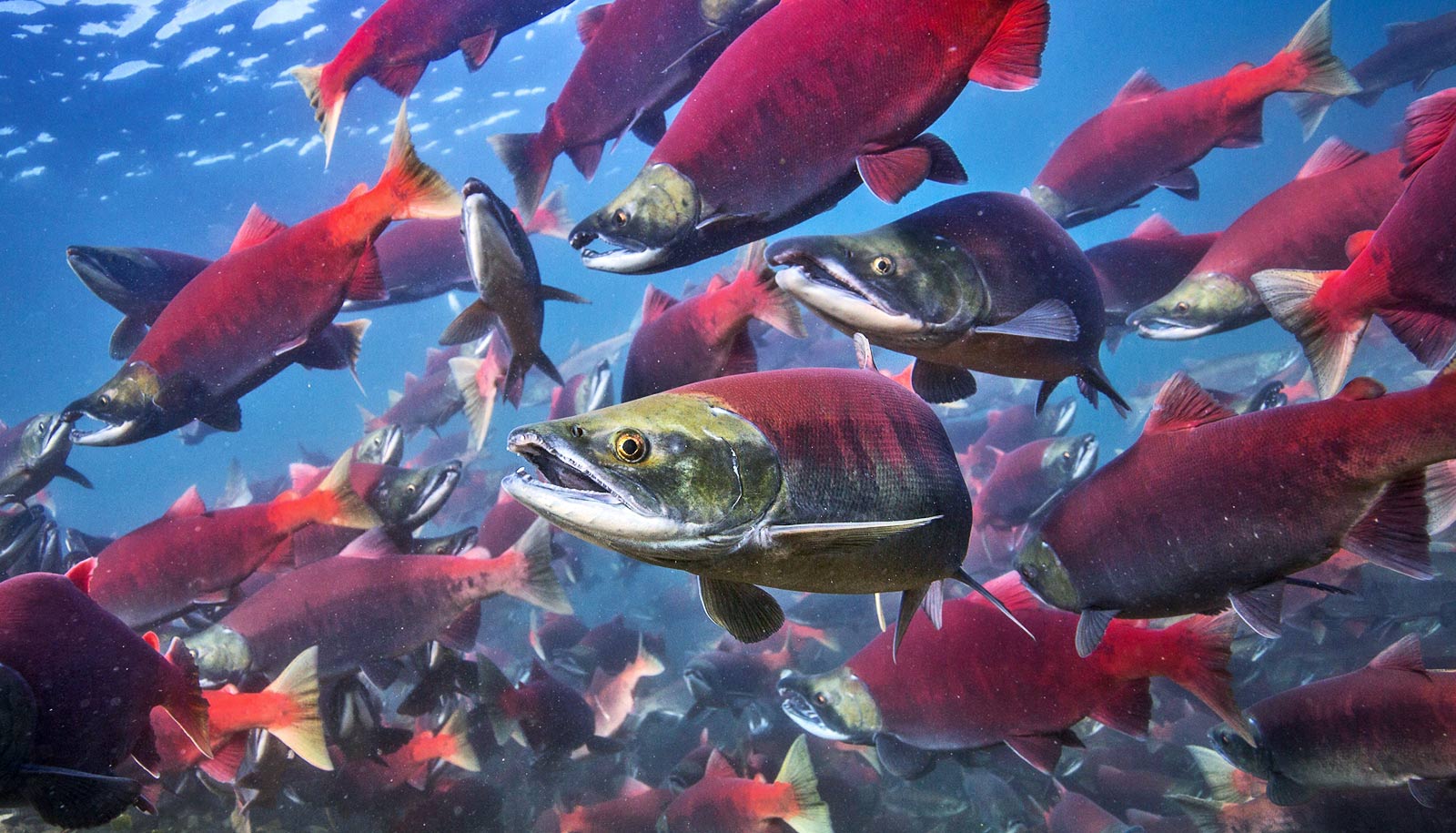
Sockeye salmon, also known as the red fish, red, or blue-black, are the most important commercial species. Sockeye have long gill rakes as they primary feed on plankton when in the ocean. They have the greatest life history diversity and can spend anywhere from 3 months to 3 years in freshwater.
They will spawn near shorelines, the bottom of lakes, or hundreds of miles upstream. Fry of this species rears almost exclusively in lakes.

While in the ocean they are greenish blue on top of the head and back, silvery on the sides, and white to silver on the belly.
During the spawning phase the head and caudal fin become bright green and the body turns scarlet. Land locked populations of this species are known as kokanee. These fish generally live 2-6 years, are about 21-26in in length, and weigh about 4-7lbs.
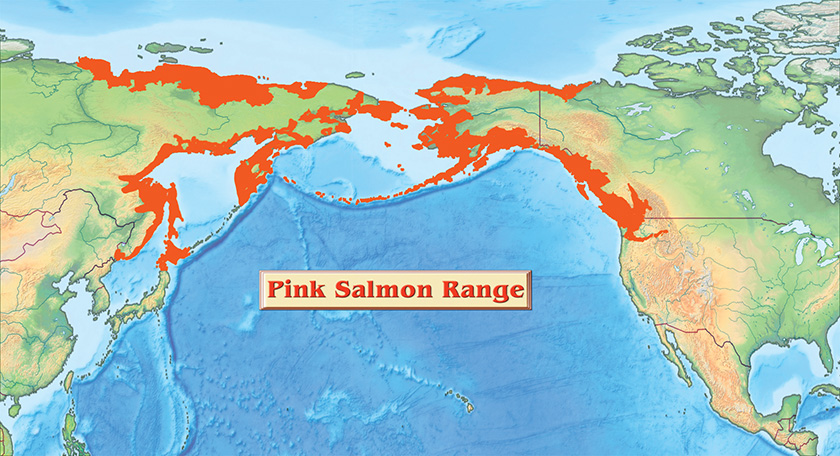
Pink salmon, are also known as humpies, due to the very large hump males get just behind the head, during the spawning phase. Although they are the smallest of the species, they are the most abundant in number.
They spend the least amount of time in freshwater, spawning in two year cycles very close to the mouth of streams with little to no upstream migration.

While in the ocean they appear to have steel blue to blue green backs, silver sides, and a white belly with large oval spots covering their back, adipose fin and both lobes of the caudal fin.
During the spawning phase pinks have dark backs with a pinkish wash and green blotches on their sides. These fish generally live for 2 years, are about 18-24in in length, and weigh about 3-5 lbs.
South Puget Sound Salmon Enhancement Group / Crickey Conservation Society 2023.
The Mystery of the Longyou Caves in China
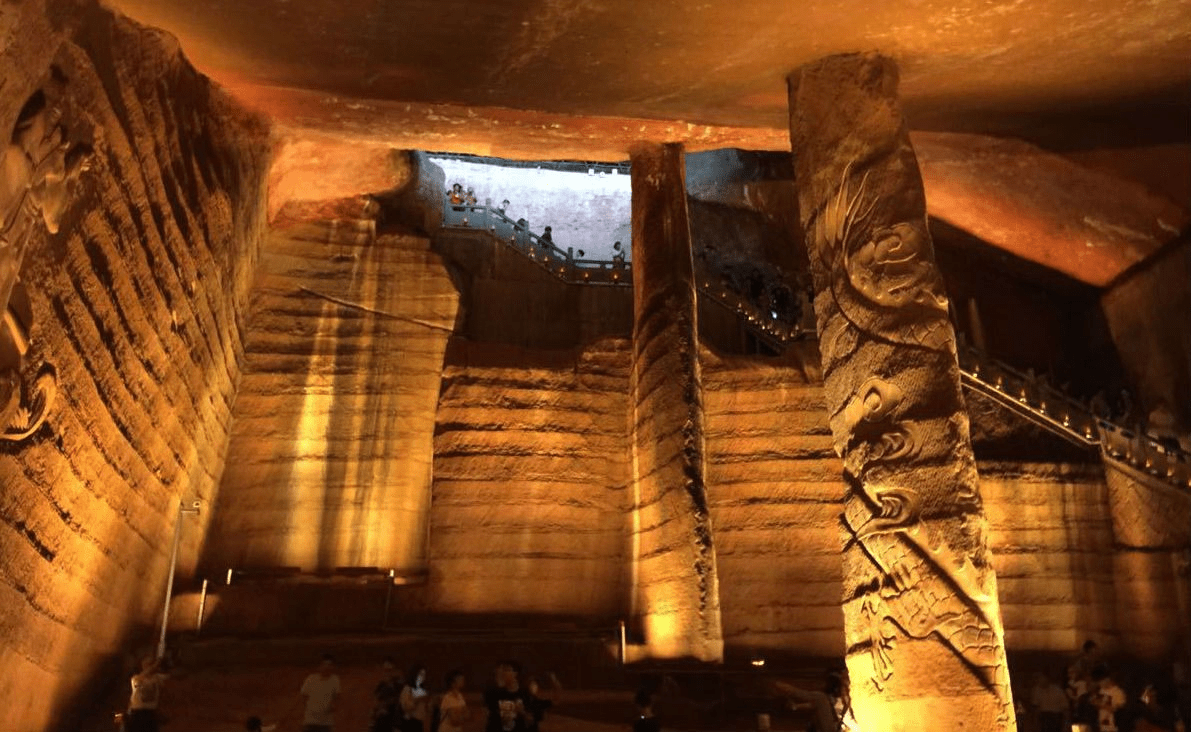
For as long as anyone could remember the ponds of Longyou County were thought of as “bottomless,” but when one local set out to see how deep they really were he discovered the first in a series of massive hand-carved caves, the origin of which is almost a complete mystery.
Discovered after draining a local pond, these ancient man-made caves are still a complete mystery. In 1992, in the Chinese village of Longyou, a uniquely curious local named Wu Anai pooled his money with his neighbors to buy a water pump and began siphoning out the pond in his village.
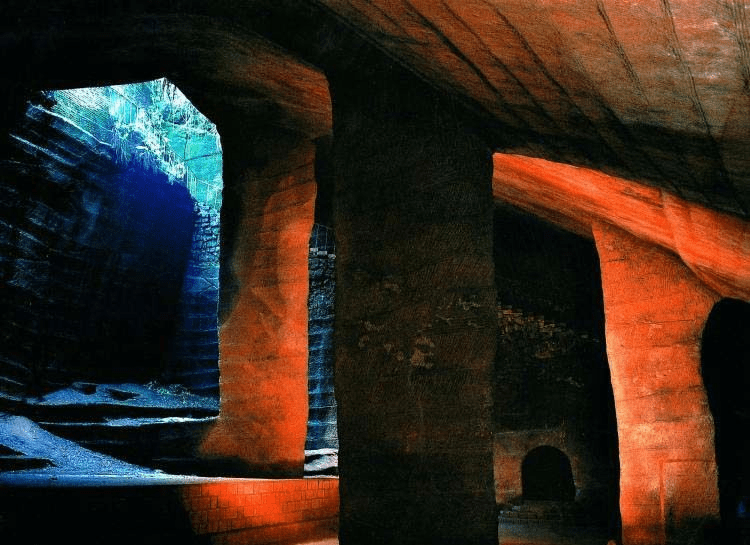
The pond was one of many in the area that were used for washing, fishing, and other chores, and which were always said to be endlessly deep.
Not satisfied with that fantastical depth, Anai completely drained one pond and found that it wasn’t really a pond at all, but the flooded entrance to an ancient, man-made cave.
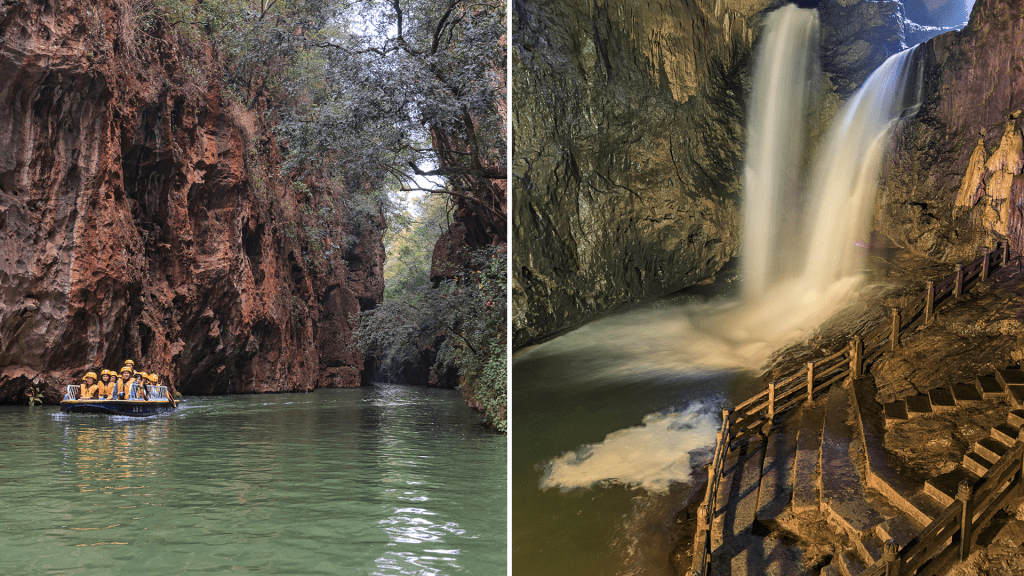
Soon other ponds in the area were also drained and they too were found to be strangely massive, hand-carved caves (24 in all). The huge caverns sink as deep as almost 100 feet and then sprawl out at the bottom.

While none of the caves are connected many of them share thin walls that it is remarkable the primitive builders did not puncture. The walls of the caves are also covered in carved lines and symbols, the meaning of which has yet to be deciphered. And that’s hardly the only mystery.
While the caverns have been dated back to around 200 BCE, there is no historical record of their construction, nor is there any evidence of the tools used to make them, or even their purpose.
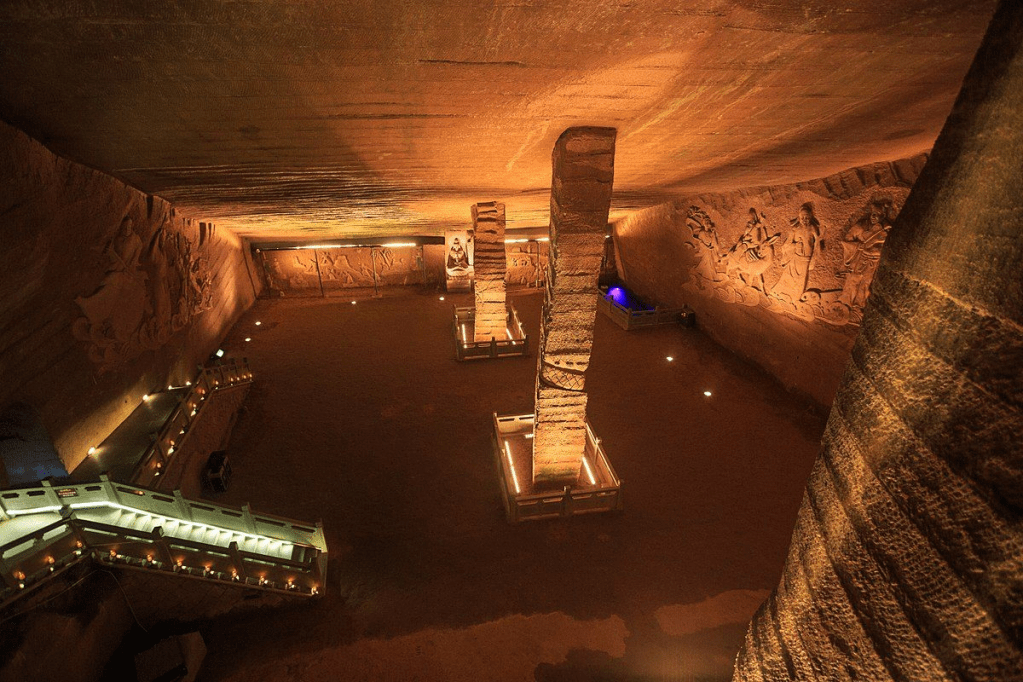
In addition no one is quite sure where the excavated rock went. The caves seem too big to have been the work of a small group villagers and it is thought that it would have taken over a thousand workers to build them in their day.
While the origins of the caves are still unknown, they are now open to visitors willing to make the trek to the remote village. Hopefully someone can come back with some answers.
Atlas Obscura / Crickey Conservation Society 2023.
The Mysterious inner Earth City beneath Tibet

Many mystical religions have a concept of an ideal place on Earth, a region untouched by human greed or vices where spiritually evolved people reside. In Buddhism, the legendary city of Shambala is one such place. Many believe that the city is located deep beneath the Earth.
Shambala is a Sanskrit word that means a place of peace or a place of silence. It is mentioned in Buddhist and Hindu texts. In Buddhism, it is specifically mentioned in the Kalachakra Tantra as a unique place that exists within our own planet.

Shambala is a kingdom where humanity’s wisdom is spared from the destructions and corruptions of time and history, ready to save the world in its hour of need, a commentary of the Kalachakra Tantra states (Collective Evolution).
Traditional Buddhists believe the place to exist somewhere in the Himalayan/Tibetan region. According to Tibetan beliefs, Shambala is guarded by unique beings with immense supernatural powers.
Some have reported seeing them. People who search for Shambala are said to either end up discovering the place or perishing in the process. Those who succeed choose to remain there, cut off from the rest of the world.
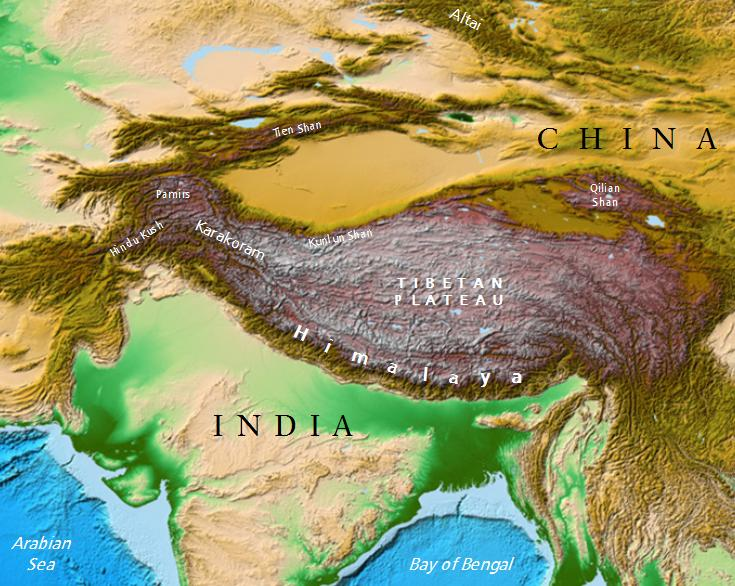
Shambala, being located inside the Earth, is also supported by the Hollow Earth Theory, which propounds that our planet is largely hollow, containing significant interior space that might contain vegetation and life forms.
However, Buddhists are not the only ones obsessed with the idea of Shambala. The Nazis were so smitten by the concept of a spiritual utopia that they sent several teams in search of the legendary place.
In the Himalayas, a Tibet expedition in 1938 was intended to produce new findings relating to early Germanic history. The Nazis believed in a Nordic master race that was supposed to have survived the demise of the legendary Atlantis.

In Tibet — so the theory goes — these people of Nordic origin are supposed to have constructed the underground realm of Shambalah, traces of which the expedition hoped to find, according to Above Top Secret.
The expeditionary team apparently came across a surprise in Shambala — a group of extraterrestrials. The beings refused to cooperate with the Nazi war efforts.
Instead, the extraterrestrials offered to travel to Germany to help people in their spiritual development. This is believed to have led to the establishment of the Vril society, an occult group.

One of Buddhism’s highest figures, the Dalai Lama, believed that only those with a pure mind could visit Shambala. Although those with special affiliation may actually be able to go there through their karmic connection, nevertheless it is not a physical place that we can actually find.
We can only say that it is a pure land, a pure land in the human realm. And unless one has the merit and the actual karmic association, one cannot actually arrive there, he said in a 1985 speech (Ancient Code).

Shambala is also mentioned in Hindu mythology as the birthplace of the 10th avatar of Lord Vishnu. Named Kalki, the incarnation is prophesied to appear on Earth when evil reaches its peak.
The avatar will destroy all wicked people and help the surviving good ones to usher in a new golden age that will last for 10,000 years.
NSpirement / ABC Flash Point News 2023.
How to Plant Lemongrass to Repel Mosquitoes
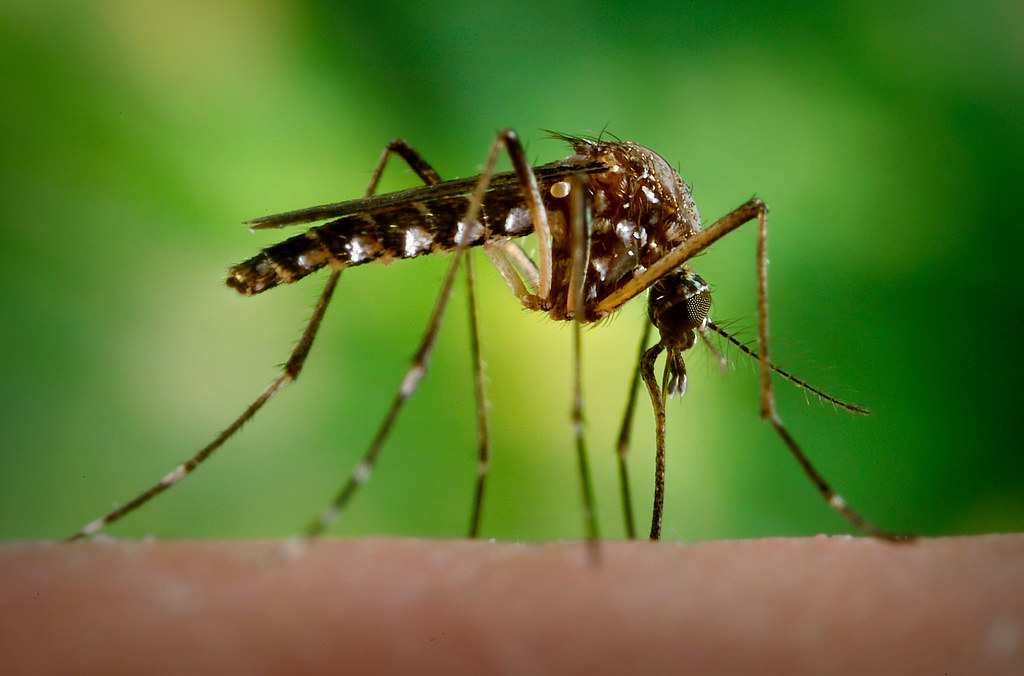
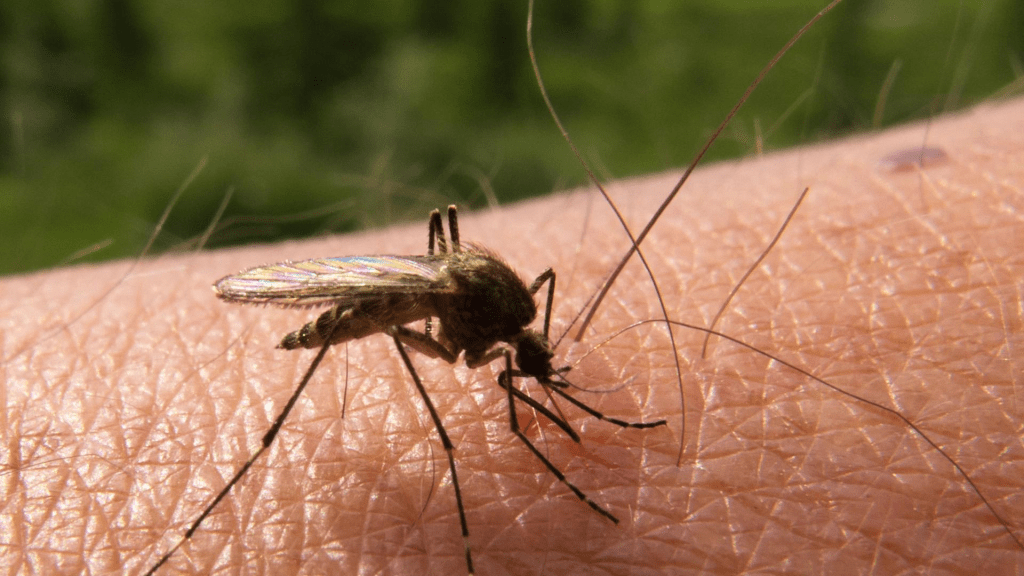
Let’s be real – everyone loves summer and the hot weather, but no one enjoys the bugs that come along with it. I hate mosquitoes. I mean, I know I am delicious, but that’s besides the point. Their bites itch, and some species even leave welts and red marks on your skin that can last weeks?
Thankfully, there are some things you can do, like learning how to plant lemongrass to repel mosquitoes from your backyard. Now, I know it seems far-fetched, but there are actually studies to back up how this works. But first, let’s take a little look at the lemongrass plant itself.
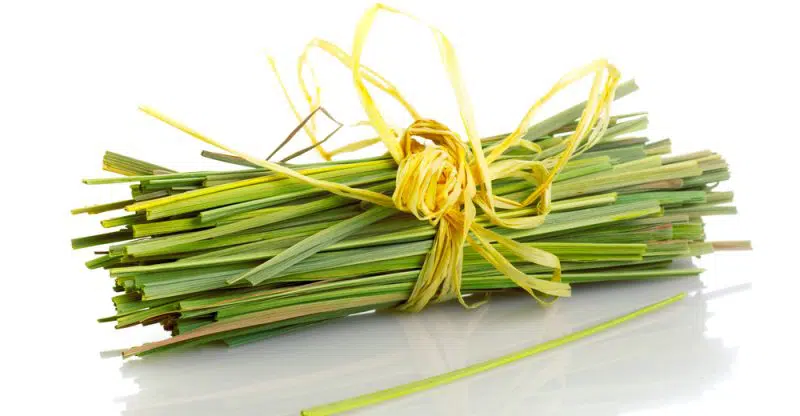
Lemongrass (Cymbopogon citratus) is a tall perennial grass, native to Asia, Australia, and Africa. It is considered a culinary herb, often used in Thai, Indonesian, Sri Lankan, and Indian dishes.
The woody stalks of lemongrass have a citrusy aroma that provides a subtle lemon-floral flavor to the aforementioned dishes. The tall stalks of lemongrass can grow up to ten feet tall, but it is the softer inner cores that are used for cooking purposes.
Lemongrass contains the essential oil ‘citronella’, which is commonly used in natural mosquito repellent found in candles, sprays, and lotions. But does citronella actually work to repel mosquitoes? Research says yes.

The oil supposedly works by masking scents that are attractive to insects, according to the National Pesticide Information Center (NPIC).
The oil is a mixture of components including citronellal, citronella, and geraniol, all of which possess antimicrobial, antithetical, antioxidant, anticoagulant, and wound healing properties (in addition to mosquito-repelling action.
A study found that citronella oil kept human subjects free from mosquito bites for up to 3 hours.

The authors go on to note that Mosquitoes in captivity exhibited active movement away from the oil-treated chamber of the box within the first minute of application: 43% repellency and 100% mortality were recorded after 18 minutes.
The plant gives off a slight lemony fragrance, but that alone will not be enough to keep pesky mosquitoes from entering your home uninvited.
The best and most effective way to repel mosquitoes using the plant is to crush the leaves, thus releasing the oil, and rub them directly onto your skin. Even so, this method will only repel mosquitoes for a short time.

Since the mosquito-repelling oils of the plant are embedded in the leaves, you need to plant a lot of lemongrass for it to properly take effect.
The lemony fragrance released from the plant will help repel bugs, but the most effective way to repel mosquitoes using the plant is to crush the leaves, thus releasing the oil and rubbing it directly onto your skin.
So if you want to deter mosquitoes with the intense fragrance of lemongrass, you can either plant it along your porch, walkway, or any other area that is in close proximity to your seating area. Leave the plant as is, or cut off pieces to rub into your skin to enhance its mosquito-repelling effects.

Lemongrass is a hardy plant that grows best in full sun and soil that drains well. It is well suited to container growing and can be grown as a perennial where winters are mild. While growing lemongrass can be a little challenging, the reward is well worth the effort.
You can either start the lemongrass from seed, or you can propagate from an actual lemongrass plant you find in the grocery store. Make sure you start your seeds or propagating roots on your lemongrass plant in late winter. Transplant outside only once nighttime temperatures reach 10ºC (50ºF).
When growing the lemongrass from seed, you’ll want to harden them off in early summer by slowly exposing them to full sun and cooler temperatures.
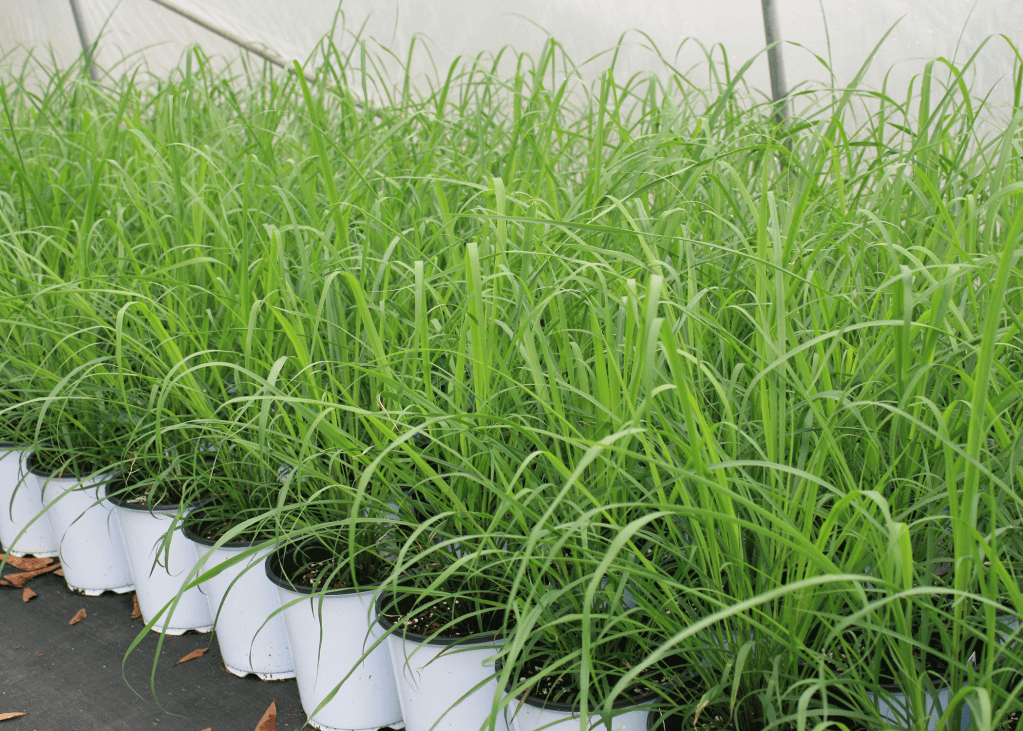
Once you’ve hardened them off, transplant individual seedlings into larger containers with good drainage. Keep the soil moist – water 2-3 times a week or more in hotter weather.
If your propagated plants are not already in a large 5-gallon well-drained container, consider transplanting them into one. Keep the soil moist – water 2-3 times a week or more in hotter weather.
Instead of pots, you can also plant lemongrass directly into the ground. So instead of transplanting into pots, you’d do so in freshly prepared and well-fertilized soil on the ground. Ground planting will generally only work in areas where winters are mild.
Whether you plant in the ground, or in pots, make sure to position the plants so that they are in an area around where you’d sit outside in the evening. This will help deter mosquitoes and other bugs.
At the end of the growing season, as night temperatures near 10ºC (50ºF), cut back your plants so that they are around 8 inches tall and reduce watering. If you planted your plants in containers, you can transfer them indoors to a bright, sunny spot.
If you planted them in too-large containers or in the ground, protect them from the frost by covering them in a burlap bag or other covering.

You can harvest your lemongrass and rub it onto your skin for even more mosquito-protecting abilities. Make sure to cut whole stalks from the base of the plant. The stalks should be at least 1/2-inch thick before picking.
Lemongrass can also be harvested to be used in teas and other dishes. The benefits of lemongrass range far more than just mosquito-repelling properties. It also helps to reduce inflammation in the body, relieves symptoms of PMS, can help alleviate headaches and promote relaxation.
Lemongrass contains two prominent anti-inflammatory compounds called citral and geranial, which reduces the expression of inflammatory markers in the body.

Lemongrass tea has been traditionally used to treat menstrual cramps, bloating and hot flashes. While there is no research specifically done on lemongrass and PMS, it does provide stomach-soothing properties and anti-inflammatory.
The anti-inflammatory, like limonene, help reduce prostaglandins that are often involved in pain and inflammation that trigger uterine muscle contractions.
According to some research, lemongrass may also help relieve pain caused by headaches and migraines. It does so via a compound called eugenol, which possesses abilities similar to aspirin.

Eugenol can prevent blood platelets from sticking together, and it also triggers the release of serotonin from the gut and brain. This hormone helps regulate our mood and sleep, which can be major headache-triggers if not properly synced.
Aromatherapy is a powerful tool for relaxation and helping reduce stress and anxiety – and lemongrass can help with that. One study looked at how lemongrass essential oil affected individuals when combined with massage.
What they found was that the lemongrass oil massage reduced diastolic blood pressure, with no effect on their systolic blood pressure or pulse. High blood pressure is a common side effect of stress, so by being able to reduce blood pressure, we can inadvertently calm ourselves down.

Plant mint, garlic and basil because mosquitoes also hate the scent of these plants. This beautifully scented flower can also help repel bugs. I used it when I was working up in Northern Manitoba, where the bugs are beyond anything I’ve ever seen in my life.
Surprisingly, it worked well. I did have to re-apply it every 30 minutes to an hour, but it was totally worth it.
Lavender essential oil has been used for centuries to repel bugs and protect clothes and linens from the infestation of moths and other insects. Lavender also helps control the inflammation and itching that comes with bug bites.
Live Love fruit / ABC Flash Point News 2023.
Scientists detect a ‘Tsunami’ of Gravitational Waves

A team of international scientists, including researchers from The Australian National University (ANU), have unveiled the largest number of gravitational waves ever detected.
The discoveries will help solve some of the most complex mysteries of the Universe, including the building blocks of matter and the workings of space and time.
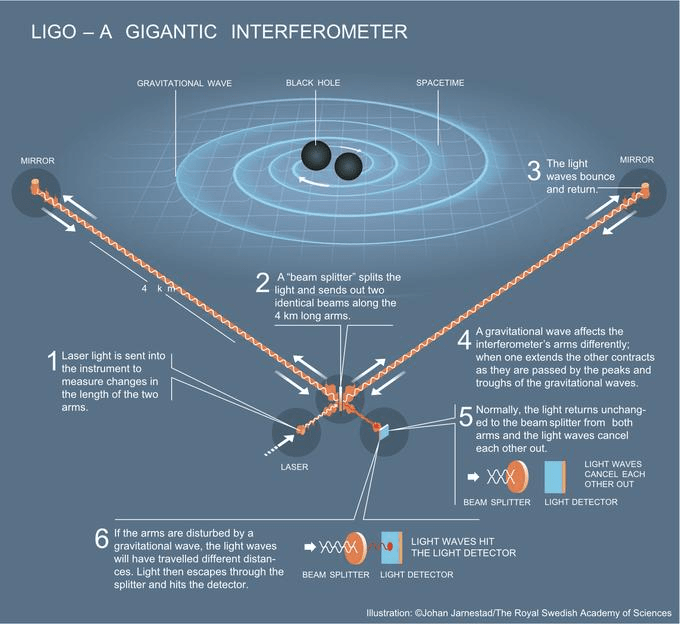
The global team’s study, published on ArXiv, made 35 new detection’s of gravitational waves caused by pairs of black holes merging or neutron stars and black holes smashing together, using the LIGO and Virgo observatories between November 2019 and March 2020.
This brings the total number of detection’s to 90 after three observing runs between 2015 and 2020. The new detection’s are from massive cosmic events, most of them billions of light-years away, which hurl ripples through space-time.
They include 32 black hole pairs merging, and likely three collisions between neutron stars and black holes.

ANU is one of the key players in the international team making the observations and developing the sophisticated technology to hunt down elusive gravitational waves across the vast expanse of the Universe.
Distinguished Professor Susan Scott, from the ANU Center for Gravitational Astrophysics, said the latest discoveries represented “a tsunami” and were a major leap forward in our quest to unlock the secrets of the Universe’s evolution.
Scott, who is also a Chief Investigator of the ARC Center of Excellence for Gravitational Wave Discovery (OzGrav), said the continual improvement of gravitational wave detector sensitivity was helping drive an increase in detection’s.
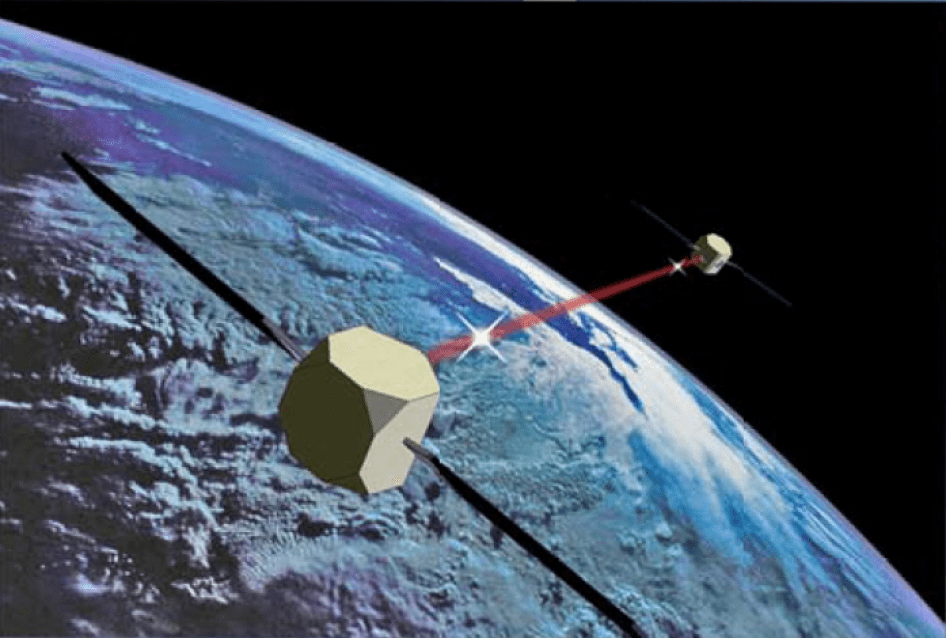
This new technology is allowing us to observe more gravitational waves than ever before. We are also probing the two black hole mass gap regions and providing more tests of Einstein’s theory of general relativity.
The other really exciting thing about the constant improvement of the sensitivity of the gravitational wave detectors is that this will then bring into play a whole new range of sources of gravitational waves, some of which will be unexpected
NSpirement / Australian National University / Crickey Conservation Society 2023.
Plants that attract Dragonflies for Mosquito Control

It always amazes me the way nature takes care of things in her own time, and her own way. If people only stopped taking control and started listening to her, we’d see the beauty of these interactions take place. Utilizing plants that attract dragonflies for mosquito control, for instance, is one such example.
I grew up in a place that danced with hundreds of dragonflies, and was always taken aback at how effective they were at controlling the mosquito populations.
Every evening in the warmer months, when bugs very evidently started to get worse, swarms of dragonflies would populate the skies and scoop up the bugs in a matter of minutes.
Utilizing dragonflies for mosquito control is natures way of telling us she’s got this. Only when we start intervening with harmful chemicals (like bug sprays and mosquito coils), will we do more harm than good.
Dragonflies are some of the best predators to keep mosquito populations low. Not only do they scavenge the skies in adulthood, but they eat large numbers of mosquito larvae in their larval form (which happens in the water).

One study found that dragonfly larvae could play a significant role in the regulation of mosquito populations. While they are most effective in their larval stage, adult dragonflies can still eat up to 100, if not many more, mosquitoes per day.
Not only do dragonflies control mosquito populations – they help control other bugs, too, like midges.
Attracting dragonflies to your garden and backyard requires planting a diverse array of plants. Planting trees and shrubs around the perimeter of the yard will provide adequate hiding spots for young dragonflies.
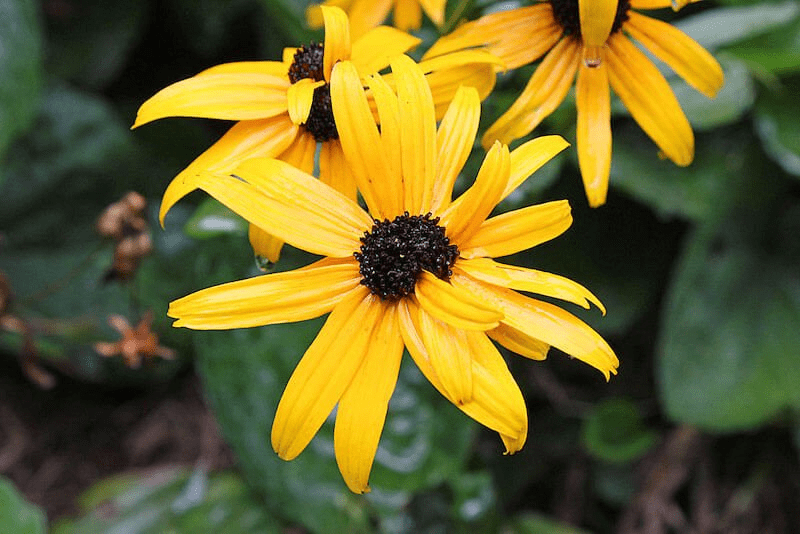
Black-eyed susans attract butterflies and other pollinators – a popular choice of the dragonfly (unfortunately so, but everyone has to eat!).
These bright yellow wildflowers typically live for around two years in climates that remain warm for most of the year, and will die off once winter hits in cooler climates. They adapt well to nearly every type of soil and require full sunlight and regular watering to bloom.

Blooming plants also attract pollinators (like butterflies, beetles, wasps, moths and other small flying insects that dragonflies love to prey on.
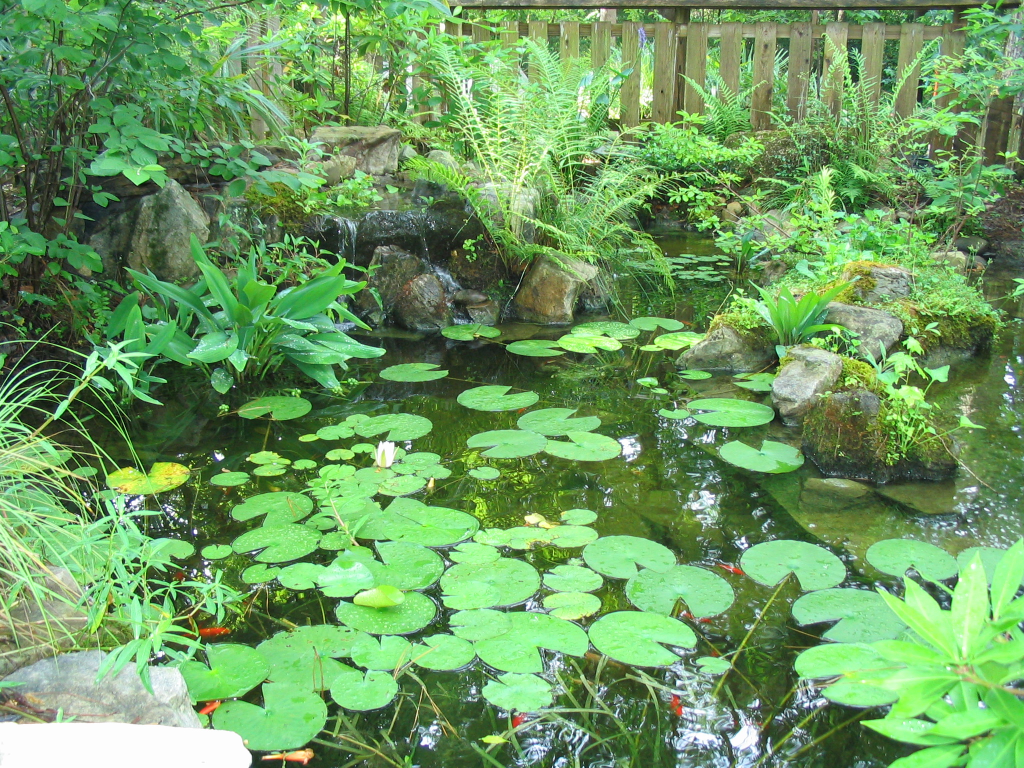
Water plants that grow near and within ponds are also highly sought out by dragonflies, but only if you’re willing to sacrifice a part of your yard with a pond (which wouldn’t be too bad, would it?
While building a backyard pond is the best way to attract dragonflies as they mate and lay their eggs in water, you can still attract dragonflies through other means.
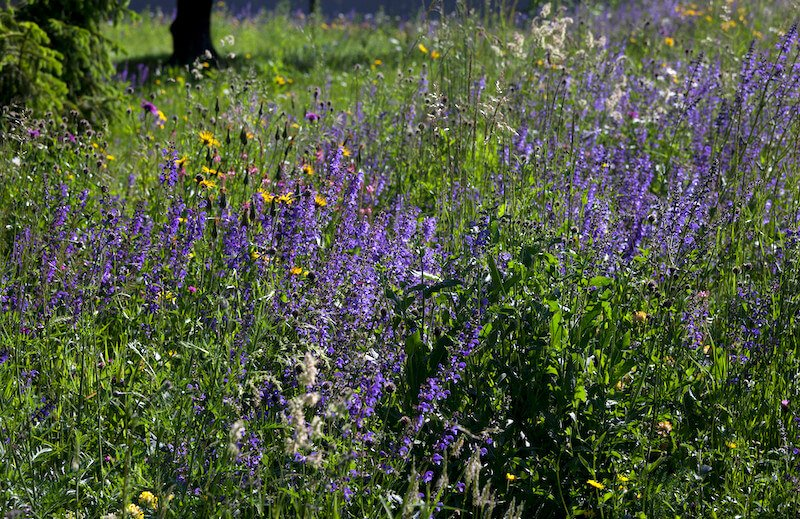
Planting flowers that attract prey for dragonflies will bring them to your garden indirectly. Here are five plants you can grow to attract more dragonflies into your backyard.
Meadow sage is a beautiful perennial with eye-catching purple flowers that attract butterflies and other small insects. This flower loves full sun, but it can also do well in partial shade.
The best growing location receives morning sun and afternoon shade. Once established, this plant does not need a lot of water. In fact, it can handle pretty well in drought conditions, but if scarcity of water does become a thing, make sure you give it a sip at least once a day.

Incorporating a pond into your backyard is also a good idea if you want dragonflies to return to your side of the neighborhood. Dragonflies spend two months to several years underwater, and water is a place they will return to time and time again.
If you provide water, dragonflies will come to hunt, reproduce, perch, and play.
Aside from the water-dwelling plants listed below, you should also provide rocks around the pond, and around your garden in general. Rocks provide hiding place for dragonfly larvae as they grow and develop under water.
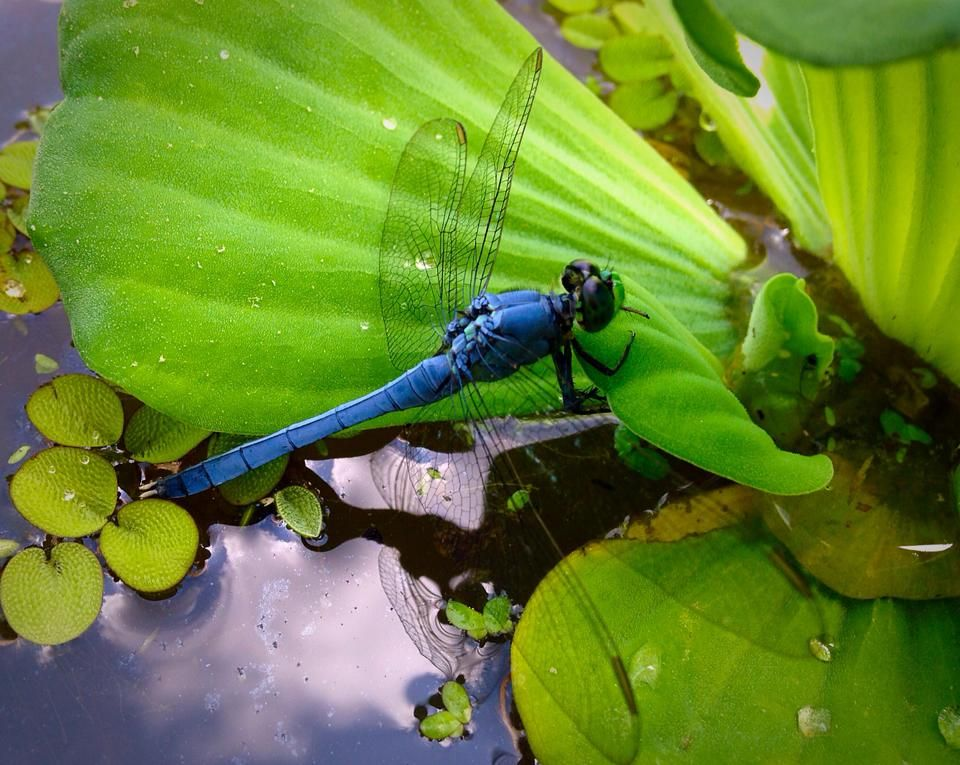
While you’re waiting for plants to grow tall enough for dragonflies to perch on, you can place sticks around your pond. This will give them somewhere to land and take a rest. You can use sticks from nearby trees, or bamboo stakes for plants and vegetables.
Floating plants like water lilies make the perfect egg-laying spot for adult dragonflies. Water lilies can be grown from tubers planted in pots beneath the water’s surface.
The plant will then send up stems with rounded leaves and star-shaped blossoms that float on the surface. Adding in rocks will help keep the plant submerged.
Live Love Fruit / Crickey Conservation Society 2023.
The Ocean Race to collect data about the Global Environment

The forthcoming edition of The Ocean Race, which sets sail from Alicante, Spain, on the 15th January, is set to feature the most ambitious and comprehensive science program created by a sporting event.
The round-the-world sailing race will measure microplastic pollution, gather information about the impact of climate change on the ocean and collect data to improve global weather forecasting.
Every boat participating in the grueling six-month around-the-world race will carry specialist equipment onboard to measure a range of variables throughout the 60,000km route, which will be analyzed by scientists from eight leading research organizations to further understanding about the state of the ocean.

Sailing through some of the most remote parts of the planet, seldom reached by scientific vessels, teams will have a unique opportunity to collect vital data where information is lacking on two of the biggest threats to the health of the seas: the impact of climate change and plastic pollution.
Data will be delivered to science partners faster, transmitted via satellite and reaching the organizations, which includes World Meteorological Organization, National Oceanography Center, Max Planck Society, Centre National de la Recherche Scientifique and National Oceanic and Atmospheric Administration, in real time.
Two boats, 11th Hour Racing Team and Team Malizia, will carry OceanPacks, which take water samples to measure levels of carbon dioxide, oxygen, salinity and temperature, providing insights about the impact of climate change on the ocean.

Trace elements, including iron, zinc, copper and manganese, will also be captured for the first time. These elements are vital for the growth of plankton, an essential organism as it is the first part of the food chain and the ocean’s biggest producers of oxygen.
GUYOT environment – Team Europe and Holcim – PRB will take regular water samples throughout the race to test for micro-plastics.
As with the previous edition of the Race, the amount of micro-plastics will be measured throughout the route and, for the first time, samples will also be analyzed to determine which plastic product the fragments originated from (for example, bottles, straws or carrier bag).
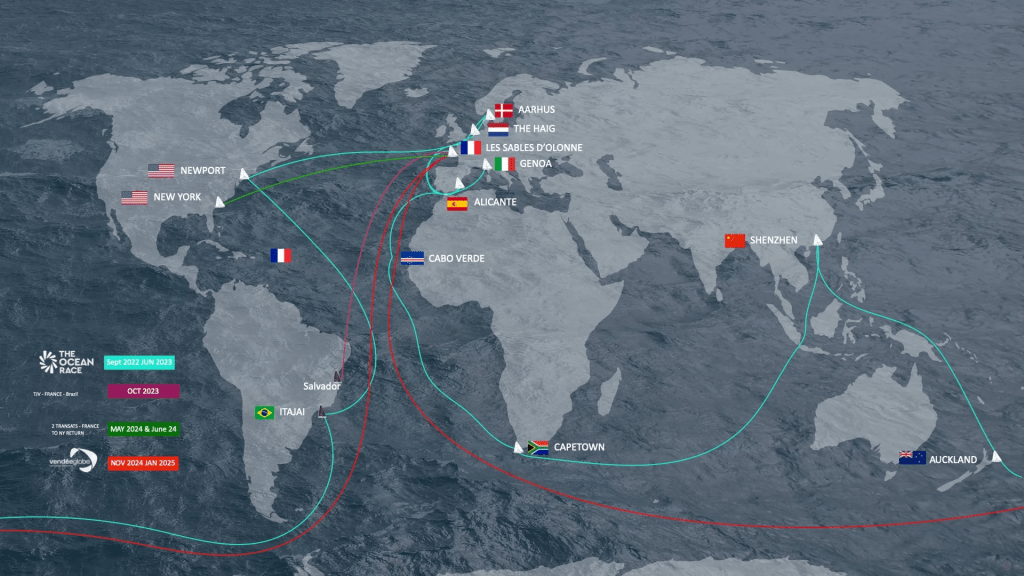
The entire fleet will use onboard weather sensors to measure wind speed, wind direction and air temperature.
Some teams will also deploy drifter buoys in the Southern Ocean to capture these measurements on an ongoing basis, along with location data, which helps to grow understanding about how currents and the climate are changing.
Meteorological data will help to improve weather forecasts and are particularly valuable for predicting extreme weather events, as well as revealing insights on longer-term climate trends.

Biotherm is collaborating with the Tara Ocean Foundation to trial an experimental research project to study ocean biodiversity during the Race.
An onboard automated microscope will record images of marine phytoplankton on the ocean surface, which will be analyzed to provide insights on phytoplankton diversity in the ocean, along with biodiversity, food webs and the carbon cycle.

All of the collected data is open-source and shared with The Ocean Race’s science partners – organizations across the world that are examining the impact of human activity on the ocean.
Info feeding into reports, including those from the Intergovernmental Panel on Climate Change (IPCC) and databases such as the Surface Ocean Carbon Dioxide Atlas, which provides data for the Global Carbon Budget, a yearly assessment of carbon dioxide that informs targets and predictions for carbon reduction.
The Ocean Race / Crickey Conservation Society News 2023.
 Crickey Amigu di Natura