
Brazil’s Pesticides Poisoning Global Consumers through Agricultural Exports
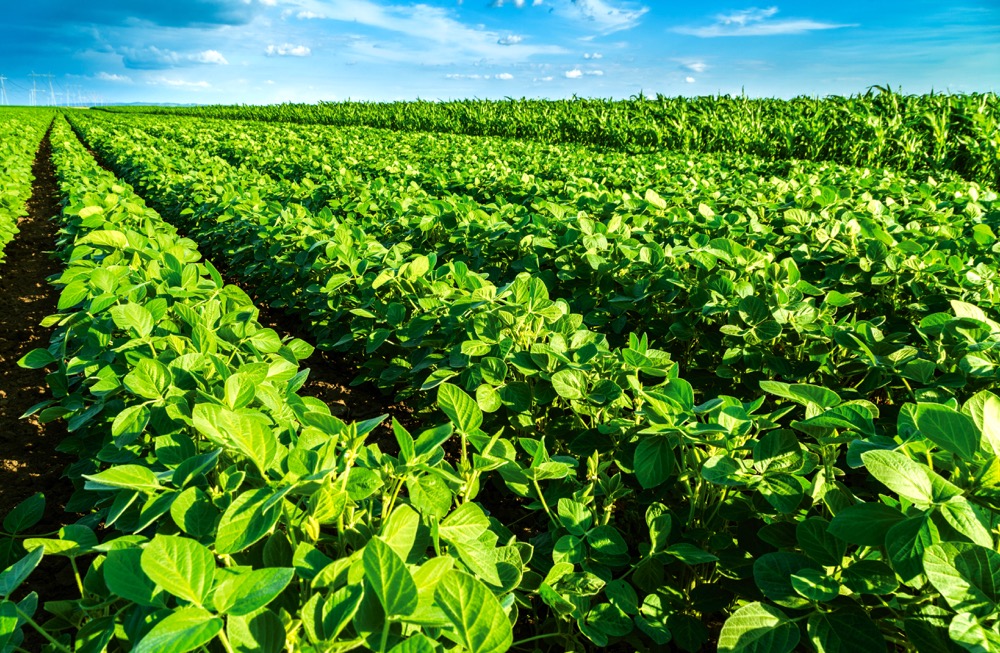
Brazil’s government has approved extremely toxic agricultural pesticides this year and loosened regulations, which is now is affecting consumers all over the world.
Environmental journalist and founding member of the Green Economic Institute think tank Oliver Tickell, said that EU-banned pesticides being manufactured in the EU, are coming back to citizens in the EU, in the food we eat.

Brazil supplies, as one of the largest soy exporters in the world, a significant quantity of the feed that cattle and other livestock worldwide consume.
European consumers tucking into a juicy steak have no idea that the creature they’re eating might have been nourished on soy sprayed with highly toxic pesticides.
The fervently pro-business government of President Jair Bolsonaro has already approved 262 pesticides this year, 82 of which are classed as “extremely toxic.”

Jair Bolsonaro follows through on campaign promises to demolish environmental regulations and open up protected rain forest lands to mining and agriculture.
This is not just a problem for Brazil and its people exposed in the countryside to these pesticides, but it is affecting people all over the world through Brazil’s agricultural exports.
While Agriculture Minister Tereza Cristina has flatly denied Brazil uses any more pesticides than any other country, EcoWatch claims the country consumes more pesticides per capita than any other nation.
Crickey Conservation Society News 2019.
Amsterdam Lelystad Airport opening delayed until 2020 due to Carbon Footprint

The opening of the Dutch biggest general aviation airport to commercial flights has been delayed until 2020.
Lelystad Airport, which was bought by the Schiphol Group in 1993, was due to open to civil aviation in April 2019, taking pressure off of Amsterdam Airport Schiphol.
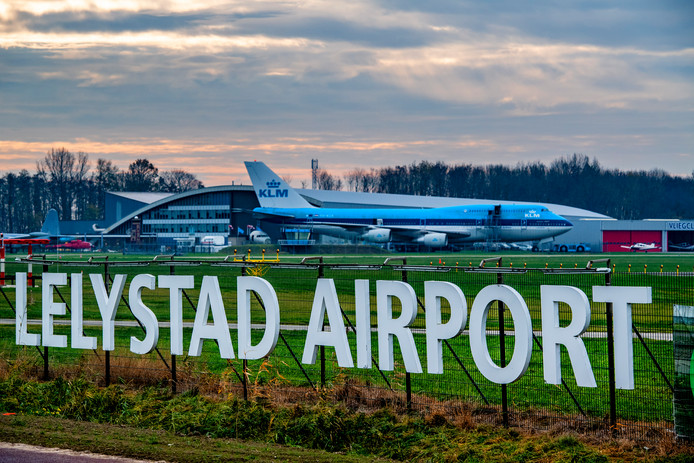
The biggest general aviation airport in the Netherlands, Lelystad Airport expansion was due to be completed in April 2019 so that it could begin taking commercial holiday traffic for the polluting travel industry.
In a statement published on Lelystad’s website, the airport’s Director Hanne Buis said he was disappointed with the report that the Dutch transport minister saw no possibility to open up Lelystad Airport in 2019 for Holiday Traffic.
At the same time, the minister has also confirmed today that Lelystad Airport will be open in 2020 and that we will thus be able to make the necessary contribution to the implementation of the widely supported selectivity agreements.
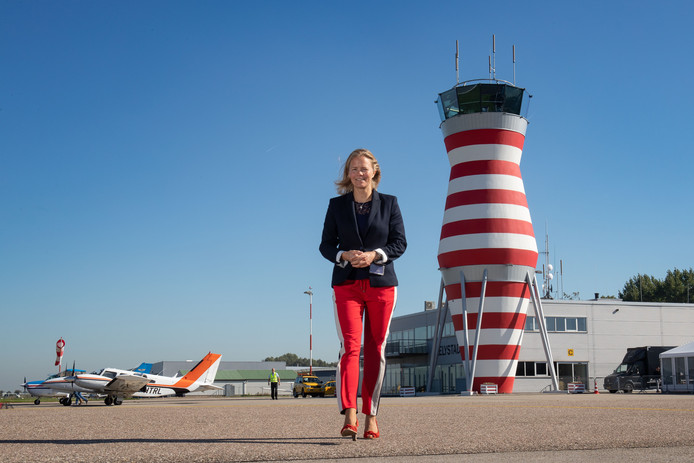
Buis trusts that the Ministry of Infrastructure and Water Management will make every effort to comply with the agreements made and the important steps for the opening in 2020.
The Minister has to put due diligence first. On the other hand, the Dutch aviation sector now has to wait even longer for a political and social decision made 10 years ago to be implemented.
A recent study by Greenpeace shows that Schiphol pollutes 13,6 megaton of CO2 per year. Now Lelystad Airport must take away some of these carbon residues in order to avoid more future protests.
Crickey Amigu di Natura Foundation 2019.
Bouw Mangrove Resort op Curacao zou onder Den Haag aan Stikstofregels verbonden worden

De bouw van het grootste hotel op Curacao langszij een “nog’ beschermd Mangrove bos aan de Caraibishe Zee voor de kust van Venezuela zal een zeer grote ‘carbon footprint’ achterlaten.
Ook de verkapte vorm van mensenhandel zelf zal jammergenoeg bij blijven dragen aan extreme luchtverontreiniging, als de toeristen met vliegtuigen naar hun vakantie kamp worden geloodst.
Een passagier in een vliegtuig vervuilt 10x zoveel als een passagier in een auto dat doet. Een vlucht uit Amsterdam levert evenveel emissies op als zes jaar rondrijden in een V-8 automobiel.

Een lokale NL’s talig dagblad prijst de bouw van het hotel dan ook in de lucht. Zolang er maar geld verdient wordt is de lat nooit te hoog geplaatst. Bovendien levert het mangrove bos veel bloed zuigende muggen op, wat vakantiegangers vast niet leuk vinden.
Experts van Green Destination Foundations werken nu aan “Destination concept” om de balans tussen de toerisme/transport industrie en de sociale welvaart te bevorderen om zodoende (ook) het algemeen welzijn voor de burger te verbeteren. Maar dat verhaaltje gelooft niemand nog.
Massa toerisme vernietigd het leven en cultuur van de inmiddels vele met de KLM gedeporteerde landskinderen, en vervangt deze groep met rovers en plunderaars die met lokaal belasting geld mooi weer mogen komen spelen.

Voor de onwetenden onder ons, toerisme is een Nazi produkt wat werd uitgevonden door de Duitse propaganda minister Goebels, die de eigenaardige Fransen in Parijs moest zien te om te kopen.
Rijke industrielen werden naar de hotels in Parijs gestuurd om veel geld uit te geven en de Fransen aan hun zijde te krijgen. En het toerisme was geboren. Voorheen waren onderzoekers en avonturiers de reizigers, maar sindsdien werd het een business.
Nu kunnen personen vanaf 4 Juli, 2020 voor vijf overnachtigingen inclusief KLM vlucht voor fl.3250 pp een kamer boeken, waar voorheen Mangroven stonden?

Curacao wordt massaal onder de voet gelopen, maar de lokale armoede en werkeloosheid blijven stijgen doordat de banen in de bouw en hotels vervangen worden door Latijns sprekende gastarbeiders die voor minder geld wel willen zwoegen in de hitte.
Publieke eigendommen, zoals de vele stranden en landhuizen worden overhandigd en geprivatiseerd aan belasting vrije entiteiten die andersom met belasting geld hun onkosten (monumentenzorg) dekken.
Zo kan ook Jan met de korte achternaam rijk worden. Maar mensenhandel is en blijft zeer lucratief, zolang de regering in Fort Amsterdam maar vergunningen blijft uitgeven. De door bedrijven gesponsorde kranten maken er wel een mooi verhaal van.
Stichting Crickey Amigu di Natura 2007.
Indonesia Wildfire Crisis Expands to over 2.000 Hot Spots

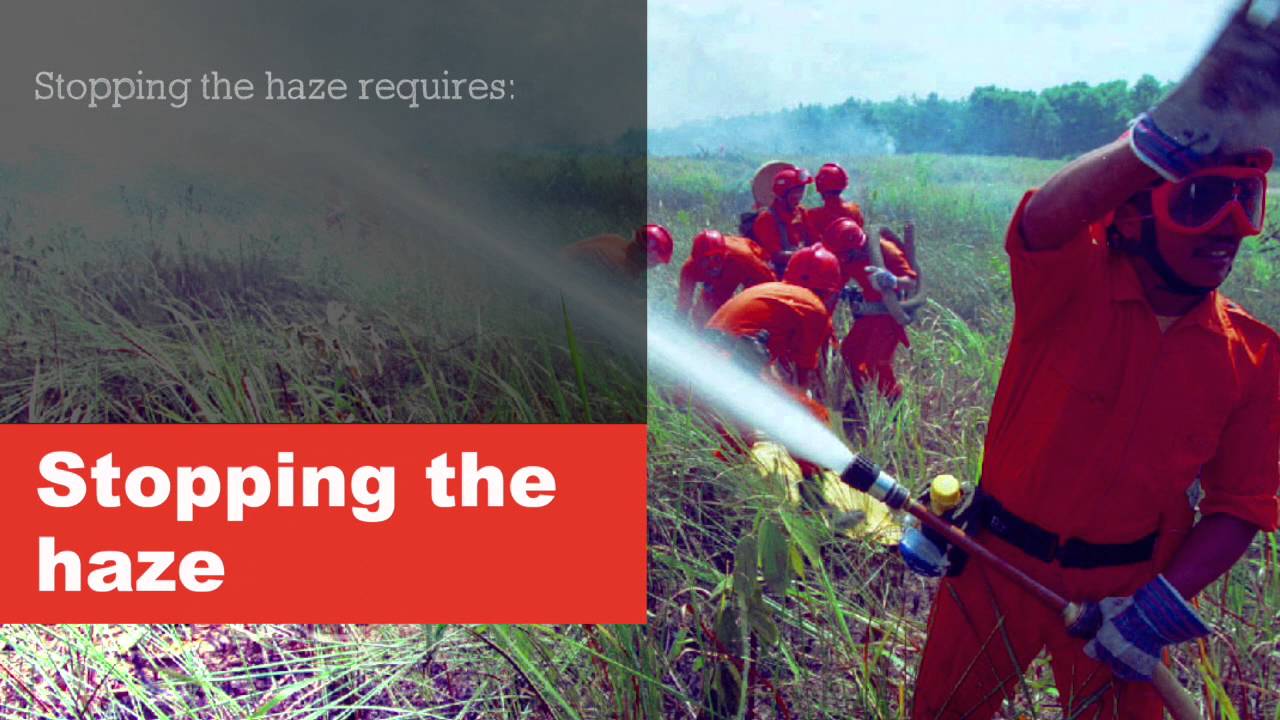
Indonesia is currently on the brink of another haze crisis as the archipelago is seeing an increase in the number of forest and land fires, facing an environmental disaster.
Wild Fires from drained peatlands have caused massive air pollution, or ‘haze’, causing respiratory and other illnesses.

Stopping the inferno requires a commitment to sustainable management of forests and peatlands. Especially religious minorities are now under threat.
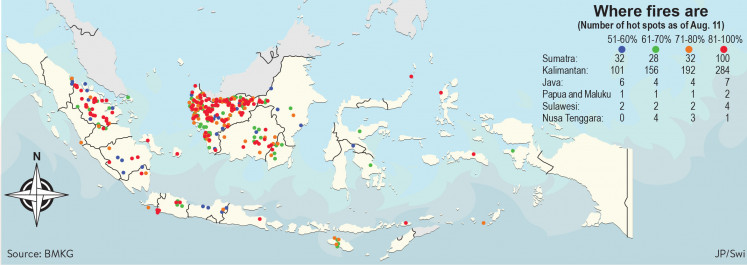
According to the Meteorology, Climatology and Geophysics Agency (BMKG), the number of hot spots increased to 2,002 on Augustus, 2019.
Indonesia’s fire and haze crisis this year has been described by many in the international community as an environmental disaster.
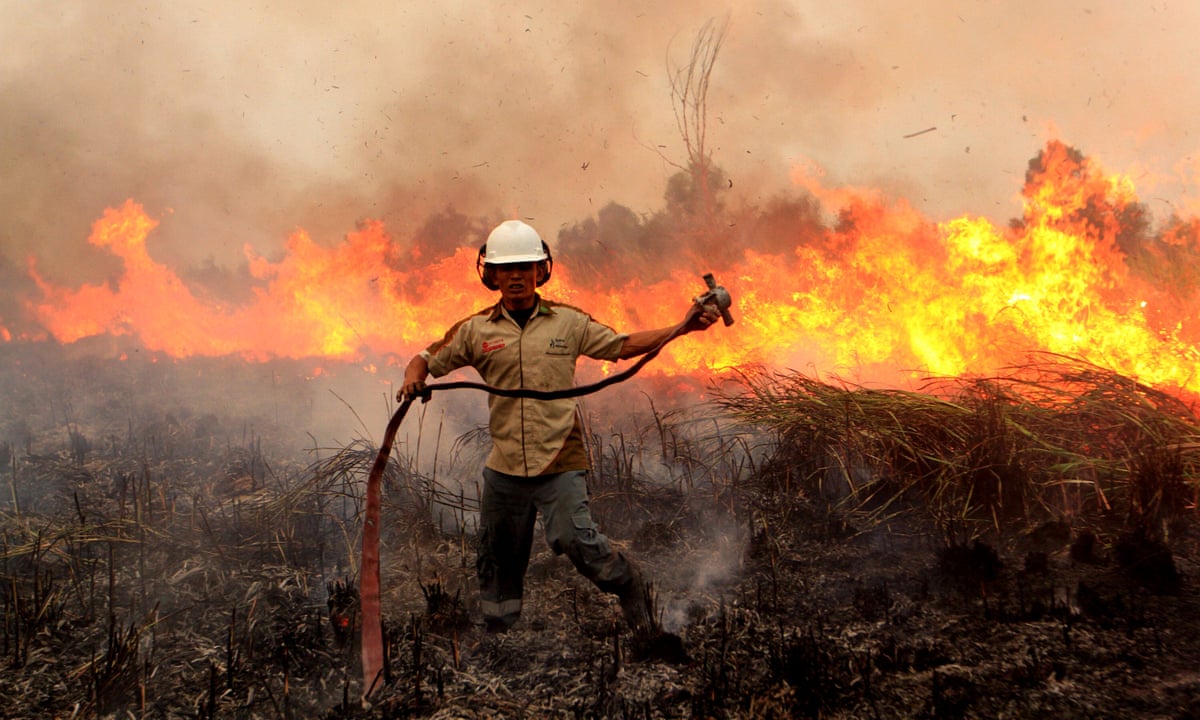
The hot spots were largely detected in the provinces of Riau, West Kalimantan and Central Kalimantan.
Apart from the hot spots, wildfires also burned more land area. The Environment and Forestry Ministry recorded wildfires had burned 42,740 hectares of land across the country between January-May, nearly twice the area burned in the corresponding period last year, which was 23,745 ha.
This occurred roughly three years after Indonesia started ramping up efforts to mitigate the impacts of forest and land fires across the country, which seems to be bearing fruit as the country has yet to suffer large-scale wildfires since then.
It raises concerns about a possible repeat of the 2015 haze crisis that badly affected the country, as well as neighboring countries Malaysia and Singapore.
El Niño is a climate pattern linked to warming waters in the central and eastern areas of the equatorial Pacific Ocean.
Such weather phenomena are known to trigger an extension of the dry season in Indonesia, which can increase the risk of wildfires.
Some regions have not seen rain for more than 100 days. The BMKG predicted that the rainy season would not start until October.
The government has been making several efforts to prevent wildfires. However, they have not yet been able to do enough to prevent another crisis due to a lack of resources to execute it.
In the last two months, the ministry had intensified joint patrols with police and military personnel in areas deemed prone to wildfires. Indonesia has also ramped up measures to extinguish fires at the hot spots.
The Djakarta Post / Crickey / Amigu di Natura News 2019.
Ethiopia dismisses Egypt’s proposal on Nile River Dam Project
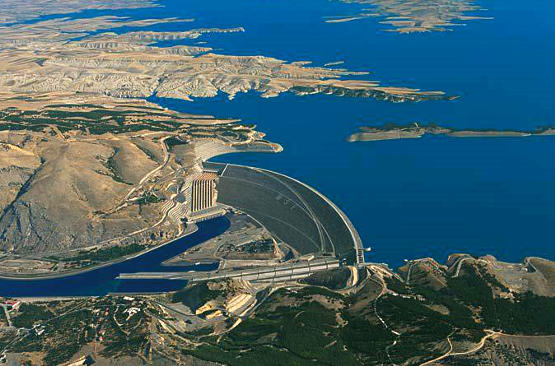
Ethiopia’s Foreign Ministry has dismissed Egypt’s latest proposal regarding, a massive Nile River dam project, shortly after Cairo said a new round of talks over the filling and operation of the soon-to-be-finished $5 billion Grand Ethiopian Renaissance Dam failed to achieve progress.
The dam was originally called “Project X”, and after its contract was announced it was called the Millennium Dam. On 15 April 2011, the Council of Ministers renamed it Grand Ethiopian Renaissance Dam. Ethiopia has a potential for about 45 Giga Watts of hydro-power.

Egypt fears Africa’s largest hydroelectric dam could reduce its share of the Nile, which serves as a lifeline for the country’s 100 million people. Ethiopia has roughly the same population and says the dam will help its development as one of Africa’s fastest-growing economies.
The eventual site for the Grand Ethiopian Renaissance Dam was identified by the United States Bureau of Reclamation during a Blue Nile survey conducted between 1956 and 1964 during the administration of Aklilu Habtewold.
Due to the coup d’état of 1974, however, the project failed to progress. The Ethiopian Government surveyed the site in October 2009 and August 2010. In November 2010, a design for the dam was submitted by James Kelston.

On 31 March 2011, a day after the project was made public, a $4.8 billion contract was awarded without competitive bidding to Salini Costruttori and the dam’s foundation stone was laid on 2 April 2011 by then Prime Minister Meles Zenawi.
A rock crushing plant has been constructed along with a small air strip for fast transportation. The first two turbines are expected to become operational after 44 months of construction.
Egypt, which lies downstream, opposes the dam which it believes will reduce the amount of water that it gets from the Nile.

Zenawi argued, based on an unnamed study, that the dam would not reduce water availability downstream and would also regulate water for irrigation.
In May 2011, it was announced that Ethiopia would share blueprints for the dam with Egypt so the downstream impact could be examined.
The main contractor is the Italian company Salini Costruttori, which also served as primary contractor for the Gilgel Gibe II, Gilgel Gibe III, and Tana Beles dams. Simegnew Bekele was the project manager of GERD from the start of construction in 2011 up to his death on July 26, 2018.
Crickey Conservation Society 2007.
Curacao moet Flora en Fauna beter Beschermen tegen Natuur Misdadigers
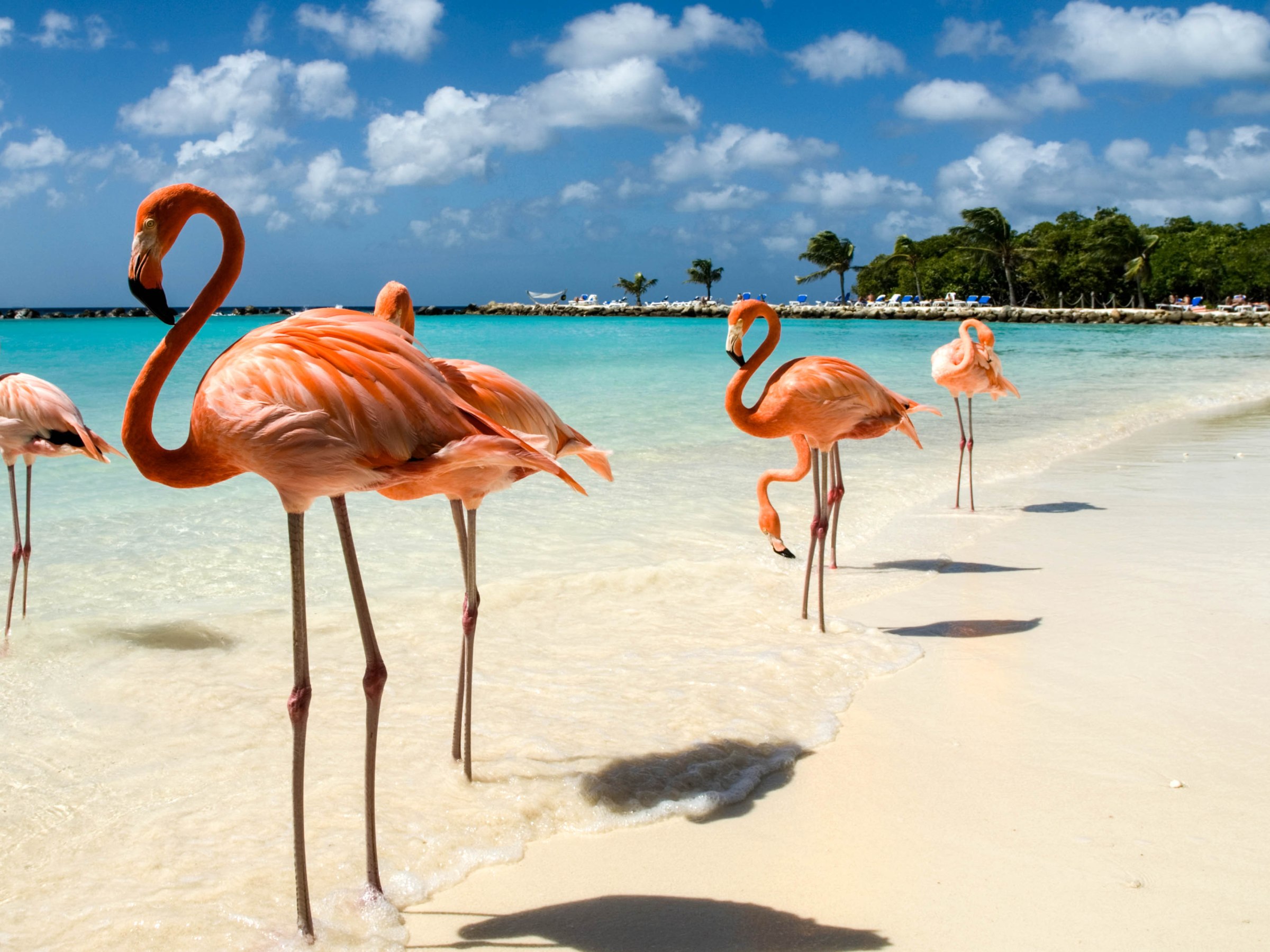
Lokale natuur organisaties, zoals Stichting Crickey Amigu di Natura (CAdN), vinden sinds 2007 dat de overheid op Curacao betere resultaten moet leveren als het gaat om het optreden tegen eco-terroristen die omwille van onbegrensde zelfverijking publieke eigendommen vernielen.
Het handhaven van wettelijke bepalingen opgenomen in het Eilandelijk Ontwikkelings Plan (EOP) van 1997 laat veel te veel aan willekeur te wensen over.
Op de BES Eilanden geeft het Wereld Natuur Fonds (WNF/WWF) specifieke aanwijzingen aan de NL’se bestuurders.
Het eerste bezoek van minister Carola Schouten (LNV) aan Bonaire werd door het World Wildlife Fund (WWF) aangegepen om haar te herinneren aan de bedreigingen voor het koraal.
Het WWF vraagt de minister om in actie te komen voordat het te laat is. De koraalriffen worden niet alleen ernstig bedreigd, maar zijn ook van economisch belang voor de Caribische Eilanden.
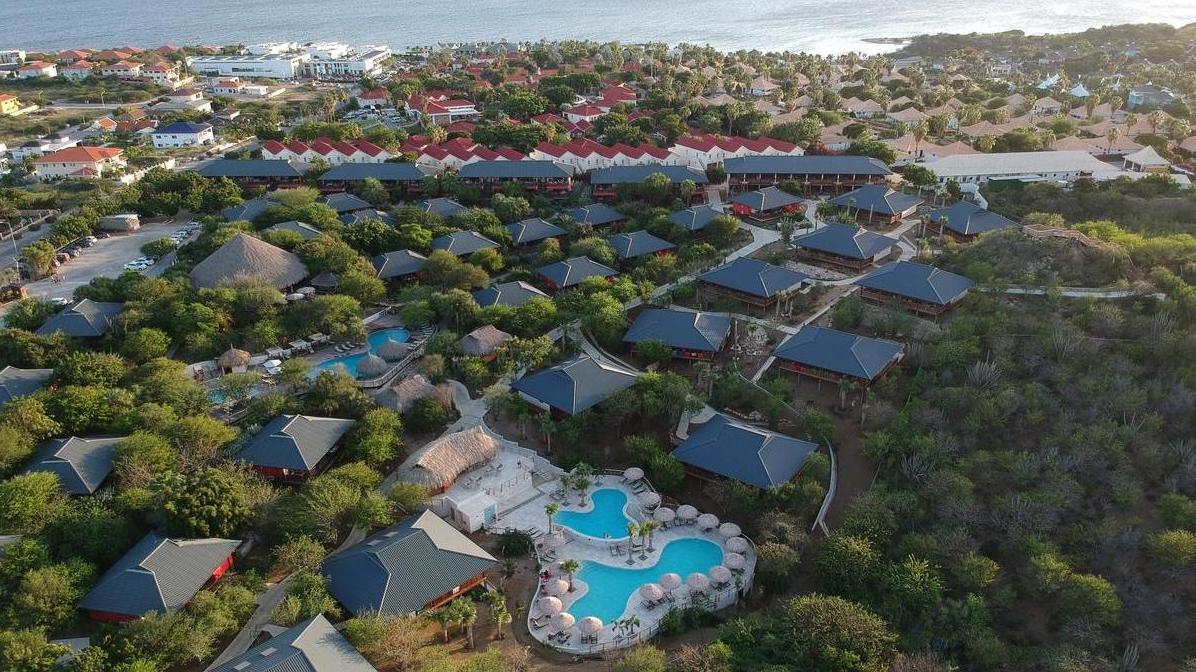
Ook op Curacao wordt de druk op de koralen en andere beschermde gebieden steeds groter door toenemend toerisme. Over de afgelopen 50 jaar is meer dan 75% van de riffen verdwenen.
Vooral cruise schepen en duiktoerisme verhogen de druk op bijbehorende handhaving, maar ook de onbelaste rioolvervuiling van de hotels verstoren de balans in de natuur en zorgen in toenemende mate voor problemen.
Ook worden de natuur en de koralen door klimaat verandering aangetast. Vooral op Jan Thiel laat handhaving veel te wensen over, mede omdat het APC haar inkomsten boven de wettelijke handhaving stelt.
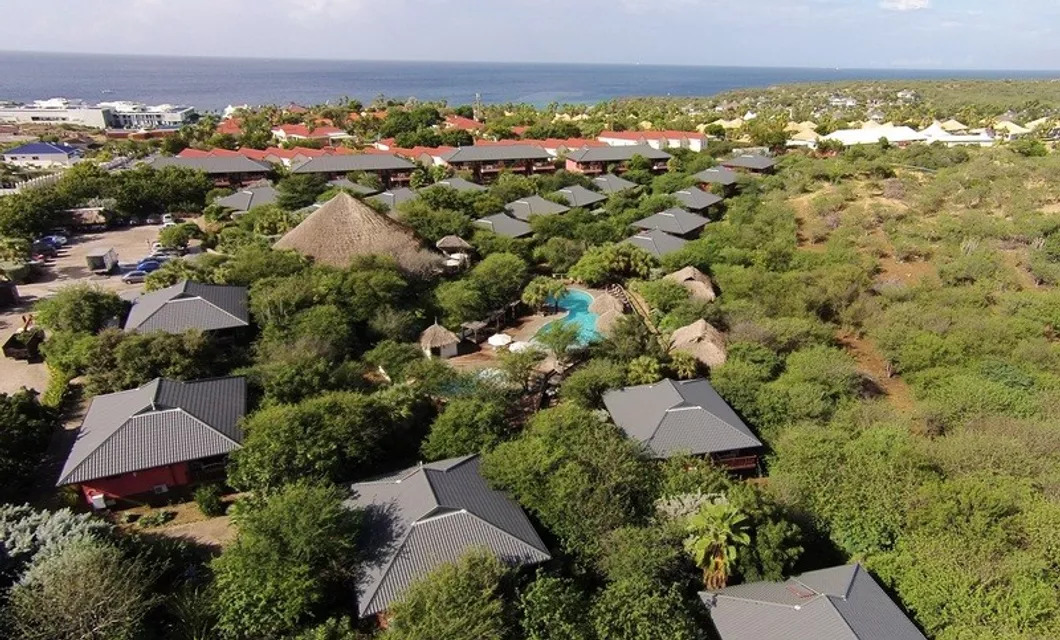
Het WWF zegt dat er verschillende concrete oplossingen te realiseen zijn die zullen helpen om on andere de koralen te onderhouden.
Volgens CAdN zijn rioolwaterzuivering, het tegen gaan van plastic afval, bodemerosie en bescherming van kwetsbare gebieden, zoals de zoutpannen en de flora an fauna op Jan Thiel.
Massa toerisme staat gelijk eco-terrorisme, waaraan de toeristen fabrieken aan de zuidkust van Curacao een kwalijke bijdrage leveren.
WWF / Crickey Amigu di Natura
Brazil authorized Federal Troops to Fight Amazon Fires

In a televised address Brazilian president Jair Bolsonaro said that above-average temperatures and dry weather have led to the fires in Amazon states, adding that he had authorized use of federal troops and equipment to fight the fires.
Bolsonaro said that the government is aware of Amazon fires and is taking actions to try to contain them. More than 20% of the world’s Oxygen is produced by the Amazon Rain forest.

As news reaches around the world that the Amazon rain forest is burning at an unprecedented rate, people are beginning to ask questions about who is responsible.
In the past weeks, since August 15, over 9,500 new forest fires were reported in Brazil, most of them spread across the Amazon basin.
According to Brazil’s National Institute for Space Research, over 74,000 forest fires were started in Brazil this year, which is nearly double the 40,000 fires that were recorded in 2018.

This represents an 83% increase in wildfires when compared to the same time last year, making it the most fires recorded in a single year.
Brazil’s pro-business President Jair Bolsonaro has been blamed for emboldening farmers and loggers in Amazonia to set fires to the forest, the planet’s carbon dump, to clear the land for exploitation.
Among his disputable decisions was the sacking of Ricardo Galvao, the head of INPE, earlier this month, who accused Bolsonaro’s government of increasing the pace of deforestation in the Amazon region.
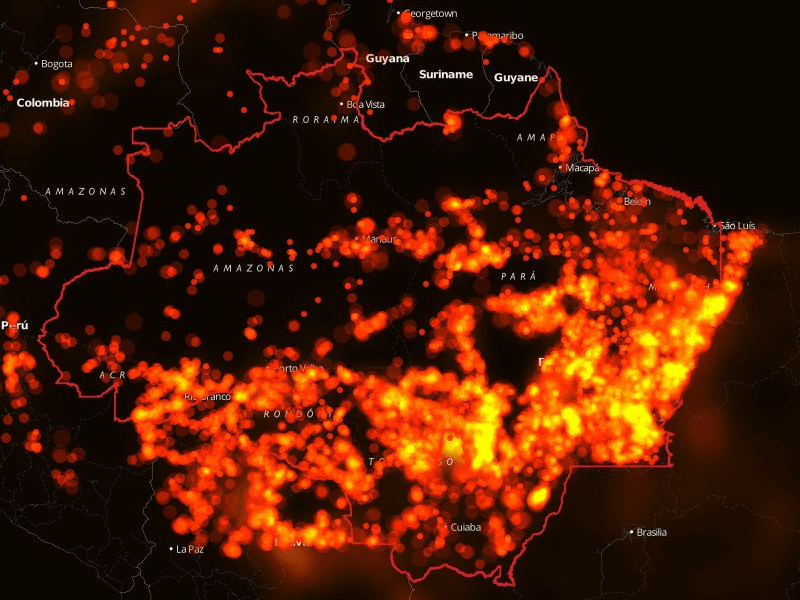
Even before this ominous development, things were looking pretty bleak for the Amazon.
Experts and activists have suggested a variety of reasons for the recent burning, but the government is allowing the rain forest to be ravaged by farmers and corporations for their own personal gain.
The newly elected president Jair Bolsonaro campaigned on a misguided platform of stimulating economic growth by opening up the Amazon to industry.

Since coming into office, his administration has significantly scaled back environmental protections, essentially giving a green light to loggers, miners, and ranchers to violently expel native tribes from their lands and destroy the local ecosystem.
Amazon Watch is not alone. Amnesty International secretary-general Kumi Naidoo also made a statement blaming the current condition of the Amazon on the controversial president.

They must change their disastrous policy of opening up the rain forest for destruction, which is what has paved the way for this current crisis.
One of the tactics listed was framing the Amazon crisis as a wedge issue to divide liberals and conservatives.
If the destruction of the Amazon can be reduced to a simple “political opinion,” the legitimate concerns from activists and experts can be easily dismissed as nothing more than a dissenting political opinion.
Sharks in the USA

Sleek, muscular bodies of sharks slice through the water—powerful predators of the ocean, striking fear in smaller fish—and sometimes humans.
After extensive coverage of shark attacks on people in local and national media, readers may be left asking why there seems to be a “spike” in recent incidents.

5. North Carolina is the shark haven of the USA. Fisherman call it the swarm farm of the ocean. Luckily only 1% of the shark attack victims face sudden death.
International Shark Attack File (ISAF), ISAF focuses on the number of unprovoked attacks, reporting that the overall trend has increased worldwide over recent decades.
The main reason, the scientists say: tourism. The human population is increasing, while more people are visiting beaches and engaging in water activities. International Shark Attack File (ISAF).

4. California is best known for its Great White shark attacks during summer time vacations.
Out of more than 489 shark species, only three are responsible for a double-digit number of fatal, unprovoked attacks on humans: the Tiger, Bull and Great White.
However, the Oceanic White Tip has probably killed many more castaways, but these are not recorded in the statistics.

3. South Carolina has the Black Tip sharks roaming the shallow waters where swimmers also try to enjoy a sunny day at the beach.
A notable difference exists in the number of recent incidents on the U.S. Atlantic coast versus the Pacific. The reasons may surprise you.
In 2018, the United States led the world with the highest number of reported shark attacks, according to the ISAF

2. Hawaii has the problem with Tiger Sharks, that eat anything in their path, hearing heart beats of prey from a distance of 1 mile.
Within the continental United States, more shark-human encounters occurred in the Atlantic Ocean—only four attacks were reported in the Pacific (three from Hawaii) compared to 27 in the Atlantic.
In Hawaii, attacks by Tiger sharks are the most common, whereas in California, White sharks (also known as great white and white pointer) are most likely to be involved.

1. Florida is the number one shark domain in the USA, With over 100 kinds of prey moving around, including humans the US beaches become a threat to humans.
This Sunshine State has over 1200 miles of coastline where 10 foot Bull Sharks are the most dangerous in these waters. From above you are able to see that the sharks are swimming between the people in the water.
Most victims of attacks are swimmers or surfers. That also explains why more shark incidents tend to occur in warmer months, because that’s when more people pursue those activities.

A female Bull Shark an weigh over 500 pounds, making it a real deal to cope with. Bull Sharks are the only shark species that an survive outside salt water, making them look for prey in river systems and sweet water lakes.
Florida has more shark attacks registered then the rest of the top-5 all together. With 26 million beach goers visiting the warm waters during the three month summer vacation time that does not surprise the scientists.
Working with sharks on a day-to-day basis, one of the things that you realize is how vulnerable they are, and the extent to which we are a greater threat to them than they ever will be to us,”
Over 150 million sharks are killed every year, most of them for shark fin soup and other human cut backs.
Wikipedia / Crickey Amigu di Natura News 2019.
Cockroaches will soon be Impossible to Kill with Chemical Pesticides

An ominous new study has found that Cockroaches will soon be impossible to kill with standard pesticides, as they can develop cross-resistance to poisons they’ve never encountered within a single generation.
German cockroaches – the small, quick-scurrying type whose traces can be found in 85% of US urban homes – are rapidly becoming impervious to pesticide chemicals, developing cross-resistance to a variety of insecticides within a single generation, a study published in Scientific Reports has demonstrated.
And even the researchers who conducted the experiment are creeped out by the evolutionary capabilities of the ubiquitous six-legged natural cleaners.

Michael Scharf, chair of the Entomology Department at Purdue University and co-author of the study, said in a statement last week. “Cockroaches developing resistance to multiple classes of insecticides at once will make controlling these “pests” almost impossible with chemicals alone.”
One experiment in which 10% of cockroaches started off resistant to a particular pesticide actually saw populations grow over the six months during which the researchers sprayed, a disconcerting result in itself.
But it was the multi-chemical experimental groups that really caused a stir – cockroaches who survived treatment with one insecticide developed immunity not just to that chemical, but to other chemicals they hadn’t even been exposed to – increasing their resistance “four- to six-fold in just one generation,” Scharf marveled.

Cockroach populations targeted with multiple chemicals also tended to spread out, infesting adjacent apartments to those being tested – so not only did total population numbers not decrease as they were expected to, but entire buildings fell to six-legged armies that were once content with smaller domains.
Female German cockroaches may lay up to 400 eggs in a lifetime, and the insects’ 60-day lifespan makes for a quick-evolving species. They thrive in human habitats – particularly where food is left behind – and rely on humans for shelter in cold climates.
They also have wings – but at least the humans can take some small comfort in knowing the species “very rarely flies,” according to Orkin?
RT Science / Crickey Amigu di Natura Foundation News 2019.
Common Things That Can Cause Cancer

The bad news is that cancer is one of the leading causes of death worldwide.
The good news is that death rates from cancer in the U.S. have declined steadily over the last 25 years, according to the American Cancer Society.
This notable drop of about 1.5% per year has a lot to do with lifestyle changes.

Certain cancers are determined by genetics, which means it is out of our control to prevent it from occurring.
However, in many instances the food we eat, the lifestyles we live, and the chemicals we breathe and ingest can dramatically increase the risk of some cancers.

Business Insider recently delved deeper into the medical world to determine which known carcinogens (cancer causers) and other factors can increase that risk. Based on that report, here are 11 things that could be linked to cancer:
Sugar. Eating too much sugar has been linked to diabetes and weight gain, but those are not the only health risks that come with polishing off all those bags of sweets or drinking sodas.
Consuming too much sugar can also damage cells, increasing your chances of developing cancer.

Processed foods. The chances are that if the food you are eating has little to no resemblance to its original form (a piece of fruit or vegetable) it is probably bad for your health.
Foods that have been plastic wrapped to last for ages on the shelves have also been linked to certain cancers. This could be from the ingredients that give the items their extended shelf life or the plastic packaging they come in.
Smoking. By now you probably know just how bad smoking is for your health and that it can cause cancer. However, it is not just smokers who are at risk.

Tobacco smoke contains at least 70 chemicals that can cause cancer, putting people who inhale secondhand smoke also at risk of developing deadly cancers.
Charred meat. Meats that have been charred, or cooked over an open flame, contain compounds that have been linked to cancer. Those dangerous chemicals are released when meat such as beef, poultry, and fish are cooked over an open flame or even pan-fried at high temperatures.
Alcohol. Drinking more than the recommended limit on a regular basis can increase your risk of developing several types of cancer affecting the liver, colon, and digestive system.
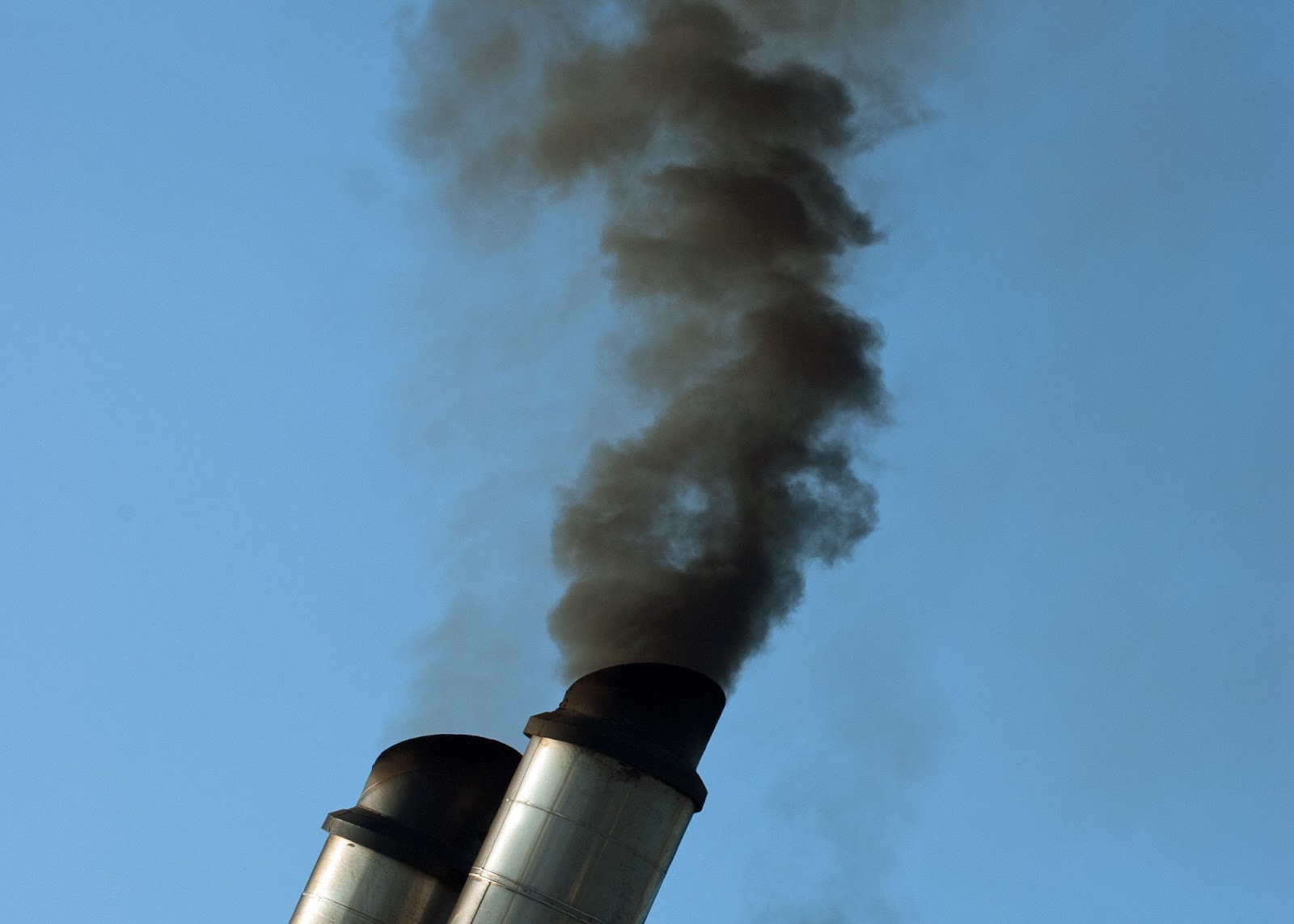
Diesel exhaust. Research has found that diesel oil contains more than 30 airborne chemicals that have been linked to lung cancer and possibly bladder cancer, the American Cancer Society noted.
Processed meats. While hot dogs, bacon, and ham all taste great, they are not doing your health any favors. These processed meats are crammed with cancer-causing preservatives.
They have also undergone various treatments that can all up your risk of developing cancer. If that is not enough, studies have found that red meat, even when unprocessed, has also been linked to certain types of cancer.

Birth control. This has been a strongly debated topic, but some research suggests that using birth control pills could increase a woman’s likelihood of developing cervical cancer.
However, on the opposite end of the spectrum, other studies found the opposite to be true. There is also evidence that birth control pills may reduce the risk of developing other cancers.
Viruses. Some viruses like human papillomavirus (HPV), hepatitis B and C viruses, the Epstein-Barr virus, and even the H. pylori bacterium could increase the risk of cancer.

Obesity. Being overweight can put you at risk of various health issues, and cancer is one of them. Obesity can increase your chances of developing several types of cancer affecting the kidneys, pancreas, breast, and colon.
Business Insider / Crickey Amigu di Natura 2019.
Corendon overgenomen door de Zweedse investeerder Triton

Corendon wordt overgenomen door de Zweedse investeerder Triton. Die zal de reisorganisatie samenvoegen met Sunweb (sponsor wielrenner Tom Dumoulin), waar de Zweden eerder een meerderheidsbelang in verwierven.
De verkoop betreft de activiteiten van de touroperator in Nederland en België. De hotels van Corendon en de eigen luchtvaartmaatschappijen in Turkije en Malta zijn geen onderdeel van de verkoop.

Corendon werd in 2000 opgericht door Atilay Uslu en Yildiray Karaer. Aanvankelijk was het bedrijf gespecialiseerd in reizen naar het land van de grijze wolven in Turkije.
Later kwamen daar andere bestemmingen bij. De activiteiten werden uitgebreid met luchtvaartmaatschappijen in Turkije (2005), Nederland (2011) en Malta (2017). Ook opende Corendon hotels in Turkije, Nederland, Ibiza en Curaçao.
Vorig jaar handelde Corendon in meer dan 750.000 vakantiegangers uit Nederland en België. Corendon behaalde daarmee een omzet van 515 miljoen euro.
NOS / ABC Flash Point Travel News 2019.

Klein Hofje & Groot Kwartier Chemische Afvalstoffen

Voorlopig zullen de benodigde capaciteiten voor de afvalstoffen van de toerisme sector niet beschikbaar worden gesteld door Leito-Jesus?


