
Scientific research finds that High Cholesterol does not cause Heart Disease

A new study has found that high cholesterol does not cause heart disease in the elderly leading experts to claim what many in alternative fields have been saying for years.
Trying to reduce it with drugs like stains is not only a waste of time but can actually increase the risk of cardiovascular problems.

Research involving nearly 70,000 people found there was no link between what has traditionally been considered bad cholesterol and the premature deaths of over 60-year-olds from heart disease.
The new study published in the BMJ Open journal found that 92% of people with a high cholesterol level lived even longer?
The authors have called for a re-evaluation of the guidelines for the prevention of cardiovascular disease and atherosclerosis, a hardening and narrowing of the arteries, because the benefits from stating treatment have been exaggerated.

The results have prompted immediate skepticism from other academics, however, who questioned the paper’s balance. High cholesterol is commonly caused by an unhealthy diet, and eating high levels of saturated fat in particular, as well as smoking.
It is carried in the blood attached to proteins called lipoproteins and has been traditionally linked to cardiovascular diseases such as coronary heart disease, stroke, peripheral arterial disease and aortic disease.
Co-author of the study Dr Malcolm Kendrick, an intermediate care GP, acknowledged the findings would cause controversy but defended them as robust and thoroughly reviewed.

What we found in our detailed systematic review was that older people with high LDL (low-density lipoprotein) levels, the so-called bad cholesterol, lived longer and had less heart disease.
Vascular and endovascular surgery expert Professor Sherif Sultan from the University of Ireland, who also worked on the study, said cholesterol is one of the most vital molecules in the body and prevents infection, cancer, muscle pain and other conditions in elderly people.
Lowering cholesterol with medications for primary cardiovascular prevention in those aged over 60 is a total waste of time and resources, whereas altering your lifestyle is the single most important way to achieve a good quality of life.


Lead author Dr Uffe Ravnskov, a former associate professor of renal medicine at Lund University in Sweden, said there was no reason to lower high-LDL-cholesterol.
But Professor Colin Baigent, an epidemiologist at Oxford University, said the new study had serious weaknesses and, as a consequence, has reached completely the wrong conclusion.
Another sceptic, consultant cardiologist Dr Tim Chico, said he would be more convinced by randomised study where some patients have their cholesterol lowered using a drug, such as a stain, while others receive a placebo.

There have been several studies that tested whether higher cholesterol increases the risk of heart disease by lowering cholesterol in elderly patients and observing whether this reduces their risk of heart disease.
These have shown that lowering cholesterol using a drug does reduce the risk of heart disease in the elderly, and I find this more compelling than the data in the current study.
The British Heart Foundation also questioned the new research, pointing out that the link between high LDL cholesterol levels and death in the elderly is harder to detect because, as people get older, more factors determine overall health.
News Punch / ABC Flash Point News 2024.
Palestinians are Biological Descendants of Biblical Jews
One day Israel will be become the “state of all its citizens” that democratic values require it to be, a country of Hebrew-speaking Jews, Muslims, and Christians, all equal before the law.
Although the great majority of secular Israelis do not yet subscribe to this point of view, more and more will come to it if things continue on their present course.

Two new articles deal with political/genetic controversies over the origins of “the Jewish people” (of whom I consider myself a part for one tribal reason or another).
Here is Israeli historian Schlomo Sand in Le Monde Diplomatique, writing, “Israel Deliberately Forgets Its History.” Sand says that the Jewish exile of 70 AD is a myth, and “the Jews” of Europe were created by conversion.
Then there is the question of the exile of 70 AD. There has been no real research into this turning point in Jewish history, the cause of the diaspora. And for a simple reason, the Romans never exiled any nation from anywhere on the eastern Mediterranean.

But if there was no exile after 70 AD, where did all the Jews who have populated the Mediterranean since antiquity come from?
The smokescreen of national historiography hides an astonishing reality. From the Maccabees revolt of the mid-2nd century BC to the Bar Kokhba revolt of the 2nd century AD, Judaism was the most actively proselytizing religion.
The most significant mass conversion occurred in the 8th century, in the massive Khazar kingdom between the Black and Caspian seas.

The expansion of Judaism from the Caucasus into modern Ukraine created a multiplicity of communities, many of which retreated from the 13th century Mongol invasions into eastern Europe.
There, with Jews from the Slavic lands to the south and from what is now modern Germany, they formed the basis of Yiddish culture.
Until about 1960 the complex origins of the Jewish people were more or less reluctantly acknowledged by Zionist historiography. But thereafter they were marginalized and finally erased from Israeli public memory.


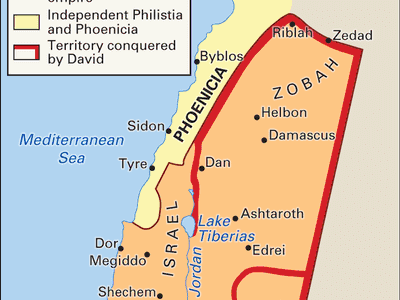
The Israeli forces who seized Jerusalem in 1967 believed themselves to be the direct descendants of the mythic kingdom of David rather than – God forbid – of Berber warriors or Khazar horsemen.
The Jews claimed to constitute a specific ethnic group that had returned to Jerusalem, its capital, from 2,000 years of exile and wandering.
Hillel Halkin somewhat concedes the point in Commentary, writing that DNA studies suggest that “Jews” owe a lot to intermixing of genes in eastern Europe and Asia. As for Palestine, Schlomo Sand suggests that the Palestinians are the people we call “the Jews” in the Bible.

Apart from enslaved prisoners, the population of Judea continued to live on their lands, even after the destruction of the second temple [in 70 AD]. Some converted to Christianity in the 4th century, while the majority embraced Islam during the 7th century Arab conquest.
Most Zionist thinkers were aware of this: Yitzhak Ben Zvi, later president of Israel, and David Ben Gurion, its first prime minister, accepted it as late as 1929, the year of the great Palestinian revolt.
Both stated on several occasions that the peasants of Palestine were the descendants
of the inhabitants of ancient Judea.
Mondoweiss / ABC Flash Point History News 2021.
The West leaves COP29 to foot the bill for Climate Change

Geopolitical reality was again out in the open as the developed world, mainly Western nations, did everything at the annual UN global summit on climate change in Baku, Azerbaijan, to wash their hands of their historical responsibility.
Though India, which is trying to stake its claim to the mantle of the Global South’s climate leader, could not stop the new finance deal from going through, it voiced its strong opposition calling the proceedings disappointing and stage-managed.

The new finance deal, called the New Collective Quantified Goal (NCQG) and achieved at the 29th edition of the United Nations Conference of Parties (CoP), provides about $300 billion annually for developing countries by 2035.
The annual climate summit at Baku was dubbed the ‘finance CoP’ and it was expected that ambitions would be raised considering that the impact of climate change is already visible.
The final figure, however, has come under heavy criticism as it is a far cry from the demand of about $1.3 trillion per year. It will replace the $100 billion annually that was agreed upon in 2009.

A livid India termed the deal “too little, too distant.”
The Indian government’s negotiator, Chandni Raina of the department of economic affairs, raised questions about the process and said the Indian delegation was not allowed to speak before the deal was adopted.
This happened even as it had informed the CoP presidency that it wanted to make a statement before the final decision. India’s stern stance drew cheers from those in the plenary room and countries such as Nigeria, Malawi and Bolivia also extended their support.

About 15 years ago, at the Copenhagen CoP, the developing countries were promised $100 billion a year but that was barely achieved.
The expectation at Baku was that it would be significantly increased considering the climate change impact the world is witnessing. Alas, that was not the case.
Developing countries including India, Bolivia, Nigeria all voiced their opposition to the NCQG in its present form, yet it has been adopted ?

Apart from the quantum of finance, the lack of sub-goals for mitigation, adaptation, loss and damage; the too long timeline of 10 years (“by 2035”) and reduced emphasis on grants and grant equivalent finance have made this outcome a rather weak one.
It feels like a lost opportunity. West has gotten away far too easily… not that opposition was not voiced by various developing country groups throughout the two weeks of CoP29, it was.
The deal that has been agreed upon seems more a deal of convenience, than delivering on the historical responsibility and moral imperative of the global north.

Aparna Roy, who works as a fellow and lead for climate change and energy at the Observer Research Foundation, noted that it is undeniable that the Western world continues to sidestep its historical responsibility.
While CoP29 made some progress on acknowledging the urgency of reducing emissions, there was inadequate accountability for the historic carbon footprint of industrialized nations.
The world can no longer afford for wealthier nations to pay lip service to climate solidarity while avoiding real, transformative action.

The outcome of CoP29 is being termed a mixed bag by many. Experts acknowledge the near disaster the summit turned out to be but are still trying to find the glass half full even as some see the glass already broken.
Experts also point out that the summit is a note of caution for developing nations who are being continuously pushed to adopt the low-carbon transition, even at the cost of growth, while the developed world is neither ready to make any adjustments nor to help the developing world.
India has been under pressure to transition away from fossil fuels even as it has maintained that energy security and energy independence is critical for it to sustain economic growth and feed 1.4 billion people.


The UN climate summit exposed significant roadblocks in global climate negotiations that developing countries such as India would need to navigate strategically.
India should leverage South-South cooperation and should strengthen alliances with countries in the Global South to amplify our collective voice.
India must advocate for reforms in international financial institutions to ensure the needs of developing and vulnerable countries are addressed.
RT. com / ABC Flash Point News 2024.
Baoase op Curacao bouwt in Strijd met Maritime Wet verder in de Caribische Zee

De eerder dit jaar aan Baoase onrechtmatig verstrekte vergunning voor aanleg van 2.000 m2 land in zee, is nog geen drie maanden later door VVRP minister Charles Cooper (MFK) ingetrokken.
Bij het nemen van deze beslissing heeft Cooper onder meer overwogen dat er naar aanleiding van ingediende beroepsschriften een analyse werd gedaan naar de totstandkoming van de onderahvige beschikking waaruit is gebleken dat er bepaalde zaken nader moeten worden onderzocht.


Baoase, of in feitenlijk Flamingo Ontwikkelings Maatschappij is bereid om mee te werken bij het aanvullen van informatie in het kader van de heroverweging van de ingediende aanvraag en heeft in overleg met de minister aangegeven geen bezwaar te hebben tegen de beschikking.
Die bepaalde zaken die nader moeten worden onderzocht, hebben alles te maken met de gezondheid van het kotaal op de beoogde locatie.
Het bouwen in zee is simpelweg per wet verboden, waarbij helaas de schade aan de koralen al werd verzorgd door de ontwikkelaar, die het gebied al met zand en bouwpuin wist vol te storten.
04.03.2025.


Naar aanleiding van het beroep zijn recente onderzoeken verricht naar in het projectgebied. Het grootste gedeelte van de koraal kolonies was al dood, aldus het ministerie. De oorzaken daarvan zijn divers, zoals klimaat verandering en ziekten.
Helaas wordt het grootste gedeelte van de vervuiling aangericht door massa toerisme (*vliegtuigen en andere zwaar vervuilende tramsport middelen, zoals huurauto’s en stinkende dieselbussen voor de gemiddeld 50.000 toeristen per maand), waarbij ook landfill eerder vol komt te zitten.



Vervolgens stelt het VVRP dat de overheid aan het beraden is op welke wijze er met deze situatie moet worden omgegaan om te voorkomen dat er nog meer koraal kolonies afsterven over het gehele eiland waar er ook door andere ontwikkelaars aan de Pensstraat in zee verder gebouwd wordt.
Crickey Amigu di Tera Foundation since 2007.
China’s first vertical forest – home to 500 people and 5,000 trees

China’s first ‘Vertical Forest City’ has been completed, providing a home to around 500 people – and over 5,000 shrubs and trees.
Though we may not think of tower blocks as green spaces, Italian architect Stefano Boeri has been disrupting this notion for decades.


Huanggang is home to more than 1.2 million people, and is situated in the Hubei Province, about 70 kilometers east of Wuhan.
The inhabitants of the residential towers have the opportunity to experience the urban space from a different perspective while fully enjoying the comfort of being surrounded by nature.
Though the new complex is still recognizably the work of Boeri, best-known for the Bosco Verticale in Milan, the residential towers combine open and closed balconies to forge a stair-like effect.


This design is meant to create a continuous, ever-changing movement, as the building blends natural and built environments together.
All the foliage included in the project has been selected from native, non-invasive species. There are 404 trees, predominantly Ginkgo biloba – which is a type of Ginkgoales, an ancient order of trees dating back more than 290 million years.
There are also 4,620 shrubs used in the design, and 2,409 square metres of perennial grass, flowers and climbing plants.

Each year it’s estimated that the vertical forest will absorb around 20 tonnes of carbon dioxide, while emitting approximately 10 tonnes of oxygen.
The design allows an excellent view of the tree-lined façades, enhancing the sensorial experience of the greenery and integrating the plant landscape with the architectural dimension, says architect Stefano Boeri.
The inhabitants of the residential towers have the opportunity to experience the urban space from a different perspective while fully enjoying the comfort of being surrounded by nature.

This isn’t the only project of Boeri’s planned in China, however. Work is underway on the Liuzhou Forest City in the mountainous province of Guangxi in southern China.
Liuzhou is one of the most smog-affected cities in the world, hence why it has been chosen as a host for Boeri’s work.

The Liuzhou Forest City will house 30,000 people, along with 40,000 trees and more than a million plants from over 100 different species.
Described as an urban organism, it is designed to absorb 9,000 tonnes of carbon dioxide every year, along with more than 50 tonnes of micro-particles too. The idea is that it can help improve the air quality, as well as combat carbon emissions.
Green Euro News / ABC Flash Point News 2024.
Canada’s record Wildfires got so Bad, so Fast
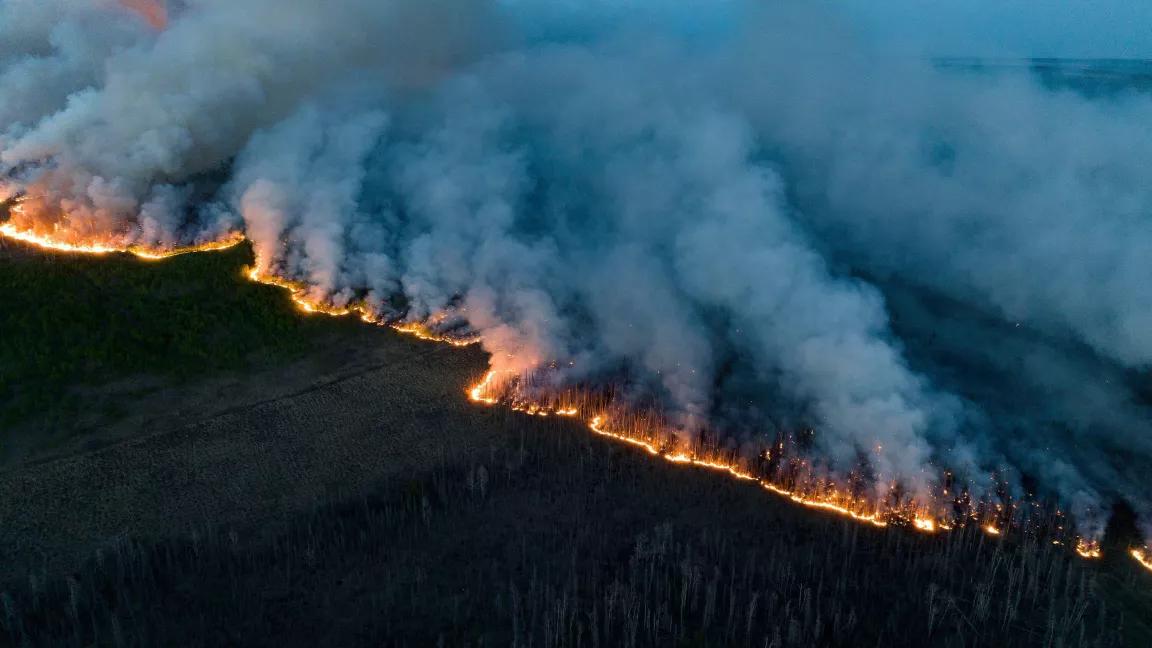
Wildfires in Canada have burned a staggering 25 million acres so far this year, an area roughly the size of Kentucky.
With more than a month of peak fire season left to go, 2023 has already eclipsed Canada’s previous annual record from 1989, when over 18 million acres were scorched. And the country’s worst wildfire season on record continues to rage.


Hot, dry conditions have fueled widespread wildfires, mostly in Canada’s boreal forests, since the spring, with some of the largest blazes burning in northwest Canada and in Quebec.
The fires have forced more than 120,000 people to evacuate their homes, stretched firefighting resources, and repeatedly darkened the skies and polluted the air for millions of people across North America.
International fire crews, including more than 1,800 firefighters and support staff from the United States, have been mobilized to help battle the flames since May, but the size and ferocity of the blazes have often hampered their efforts even as many of the largest, most remote fires have been left to burn.

Over the past week, two Canadian firefighters were killed on duty just days apart.
High temperatures in the spring helped the fire season get off to an intense early start. A heat wave baked British Columbia and Alberta in mid-May, exacerbating several early wildfires.
In early June, multiple fires broke out in Quebec amid record heat and rapidly intensified. By the end of the month, June was recorded as the planet’s hottest month ever, and some of the world’s most anomalous temperatures were found in northern Canada.

Studies directly linking climate change to this year’s wildfires have not yet been carried out, but the 2023 fire season is in line with scientists’ understanding of how global warming is affecting wildfires.
That doesn’t mean that quieter wildfire years, such as last year, are no longer possible, Flanningan said, but a warmer world makes large, explosive wildfires more likely than they were in the past.
This year’s hot, dry conditions have contributed to extreme fire behavior, too. More than 100 times over the past three months.

Canadian wildfires have grown sufficiently large and powerful to produce their own weather, kicking up giant thunderclouds known as pyrocumulonibus, and injecting smoke high into the atmosphere. These events can help transport smoke over very long distances.
The previous most active year for such extreme fire weather in Canada was 2021, which had fewer than half as many pyroCbs, as they are more commonly called, over the entire season.
Forecasts for the rest of the summer suggest that higher-than-normal fire activity is likely to continue across much of Canada, which could mean more heat, more fires and more smoke ahead.
The New York Times ABC Flash Point News 2023.
Pods Resort bij Spaanse Water Mangrove gebied

More projects on the island of Curacao lures the population into property loss and poverty, leading to mass deportation of local economic refugees, flying with the modern pirate-ships of AA, KLM an TUI to the USA, NL and Belgium.
The 50.000 visitors that invade the island every month leave a humongous carbon footprint behind, causing a lack of energy and overloaded landfills or even polluted oceans as many cruise ships dump their waste water into the seas around the ABC island chains. Off course no Coast Guard inspections here.
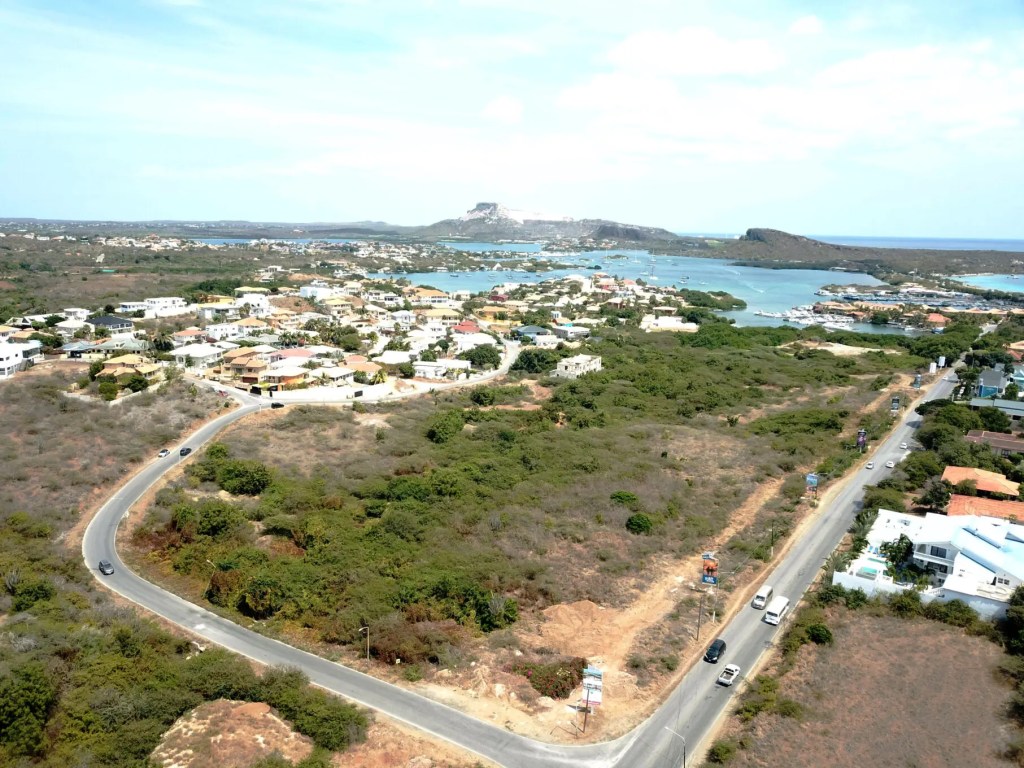









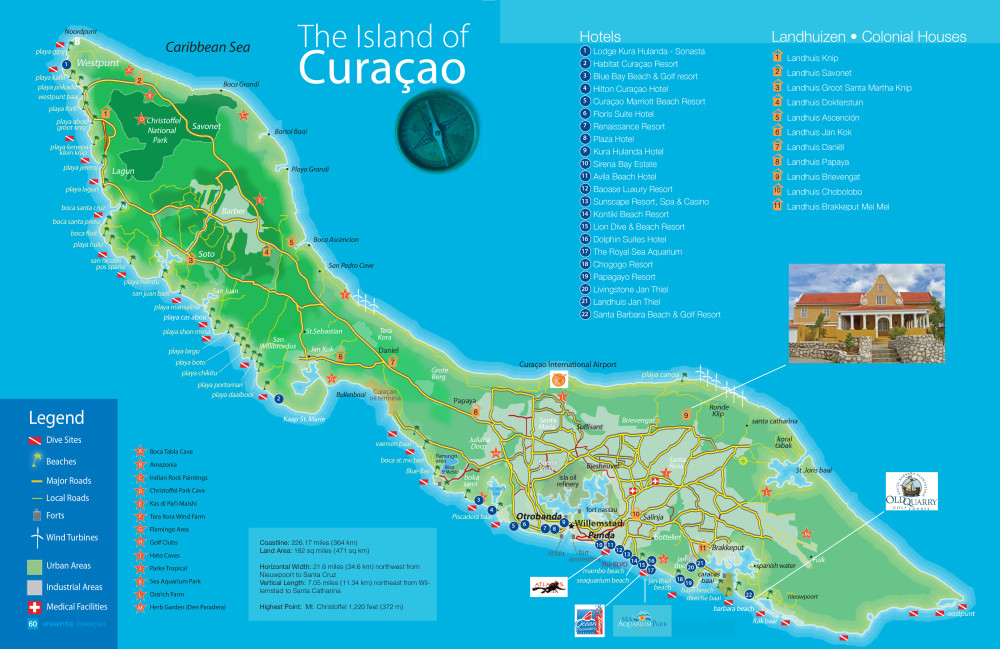
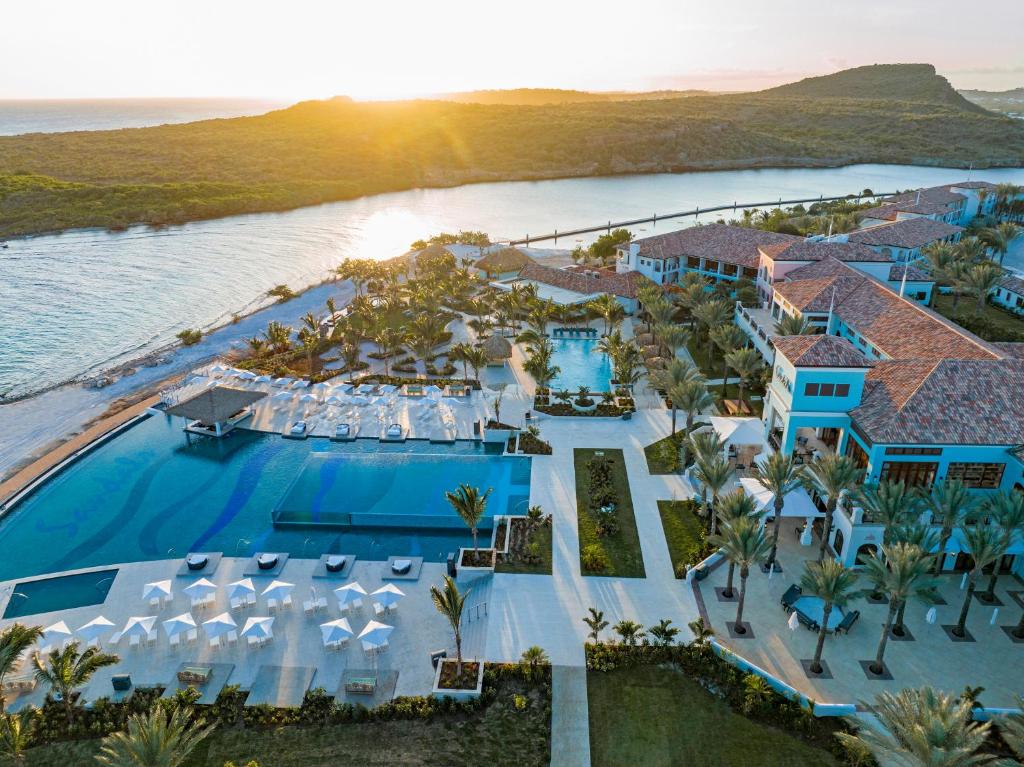



Mass tourism has been hunting down local real estate, turning nature into concrete buildings, without profiting from the so-called development. Tax holidays, illegal government permits and even subsidies are given to the colonial misfits, while the local population is deported to Amsterdam as economic refugees?
Privatization has caused depletion of tax payers properties, which have led to no return on investment for the Curacao tax collector. On the other hand, Latin Americans refugees are forced to deliver cheap slave labor in order for the Dutch business to extremely profit from!
Most of these capitalist minded businesses receive unorthodox tax holidays and avoid paying room taxes, leading to famine, economic deportation and screaming poverty.
To cover up this entire operation, Dutch politicians and newspapers handle the narrative for the local population to be corrupt and not willing to work for minimum salaries. At the same time the islands properties (like public beaches) are confiscated by the colonial rulers.
The tropical island of Curacao has been plagued by mass tourism schemes that cause poverty and chaos among the local born citizens. The fascist rulers in The Hague force to local elected politicians to their knees, glorifying the annexation of local real estate.
The key factors to the vampire like destruction of the local lifestyle are several vehicles introduced to enforce the recolonization campaign, which are to be blacklisted by the remaining citizens that we able to survive the ongoing onslaught on the road to nowhere.
Over half of the local born citizens have already been deported to the Netherlands, where they are added to the lifestyles of war refugees from mostly Muslim countries where the same kind of formulas are supplied, while the mainstream media disguises the real facts.
Crickey Amigu di Natura Foundation @ Curacao 2024
The Hollywood & Vatican Global Pedophile Crime Ring Exposed

Recent revelations regarding pedophile rings run by and for the rich and powerful, show that these are not isolated incidents and part of a systemic, global problem targeting defenseless kidnapped children.
Pedophilia scandals continue to emerge around the world year after year while the corporate media and law enforcement agencies alike fail to treat the sexual exploitation of minors as a global, systemic problem.

As the number of child abuse scandals involving the rich and powerful continue to grow, it is becoming impossible to cover up that these instances of child sexual abuse and exploitation are globally organized and often run by the very same people who greatly influence society and politics.
The industry of the global sex trafficking rings has been proved to be more lucrative then the drugs- and weapon industry combined.
HOLLYWOOD :
The entertainment industry, powerful political centers, and even organized religion have been shown to be major centers where this horrifying abuse has been enabled and widely accepted among the “elites” and other powerful individuals that dominate these horrific institutions.

There is no question that something dark is going on within the US’ entertainment industry.
It is a horrible trap that the kids are in.” Parents of child Hollywood actors remain silent out of fear even after finding out that their child was sexually abused. Our Children Are Being Satanically Sexualized by the Pedophile ‘Elites’
One of obvious example is how the music industry has been openly marketing sexualized songs, videos, and lyrics to children while also using pop stars, like Miley Cyrus, to sexualize children and even babies.
Rihanna, Beyonce, Lady Gaga, Miley Cyrus, Katy Perry and other pop stars have their videos and songs often marketed directly to children, despite their sexual overtones.

WASHINGTON :
Pedophilia is also commonplace among the US’ political elite, with scandal after scandal emerging in recent decades.
Invariably, numerous cover-ups have followed as a result to prevent the exposure of America’s rich and powerful.
The most famous of these, dubbed the “Franklin cover-up,” was arguably the biggest pedophile scandal in US history and even implicated the White House.

Two Republican party insiders and Washington DC lobbyists, Craig Spence and Lawrence E. King Jr., were accused of managing a homosexual underage sex ring involving boys aged 15 and younger.
Spence, who was incredibly influential at the time, arranged for at least four midnight tours of the White House in the 1980’s where he was accompanied by young boys that he falsely identified as his children.
When news of the scandal broke, Spence was suddenly found dead, while many of his business partners were jailed for their involvement.

Spence’s links to the Reagan White House or other top US politicians were not investigated and attempts to investigate further were suddenly halted.
Then, in the 1990’s, Bill Clinton’s sexual escapades became well-known and almost led to his impeachment for perjury.
Clinton was also linked to convicted pedophile Jeffrey Epstein as Clinton frequently rode on Epstein’s plane full of underage girls – the “Lolita Express” – and made several visits to Epstein’s private residence known as “Orgy Island.”

Several US congressmen have also been implicated over the years in pedophile sex scandals such as Mark Foley, a former congressman from Florida, who in 2003 was caught sending sexually explicit messages to underage men.
Following further investigation by citizen journalists, now known as “Pizzagate,” some truly shocking discoveries have been made that suggest that both the sexual abuse of children as well as child murder are regularly practiced by several top figures in US political society.
The citizen investigation into “Pizzagate” was shut down by the moderators at Reddit who called it “a witch hunt.” As a result, many have accused Reddit of censoring the thread to protect the interests of the powerful.

THE VATICAN :
Probably the most well-known child abuse scandal of all involves the Roman Catholic Church, which has been on-going for much of the last one hundred years and possibly long before.
However, it wasn’t until the 1980’s that the rampant sexual abuse of minors by Catholic priests began to receive significant media coverage.
In the decades since, the number of allegations has only continued to grow. From 2001 to 2010, the Holy See, the church’s central governing body, considered sex abuse allegations involving over 3,000 priests.

The Vatican Paid Nearly $4 Billion to Settle Pedophilia Lawsuits
Though some studies have claimed that the rate of abuse by priests has fallen in the last twenty or so years since it became an international scandal, there is no denying that it is a systemic problem that runs rampant throughout the entire organization, making it particularly difficult to eradicate.
It also doesn’t help that the church has frequently ordered its bishops and priests to actively cover up sex abuse allegations while also disciplining relatively few priests considering the enormity of the accusations.
Little has changed as, the Vatican, earlier this year, told its clerics that reporting child abuse by priests is “not necessarily” their duty.
Sadly, there are many, many more examples. For instance, the persistence of pedophilia among the rich and powerful in England, including members of the royal family, is well-documented.
But so are the cover-ups and mysterious “disappearing” evidence that implicates top UK politicians and even former prime ministers in the sexual abuse of minors.
Many of those speaking out against elite pedophilia have been labelled as “crazy” or “conspiracy theorists” until they were proven right, such as with the famous case of BBC TV personality and pedophile Jimmy Savile.

Due to their influential connections, these powerful people have been able to silence their victims and cover up their heinous crimes with little consequence.
Yet, with less and less people believing in the lies of decades past and with new evidence of widespread pedophilia emerging all the time, will they be able to keep up their charade for much longer?
Humans are Free. com / ABC Flash Point News 2019.
Sea Shepherd warns that Destruction of Planet is ‘Out of Control’

Sea Shepherd founder Captain Paul Watson has warned human destruction of ecosystems is seriously “out of control” and now impacting us as a species. This is not about saving planet Earth, but this is about saving ourselves from ourselves.
Describing the world as “completely out of balance”, the veteran environmental campaigner argues that humans need to realize they are dependent on other species for survival.

On Captain Watson’s mind right now is the survival of the tiny phytoplankton which live in our oceans – organisms most people have never heard of.
The diverse group of microorganisms play a role as significant as forests in transforming the planet’s carbon dioxide into oxygen and are the basis of ocean food webs.
Life on Earth depends on their existence, and a small drop in number could have devastating consequences. Scientists fear they are under threat from rising ocean temperatures.

As the permafrost melts and forests are destroyed, he is concerned new viruses and methane that were once locked away under ice or in the blood of animal hosts risk coming into contact with humans.
Despite his dire predictions, Captain Watson does not appear to be rattled or alarmed, noting that during previous extinction events, the Earth has recovered in 18 to 20 million years.
We will survive if our species wants to survive, and that’s only going to happen if we learn to live in harmony with all other species.

And learn to live within the context of the basic laws of ecology, to understand the importance of diversity, interdependence and finite resources.
Captain Watson’s faith in the importance of the present moment came from his time volunteering as a medic for the American Indian Movement (AIM) during the occupation of Wounded Knee in 1973.
Armed with .50-calibre machine guns, rifles and grenade launchers, government forces fired an estimated 133,000 rounds into the village. Two died and roughly 51 people were injured.

Captain Watson said he approached AIM’s leader Russell Means and asked why they should continue to protest when there was no possibility of winning.
We are here because this is the right thing to do, the right place to do it, and the right time to do it. We have to focus on the present, because what we do in the present will define what the future will be.
As awareness grows of the impact humans are having on the planet, Captain Watson says there are more young activist leaders fighting for the environment than he has seen before.

What people need to do is simply harness their passion to the virtues of courage and imagination and they can change the world.
Although Captain Watson has played a leading role in driving the world’s commercial whale hunt to plummet over the last 45 years, he believes there is nothing unique about his own character other than being persistent and relentless.
He argues that he was in the right place at the right time when Greenpeace was founded, and much of his journey just “fell into place”.

By looking at life as “an adventure”, he has been lucky to avoid the depression many activists feel. I don’t recall any tough days, there’s been challenges of course.
I was put on the Interpol Red List (by Japan) and arrested in Germany, and had to escape and went into exile for six months. But I have to tell you, my six months in exile in South Pacific was like a holiday, so I have no complaints there.
While he tries not to look into the future, Sea Shepherd founder Paul Watson said Australia turning from a whaling nation to a conservation nation gives him hope that Japan may one day follow suit.

When he began campaigning to end the practice in the seventies, Australia’s humpback whale population had collapsed, and the Cheynes whaling station in Western Australia was hunting sperm whales for their oil.
With the Soviets and the United States vying for supremacy, there was unprecedented demand for the high-grade substance which was highly prized by the military and NASA.
When we were intervening against the whalers, the whaling company actually recruited the local motorcycle gang to protect their interests, he said. So we were out there battling bikers on the high seas.

As pressure continued to be applied by local whaling groups including Friends of the Earth, Project Jonah and the Whale and Dolphin Coalition, the Australian government made the decision to ban whaling in 1978.
Today there are few nations engaging in commercial whaling, with the notable exceptions being Norway, Japan, Denmark and Iceland who do so within their territorial waters.
Since forcing the Japanese whaling fleet out of the Southern Ocean, Captain Watson has stepped back and Sea Shepherd now operates in 42 different countries, as separate entities who work together.

Something I’m most proud of is that Sea Shepherd is not an organization, it has become a movement.
I came to the realization, when the Japanese came after me personally, that you can stop an individual, and you can shut down an organization, but you can’t stop a movement.
Sea Shepherd is now concentrating much of its efforts stopping the annual whale hunts on the Faroe Islands, fighting the French government on the issue of commercial fishing vessels which kill an estimated 6000 dolphins each year, and stopping poaching off the coast of Africa.
Yahoo / ABC Flash Point Wildlife News 2021.
Global Banks made $3 billion in profits from Green Loans in 2023


One reason for the increase in transition financing was stricter EU regulation. With that regulation, the European Union essentially obligated banks to give more loans and underwrite more bonds for companies in, for example, the wind and solar energy sectors.
In other words, it was not fully by these banks’ own choice that they provided more loans and underwrote more bonds for the industries classified as environmentally responsible. It was by a Brussels mandate.
However, several banks had pledged to shrink their lending exposure to the oil and gas industry, with French Credit Agricole the latest to declare an end to the financing of new oil and gas projects last December 2023.

Yet the effect of stricter EU regulation should not be underestimated: it puts banks at risk of higher capital requirements and even fines unless they provide more loans to the industries related to the transition and reduce the financing of the oil and gas industry.
In this context, it is hardly a surprise that European banks led the increase in green financing—even though the biggest issuer of such financing was Japan’s MUFG. In contrast, U.S. banks were less inclined to fund projects labeled environmentally friendly.
The reason was mostly political: there has been a backlash against what some states call discriminatory investment policies by some of the world’s largest banks as they try to shun the oil and gas industry in favor of wind, solar, hydrogen, and dangerous proven EV’s.

This backlash continues and has already forced some financial industry majors to make declarations that they are not, in fact, against oil and gas.
It all began back in 2022 when Texas accused BlackRock and nine European investment mammoths of boycotting the oil and gas industry and threatened to divest its own money from them in response.
The asset manager responded by assuring Texas authorities that it does not boycott oil and gas and is very much in favor of energy investments in the sector.

In a letter to the Texas comptroller, BlackRock reported that it has investments of some $310 billion in the oil and gas industry, of which $115 billion is in Texas.
In the USA, then, so-called sustainable financing goes slower in the direction the government wants it to go.
But it does go there: Bank of America last year had $32.3 billion in financing exposure to low-carbon energy supply, while its exposure to oil and gas stood at $32 billion.

Wells Fargo, on the other hand, was more than twice as invested in oil and gas than it was in wind, solar, EV’s, and hydrogen. Its low-carbon exposure last year was $14.3 billion versus $35.7 billion for oil and gas.
Government policies and regulations, then, are vital for the switch from financing oil and gas, considered an industry with no long-term future, to financing the energy industries that are believed to have that long-term future. But there is another critical factor, too.
Last year, wind and solar companies suffered a massive stock rout. The S&P Clean Energy Index dropped by over 20% in two months. To support rapid growth, you need to keep leveraging the balance sheet or issue equity.

The reason behind the rout was the series of interest rate hikes that both the European Central Bank and the Fed implemented over the past two years in a bid to combat inflation.
And the reason that wind and solar were more susceptible to the effects of inflation-fighting monetary policy was that they are a lot more dependent on loan financing than oil and gas producers.
In a zero-rate environment, this formula worked. In a higher-rate environment, it falls apart, David Souccar, portfolio manager at Vontobel Asset Management, explained to the Financial Times.

In other words, low-carbon energy companies are extra vulnerable to higher rate hikes because they lack the resources to weather the effects of such policies.
The reason they are so vulnerable is that they simply do not make as much money as the oil and gas industry.
The market they operate on is quite different, with set long-term prices for the electricity they produce and equally set subsidies.

Banks, then, made more money from lending to wind and solar—and other industries classified as green—because these industries rely more on loan finance to function and grow.
And they also made more money from lending to these industries because many of them were essentially forced to lend more to these industries.
Oil Price.com / ABC Flash Point News 2024.
Gran Canari op Brakkeput in problemen bij Brandgevaar



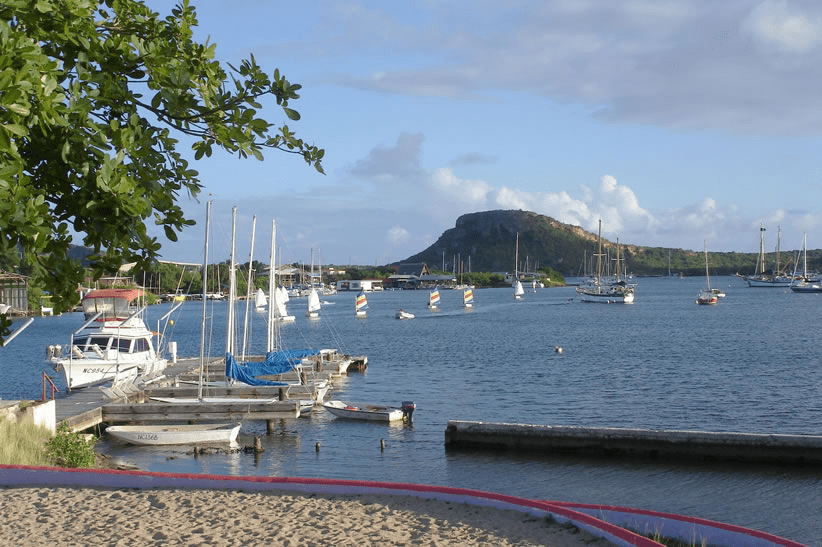



Boven vernoemd LOB verzoek werd ingediend op maandag 25 november 2024. Over het algemeen krijgen wij geen antwoord op de ingediende openbare bestuurs beslissingen.
Negeren is de makkelijkste uitweg voor de anbtenaren op de loonlijst van de belasting betaler die de salarissen en overdreven pensioenen verbonden aan het ministerschap moeten vergoeden?
Crickey Amigu di Natura 2024.
Gold stokes Tribal Tension in Philippines

As gold shines through the Corona-virus pandemic, touching new highs as a precious metal hedge to the dollar, the stakes for Southeast Asia’s largest undeveloped copper and gold minefield have never been higher.
Nestled 1,300 meters above sea level, huge gold and copper deposits lie untapped in the mountains surrounding the sleepy Philippine town of Tampakan on the southern island of Mindanao.

Over three decades since the deep, rich deposits were first discovered, controversy still burns over who has the right to mine and profit from the precious metals, pitting central government agencies and their corporate concessionaires against local tribal communities.
Over the years, the center-versus-periphery struggle has often devolved into violence and even death, and the prospect for more bloody turmoil is on the rise in line with the surging price of gold, now at well over US$2,000 per ounce on global markets.

Sagittarius Mines, Inc. (SMI), developer of the mammoth S5.9 billion Tampakan copper-gold project in South Cotabato, has “reacquired” its environmental compliance certificate (ECC), one of the requirements needed to proceed to the commercial production phase.
Omar Saikol, Environmental Management Bureau – Region 12 (EMB-12) director, said the ECC of SMI, which the late Environment Secretary Gina Lopez canceled on February 14, 2017, has been restored by the Office of the President (OP) on May 6, 2019.
Saikol said that SMI was originally granted the ECC by the EMB main office on February 19, 2013. The firm needs to secure an ECC because its proposed mining operation falls under the environmentally critical project category.

SMI had announced that open-pit mining is the most viable method to extract the massive deposits for the Tampakan project, so named because the minefield is located in Tampakan, South Cotabato.
Touted as Southeast Asia’s largest known undeveloped copper and gold minefield, the Tampakan project has the potential to yield an average of 375,000 tons of copper and 360,000 ounces of gold in concentrate per annum in the 17-year-life of the mine.
The national government granted SMI a 25-year Financial and Technical Assistance Agreement (FTAA) that was to expire on March 21, 2020.

The Tampakan project has been facing opposition from the local Catholic Church and environment groups.
Marbel Bishop Cerilo Casicas vowed to sustain the local Catholic church’s opposition against the Tampakan project on concerns over the environment, food security and human rights.
If developed, the Tampakan project “has the potential to make a significant contribution to the economic prosperity of the Philippines and enable a better future for the people of southern Mindanao.
Asia Times / Minda News 2020.
Huge lost Ancient city found in the Amazon

A huge ancient city has been found in the Amazon, hidden for thousands of years by lush vegetation. The discovery changes what we know about the history of people living in the Amazon.
The houses and plazas in the Upano area in eastern Ecuador were connected by an astounding network of roads and canals. The area lies in the shadow of a volcano that created rich local soils but also may have led to the destruction of the society.
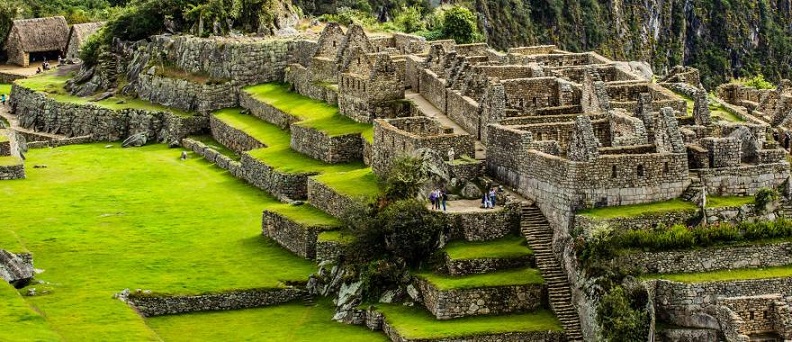


While we knew about cities in the highlands of South America, like Machu Picchu in Peru, it was believed that people only lived nomadically or in tiny settlements in the Amazon.
This is older than any other site we know in the Amazon. We have a Euro-centric view of civilization, but this shows we have to change our idea about what is culture and civilization, says Prof Stephen Rostain, director of investigation at the National Center for Scientific Research in France, who led the research.

It changes the way we see Amazonian cultures. Most people picture small groups, probably naked, living in huts and clearing land – this shows ancient people lived in complicated urban societies, says co-author Antoine Dorison.
The city was built around 2,500 years ago, and people lived there for up to 1,000 years, according to archaeologists. It is difficult to accurately estimate how many people lived there at any one time, but scientists say it is certainly in the 10,000’s if not 100,000’s.
The archaeologists combined ground excavations with a survey of a 300 sq km (116 sq mile) area using laser sensors flown on a plane that could identify remains of the city beneath the dense plants and trees.


This LiDAR technology found 6,000 rectangular platforms measuring about 20m (66 ft) by 10m (33 ft) and 2-3m high. They were arranged in groups of three to six units around a plaza with a central platform.
The scientists believe many were homes, but some were for ceremonial purposes. One complex, at Kilamope, included a 140m (459 ft) by 40m (131 ft) platform. They were built by cutting into hills and creating a platform of earth on top.
A network of straight roads and paths connected many of the platforms, including one that extended 25 km (16 miles). Dr Dorison said these roads were the most striking part of the research.


The road network is very sophisticated. It extends over a vast distance, everything is connected. And there are right angles, which is very impressive, he says, explaining that it is much harder to build a straight road than one that fits in with the landscape.
He believes some had a very powerful meaning, perhaps linked to a ceremony or belief.
The scientists also identified causeways with ditches on either side which they believe were canals that helped manage the abundant water in the region.


There were signs of threats to the cities – some ditches blocked entrances to the settlements, and may be evidence of threats from nearby people.
Researchers first found evidence of a city in the 1970s, but this is the first time a comprehensive survey has been completed, after 25 years of research.
It reveals a large, complex society that appears to be even bigger than the well-known Mayan societies in Mexico and Central America.


Imagine that you discovered another civilization like the Maya, but with completely different architecture, land use, ceramics, says José Iriarte, a professor of archaeology at University of Exeter, who was not involved in this research.
Some of the findings are unique for South America, he explains, pointing to the octagonal and rectangular platforms arranged together. The societies were clearly well-organized and interconnected, he says, highlighting the long sunken roads between settlements.
Not a huge amount is known about the people who lived there and what their societies were like. Pits and hearths were found in the platforms, as well as jars, stones to grind plants and burnt seeds.


The Kilamope and Upano people living there probably mostly focused on agriculture. People ate maize and sweet potato, and probably drank chicha, a type of sweet beer.
Prof Rostain says he was warned against this research at the start of his career because scientists believed no ancient groups had lived in the Amazon. But I’m very stubborn, so I did it anyway. Now I must admit I am quite happy to have made such a big discovery.
The next step for the researchers is understanding what lies in an adjoining 300 sq km (116 sq mile) area not yet surveyed.
BBC / ABC Flash Point News 2024.
 Crickey Amigu di Natura