
LOB Verzoek Mijnbouw vergunning voor afgraven Tafelberg
LOB # 588259 dd 29 November 2025.


LOB Verzoek verloopt na 6 weken op 9/1/26, bezwaarschrift verloopt op 20/2/26. Daarna Beroepschrift indienen bij Griffie voor behandeling LOB rechter.
LOB verzoek aan Centrale Bank Curacao & St.Maarten
LOB # 588160 dd 28 November 2025.



LOB Verzoek verstrijkt op 19/12/25 (*3 weken), 9/1/26 (*3 weken), Bezwaar termijn +6 weken is 20/2/26.
Bouwvergunning VR/H3
LOB # 588226 dd 28 November 2025.


LOB Verzoek dient een antwoord termijn van 2×3 weken, een bezwaar termijn van 2×3 weken gevolgd door een beroepsschrift in te dienen bij Griffie voor LOB rechter.
Europe indefinitely postpones planned Nature Restoration Plan

The European Union’s nature restoration law, which had set out to restore 20% of land and sea areas in the EU by 2030, has now been postponed indefinitely after a vote to pass the bill on Monday was canceled.
The nature restoration law was initially proposed in June 2022 and has spent the last several months going through the legal approval process in the EU. But following protests by farmers and a withdrawal of support from Hungary, the EU canceled the vote.


It seems that we don’t have a qualified majority anymore, because Hungary has changed its vote. We have to understand why they do that, said Alain Maron, a regional climate minister for Belgium, as reported by The Associated Press.
The European Commission had already previously weakened environmental regulations, including the proposed nature restoration law, because of the protests.
Laws on sustainable farm practices, such as crop rotation and reduced use of pesticides, have been weakened or scrapped altogether, the Associated Press reported earlier this month.


The agricultural sector is a very important sector, not only in Hungary, but everywhere in Europe, said Anikó Raisz, Minister of State for Environmental Policy and Circular Economy of Hungary, as reported by Reuters.
The decision to cancel the vote to pass the nature restoration law also comes ahead of elections for the European Parliament that are to take place this June, 2024.
According to the European Parliament, about 80% of EU habitats are in poor condition. The bill would have worked to restoring 90% of these degraded habitats to a good condition as well as enacting protections to prevent further degradation.

We condemn all Member States who are not supporting the law — at best, it suggests a deep failure to understand the situation we are in and what it means for the rights of citizens, the #RestoreNature coalition, which includes BirdLife Europe, ClientEarth, European Environmental Bureau (EEB) and World Wildlife Fund (WWF)-EU, shared in a statement.
An online public forum on the law in 2021 showed overwhelming support from over 110,000 people and organizations, according to Carbon Brief. The law was agreed upon in November 2023 and passed a European Parliament vote in February 2024.
The vote that had been planned for Monday was to formally adopt the law via the European Council.
This final step is typically considered a formality; however, in the case of the nature restoration law, environmentalists are concerned over whether it will come to vote again at all.
The #RestoreNature coalition is calling for lawmakers to adopt the law before the EU Parliament takes its summer recess.
Eco Watch / ABC Flash Point News 2024.
Mount Shasta: Spirits and Danger on a Sacred California Mountain

Mount Shasta, located near the Oregon border in northern California, holds the distinction of being one of the world’s preeminent sacred mountains. It is recognized as an eligible Native American cultural and cosmological property on the National Register of Historic Places.
Artifacts found in the surrounding area conservatively suggest at least 11,000 years of human habitation, designating this region as one of the longest-occupied areas of North America.


On a clear day, Mount Shasta can be seen from over 100 miles away (160 km). The mountain, part of the thousand-mile-long Cascade Range stretching from northern California to British Columbia, is one of the largest strato-volcanoes in the world.
Mount Shasta is rising to an altitude of 14,179 feet (4321 meters); it is also part of a chain of volcanoes that encompasses the Pacific Basin’s notorious Ring of Fire, along which the majority of the planet’s earthquakes and eruptions occur.
Geologists consider Mount Shasta to be a very dangerous, high threat volcano; someday it will wake up and erupt again, possibly during this century.
A volcanic eruption from Mount Shasta could match or exceed the scale of the 1980 eruption of Mount St. Helens.
The effects of an eruption on the surrounding towns close to the base of the mountain are predicted to be catastrophic, and because volcanoes stay active for years after an eruption, the region may have to be closed off to the public for a very long time.
Mount Shasta’s fuse is already burning, and experts all agree, it’s not a matter of if Mount Shasta will erupt again—but when.

Northwestern California Native American tribes traditionally view Mount Shasta as being structurally and energetically connected to a wide range of important volcanic landscapes and mountains, which extend northwards and southwards of their tribal territories.
A primordial spiritual connection is believed to link all these energetically powerful sites together, including Mount Shasta, Lassen Peak, Lava Beds, Medicine Lake Highlands, Crater Lake , as well as many other lesser landmarks found throughout the region.
Pulses of human occupation surrounding Mount Shasta have been traced back to around the end of the last Ice Age , some 11,000 years ago, marking this area of northern California as one of the oldest continually occupied regions in North America.

More recent discoveries suggest there may have been substantial human occupation along the northern California-Nevada border going as far back as 14,000 years ago.
Mount Shasta’s vast antiquity and mythic relevance places its significance on par.
Historically and categorically, with other sacred sites found among the world’s oldest known civilizations, including the temples and pyramids of Egypt, Stonehenge, the Mayan pyramids , and Machu Picchu.
Ancient Origins / ABC Flash Point News 2023.
The Railroad Genius who changed the Face of America
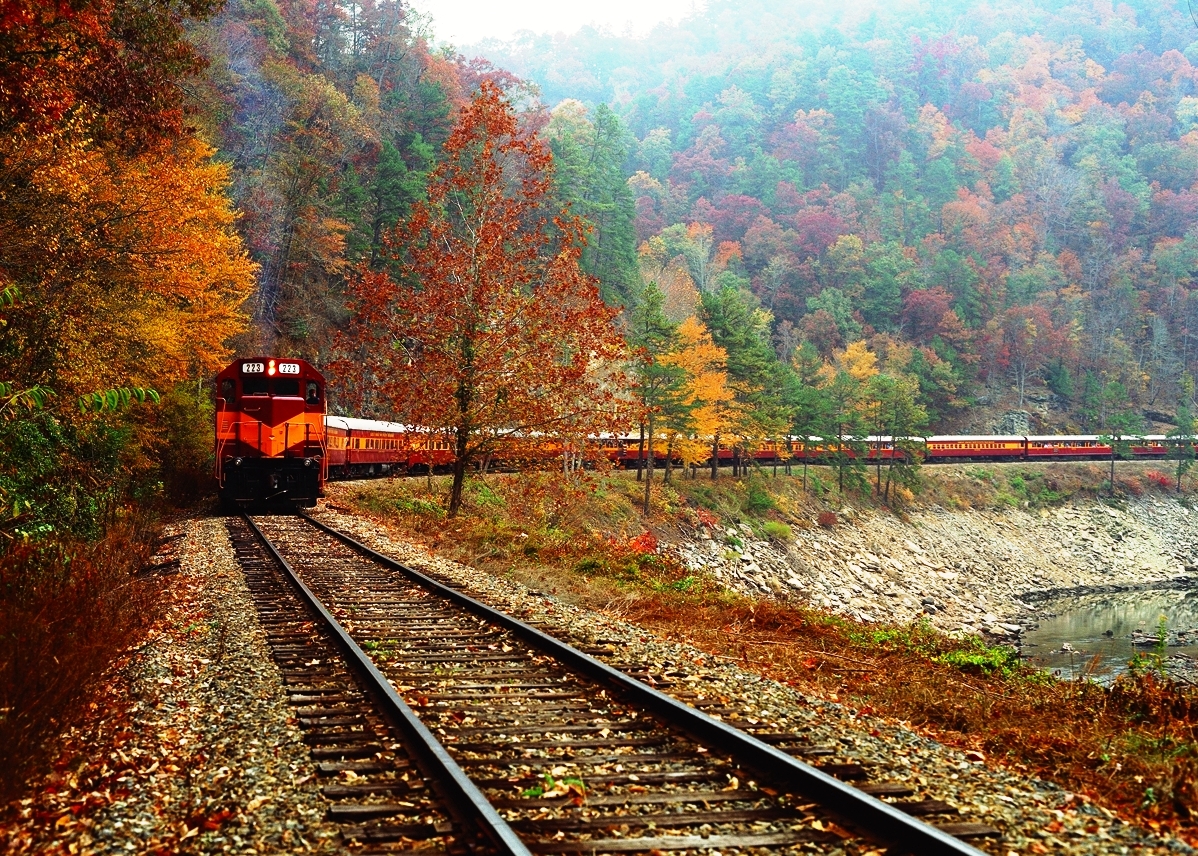
His enthusiasm for the railroad earned him his nutty nickname of Crazy Judah, but Theodore Judah would prove himself one of the greatest geniuses of US railroad history!

The Transcontinental Railroad, completed in 1869, changed the face of America. It offered better economic circumstances, faster travel, and to some it seemed, unlimited opportunity.
Many people were responsible for its eventual success, but one of its biggest supporters and believers in its potential was a young engineer named Theodore Judah.
Unlike many of his contemporaries, however, Judah wasn’t in it for the money. In many ways, he dedicated his life to the railroad.
Growing up With the Railroad

Theodore Dehone Judah was born in Bridgeport, Connecticut, in 1826. At the time of his birth, only about three miles of railroad track were functioning in the United States.
Judah and the railroad industry matured together and became increasingly intertwined as the young man grew.
Judah studied civil engineering and, by the age of 18, was a railroad surveyor for the New Haven, Hartford, & Springfield Line. At 21, he married a young woman named Anna Pierce, who supported her husband’s dreams as the pair traveled throughout the northeast for Judah’s work.
His enthusiasm for the railroad earned him his nutty nickname of Crazy Judah, but Theodore Judah would prove himself one of the greatest geniuses of US railroad history!
The rail industry was growing rapidly, and by this time, quality engineers were in high demand. In 1854, Judah was hired to become an engineer in California.
He acquired the job on the recommendation of the governor of New York, who was asked to suggest a qualified engineer who might be up for the task of building the first railroad in the West.
California was teeming with gold money at the time, and investors were looking to turn the western frontier into a respectable business environment.
A railroad connecting business interests in the west and east could help meet this goal, and Judah was the one to make it happen.
Moving West: A New Obsession

There were two modes of travel available to make this trip—traveling in a covered wagon, as thousands did during this era, or steamship travel, which is how the Judahs made the journey.
This required sailing south through the Caribbean, crossing the Isthmus of Panama, a narrow strip of land connecting the Caribbean Sea and the Pacific Ocean, and then boarding another ship to sail up the Central American coast to California.
Traveling down around Cape Horn at the southern tip of South America was another option, but it added significant time. The downside of the Panamanian route was the land crossing, which took three to four days on foot, horseback, or on mules.

The Judahs arrived in Sacramento, California, in May of 1854. At the time, Sacramento echoed many other “wild west” towns. Despite its status as California’s capital, it was a town filled with saloons, gambling houses, and brothels.
Theodore Judah went right to work in this new, rough environment and, over the next two years, played a key role in creating the Sacramento Valley Line, the first railroad west of the Missouri River.
By this time, Judah’s enthusiasm for his craft had earned him the nickname “Crazy Judah,” but despite the odd nickname, Judah was a well-respected member of the industry.
His work in California had ignited a spark in Theodore, and though he wasn’t the only one thinking about a transcontinental railroad and its potential for America, it occupied his thoughts frequently. He spent most of his free time thinking about such a project and the route it might take.
Mapping a Route

There were several challenges. One of the most significant ones was how to conquer certain land-forms in the way, especially mountain ranges.
In 1859, Judah was nominated by the California Pacific Railroad Convention to travel to Washington to lobby for funding for a transcontinental railroad.
After spending time getting many congressmen thinking about the potential for such a project, Judah realized that more detailed planning was required before this project could succeed.
Heading back to the drawing board, he focused more intently on finding a feasible route.

Determining the best way through, around, or over the Sierra Nevada mountain range was a major concern for the surveyor. In July 1860, he received a letter from a man named Daniel “Doc” Strong, a storekeeper from Dutch Flat, California.
Strong was also interested in seeing the transcontinental railroad come to fruition and invited Judah to visit Donner Pass, suggesting that it might be a suitable place for the future railroad to crest the Sierra Nevadas.
Judah accepted and, upon surveying it himself, found that the pass had a gradual, continuous rise and fall that made it perfectly suitable for locomotives to travel over.
Strong and Judah joined forces and eventually became the driving force behind the founding of the Central Pacific Railroad Company.
Finding Investors

Now that he had a route, Judah required financing. He and Strong managed to drum up about 46,000 dollars from private investors in the gold fields but were still in need of cash to put the project into motion.
They considered selling subscriptions, which would bring in smaller amounts and require many sales.
However, Judah met with Collis P. Huntington, a ruthless California businessman, who offered to come up with the remaining funds and bring in only three other investors, tossing aside the need to sell dozens of subscriptions.
Huntington, along with Leland Stanford, Mark Hopkins, and Charles Crocker, would become known as “The Big Four” or the “Associates.” They financed the founding of the Central Pacific Railroad Company.
Judah was named Secretary of the Railroad Committees in both the House and Senate, allowing him direct access to further lobby for federal support for the project.
The Railroad Act of 1862 checked all the boxes, securing additional federal funding for the project. The Transcontinental Railroad project was underway.
Trouble in Paradise

Judah soon discovered that he had very different goals than other members of the Central Pacific. The Big Four were in the project solely to make money and soon began scheming to maximize their profits, sometimes at the expense of the railroad.
For example, the Big Four wanted to fudge measurements regarding where slopes began since the company would be paid more per mile of mountain construction as opposed to building on flat land.
Judah disagreed, and the Big Four went over his head and hired another surveyor.
Judah grew increasingly frustrated at his lack of control over the proceedings and the amount of influence that the Big Four held over the project.
He explored his options and decided that buying the businessmen out of their stakes in the Central Pacific Railroad Company was the best course of action.
Unable to do so himself, he would need to look elsewhere for support. He headed back east, hoping to meet with Cornelius Vanderbilt and similar wealthy counterparts.
Premature Passing

Judah set sail for New York in October of 1863, determined to save his dream. However, he became gravely ill while making the crossing in Panama. He became progressively sicker as the second half of the trip continued and was diagnosed with Yellow Fever.
Upon reaching New York, he took refuge in the Metropolitan Hotel in New York City with Anna, but he was too sick to commence the meetings for which he made the trip.
Theodore Judah passed away as a result of his bout of Yellow Fever one week after reaching New York. He was buried in Greenfield, Massachusetts.

Judah did not live to see the completion of the railroad he had worked so hard to build.
Construction concluded when crews from the Central Pacific Railroad Company met those from the Union Pacific Company in Utah in May of 1869, where a golden spike was driven to mark its completion.
Leland Stanford of the Big Four was on hand to drive the celebratory nail.
While Judah may not have been able to see his vision completed, it is doubtless that his personal investments of labor and dedication, the ones that earned him his crazy nickname, were critical to its success.
The Collector / ABC Flash Point News 2025.
Totaal Aangifte samenvatting met als doel terreur te omschrijven
Slotzin : Wij hopen dat verdere aanslagen op het welzijn van de bewoners op VR/H2 tot een minimum te berperken, waar daders gezocht kunnen worden in de achterban van het landrovende toerisme en APC die haar gronden in conserveringsgebieden beschikbaar stelt en daarmee toestaat dat men in natuur gebied blijft bouwen op Jan Thiel.
Rutme verstoring gebasseerd op 6-daagse werkweken lag aan de basis van de toebediende ellende. Ook het verwijderen van een ontsluitingsweg tegenover Livingstone zorgde voor alle overlast van het bouw- en werkverkeer tijdens de bouwperioden van Vista Royal.
De ingediende aangiften doen verder duidelijk uit de doeken, hoe na 24 de hele omgeving betrokken wordt bij het verwijderen van de bewoners op VR/H2. Grof geweld tegen APB onderbouwde deze stellingname, toen meneer Bo op APB afgestuurd werd om het aan te vallen en te wurgen, onder het motto van je moet oprotten uit deze buurt, iedereen heeft eeh hekel aan jou, maar politie doet daar verder geen onderzoek na.
Het zwart schilderen van een persoon geeft derden geen recht om gezamelijke aanvallen te organiseren.
Aanslagen en grof geweld zijn de toegepaste ingredienten van APC (negeren klachten 24 jaar aanhoudende 7-daagse bouw hinder) en de toeristen fabrieken (die in wettelijk bepaalde (EOP) natuurgebieden “ontwikkelden”.
De vermeende vingerafdrukken van uit de hand gelopen grap om de levens kwaliteit en reputatie opzettelijk te blijven ondermijnen in de hoop mij van het toneel te verwijderen en de daaraan gekoppelde bewijsvoering (*digitale sabotage email en websites om informatie voorziening voor wettelijke aansprakelijkheid te verwijderen).
Terreur en grof geweld op afstandbediening? Overtreden WSB en Hinderwetgeving. KPC weigert op te treden tegen de wettelijke overtredingen, waarmee wij vast kunnen stellen dat nog APC of KPC over de capaciteiten en/of wil beschikt om op te treden tegen vnl NL’se misdadigers op Jan Thiel.
Israeli Countdown underway to cripple US Cyber Grid and Communications systems
The walls are closing in on the global elite. Their narratives are collapsing, their lies exposed, and the public—finally—has stopped swallowing the propaganda.
Cornered and desperate, they’re making their next move.
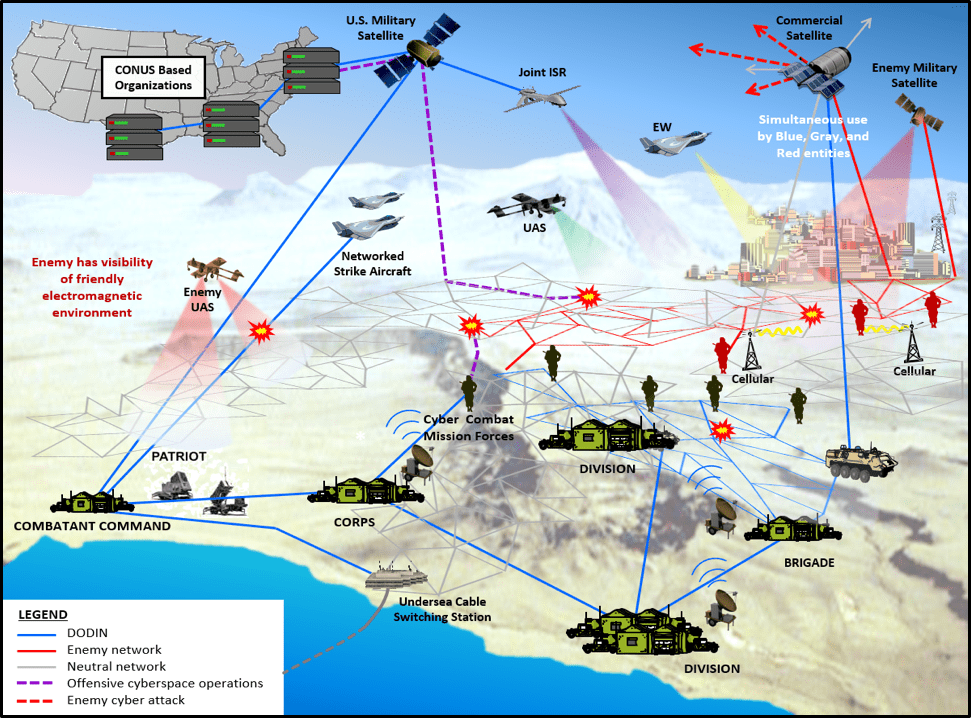
According to Gen. Flynn and federal insiders, preparations are underway for a coordinated cyber and communications assault—one that could cripple America’s power grid, banking systems, and digital lifelines overnight.
The question isn’t if it happens — it’s who’s orchestrating it. Because while the Israeli-controlled media point the finger at China, the digital fingerprints lead somewhere far closer to home: Israel’s global cyber network.
This isn’t just another warning. It’s the countdown.
Last week, the Secret Service quietly uncovered a plot in New York to unleash a major cyber attack and cripple America’s communications and power grid — a plot far larger, and far darker, than anyone first realized.
The moment the story broke, the Israeli-controlled propaganda outlets switched on. China did it, they said. Russia’s involved. The USA must prepare for WW3.
But insiders know how this game works — the louder they shout, the more they’re trying to hide who’s really behind the curtain.
One source inside the investigation said it bluntly: No agency would take a risk like that unless they knew the system would protect them. They wouldn’t risk exposing their assets. Whoever is behind it has high-level cover in DC— and they know it.
Who’s tracking them, who’s stopping them — and when will our so-called leaders admit the truth? This isn’t a glitch. It’s an act of war against the American people.
Let’s be clear — this didn’t happen overnight. The blueprint’s been circulating for years among the same powerful interests who profit from crisis and control. And now their script is being followed to the letter.
You don’t need to be a body language expert to see it — Professor Schwab’s deranged excitement when talking about a worse than 9/11 cyberattack isn’t normal.
Students of history know this pattern — the global elite are using Israel to steer the world toward a new war, one that will leave nations shattered and pave the way for a single centralized system of control.
From the ruins, a new order will rise — digital, authoritarian, and absolute.
Behind the curtain, powerful networks have already seized control of the world’s communication channels — from the algorithms that shape what you see, to the newsrooms that decide what you believe.
Even the VPN’s you thought were protecting you have been hijacked and compromised.
The narratives are being engineered, war is being normalized, and dissent is disappearing before our eyes.
Netanyahu said it out loud: we’ve entered a new era — the elite are now at war with Americans not by open conflict, but by silent weapons and quiet wars.
We’ve been warning about this for years. The blueprint’s been sitting in plain sight the whole time — and now, they’re moving fast. Step by step, they’re taking control of the very systems that once gave us freedom.
The first move? Silencing dissent and dismantling privacy online. Every new restriction, every new security measure, every round of censorship, brings them closer to total control.
And whether people see it or not, it’s all part of the same grand design.
The first move? Silencing dissent and dismantling privacy online. Every new restriction, every new security measure, every round of censorship, brings them closer to total control.
And whether people see it or not, it’s all part of the same grand design.
Here’s the good news: the people are waking up.
From America to Europe to Australia, a global movement is rising — millions of us exposing their false flags, their gaslighting, their agenda of control.
And here’s the part they didn’t see coming: we’re fighting back — with knowledge, with courage, and with the tools to break their digital chains.
Because here’s the truth they don’t want you to know.
The VPN’s you thought were your shield — your last line of defense against government and corporate surveillance — have already been hijacked.
One Tel Aviv–based company with a long history of distributing malware has quietly bought up nearly all the biggest VPN’s on the planet: ExpressVPN, CyberGhost, Private Internet Access… the list goes on.
And the people they hire? Not random techies. Not privacy activists. But veterans of Israel’s most notorious intelligence units — Unit 8200, the cyber-warfare arm behind some of the world’s most advanced spying tools, and the Duvdevan Unit — infiltration experts turned executives.
When their operatives get caught spying, they don’t get punished — they get promoted.
It’s shameless. The fox has taken control of the hen-house.
And those are the people now asking you to trust their no-logs policy. Trust them not to peek. Trust them not to sell your data. Trust them with your entire digital life.
This is a red alert. If you are using a traditional VPN, you need to cancel your subscription immediately. You are under attack.
That’s why, in 2025, VP.net was built to solve this urgent problem — using zero-trust architecture and next-gen cryptography to shut their digital eyes forever.
It’s not another VPN with clever marketing. It’s trust-less by design — meaning even if they wanted to spy on you, they couldn’t.
Even if the feds hold a gun to their head, they can’t hand anything over.
Built on zero-knowledge cryptography, Intel SGX secure enclaves, and open-source code you can audit yourself — it’s mathematically impossible to log or leak your data.
No Mossad back-doors. No kompromat. No hidden hands.
Just pure, verifiable privacy.
This is how we fight back — not with fear, but with technology that works for us, not against us. Go to vp.net/tpv — just five bucks a month — and close Big Brother’s eyes for good. Because they were watching you. But with vp.net, they’re not.
News Punch / ABC Flash Point News 2025.
Nearly 8% of all Children on Planet Earth have the DNA bloodline of Genghis Khan

Genghis Khan’s genetic legacy has never been doubted. The question is, how many kids did Genghis Khan have? According to historical records, Khan’s official heirs numbered four through his primary wife Börte.
Married to Temujin, later Khan, at age 17, Börte’s original tribe helped cement his political grip. She would later help Khan rule at home.

More importantly, she bore him his four official heirs: Jochi, Chagatai, Ögedei, and Tolui. Born between 1182 and 1191, they helped Khan expand the Empire after 1206.
Börte was not Genghis Khan’s only wife- just the important one. Altogether, Khan’s wives numbered six, all Mongolian, who gave them over thirteen children. With his other wives and concubines, he fathered over 120 children.
There is no doubt Khan had children, possibly into the thousands. His official offspring are known, plus indirect evidence from concubines. Khan also kept a harem, organized into camps called ordos.

From here, it’s thought that Genghis Khan could have fathered thousands of children, beyond the official offspring. Evidence must be gleaned from historical records or DNA evidence.
One of the best historical sources is “The Secret History of the Mongols.” Written in the 13th century, this source covers Khan’s reign. The details cover Khan’s four primary sons and mention his daughters.
Central Asia and surrounding groups possess oral traditions linking Khan as an ancestor. The Hazara of Afghanistan claim this heritage, given that Mongol clans settled during the invasions.
Oral traditions are valuable but sometimes unreliable, but the Hazara claim Genghis Khan as an ancestor. While pockets of Mongol DNA exist in Afghanistan, doubts remain about the tribe’s lineage.

A 2003 genetic study claims that Khan’s DNA spread across Asia, even to Russia’s southern plains. Utilizing the Y or male chromosome, the study traced Khan’s DNA across the breadth of the former Mongol Empire. The Y chromosome is passed from father to son.
The study’s scientists explain this in distinctive Y chromosomes that spread too rapidly. Originating from Mongolia about 1,000 years ago, the Y chromosome crept into many regions.
The study asserts that up to 8% of males in the conquered territories carry Khan’s gene. Or in simple terms, roughly this 8% represents 0.5% of all males worldwide.

However, this study of Genghis Khan’s direct DNA in so many ancestors is under challenge. The biggest is a lack of direct DNA evidence. Khan’s burial location remains unknown, so there can’t be any direct comparison.
A 2017 study found different results regarding the Y chromosome. This casts doubts on the one DNA source. Recent research throws doubt on the 2003 study results. Scientists used a bigger study base, gathering DNA from thousands more across Central Asia.
The result? The Y chromosome linked to Genghis Khan appeared 1000 years before Genghis Khan’s empire building. Thus, there is little or no link.
Genghis Khan’s Descendants and Their Dynasties

Genghis Khan built the Mongol Empire with superior tactics, organization, and blood. He achieved Pax Mongolia, creating a peace that the Romans longed for. His four acknowledged sons expanded into Poland, the Middle East, and China.
Besides establishing their khanates, these four rulers left a genetic trail that possibly linked them to their progenitor.
Genghis Khan maintained a harem with many concubines and wives. Ögedei, Jochi, Chagatei, and Tolui kept large harems as per the Mongol custom.
Jochi fathered fourteen sons, and his brothers at least eleven more. The idea, however, of Khan fathering thousands himself is a stretch.
Separating Genghis Khan’s DNA Myth from Reality

The common thought today is that Khan had thousands of children, which later spread to millions. There is no doubt his DNA diffused across his empire. However, the source of Genghis Khan’s Y chromosome is likely the larger group of Khan’s descendants.
Groups like the Afghan Hazara use their oral history to assert a direct link to Khan. Oral histories are invaluable, but here there’s no confirmed evidence.

Time distorted the question of how many children Genghis Khan had. The Mongols customarily kept large harems. From his various marriages or liaisons, Khan did produce numerous children.
The thousands of children myth cannot be backed by solid evidence. Genetic studies prove that a Y chromosome linked to his heirs is widespread. Unfortunately, due to a lack of records plus a shaky DNA link, there’s no telling the exact number of children.
The Collector / ABC Flash Point News 2025.
USA Agriculture hit by Catastrophic Floods caused by Global Warming?

The worst agricultural disaster in modern American history with catastrophic flooding is torturing the USA, as the NOAA warns that this will continue through to the end of May.
With more than 90% of the upper Mid-West and great planes still covered by nearly 11 inches of snow this is a very alarming issue, especially because that this snow still has to melt and find its way through the river systems in order to flow into the sea.

Millions of acres of farmland are already under water.
That means the USA will transform from one of the worst winters in modern history into a flood season that has already taken an apocalyptic turn for farmers across the USA.
Millions of acres of farmland are already under water meaning thousands of farmers will not be able to plant crops this summer, with thousands of more farmers who have been financially ruined by the floods and will never return to farming again.
So far, 2019 is already the worst agricultural disaster in modern American history and it is going to get a whole lot worse.

Nearly two-thirds of the Lower 48 states face an elevated risk for flooding through May, with the potential for major or moderate flooding in 25 states, according to NOAA’s U.S. Spring Outlook issued today.
The majority of the country is favored to experience above-average precipitation this spring, increasing the flood risk.
Portions of the USA, especially in the upper Mississippi and Missouri River basins including Nebraska, Minnesota and Iowa – have already experienced record flooding this year.

This early flooding was caused by rapid snow melt combined with heavy spring rain and late season snowfall in areas where soil moisture is high. In some areas, ice jams are exacerbating the flooding.
Additional spring rain and melting snow will prolong and expand flooding, especially in the central and southern USA. As this excess water flows downstream through the river basins, the flood threat will become worse and geographically more widespread.
Record winter precipitation across a large swath of the USA has set the stage for the elevated flood risk. The upper Mississippi and Red River of the North basins have received rain and snow this spring up to 200% above normal.

The areas of greatest risk for moderate to major flooding include the upper, middle, and lower Mississippi River basins including the mainstream Mississippi River, Red River of the North, the Great Lakes, eastern Missouri River, lower Ohio, lower Cumberland, and Tennessee River basins.
The flood risk outlook is based on a number of factors, including current conditions of snow pack, drought, soil moisture, frost depth, stream flow and precipitation.
Local heavy rainfall, especially associated with thunderstorms, can occur throughout the spring and lead to flooding even in areas where overall risk is considered low.

In the western U.S., snow packs at higher elevations may continue to build over the next month, and the flood risk will depend on future precipitation and temperatures.
That’s a huge area. A big food bowl & on some farms oil wells pumping as well. It is so sad to think of the farms destroyed & farming & country town families walking away with very little.
Has the Federal Government declared it a disaster yet, or is it just some part of weather engineering to separate some kind of export farmers from others?
With groundwater poisoned by pesticides, drowned oil wells polluting the entire river system, the USA is in for a real life changing roller coaster experience?

In reality this catastrophe is only just beginning to show it’s ferocity. Let’s not forget the long term effects of the chemical cocktail the already depleted top soil has just been dosed in.
The situation is extremely dire. It must be much worse than we know, perhaps by an order of magnitude? This areas has been not our bread basket but they export wheat, soy beans and corn all over the world.
This may be a good time to let the land lay fallow and have a subsidy available for those
farms that do. A good time to consider the damages to the soil caused by the pesticides
and herbicides and the Monsanto Frankenseeds that harm us and livestock.
Big Wobble / Crickey Conservation Society 2019.
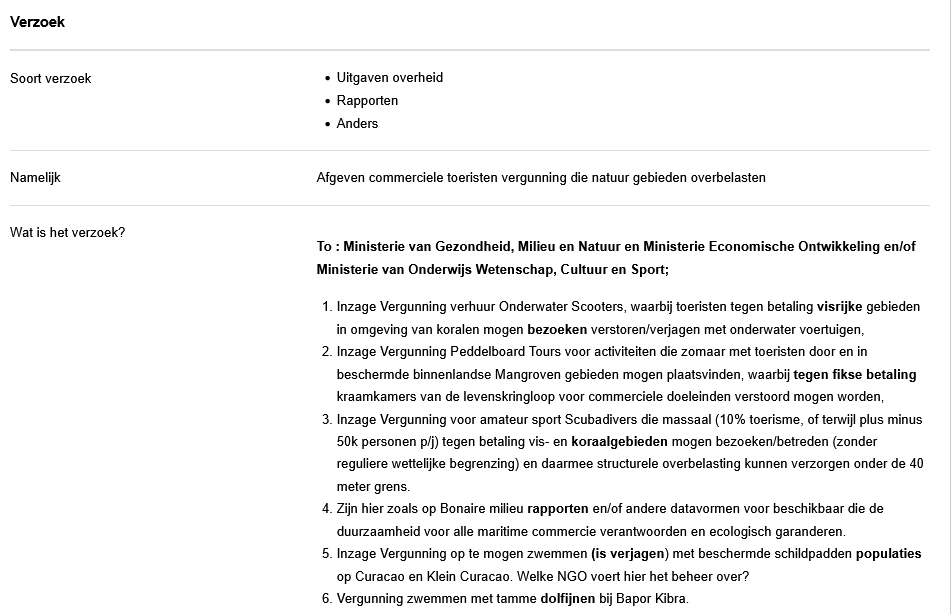
Toeristen op Curacao genieten van Mass scuba diving, Mangrove peddling, under water Scooter sight seeing tours, zwemmen met Dolfijnen

Massa toerisme staat bekend voor het ontregelen van lokale levenskwaliteit, omdat deze de hele samenleving in een ander jasje stopt, waarmee het volk geen voorrang meer krijgt in de samenleving en toeristen de overhand nemen omwill van een geldverdien model.
Dit levert alleen de monetaire winsten op voor hebzuchtige belanghebbende bedrijven en ondernemingen die hun lusteloze ego’s op deze wijze weten te bevorderen. Vaak krijgen dit soort entiteiten ook nog eens belasting voordelen om de pret te bevorderen.
Lokale tradities en culturele waarden worden daarmee onderheving aan kapitalistische winsstnemeingen, waarbij de pers de bezetters zelfs nog weten te glorificeren ten behoeve van het kwaad wat willekeurig aangericht wordt door het massa toerisme model.
Waarom regeringen dit soort evenementen promoten zal Joost wel weten. Na vier jaar worden de ministers in dit ecocomplot rijkelijk beloond met een aanzienlijk pensioen voor de rest van het leven. Ingediende LOB verzoeken naar het reilen en zeilen van dit soort constructies blijven gewoon onbeantwoordt.
De meteo en weather channel werken dapper mee aan deze volks hoax. Zij presenteren temperaturen die niet of nauwelijks boven de 34C uitkomen, zodat de toeristen niet voor een andere tijdelijke bestemming kiezen. CAP mag voorts alle airport tax opstrijken en in eigen zak steken?
Hiermee wordt het zelfs voor de blinden en doven klaarklinkend duidelijk dat de regering niets anders is dan een bedrijf wat andere bedrijven met belastinggeld en subsidies beloond. Meeste ministers verhuizen na hun diensttijd de omgeving om in pracht en praal de ontnomen landsinkomsten te verzilveren.
Met zo’n 75.000 toeristen per maand die Curacao bezetten en extreem vervuilen wordt het volk armer in plaats van rijker. Met zo’n 17 TUI- en 21+ KLM vluchten per week van Amsterdam naar Curacao krokgt het volk het nakijken. Ook de USA met zo’n 30 vluchten per week participeren in deze marketing stunt.
De toeristen zelf valt nietws te verwijten daar zij ook slachtoffers zijn van de fascistische bewegingen. In het eigen land blijkt de levenskwalitieit ook zwaar verwaarloosd en dienen op een andere wijze naar lucht te happen.
Date : 25.04.2025, Time 16.04 PM

CAdN 2025.
LOB # 2 dd 29 September 2025.

*************************************************************************************************************

************************************************************************************************************

CAdN 2025.
Dutch Navy war-frigate Van Amstel heads to Caribbean

WILLEMSTAD – The Royal Netherlands Navy ship Zr.Ms. Van Amstel departed from the Netherlands on Sunday bound for the Caribbean, where it will serve as extra station ship. Defense spokesperson Marinka Hiraldo Vos-van Kooten confirmed the deployment.
According to the spokesperson, the frigate is filling a gap left between the return of Zr.Ms. Friesland for scheduled maintenance and the delayed completion of maintenance on Zr.Ms. Groningen.

The Van Amstel is a different type of vessel (an M-frigate) compared to an OPV (Offshore Patrol Vessel). This has to do with the availability of assets and not with an increase in readiness, Vos-van Kooten motivated ?
It remains unclear how long the Van Amstel will remain stationed in the region. This is a temporary solution, the spokesperson emphasized, noting that such gaps between vessels occur from time to time.
The frigate is expected to arrive in the Caribbean within 10 to 14 days. In the meantime, the Ministry of Defense is working on a longer-term solution for maintaining a consistent naval presence in the region.
Curacao Chronicle / ABC Flash Point Blog News 2025.
Trump considering military strikes in Venezuela

US President Donald Trump is considering carrying out strikes against drug cartels on Venezuelan soil, CNN reported on Friday, citing sources familiar with the matter.
The reported deliberations come as the Pentagon has deployed at least eight warships and one submarine to the eastern Caribbean.
According to CNN, Tuesday’s missile strike on a boat allegedly smuggling drugs from Venezuela was just the first step in Trump’s efforts to neutralize drug trafficking in the region and potentially topple Venezuelan President Nicolas Maduro.
The US imposed sweeping sanctions on the socialist-ruled South American county during Trump’s first term in office, targeting its oil trade and financial sector.
Last month, Attorney General Pam Bondi doubled the reward for information leading to Maduro’s arrest to $50 million.
Although Trump denied plans for regime change on Friday, he described Venezuela’s 2024 presidential election as very strange.
Secretary of State Marco Rubio stated earlier this week that the USA would take on drug cartels wherever they are.
Maduro has denied the accusations of involvement in drug trafficking and vowed to declare Venezuela a republic in arms if attacked by the USA.
Just as it wasn’t true that Iraq had weapons of mass destruction, what they’re saying about Venezuela isn’t true either, Maduro said on Friday, referring to the rationale behind the 2003 US invasion of Iraq.
RT. com / ABC Flash Point News 2025.

