
Wildfires destroys popular Tourist Town in Hawaii

The wildfires in Hawaii broke out due to dry and hot weather and are exacerbated by strong winds brought by Hurricane Dora. Some fires cover an area of 400 hectares (over 1.5 square mile).
The fire destroyed several settlements, including the popular tourist town of Lahaina. The authorities are forced to block roads and suspend public transport. Hundreds of local residents were evacuated from the area.
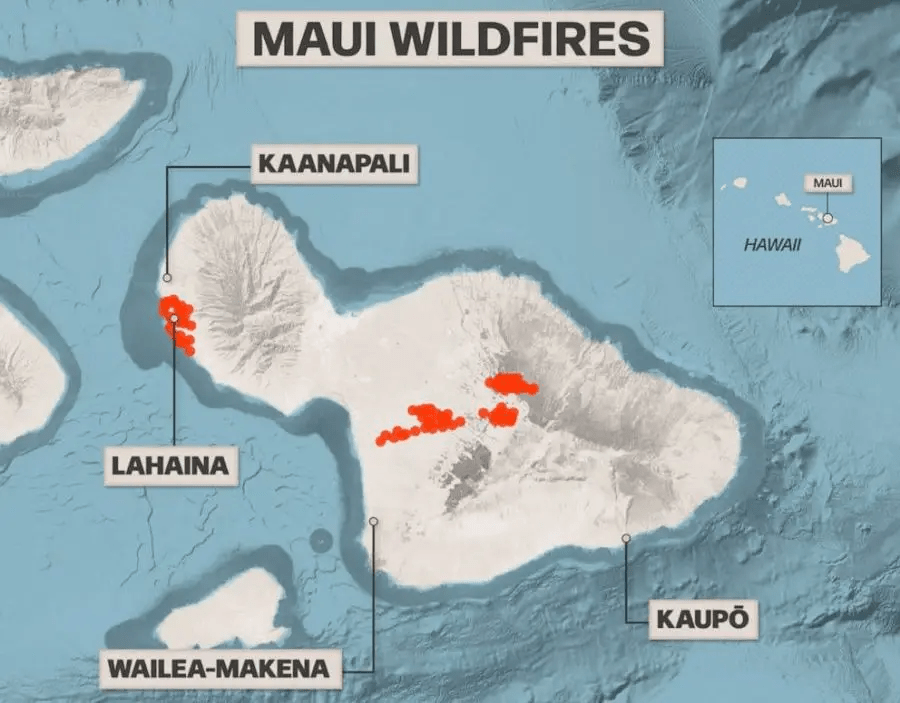
The death toll from the man-made wildfires in Hawaii has risen to 80 as fire fighting efforts continue, Maui County said on Saturday.
Earlier in the day, the local authorities said 67 people were killed as a result of the wildfires.
Firefighters continue working to extinguish flare-ups and contain fires in Lahaina, Pulehu/Kihei and Upcountry Maui. The number of fatalities is at 80, the authorities of Maui County said in a statement.

US President Joe Biden officially declared a major disaster in Hawaii, which makes additional federal resources available to help combat ongoing wildfires on the islands.
Much of the island’s critical infrastructure, including power lines, water services and roads, could take a while to restore, officials said
Sputnik / ABC Flash Point News 2023.
The Shinmonzen, the pocket of heaven in Kyoto, Japan

If you’re not familiar, Kyoto is considered Japan’s cultural capital. Famous for its temples, tea houses and shrines, the city has a gentler pace to other major cities, and the Shinmonzen embodies this.
The word luxury can be thrown around a lot, but truly there is no better term to describe this beautiful hotel. Inspired by a traditional Japanese inn, but with modern, art-house touches, The Shinmonzen is a pocket of heaven.

Tucked away on a traditional side street in Gion – the city’s most famous geisha district – the hotel is in a prime position to explore downtown Kyoto.
With just nine spacious suites, all with verandas overlooking the Shirakawa River, life here runs a little slower. To be clear, this doesn’t extend to the hotel’s service where nothing is too much for the staff.
From being collected at the train station (more specifically outside our exact carriage with bottles of ice-cold water) to being given traditional welcome pastries and an overview of the city, the Shinmozen’s staff go above and beyond to make you feel at home.

After weeks of navigating new cities and a new language, this personal, homely touch is most welcomed. Of all the rooms we stayed in during our trip, this one was our favorite. With sliding doors and an open plan layout, it was quintessentially Japanese.
The hotel website describes the interior as ‘soothingly minimal’ and truly, when you get there, you’ll know what they mean. This interior combined with the sweet sound of birdsong and trickling river are a fast-track pass to feeling zen.
Designed by Tadao Ando, one of Japan’s greatest architects, the owner (whose name you might recognize from Provence’s Villa La Coste) has imbued it with character and state-of-the-art design.

The latter is something Tadoa clearly takes seriously, teaming up with Remi Tessier to consult on interiors. Each piece of furniture enhanced the zen aesthetic, as did the luxury touches like 500-thread-count linen, stunning walk-in closet and free gourmet minibar.
This is all without mentioning the beautiful bathroom, fit with an onsen-style Hinoki bath tub and a rain shower overhead.
Although we had Kyoto’s bars and restaurants on our doorstep, after a day of exploring the city, nothing was more tempting than unwinding with a glass of wine in the bath. And, of course, going to bed in our Ploh Plush bathrobes and slippers.

Traveling throughout Japan can leave you feeling exhausted, lucky then that there’s an onsite restaurant at The Shinmonzen allowing guests to try local delicacies without leaving the hotel.
Jean-Georges, named after its head chef Jean-Georges Vongerichten, showcases Kyoto’s famously high-quality produce. We didn’t get a chance to eat there during our stay, but if reviews are anything to go by, it’s one of the city’s best eateries.
We did however enjoy a leisurely riverside brunch, featuring fresh smoothies, the best coffee we had in Japan and some extraordinarily fluffy omelettes.

Kyoto offers an authentic slice of Japanese culture; traditional and beautiful – an antidote to the bustling streets of Tokyo lined with its concept cafés and skyscrapers, which make up the sprawling skyline.
Kyoto on the other hand, has no building above 31 meters due to laws prohibiting it – something our driver, a proud Kyoto resident, told us in perfect English as we were whisked from the station to the hotel.
The strict building regulations are a way of the authorities keeping the city true to its roots – something you can’t help but feel as you wonder through Gion.

This quaint feel extends to the beautiful temples; we were recommended the Daitokuji Temple, a complex of temples with beautiful surrounding gardens.
After a morning of exploring, we perched ourselves on a bench and enjoyed an ice-brew Matcha. A pretty heavenly way to spend a day.
Because Kyoto is a far smaller city, the presence of tourists feels more pronounced. One way to escape? A beautiful cycle along the Kamo river in the direction of the Botanical Garden, a route one of the Shinmozen’s staff drew up for us.

There you’ll see wildlife, including herons and cranes, as well as gaining an insight to the way locals relax; painting, playing board games and reading on the riverside.
During our time in Japan, we stayed in many hotels, but this was by far our favourite. A hotel which truly embodies its surroundings, respectfully reflecting Kyoto’s zen, humble charm and yet offering ultimate luxury too.
We loved Kyoto, but it was The Shinmonzen which made our trip one to remember.
Luxury Lifestyle Magazine / Crickey Conservation Society 2023.
Holistic Health Center in Virginia, USA

Today’s traveler demands more than the latest hotel and a checklist of must-see attractions. Following years of forced alienation and disconnect, people are seeking holidays that boost their mental and physical wellness.
A recent American Express survey, showed 76% of respondents want to spend more on travel that improves their well-being. Rapidly emerging as a top destination for wellness retreats, Virginia is ready to deliver on that demand.

Eupepsia Wellness Resort, located in the heart of the Blue Ridge Mountains, was recently voted the number one Best Health and Wellness Resort in the USA for 2022 in USA Today’s Readers’ Choice Awards.
This is the second year in a row the Virginia-based resort has earned the top spot. Recently, Eupepsia has even further elevated its wellness experience, with new cutting-edge treatments and premium additions to its already-stellar facilities.
Sleep wellness is one of the foundational pillars at Eupepsia.

To further enhance guests’ sleep, rooms are now furnished with a top-of-the-line bed exclusively designed for the resort by specialist sleep wellness company Bear, for the ultimate ‘zero-gravity’ cloud-nine experience.
Taking full advantage of its location, Eupepsia encourages guests to forest bathe, with daily hikes and mountain biking on one of seven trails connecting to the Appalachian Trail and nearby Jefferson National Forest.
A lush, new labyrinth garden allows guests to experience walking meditation, to quiet the mind, calm anxieties, enhance creativity and encourage insight, self-reflection and stress reduction.

Grounded in Ayurveda, Eupepsia’s programs are curated in real time to deliver optimal wellness aligned with each guest’s specific health condition and goals.
The latest in the resort’s pioneering offerings is the Hocatt Infrared Ozone Sauna, offering exceptional preventative and management benefits for a wide variety of health conditions, including immunity boosting.
Yoga provides the perfect foundation for a spiritual journey and when practiced mindfully in the beautiful surroundings of Virginia’s Blue Ridge Mountains, the benefits to the soul are even more enhanced.

Satchidananda Ashram–Yogaville offers sadhana intensive retreats under the guidance of skilled integral yoga practitioners.
From programs focused on the benefits of gratitude and giving back, to those highlighting self-discovery through silence, the teachings at Yogaville synthesize the various branches of yoga into a comprehensive lifestyle system, benefiting guests long after they depart Virginia.
Heading from the mountains to Virginia’s shore, Edgar Cayce’s A.R.E. Health Center and Spa in Virginia Beach has been helping individuals transform their lives with holistic healing, including massage therapy, bodywork, hydro-therapies, acupuncture and chiropractic care since 1967.

Treatments such as manual lymph drainage, craniosacral therapy and conscious breathing are just a few of the cutting-edge offerings provided.
Programs such as the Women’s Integrative Wellness Retreat, coming up in February of 2023, offer tailored treatments along with daily meditation, alkaline meals and dream work to enhance personal rejuvenation, while helping solo travelers connect with others for a shared wellness experience.

Mere minutes from Washington Dulles International, in DC’s wine country, Lansdowne Resort, offers carefully curated wellness packages designed to bring guests closer to harmony in their daily life.
In addition to therapeutic massage and wellness bodywork, the resort’s culinary team uses local, sustainably grown produce guided by the five elements – wood, fire, earth, metal, water.
Channeling the principle that food is medicine, the menus deliver cuisine that enhances health and strengthens the body.

Extend a stay at Lansdowne and visit nearby Om Float for a rejuvenating REST treatment – Restricted Environmental Stimulation Therapy – then explore Cannabreeze CBD Hemp Farm and Co to discover the healing powers of CBD.
Don’t forget a stop at Farmer John’s Market for some locally grown Misty Meadow Mushrooms to enhance the immune system.
Check here for more Virginia wellness retreats and spas throughout the state, each providing trailblazing treatments and unique offerings that go far beyond massages and diet advice, instead offering a true respite from physical and mental stress.
Luxury Lifestyle Magazine / ABC Flash Point News 2023.
CO2 Levels are @ Million-Year High
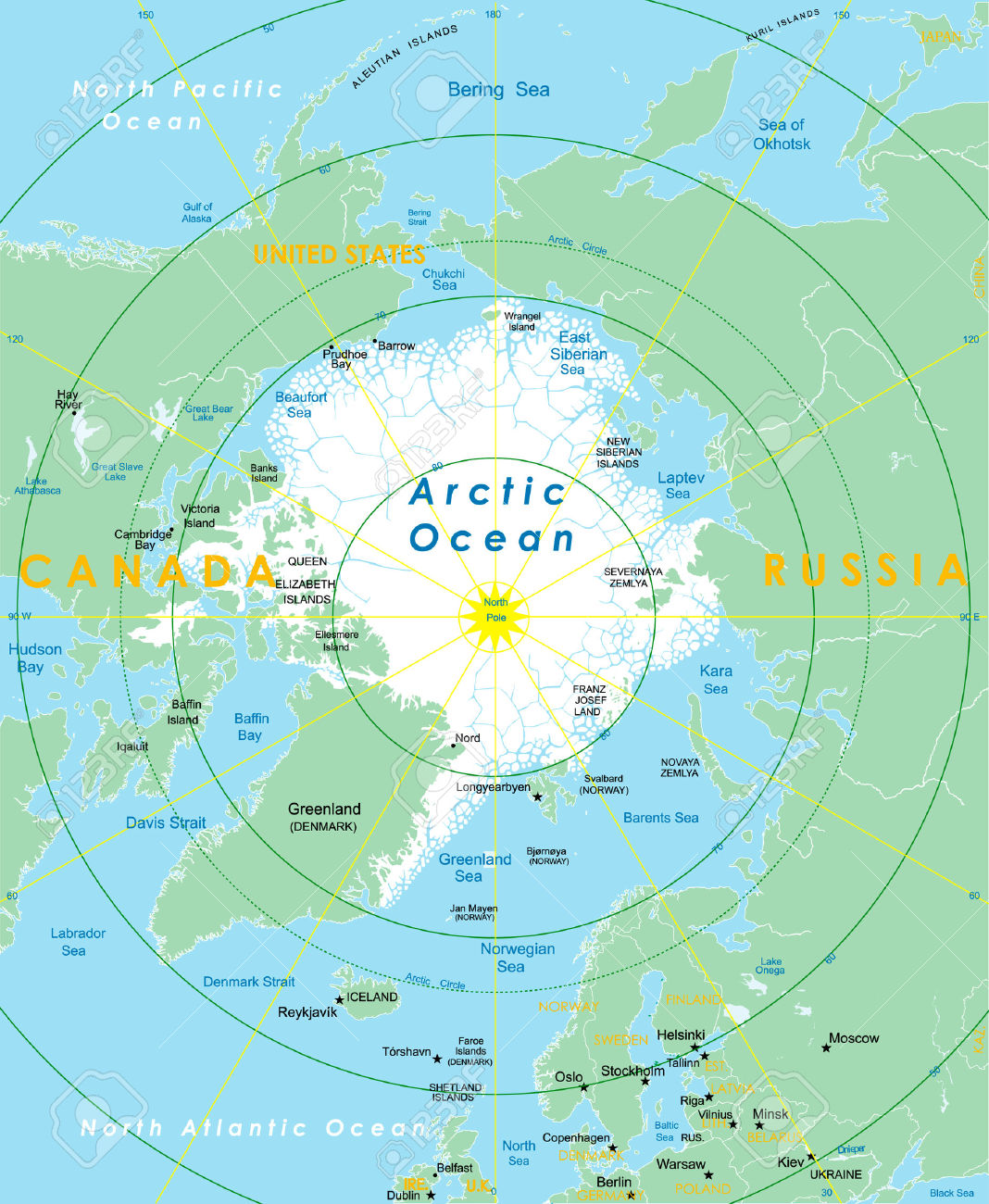
There is likely more carbon dioxide in the atmosphere now than at any other time in the last three million years. Or at least that is the conclusion reinforced by a study published in Science Advances Wednesday.
Researchers at the Potsdam Institute for Climate Impact Research and the Max Planck Institute for Meteorology in Hamburg, Germany succeeded for the first time in creating a computer simulation of the climate over the past three million years that matched data taken from sediment from the ocean floor.

The model showed that carbon-dioxide levels played a major role in shaping climate during that period — but in the reverse of their impact today. Lower levels of the greenhouse gas were a major factor in the onset of ice ages.
We know from the analysis of sediments on the bottom of our seas about past ocean temperatures and ice volumes, but so far the role of CO2 changes in shaping the glacial cycles has not been fully understood.
Matteo Willeit of the Potsdam Institute for Climate Impact Research said in a press release. It is a breakthrough that we can now show in computer simulations that changes in CO2 levels were a main driver of the ice ages.

But while this may be a scientific breakthrough, it has frightening implications. During the period modeled in the simulation, global temperatures never rose above pre-industrial levels by more than two degrees Celsius.
However, if humans continue to burn so-called fossil fuels at current rates, they will shoot past that marker within 50 years, with major consequences.
Our results imply a strong sensitivity of the Earth system to relatively small variations in atmospheric CO2, Willeit said. As fascinating as this is, it is also worrying.

Willeit told CNN that the models showed that carbon dioxide levels would not be more than 280 parts per million (ppm) today if human activity had not intervened in natural climate cycles. Instead, they are at around 410 ppm.
If this trend is not slowed, Willeit told CNN, our planet will change. The next 200 years could see one to two meters (approximately 3.3 to 6.6 feet) of sea level rise.
On the same day that the Science Advances study was released, scientists met at the Royal Meteorological Society in London to discuss what the earth was like the last time carbon dioxide levels were so high.

That was 5.3 to 2.6 million years ago during the Pliocene epoch, when beech trees grew in Antarctica, temperatures were three to four degrees Celsius warmer and sea levels were 20 meters (approximately 65.6 feet) higher.
Scientists said that studying this past era could help humans understand what the planet would look like if climate change continues. It could take millennia for the Greenland and West Antarctic ice sheets to completely melt.
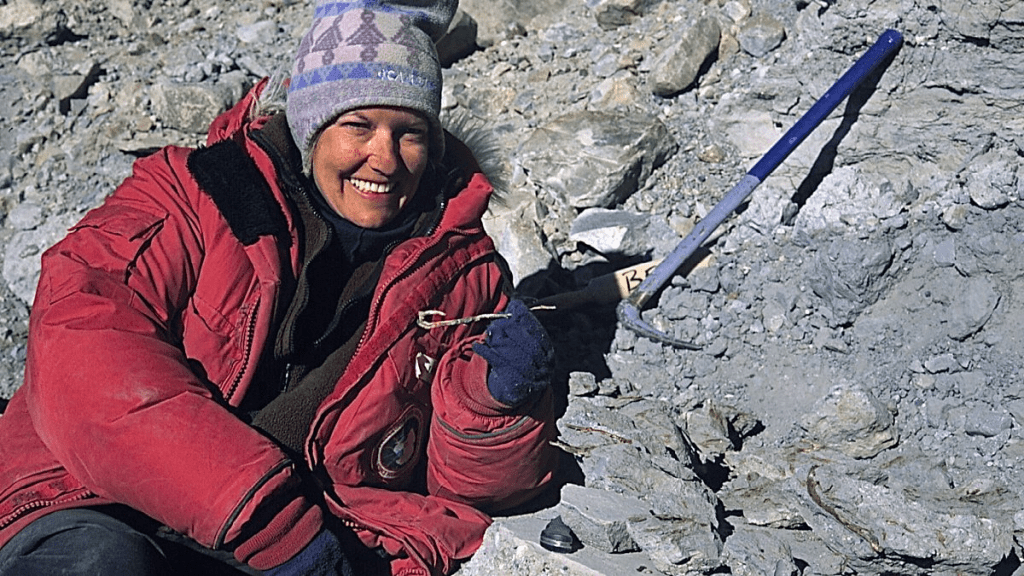
Director Jane Francis said the fossils of the Antarctic beech trees had been an important find proving the last forests of Antarctica.
They were growing at 400ppm CO2, so this may be where we are going back to, with ice sheets melting at times, which may allow plants to colonize again.

According to The Guardian, Francis said that the polar regions were important to understanding climate change, since they are uniquely sensitive to it.
Can we restrict temperature rise to 1.5 degrees this century? Can we do that? It’s possible, he said, according to BBC News. We’ve got to bring CO2 levels down to 40% of what they are today by 2030, or so.
And then to zero by 2050, and then negative after that. That’s a massive undertaking but it’s possible.
Eco Watch / Crickey Amigu di Natura Curacao 2019.
Best Resort Hotels in the Caribbean

Ask the average person what the Caribbean, Bermuda, and the Bahamas call to mind, and you’ll get a familiar formula each time: Glassy waters that wow in shades of turquoise. Tropical palms swaying over talcum beaches.
Poolside Piña Coladas. And, of course, dreamy resorts that ensure all of the above is never far from reach. But in a destination where beautiful views are par for the course, how does a hotel set itself apart?
:max_bytes(150000):strip_icc():format(webp)/best-caribbean-resorts-secret-bay-00-CARIBRESORTSWB22-93fc301a62ab4e9b800bc656b3a9bccd.jpg?w=696&ssl=1)
Every year for our World’s Best Awards survey, T+L asks readers to weigh in on travel experiences around the globe — to share their opinions on the top hotels, resorts, cities, islands, cruise ships, spas, airlines, and more.
Hotels (including safari lodges) were rated on their facilities, location, service, food, and overall value. Properties were classified as city hotel, resort, or safari lodge based on their locations and amenities.
Though they share common elements, the islands that comprise the Caribbean, Bermuda, and the Bahamas are culturally diverse destinations that all offer something unique.
:max_bytes(150000):strip_icc():format(webp)/jade-mountain-02-CARIBRESORTSWB22-11a9b7cfaaf54edbaa85089467f887c6.jpg?w=696&ssl=1)
And much like their vast and varied locales, the region’s hotels, too, have their own set of features that make them individually special.
Secret Bay, for example, is a rain-forest resort with luxurious clifftop villas, each with a private plunge pool, dedicated chef, and on-call concierge — attributes that helped it snag the top spot in this year’s list. St. Lucia’s Jade Mountain.
Jade Mountain— described by one guest as simply spectacular — landed at No. 2, thanks to its stellar Piton views and three-walled suites.

Jamaica also had a strong showing with six resorts in the rankings, including first-time WBA Hall of Famer Jamaica Inn (No. 10); Negril’s Tensing Pen (No. 8), an intimate boutique hotel with thatched-roof cottages ideal for unplugging; and Round Hill Hotel and Villas.
:max_bytes(150000):strip_icc():format(webp)/secret-bay-01-CARIBRESORTSWB22-7994de66bee440d599f14f37d1b878a2.jpg?w=696&ssl=1)
1. Secret Bay, Portsmouth, Dominica.
Set on a lush hillside in rugged Dominica, this all-villa hotel prioritizes privacy. In fact, the Caribbean country calls itself the nature island, and Secret Bay puts that nickname on full display with its 10 tree-house-style villas made of sustainably sourced wood.
Of course, this eco-sensibility is coupled with luxe amenities, including individual terraces offering sea, rain forest, and mountain views; private plunge pools; outdoor rain showers; a gourmet kitchen for guests and their private chefs; and a dedicated butler.
There’s also a secret beach accessible only by paddle, kayak, or swim, and activities like night snorkeling and yoga. In short, the resort is truly untouched. Beauty, defined on an Caribbean island, where the indigenous.

Dominica, island country of the Lesser Antilles in the eastern Caribbean Sea. It lies between the French islands of Guadeloupe and Marie-Galante to the north and Martinique to the south. The country has been a member of the Commonwealth since independence in 1978.
The island is of volcanic formation. Dominica has a number of active volcanoes, although eruptions are rare. There are numerous rivers, all of them un-navigable.
A range of high forest-clad mountains runs north to south, broken in the center by a plain drained by the Layou River, which flows to the west; the highest points are Mount Diablotins (1,447 meters) and Mount Trois Pitons (1,424 meters).

The population is mainly of African descent, with some Europeans, people from the Indian subcontinent, and Caribs.
Dominica is the only island with a relatively large and distinctive group of Carib Indians, descendants of the people who inhabited the island before European colonization.
Most of the remaining Caribs, a small number of whom are solely of Carib descent, live in the approximately 3,700-acre (1,500-hectare) Carib Territory in the east of the island and are among Dominica’s poorest residents?

English is the official language, but a French patois is commonly spoken, and the original Carib language is evidenced in a number of place-names.
The majority of the population is Roman Catholic, but there are also Methodists, Pentecostals, and Seventh-day Adventists. Dominica experienced out-migration throughout the 1970’s, a trend that culminated with a massive exodus after Hurricane David in 1979.
This wave continued in the 1980’s but moderated in the 1990’s. In 1992 the government initiated a controversial scheme to offer economic citizenship to investors from other countries.

Agriculture remains the most important sector of the economy, in terms of both employment and contribution to the gross national product.
The main crops are bananas, citrus fruits, and coconuts. Bananas accounted for nearly half of Dominica’s export earnings in the 1980’s, but in the late 20th and early 21st centuries the banana crops were devastated repeatedly by hurricanes.
Production also fell in the 1990’s in part as a result of a World Trade Organization ruling that the European Union had breached free-trade rules by offering Dominica and other former European colonies—notably, other eastern Caribbean banana-producing islands—preferential access to the European market.

There are several major hospitals. Local medical needs are handled by health centers throughout the island. Intestinal diseases, diabetes, anemia, tuberculosis, and sexually transmitted diseases constitute the major health problems of Dominica.
Primary education is compulsory and free in government-run schools. There are many secondary schools, a teacher-training college, a medical school, a nursing school, and a branch of the University of the West Indies. Literacy is estimated at nearly 90%.

Cocoa, coffee, and vegetables are also produced. Dominica is self-sufficient in fruit and vegetables and exports foodstuffs to Guadeloupe. The forests have potential for marketable timber.
The fishing industry was devastated by Hurricane David in 1979, when nearly all of the island’s fishing boats were destroyed, but, beginning in the 1990s, a new fishing port and market were built at Roseau (and subsequently repaired and renovated) with Japanese financial support.

Carib material culture remains evident in the production and use of dugout canoes and intricate woven baskets. The Carib community underwent a cultural renaissance in the 1990’s with the opening of a cultural center in Roseau and increased tourist interest in Carib art and traditions.
The government’s cultural agencies have encouraged the revival of slavery-era traditions, which had almost died out, including Afro-French dances, drama, music, and costumes.
Travel & Leisure.com / ABC Flash Point Caribbean Travel & Vacation Blog News 2023.
Japanese Cargo Ship on Fire off the coast of the Netherlands

Owners of a cargo ship which caught fire off the coast of the Netherlands, killing one crew member, suspect an electric car may be the cause of the blaze.
Authorities fear the fire aboard the 18,500-tonne Fremantle Highway car carrier could burn for days and threaten nearby natural sites in the North Sea.
Shipping company Shoei Kisen Kaisha said in a statement the car carrier Fremantle Highway, which was transporting 2,857 cars, was traveling to its final destination in Singapore when the fire broke out.
Rescue personnel received a call early on Wednesday reporting a fire about 14.5 nautical miles off the northern Dutch island of Ameland.
All 23 crew members were evacuated from the ship, but one person died and several were injured, the coastguard said. It was not clear how the crew member died. The fire could still burn for days, a coastguard official who spoke on condition of anonymity told AFP.
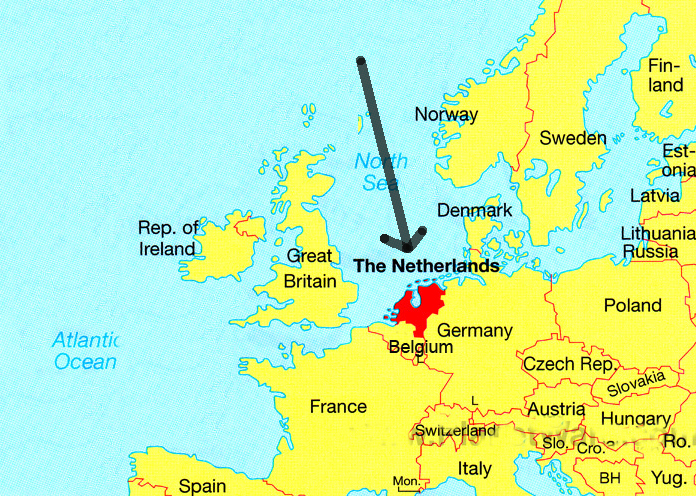
The Fremantle Highway is currently close to Ameland, one in an archipelago of ecologically sensitive islands situated in the Waddensee area just north of the Dutch mainland.
The Waddensee area spanning the Netherlands, Denmark and Germany has been declared a UNESCO World Heritage Site and has a rich diversity of more than 10,000 aquatic and terrestrial species.
This included more than 140 species of fish of which some 20 spend their entire life in the tidal areas along the islands’ famous mud flats.

The area also has a large seal and porpoise population. Should the Panama-registered Fremantle Highway sink, it would be a disaster of the highest order, Dutch daily tabloid De Telegraaf reported.
Salvage vessels were on the scene trying to put out the blaze and prevent the ship from sinking. A tug vessel has managed to attach a cable to the stricken ship to prevent it from drifting and blocking an important sailing route into Germany.

The Fremantle Highway was sailing between Bremerhaven in Germany and Port Said in Egypt when the blaze broke out, according to the marinetraffic.com website.
Last year the Felicity Ace sank of the coast of the Azores in the Atlantic Ocean with some 4,000 vehicles from German car maker Volkswagen on board.
ABC Flash Point News 2023.
Caribbean Chupacabra Shape Shifters

Shapeshifting is regarded as one of the greatest superpowers in the DC Comics Universe. Many of the publishing company’s most well-known heroes and villains either possess this power and have used it to infiltrate organizations as spies or as organic weapons.
Many shapeshifters combine skills of espionage, intelligence gathering, and professional acting to achieve their goals, proving themselves to be valuable assets.
Although numerous shapeshifters share similar powers and abilities, a special group stands out for their proficiency and creativity, establishing themselves as the greatest of all time.

However, deep within the lush central highlands of Puerto Rico lies a hidden history that goes far beyond the legend of the Chupacabra, a mythical, bloodsucking devil dog that has been long blamed for the killing of livestock and pets.
This remote region is a prime hunting ground for cryptozoologists—people who search for mythical creatures—but for travelers looking for a more tangible adventure, a journey through these mountains reveals an often overlooked experience: the Taína Route.
From ancient petroglyphs secreted away in caves by the sea to sacred ceremonial centers in the mountains, this 40-mile-long trail explores the culture of the island’s Indigenous Taíno community, using Highway 10 to cut a path from Arecibo on the north shore to Ponce on the southern coast.

The Taíno people descended from migrating Arawak-speaking communities in South America. While once believed to have been wiped out after the Spanish conquest, the Taíno continue to endure across the Caribbean’s Antilles islands, Colombia, and Venezuela.
The Taíno peoples’ legacy is woven into the fabric of Puerto Rico’s identity, from pasteles, meat and vegetable-filled yuca, to traditional hammock-weaving using maguey plants.
Even the moniker used to self-identify as Puerto Rican, Boricua, comes from the Taíno word Borinquen.

Christina Gonzalez, a researcher with the Smithsonian Institution’s Caribbean Indigenous Legacies Project, writes that understanding the Taíno way of respecting the living world is not just about the past or specific sacred spaces, but also the survival of the planet.
Whatever becomes of Taíno resurgence moving forward, its survived and rekindled spiritual expressions point to a desired and needed world where the future is ancestral, the future is ancient, the future is Atabey, one of two supreme ancestral spirits in the Taíno religion.
Since 2016, a collaboration between archaeologists, the Institute of Puerto Rican Culture, and local conservationists has been trying to promote this legacy through the heritage trail.

As Taíno groups call for more inclusion in how their narrative is told, there are emerging opportunities for travelers to immerse themselves in Taíno culture.
Whether you rent a car and go at your own pace or join a tour, here’s where you can connect with the customs that helped shape this complex island—and where to keep an eye out for Chupacabras along the way.
Some of the highest concentrations of petroglyphs on the island reside on the Taína Route, starting from the sea cave Cueva del Indio near northern Arecibo, a 45-minute drive from San Juan, to a ceremonial site on the southern coast near Ponce.
More than intriguing symbols, these seventh to 15th-century etchings of faces, animals, and divine figures give insight into the mostly oral Taíno history.
While the coastal sites along the route endpoints are worth visiting, the verdant middle section captures the essence of the community’s spiritual traditions.
In a mountain clearing just west of the trail’s central city of Utuado, multiple courtyards are lined by petroglyph-etched granite stones, some at least waist-high, in the Caguana Ceremonial Indigenous Heritage Center.
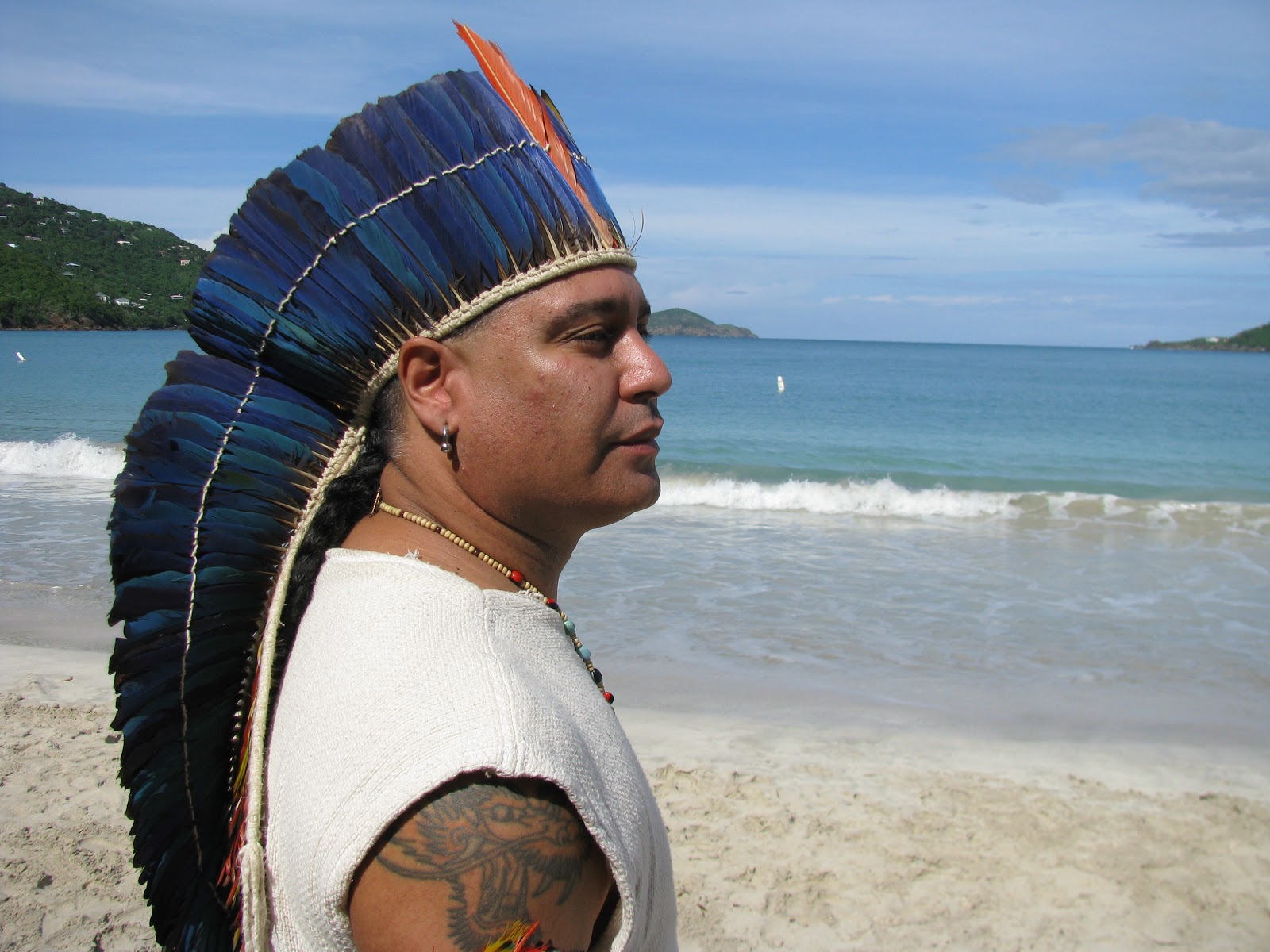
These plazas, called bateyes, are considered sacred venues for ritual dances, devotional practices, and ceremonial ball games.
Taíno literally means good people, says Roberto Múkaro Agüeibaná Borrero, president of the United Confederation of Taíno People (UCTP). The way you interact and the ceremonies the community participated in is what made them Taíno.
The petroglyphs at Caguana are also some of the most vivid across the Antilles islands. They are impressive, hinting at a very old and complex mythological tradition.

The most famous is the crouching figure of Atabey, described as the mother of creation and the consciousness of the earth. Her prominent figure is a crucial reminder that everything is alive and connected for the Taíno.
To the east is the region of Jayuya, named after the Taíno chief Hayuya and known as the Indigenous capital of the island. Here Tres Picachos, the three-peaked mountain revered by the Taíno, looms over one of the route’s most popular spots.
A well-marked walk takes travelers to a 13-foot-tall boulder covered in petroglyphs called La Piedra Escrita, or the Written Stone. It’s not just the size of this artifact or the vast number of petroglyphs near its top that draws crowds.

The Written Stone sits in the Saliente River, creating a natural swimming pool that helps visitors to understand the Taíno’s respect for an interconnected world.
Just down the road is the Museo el Cemí. The design of this three-pointed museum matches the artifacts it displays–the cemí. Typically carved from stone, these spiritual figurines represent and embody ancestral guardian spirits.
Like the sacred three mountain peaks, most cemís also have three points representing creation and the overlapping spirit realms of the living and dead.

The route ends at Ponce, near the region of Indios where a large population of Taíno lives today. Rivaling Caguana in size, excavation continues at the Tibes Indigenous Ceremonial Center.
So far archaeologists have discovered pre-Taíno and Taíno artifacts dating from A.D. 25, which can be explored at the on-site museum.
Vampiric creatures and ghouls have haunted the “Island of Enchantment” long before Puerto Rico was center stage for an international Chupacabra hunt in 1995. The Taíno believed in hupia, or the spirits of the dead.

These shapeshifters could take the form of owls, bats, and humans that would emerge at night with sometimes sinister motivations.
The most famed hupia, an urban legend popularized in the 1990 novel Jurassic Park, was a snarling vampire beast who kidnapped small children after sunset. In 1975 near Moca, Puerto Rico, a bloodsucking, bat-like humanoid reportedly killed livestock.
A new vampire cryptid called the Gargoyle emerged in 2018 near Barceloneta. This two-legged, winged predator smelled of sulfur like its predecessor, the Chupacabra.

Whether people believe in the beasts or not, the legend of the Chupacabra took root in these hills, adding to the history of lands that still ring of folkloric magic.
According to Melina Aguilar, a history tour guide with Isla Caribe, the existence of Puerto Rican historical sites older than 500 years is startling for most visitors–and many Puerto Ricans.
It’s not just that people are surprised by what they see when they get here, it’s that it’s even here to be seen in the first place, she says. And there’s more underground.

Unexcavated sites and further restoration need more funding, but the devastating effects of Hurricanes Maria in 2017 and Fiona in 2022 hamper growing infrastructure.
The already isolated regions along the trail are some of the last to have utilities restored and damage cleared. But growth is possible, particularly as Taíno activists seek co-management to bring ancestral knowledge to the sites.
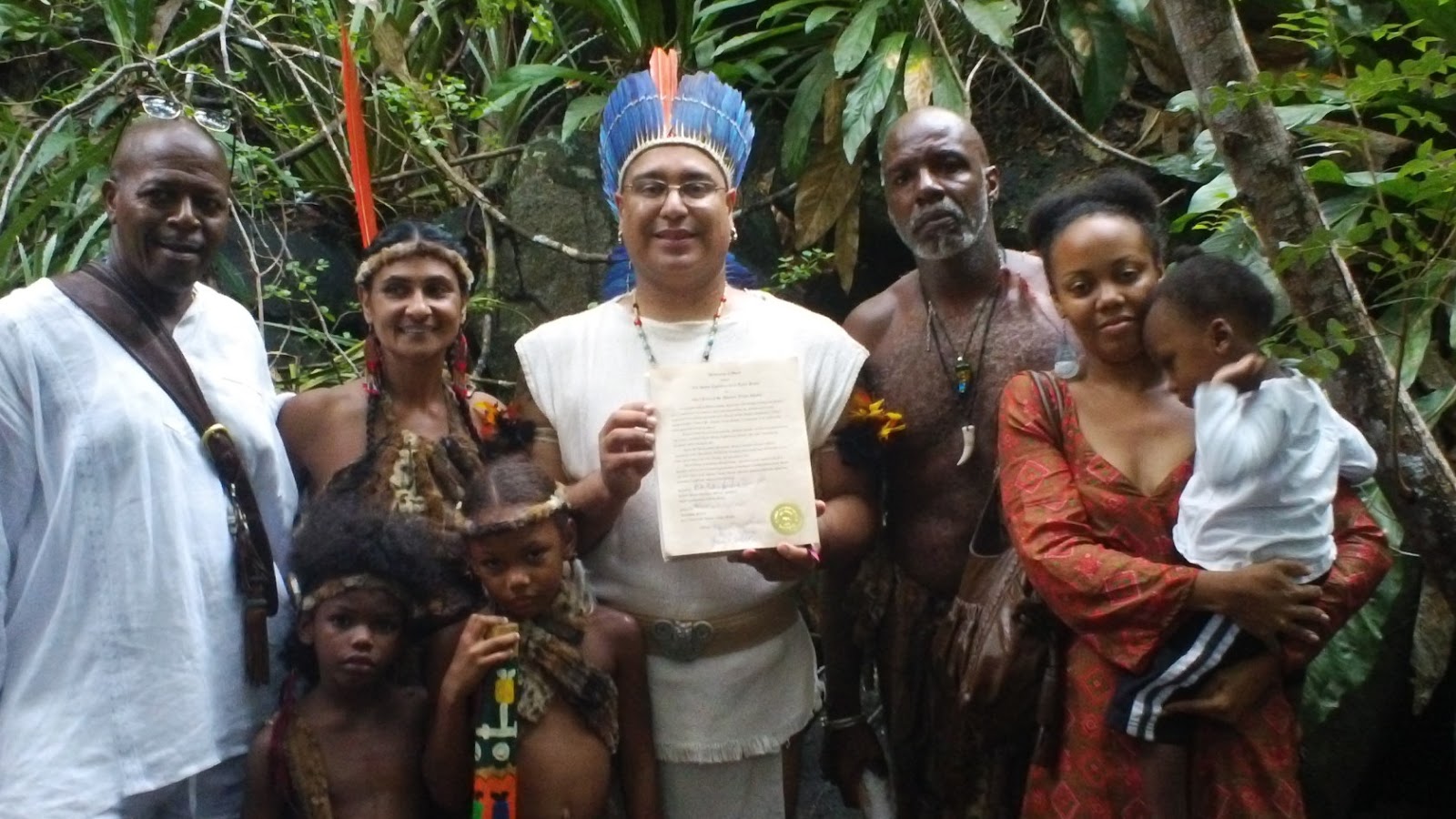
Why is it that people who do not have a connection to our heritage are able to tell us who we are and how to present our heritage? We feel as Taíno people that we have obligations and responsibilities to the land and to our ancestors.
UCTP and other organizations are working on creating a centralized community center run by Taíno people and a directory of Taíno businesses.
He invites visitors interested in connecting with locals for tours, oral histories, and cultural insights to reach out to the UCTP.
National Geographic / Crickey Conservation Society 2023.
Thousands of Penguins found dead in Uruguay

Around 2,000 dead Magellanic penguins have washed up on the coast of Uruguay in the past ten days, authorities told AFP on Friday, acknowledging that the cause of death remains unclear.
Nine out of ten of the birds were juveniles who arrived with their stomachs empty and their fat reserves depleted, the head of the Environmental Ministry’s Department of Fauna, Carmen Leizagoyen, told the news outlet.
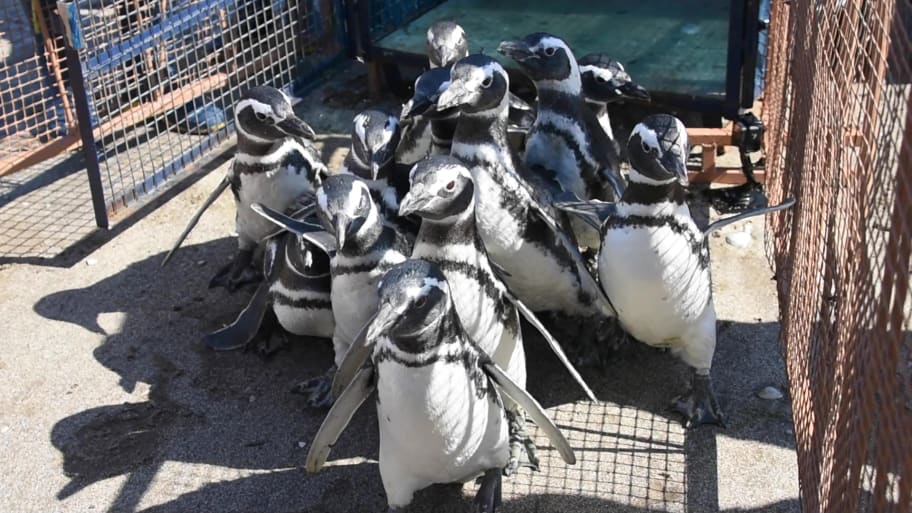
Fears that the die-off could be the result of bird flu proved unfounded, as none of the animals tested positive for the virus.
While a similar mass death took place last year in Brazil, the reasons remain unclear, and the number of dead birds is far from typical. It is normal for some percentage to die, but not these numbers.
Some environmental NGOs blame over-fishing, pointing to the starving condition of the penguins. Richard Tesoro of the NGO Marine Wildlife Rescue claimed the problem has been going on since the 1990’s.

The resource is over exploited, he told AFP, adding that he had seen petrels, albatrosses, sea lions, sea turtles, and seagulls turn up on the beach in Uruguay’s Maldonado region.
Additionally, a subtropical cyclone off southeastern Brazil earlier this month may have finished off already-weakened birds. Magellanic penguins normally migrate north from their nesting territory in southern Argentina, seeking food and warmer water.
More than 300 Magellanic penguins died in 2019 when an extreme heat wave struck Punta Tombo, one of their largest breeding colonies in Argentina’s Chubut Province.

Temperatures climbed to 111.2 degrees Fahrenheit (44 Celsius), leaving many of the birds unable to reach the sea in time to properly cool themselves before dying of dehydration.
Hundreds of little blue penguins washed up in New Zealand last year, with the mass die-off attributed to starvation as the fish they typically eat had moved to deeper waters due to warming temperatures.
While some blamed this on climate change, others countered that it was part of a naturally occurring cycle.
RT. com / ABC Crickey Conservation News 2023.
Canada’s record Wildfires
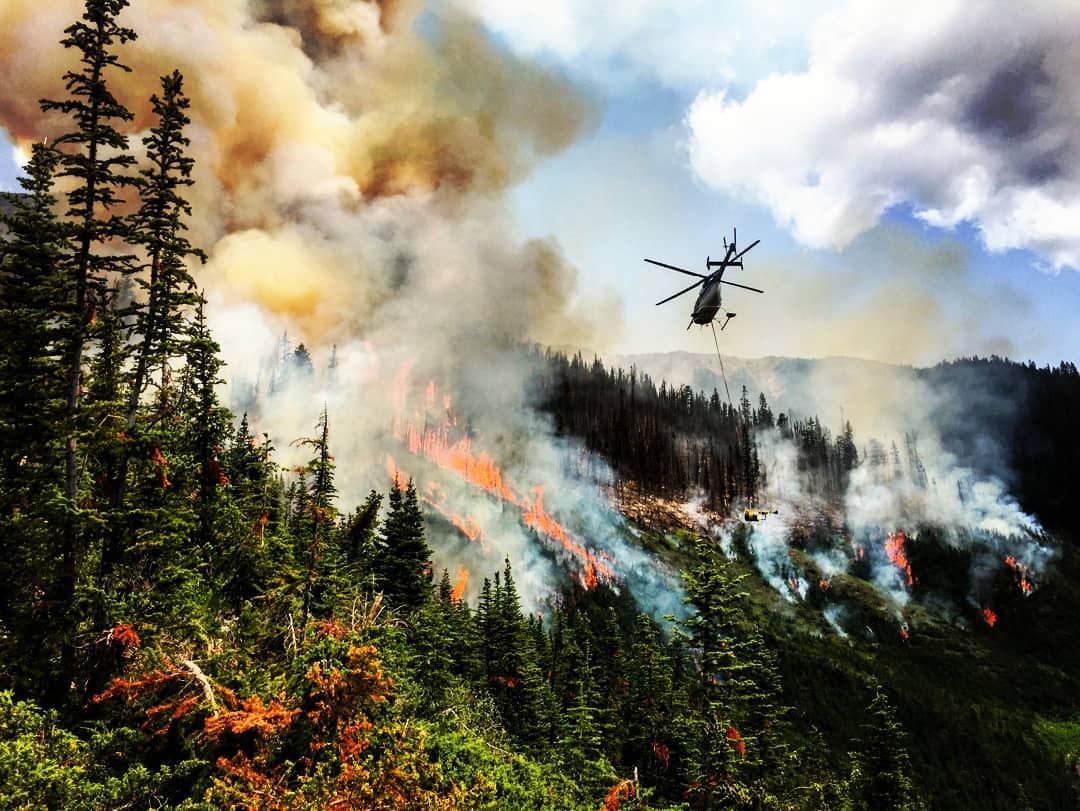
Wildfires in Canada have burned a staggering 25 million acres so far this year, an area roughly the size of Kentucky.
With more than a month of peak fire season left to go, 2023 has already eclipsed Canada’s previous annual record from 1989, when over 18 million acres were scorched. And the country’s worst wildfire season on record continues to rage.

Hot, dry conditions have fueled widespread wildfires, mostly in Canada’s boreal forests, since the spring, with some of the largest blazes burning in northwest Canada and in Quebec.
The fires have forced more than 120,000 people to evacuate their homes, stretched firefighting resources, and repeatedly darkened the skies and polluted the air for millions of people across North America.
International fire crews, including more than 1,800 firefighters and support staff from the United States, have been mobilized to help battle the flames since May, but the size and ferocity of the blazes have often hampered their efforts even as many of the largest, most remote fires have been left to burn.
Over the past week, two Canadian firefighters were killed on duty just days apart.
High temperatures in the spring helped the fire season get off to an intense early start. A heat wave baked British Columbia and Alberta in mid-May, exacerbating several early wildfires.
In early June, multiple fires broke out in Quebec amid record heat and rapidly intensified. By the end of the month, June was recorded as the planet’s hottest month ever, and some of the world’s most anomalous temperatures were found in northern Canada.

Studies directly linking climate change to this year’s wildfires have not yet been carried out, but the 2023 fire season is in line with scientists’ understanding of how global warming is affecting wildfires.
That doesn’t mean that quieter wildfire years, such as last year, are no longer possible, Flanningan said, but a warmer world makes large, explosive wildfires more likely than they were in the past.
This year’s hot, dry conditions have contributed to extreme fire behavior, too. More than 100 times over the past three months.

Canadian wildfires have grown sufficiently large and powerful to produce their own weather, kicking up giant thunderclouds known as pyrocumulonibus, and injecting smoke high into the atmosphere. These events can help transport smoke over very long distances.
The previous most active year for such extreme fire weather in Canada was 2021, which had fewer than half as many pyroCbs, as they are more commonly called, over the entire season.
Forecasts for the rest of the summer suggest that higher-than-normal fire activity is likely to continue across much of Canada, which could mean more heat, more fires and more smoke ahead.
The New York Times / Crickey Conservation Society 2023.
California and Arizona brace for historic Heat Wave
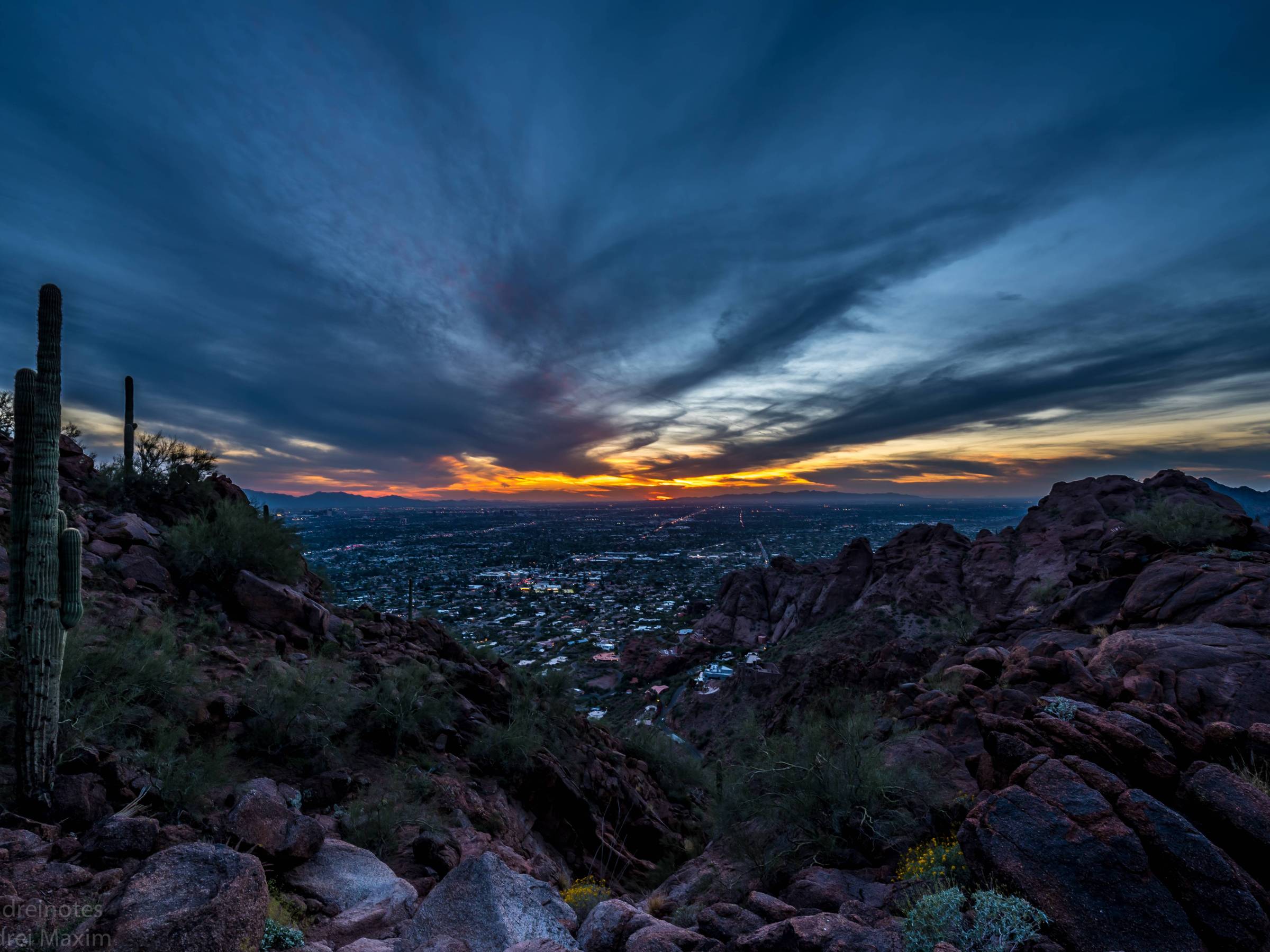
The formation of yet another “heat dome” over the southwestern United States is expected to cause temperatures in parts of California and Arizona to rise above 120 degrees Fahrenheit in the coming days,
One of the hottest places on the planet, California’s Death Valley, is expected to see temperatures as high as 125°F to 130°F this weekend. Portions of the Central Valley further north are also expected to see temperatures as high as 117°F.
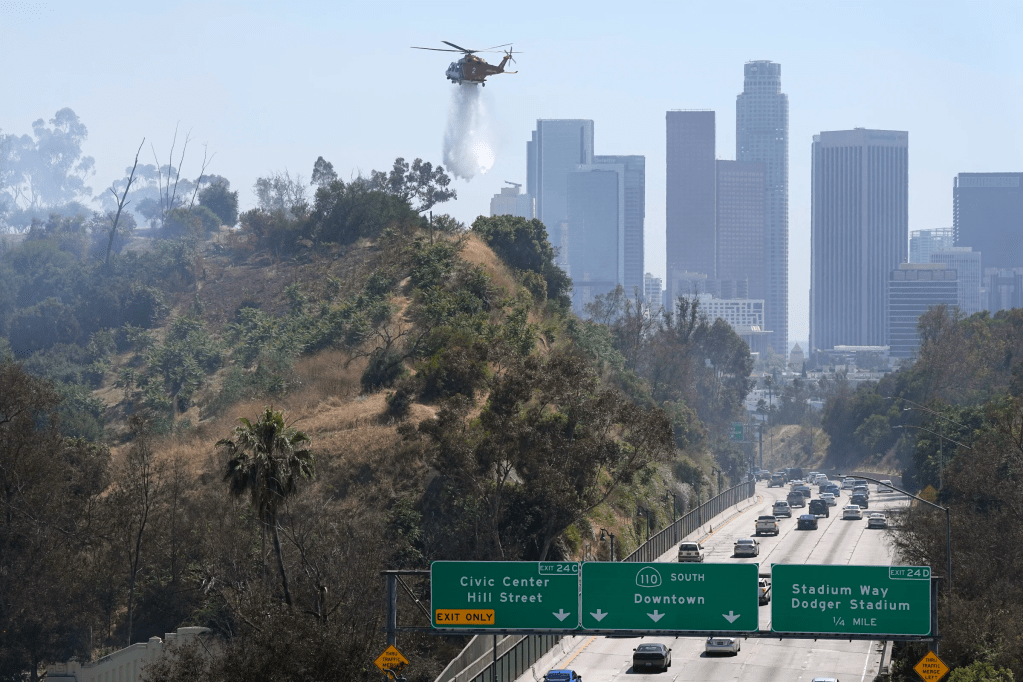
The National Weather Service also issued an excessive heat warning for Phoenix through Sunday, with temperatures forecast to reach 118°F on Saturday, still a few degrees below the all-time record of 122°F.
Widespread areas of Major Heat Risk will increase to Extreme levels this weekend, the NWS forecast office in Phoenix said in a statement.
Temperatures in the city have already topped 110°F for the last 12 consecutive days, nearing its all-time record of 18 consecutive days over 110°F, which was set in 1974.
/GettyImages-1138165502-1daa3ff05ff54d2dadb274ae52c27f14.jpg?w=696&ssl=1)
In the early morning hours Wednesday, Phoenix did break a notable record, when the all-time low temperature registered on July 12 only fell to 94°F.
Temperature records are also expected to fall in Reno, Nev., and Las Vegas is forecast to reach a blistering 117°F this weekend, which would tie the city’s all-time record.
Caused by a surge of high pressure that traps ocean heat over land, the latest heat dome comes as the National Weather Service has issued heat alerts for 108 million Americans and the Earth recorded its warmest week and its hottest June in recorded history.

Pulling back the lens, with the June figures, the planet recorded its 532nd consecutive month of above-average temperatures.
An ocean heat wave now spans the globe, sending water temperatures in the Florida Keys to an unprecedented 97°F, and Canadian wildfires, made worse by record-breaking temperatures, continue to burn out of control.
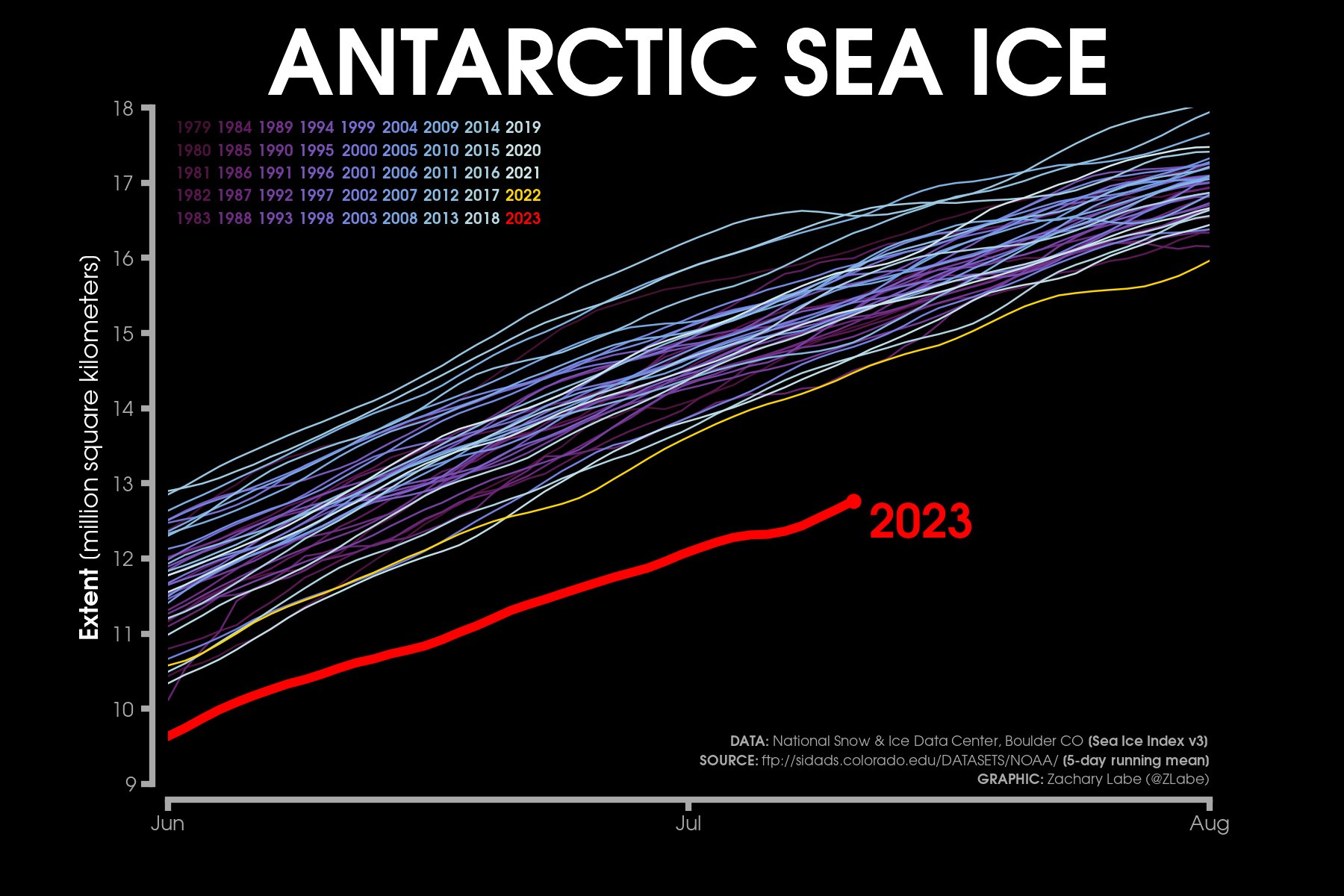
While skeptics counter that summers are always hot, the fact is they are getting hotter and countless studies have shown that those higher temperatures are having a wide array of disruptive consequences, such as the historic flash flooding in New York and Vermont this week and record low Antarctic sea ice.
Climate change is not necessarily bringing about completely brand-new types of weather, UCLA climate scientist Daniel Swain told reporters Monday.
It is shifting the envelope of weather that we experience. It’s not that we’ve never experienced heat waves before, or extreme precipitation events, or floods or wildfires. But what it’s doing is changing the character of those events. It’s upping the ante.
As the current heat wave in the Southwest inches its way east, officials are warning the public to take health precautions against the potentially deadly temperatures.

The best advice is to drink plenty of fluids, stay out of the sun, and in an air-conditioned place, the National Weather Service says on its website.
If you work or spend time outside, take extra precautions, such as frequent rest breaks in shaded or air conditioned locations. Also wear clothing that is light weight and loose fitting.
A study released this week concluded that the 2022 heat wave in Europe, which occurred during the continent’s hottest summer on record, killed 61,000 people
Yahoo
Global Electric Grid needs a $20 Trillion overhaul to support Energy Transition

For the energy transition to happen, the world needs massive grid upgrading. This message has been overlooked for years as wind and solar stole the limelight, but now it’s back on the agenda.
Because no transition from base-load, dispatch-able power generation to distributed, intermittent generation is possible without a massive grid overhaul.

Back in 2020, Bloomberg estimated the cost of that overhaul at $14 trillion over the thirty years between 2020 and 2050.
That’s how much it would cost to build the millions of miles of new transmission lines and associated infrastructure to accommodate the planned surge in wind and solar.
That was in 2020. Now, the price tag for the grid overhaul has risen to some $21 trillion, again. Because, to achieve net zero by 2050, the world would need to double the length of transmission lines in operation to 152 million km.

And this basically means that, as things stand now, we have little chance of reaching net zero by 2050. To begin with, the money for these massive investments in grid adaptation has to come from somewhere.
It can’t all come from government subsidies: new transmission lines cost billions to build. Right now, there are three new electricity transmission projects underway in the United States with a combined price tag of $13 billion.
Then there is local opposition to such projects, which is making takeoff harder still. People don’t like transmission lines passing over their backyards, and that is that.

They also don’t like forests having to be cleared for the new line. It’s NIMBY-ism at its best, and there is precious little anyone can do about it except hope it doesn’t progress to the BANANA state: build absolutely nothing anywhere near anything.
But suppose money can be found from environmentally concerned investors and governments, and suppose that NIMBY can be treated, perhaps financially. There is a bigger problem than either of these and both of them together. A skill shortage.
There are not enough linemen: the people who build and maintain transmission lines. In places such as Australia, there are not enough people to build the wind and solar installations that the transition to net zero would require.

And the rate at which people are acquiring these transition-essential skills is lagging far behind transition plans, as the FT reported earlier this week.
Each of these challenges on their own can derail the transition because they would derail the vital upgrade of the grid. Taken together, they make the transition—at least as currently planned in the West—near impossible to accomplish.
But they are not the most immediate challenges, not to the transition but to our usual way of life. The most immediate challenge is power outages.

That’s because, despite the need for a grid update and an adjustment to growing amounts of wind and solar power feeding into it, the balance between base-load and intermittent generation has been shifting in a way that makes the grid unstable.
Simply put, reliable, 24/7 power generation capacity is being retired faster than the grid is being adjusted for intermittent wind and solar—and faster than new wind and solar generation capacity are being built.
To say that this is not exactly optimal for a healthy power supply is to put things mildly.

Compared to these challenges, permitting is small potatoes. Regulation can be changed if there is enough momentum driving that change.
Yet small or not, permitting procedures are on the list of things preventing the energy transition from taking place in its most important part: the grid.
According to an April report from the Lawrence Berkeley National Laboratory, there are 1,300 GW of new wind, solar, and storage capacity waiting to be connected to the grid.

Yet most of these will not get built at all. Because joining the interconnection queue is only the start of a process that takes years and does not always have a happy ending.
Per the report, projects must also have agreements with landowners and communities, power purchasers, equipment suppliers, and financiers, and may face transmission upgrade requirements.
On the surface, the energy transition seems so simple. We simply build a lot of wind turbines and a line up of a lot of solar panels, throw in a battery here and there and switch from gas heaters to heat pumps.

We electrify everything we can electrify and discard the rest. Below the surface, things look very different indeed. There are not enough raw materials to build all that wind and solar capacity, and batteries.
There are not enough people to physically complete the buildout. There are not enough people to build the many new transmission lines. The money for all of these things has yet to be secured.
Until all of these problems are solved in a permanent way, net zero will remain a fantasy, and no amount of activism and investor pressure on companies to report their emissions would change this.
Oil Price.com /
Colorado River and Arizona ground Water are both drying up

Due to a lack of water, the state of Arizona has announced that it will not approve any more building permits for single-family homes that rely on wells in Maricopa County, CleanTechnica reported.
Like much of the western U.S., Arizona has been facing a huge drought for many years. A shortage of rainfall has led to residents relying on underground aquifers and the Colorado River for water.

The state has been using far too much water. Homes, farms, businesses, and public programs have been drawing on water supplies at an increasing rate, totaling 2.2 billion gallons per day in Maricopa County alone.
Because of this overuse, the Colorado River and groundwater are both drying up. State officials that modeled Arizona’s future water use predict that in the next 100 years, the Phoenix area will need over 1.5 trillion more gallons than it has.
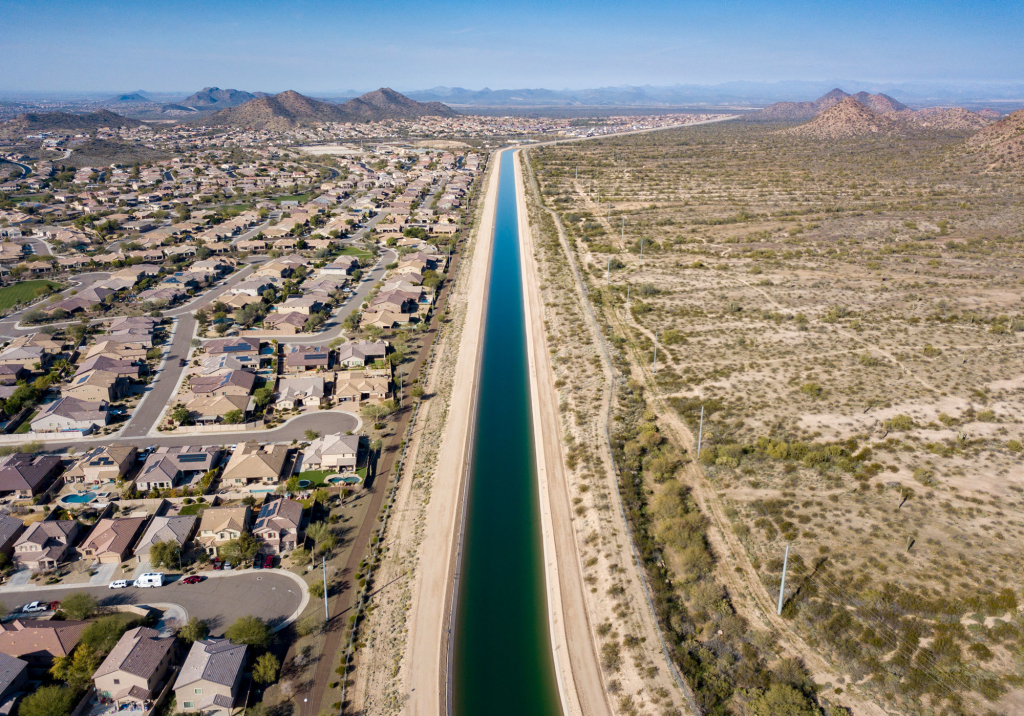
Much of this excess water use has been driven by the growth of towns and cities throughout Arizona. One of the worst offenders is Phoenix, the state capital, which is located in Maricopa County. The city is surrounded by ever-expanding suburbs that rely on well water.
That’s why Governor Katie Hobbs has put a stop to new building permits. Unfortunately, the new ban won’t stop the 80,000 building permits for new homes that have already been approved.
It also doesn’t cover building projects that rely on river water or source their water from nearby businesses and farms. According to Governor Hobbs, though, the situation is under control.

Governor Hobbs said at a news conference on June 1, according to The Guardian. We are not out of water and we will not be running out of water.
It is also incredibly important to note that the model relates only to groundwater and does not concern surface water supplies which are a significant source of renewable water for our state. What the model ultimately shows is that our water future is secure.
Yahoo / Crickey Conservation Society 2023.
African Nations struggling against forced Green Transition without proper Funding
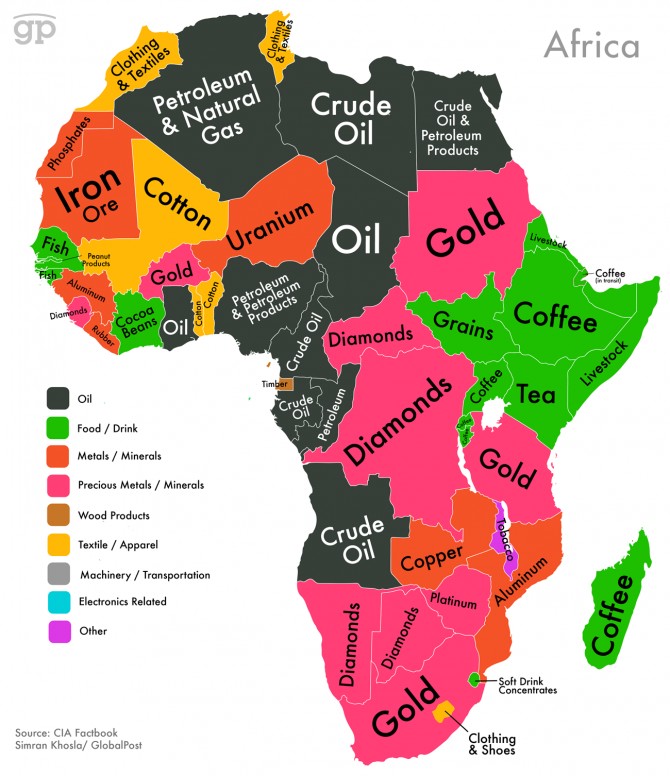
Several developing countries have made it clear that they will not be able to undergo a green transition without the help of stronger economies.
International agencies have repeatedly echoed the need for greater financing in the world’s poorer countries to develop global renewable energy capacity, respond to the rising energy demand, and transition away from fossil fuels to fulfill climate objectives.

And yet, once again, their pleas are not being met, with a multitude of developed nations failing to live up to their promises. At present, around 81% of green investment is financed by the private sector in high-income countries, compared to just 14% in emerging and developing countries?
For hundreds of years, since the industrial revolution of the 1700’s and 1800’s, Europe and North America have been contributing heavily to the world’s greenhouse gas emissions.
It is only in recent decades that scientists have fully understood the negative impact that industrial activities and transportation have had on the planet, and called on countries around the world to reduce their carbon emissions.
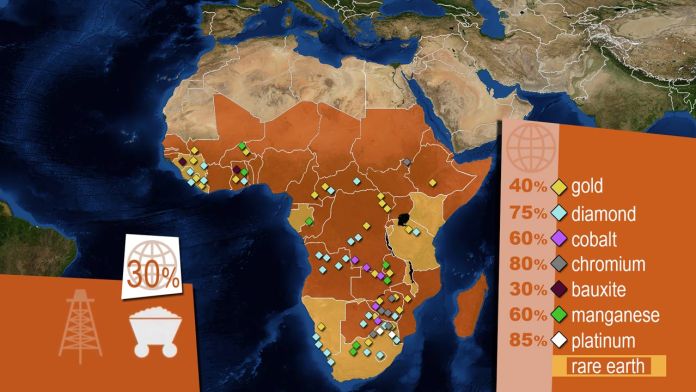
Meanwhile, several developing nations worldwide have been responsible for only a minuscule percentage of these emissions due to a lack of industrialization.
Now, as developed nations have the privilege to be able to call for a green transition, some of the world’s poorer economies are expected to simply follow suit, at a time when they could be modernizing their economies through industry and fossil fuels sector.
We are seeing Europe scramble to meet its energy needs.

We are seeing a region in the world that was advocating not to fund further investment in fossil fuels in the developing world now begin to scramble around these same places for the very same resources that were to be taken off the table.
The hypocrisy of these actions demonstrates the injustice of the situation, as developed nations are asking weaker economies to focus on decarbonization over development – potentially forgoing their industrial and energy potential, as rich states continue to rely on fossil fuels and contribute heavily to carbon emissions.
And many of these countries cannot afford to publicly finance major new renewable energy projects, particularly as many developing state governments are in debt.

At the Summit for a New Global Financing Pact in Paris this month, developing nations called for a transformation of the global financial banking system. At present, at least 52 countries are in debt distress and are facing some of the worst climate emergencies in the world.
The summit was aimed at accelerating reform efforts to provide trillions of dollars in funding for climate change through a debt forgiveness/compensation plan. But by the end of the summit, little appeared to have been achieved.
Some progress was accomplished via reforms helping to address climate change, with aims for global taxes on shipping, aviation and potentially on colonial wealth to fund climate action.

However, climate campaigners believe little decisive action was agreed upon that would make a difference now. The World Bank has agreed to put debt repayments on hold for countries facing climate disasters, although only on new loans.
Meanwhile, Great Britain will do the same for existing loans to 12 countries in colonial Africa and the Caribbean.
A grant of $100 billion will be divided across low-income countries through an instrument known as special drawing rights (SDR’s), a form of currency provided by the International Monetary Fund, with financing coming from France, Japan, and Britain, among others.

The USA may contribute a further $21 billion if approved by Congress. But several state leaders are once again highlighting the inability to achieve net-zero emissions and support a global green transition without greater help from the world’s developed economies.
They expect developing countries like Malaysia to do it on our own which is not realistic. He added that developed nations have to understand that the transition takes time and takes investments and that they have to play their part.
A drastic step would be at the expense of our education, health and development. But in terms of commitment, it is there. The transition plan is there. The energy transition has started, has begun.

The International Renewable Energy Agency predicts that Malaysia will have to double its renewable energy transition investments to at least $375 billion to meet its 2050 net-zero emissions goals.
Meanwhile, India’s Prime Minister, Narendra Modi, has repeatedly called for greater support from some of the world’s richest countries to achieve India’s green transition.
India has huge renewable energy potential, as well as a massive population and rapidly increasing energy demand, and yet it does not have the funds to develop all its green energy potential.

In 2021, Modi called on developed countries to set a target of contributing at least 1% of their GDP to green projects in the developing world. Yet, India’s ambitious green transition roadmap remains highly underfunded.
Developed nations that underwent industrialization centuries ago have made their bed when it comes to carbon emissions, and yet it seems that low-income countries are expected to lie in it.

Several impoverished nations are now having to choose between developing their economies and funding a green transition, with richer economies offering little in the way of financing for a shift to green.
Unless major action is taken to support cleaner industrialization and the development of major renewable energy projects across the developing world, many countries are unlikely to be able to contribute effectively to the global green transition.
Oil Price.com / Crickey Conservation Society 2023.

