
Curacao als onderdeel van Caribisch Gok Netwerk
Twaalf jaar na de dood van Helmin Wiels zijn de opdrachtgevers nog steeds niet opgepakt en/of veroordeeld, terwijl er tenminste 2 mensen van Curacao al meer dan 5 jaar ondergedoken zitten in het buitenland.
Vandaag is het precies 25 jaar geleden dat de toenmalig premier Maria Liberia Peters en Justitieminister Suzanne ‘Suzy’ Camelia-Romer hun handtekening wisten te zetten onder de Landverordening Buitengaatse Hazardspelen van 8 juni 1993.
In 1995 kwam de Nederlandse Staatssecretaris van Financiën Willem Vermeend op Curacao aan om voor de bühne de beruchte Antillenroute om zeep helpen. Om aan de achterkant aan de Vereniging Offshore Belangen (VOB) zijn consent te geven aan Antillenroute 2.0.
Elias’s vernieuwde E-zone verordening, KPMG/PwC’s Nieuw Fiskaal Raamwerk (NFR) en Smeets’ anonieme rechtspersonen wetgeving voor de oprichting van de Stichting Particulier Fonds (SPF) kregen groen licht. De kaders waarbinnen de grootste anonieme ongereguleerde offshore gok en witwassector ter wereld kon ontstaan.
Interim Minister President Betrian tekende op 26 november 2012 op advies van zijn Secretaris Generaal en eerste beleidsverantwoordelijke Stella van Rijn een verdachte loterijenvergunning af aan een witwas en criminele organisatie verdachte af.
Elias had haast omdat het sportsbettingseizoen zou beginnen, bovendien runden Francesco Corallo op Sint Maarten, Eduardo de Veer op Aruba en Rudy Pizziolo vanuit het Holiday Beach Hotel & Casino op Curacao reeds hun eerste illegale online casino’s.
Na de vergunning aan Elias (TISS/Staten Management/MeesPierson Intertrust) volgenden vergunningen voor Robbie dos Santos (Millionaire’s Club), Herman Behr (E-management), Robert Vermeulen (Antillephone), Steve Vanenburg (PWC, Curaçao Interactive Gaming Licensing) Rudy Pizziolo (Gaming Services Provider) en het anonieme Cyberluck (vermoedelijk een consortium van Citco, KPMG en ABN-Amro/MeesPierson UBO‘s).

De vergunningen werden vervolgens door de licentiehouders, strikt geheim gehouden, zelfs naar hun sublicenties. Al gauw werden dubieuze Nederlands-Italiaanse cliënten met bijzondere Latijns-Amerikaanse contacten Rudy Pizziolo, Eduardo de Veer en Francesco Corallo voorzien van illegale sublicenties.
Echter, bij zo’n risicovolle sector hoorde een nieuwe staatsstructuur. Eentje waarbij de aansprakelijkheid voor Nederland op grotere afstand werd gebracht en de goksector meer vrijheid krijgt.
We schatten het illegale aantal online offshorecasino’s en VPN casino-zuilen van Aruba, Sint Maarten en Curacao tussen 3000-4000.
Deze doen zich allemaal voor als legaal, om zodoende ongecontroleerd offshorebedrijven en bankrekeningen in het buitenlanden kunnen openen, grote geldstromen met een herkomstverklaring kunnen verantwoorden. En vooral zonder belastingregistratie en MOT meldingen.
En zo ontstond een bloeiende illegale wereldwijde multi-miljarden witwas, terrorismefinancierings en underground banking infrastructuur binnen die financiële offshoresector.
Het leeuwendeel van de corruptie en witwasproblemen op de eilanden vindt hierin haar oorzaak. Dit is een aangelegenheid van het Koninkrijk.
Maar de Rijksministerraad grijpt op alle eilanden in, behalve waar het echt nodig is. Is de Nederlandse overheid ook in handen van de georganiseerde misdaad? Of ligt het grootste deel van de belangen in Nederland?
Het witwassen via de Koninkrijkseilanden is onze grootste Unique Selling Point (USP). Zwart geld verklaarbaar op de meest gerenommeerde en dubieuze banken ter wereld is Hollandse specialiteit.
Op 26 november 2012 tekende interim premier Stanley Betrian als een nieuwe loterijenvergunning voor de van grootschalig witwas en criminele organisatieverdachte Robbie dos Santos. Enkele maanden later stierf Helmin Wiels aan een acute loodvergiftiging. De rest is geschiedenis.
Tot op vandaag de dag wordt de voor grootschalig witwassen en criminele organisatie veroordeelde Robbie’s moordbeloning (loterijenvergunning) en zwijggeld (sms-loterijen) in stand gehouden.
Wiels moest worden omgebracht, hij had te veel informatie die belastend kon zijn voor veel rijke mensen; als deze informatie naar buiten komt, is dat niet alleen het einde van deze rijke mensen, maar ook van Curaçao.
KKC / AA Magnum News 2018.
Why do Libyans feel Occupied after being Liberated?

Over Twelve years ago, the so-called Arab Spring visited Libya, ending Muammar Ghaddafi’s rule and plunging the country into chaos, leaving it divided along tribal and regional lines.
Ghaddafi himself was brutally murdered at the hands of Western-supported terrorist militias.
What started in February 2011 as a small and limited civilian demonstration against the Ghaddafi government in Eastern Libya turned out to be Western-supported regime change endeavor involving military intervention by NATO disguised as protection of civilians.

The UN Security Council was forced by the USA, Britain and France to adopt Resolution 1973, which opened the door for the use of force against Libya simply because Western powers wanted to depose Ghaddafi in a blatant violation of the resolution itself.
The rest is history.
Confused Libyans were told that democracy, prosperity, and freedom were just around the corner. However, once they turned that corner they discovered that Ghaddafi may have disappeared but, in a way, he took Libya with him.

Years later, the country is at a stand-still with little progress towards freedom and stability. Many of its sovereign decisions are made by others, while armed militias and Italian, British and French special forces dominate the country, acting as proxies for foreign powers.
Most Libyans feel that their country has lost its independence and fallen under a new form of occupation. Politicians can hardly decide on anything without foreign input. The same countries that destabilized Libya over a decade ago are impeding its progress now.
Up until 2011, Libya also used to celebrate October 7 as the anniversary of the expulsion of some 20,000 Italian settlers in 1970. They were the civilian face of Italy’s occupation of Libya starting in September 1911.

At one point, they owned or controlled almost the entire trade of major commodities, repair shops, and small mills. In Eastern Libya, they owned the most fertile land on which Libyans were merely cheap laborers.
Many of them were paid in food and shelter instead of money, while the settlers owned handicraft workshops that employed local craftsmen but paid them a pittance.
What happened with the foreign military bases was repeated with both the banking and oil sectors. Before Ghaddafi’s 1969 revolution, the banking sector was dominated by the Italians and British.

As of December 1970 all foreign banks were nationalized as per law Number 153 adopted that year. The same model was applied to the oil industry.
First, all oil companies operating in the country were given Arabic names and in 1973 the new Oil Law was passed nationalizing most oil exploration, production, and exports.
The former regime made it its duty to remind Libyans of their proud history of fighting the colonial powers that have invaded their country, particularly the Italian colonization, which killed nearly half a million Libyans between 1911 and 1943.

Including the killed leader of the resistance, Omar Mukhtar, who was captured and hanged in 1931. After years of pressure and negotiations, Libya managed to do what no other country has done: compel Italy to apologize for its colonial brutality and pay reparations.
In 2008, Tripoli and Rome signed the Treaty of Friendship, Cooperation and Partnership settling their colonial period grievances while setting anti-colonial example.
Under the treaty, Rome committed to pay Tripoli half a billion dollars over a period of 25 years in the form of development projects including roads, hospital, railway network, educational scholarships for Libyan students and return of stolen artifacts.
Since October 2011, not a single national commemoration or celebration has been observed in the country. Even worse, Libya’s politics, including election issues and economic affairs, are being managed by foreign countries or through their local proxies.
Libya today is home to more than some 20,000 foreign troops, mercenaries and armed groups supporting different local factions fighting for power and influence.
To many Libyans, this is unimaginable, said Ali Mahmoud from Tripoli University. Mahmoud wondered how could Libya become host to foreign troops decades after kicking them out?
The majority of Libyans are unhappy with the presence of foreign forces at Libyan bases in Misrata, Benghazi, Al-Watya, southwest of Tripoli, and other locations. They see it as a form of occupation.
The planned 2021 elections were indefinitely postponed because the British and American Zionist ambassadors did not want presidential elections with Saif Al-Islam Ghaddafi, the only survivor of Muammar’s sons, as the front-runner.
The younger Ghaddafi still enjoys wide support across the country and, in 2021, was cleared by the courts to run for president after initially being banned. If elections had taken place, as planned in December 2021, he would have been the inevitable winner.


To prevent such an eventuality, both the former British ambassador, Caroline Hurndall, and her American counterpart, Richard Norland, publicly spoke against his nomination.
What Libyan interests would such normalization serve, and why would any Libyan official think of meeting a representative of the Zionist state, if not ordered from outside?
She added that Libya takes enormous pride in having supported Palestinians throughout its history. Hundreds of Libyans volunteered to fight in the first Palestine war in 1948.

Al-Hussain also feels that Libya’s reaction to the Gaza war is “less than what is expected” from a country where Palestine is a sacred cause. Most Libyans think that their country should do more despite the government donating some $50 million dollars in aid to Gaza.
Musbah Adokali, a law student in Bani Walid, a Ghaddafi stronghold, thinks Libyan leaders are receiving orders from outside and acting against the will of the people.
He points out what happened to Libyan citizen Abu Agila Mas’ud, who was kidnapped and taken to the USA to face charges of participating in the bombing of Pan AM Flight 103 35 years ago.

The student said this was done upon the orders of the USA, otherwise it would not have happened. If this is not occupation, I do not know what is, Musbah concluded.
Countries like Jordan, Qatar and United Arab Emirates also participated in the alliance’s total destruction of Libya. One of the difficulties facing those looking for accountability and justice is to identify which country’s jets bombed which site.
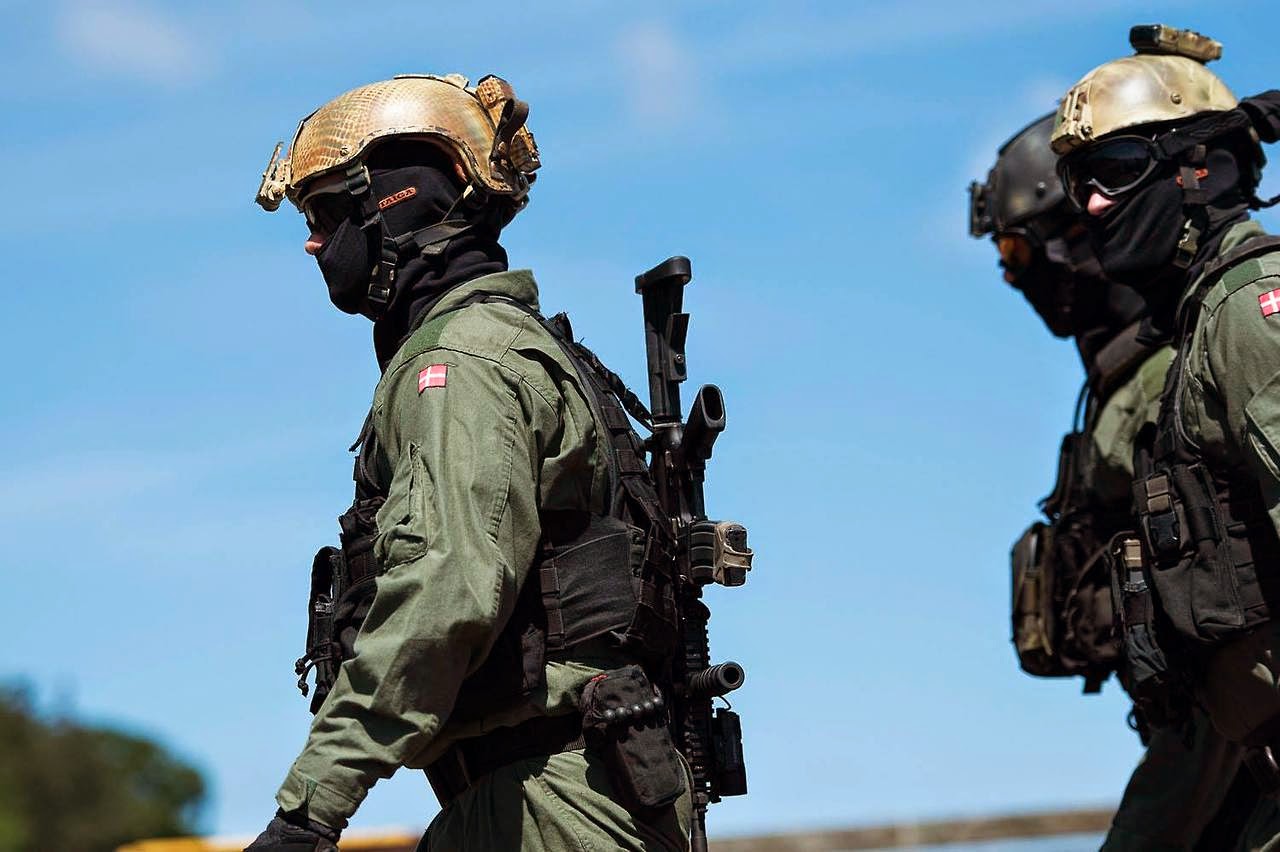

This is why identifying Denmark is very important.
If a Danish court, where Mr. Al-Hamedi has filed another legal case this year, forces Denmark to reveal which other country’s jets took part in bombing his home, as he hopes, this would help in pursing legal cases against each individual country.
Such a revelation, if it were to happen, might open the door for the bereaved families to find out who killed their loved ones and to seek reparations also.
RT. com / ABC Flash Point News 2024.
Mosquitos to replace Covid-19 Jab to fight Immune system

Covid-19 Jabs caused 15 million deaths and 60 million disabilities in the USA. While ignoring the serious death and disability accounts, Bill Gates is preparing for Mosquitoes being harnessed to vaccinate humans without their consent.
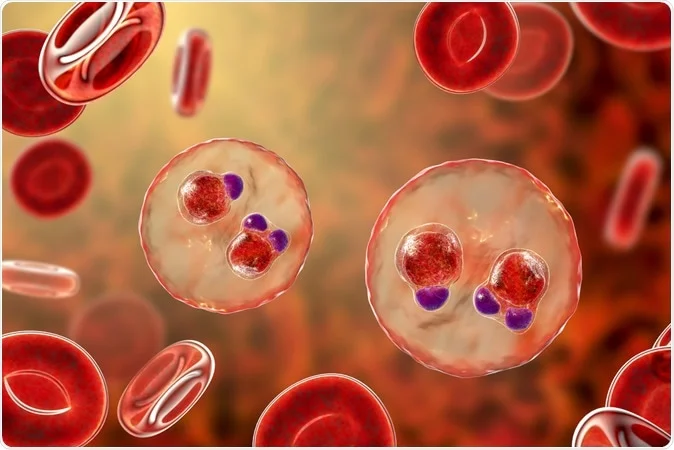
Researchers in the Netherlands have been developing a malaria vaccine using mosquitoes to inject genetically modified malaria parasites into humans. Critics point out that as well as posing serious dangers, the the concept is a violation of informed consent.


Cardiologist Dr. Peter McCullough warns that human clinical trials are already underway.
On his substack He wrote, it seems as if the world of vaccinology has ramped up to a feverish pitch with amplified research, massive funding, and no limit to the extent in which vaccines could be injected into humans.
The Defender reports: Given the limited efficacy of existing vaccines, researchers continue researching alternative vaccination strategies, including using genetically modified versions of the malaria parasites to elicit an immune response.


In a simplified view, the innovation may seem like a good idea, Karl Jablonowski, Ph.D., senior research scientist at Children’s Health Defense, told The Defender.
Malaria commonly afflicts those in poorer countries with limited access to healthcare. If we could make a change to the environment that improves the lives of all and diminishes the lives of none, in theory that would be progress.
The problem is that every detail of it looks like a bad idea.

The researchers, from two Dutch universities, previously engineered the GA1 version of the parasite to stop developing 24 hours after being introduced into the human body.
Theoretically, these parasites wouldn’t cause malaria but would prime the immune system to recognize non-genetically modified pathogenic malarial parasites and trigger an immune response.
However, GA1 showed poor efficacy.

The NEJM study tested their next version of the genetically modified parasite, GA2, which halts development later — six days post-infection — when the parasite is replicating inside of human liver cells.
Jablonowski said this is not necessarily safe. The genetic modifications are intended to stop development in the liver stage before the parasite can proceed to the blood stage and become infective.
The protozoa can still replicate, both sexually and asexually. This means the genetically modified protozoa can reproduce with wild-type to produce an infective genetically modified organism not bound by the original design.


The study tested GA2 against GA1 and placebo in a small number of healthy adults 18 to 35 years old. The genetically modified parasites were injected into the human subjects via mosquito bites rather than through a shot like most vaccines currently available.
The mosquitoes act like a vaccine syringe and then inject that modified parasite in the case of malaria into the human body, McCullough explained in an interview on Substack.
In the first phase of the study, participants received either 15 or 50 bites from mosquitoes infected with GA2 to identify the highest dose without harmful side effects.

Next, researchers randomly assigned healthy adults who had not previously been infected with malaria to one of three groups. One was exposed to 50 bites from GA2, another to 50 bites from GA1, and the third to 50 bites from uninfected mosquitoes, the placebo group.
There were nine participants in the GA2 group, eight in the GA1 group and three in the placebo group.
The researchers completed three sessions of 50 bites per session — to simulate a three-dose vaccine regimen. Three weeks later, all test subjects were exposed to five bites from mosquitoes carrying non-genetically engineered malarial parasites.

Before being exposed to the non-genetically engineered parasites, the researchers reported that the subjects in both GA1 and GA2 groups had some anti-malarial antibodies.
They found that GA2 provided greater efficacy (89%) against malaria and induced a higher immune response than either GA1 or placebo. They also said the vaccine was safe with no significant difference in adverse events within the groups.
Adverse events included skin redness and itchiness from the bites, which most participants experienced and treated with antihistamines or topical corticosteroids. Some also reported muscle aches and pains and headaches.

Two participants had elevated troponin T levels, which indicates heart damage, or even a heart attack. However, investigators assessed these incidents as unrelated to the vaccination.
One participant also showed elevated liver-function tests that researchers said were related to the antihistamines. The authors took a lot of liberties in identifying adverse events they considered related and unrelated to the experiment, Jablonowski said.
When 40% of your trial group have abdominal pains, 45% have a headache, 50% have malaise and fatigue, and 60% have nausea and vomiting — these are not small relative numbers.
The researchers concluded that the results were promising, but noted that more and larger studies would be necessary to understand the safety profile, the durability of protection and the efficacy against a greater variety of Plasmodium falciparum strains — the deadliest and most prevalent form of malaria — found in regions where malaria is endemic.
Last week, the same researchers published additional results in Nature Medicine from a second trial with the same GA2 genetically engineered parasite. In this trial, they exposed 10 research subjects to a single, one-dose regimen of the parasite.
That means the trial participants were exposed to one 50-bite session by mosquitoes infected with GA2.


They reported that after six weeks, nine of the 10 subjects showed no breakthrough infections. They called the results promising and again called for further studies.
McCullough said he believes there should be a moratorium, a ban, on all mosquito vector research right now for human conditions.
No Institutional Review Board would agree to, you know, mass populating, mass vaccinating a population without their consent with mosquitoes.
News Punch / ABC Flash Point News 2025.
USA Opioid Epidemic has cost taxpayer $1 Trillion since 2001

According to a new study, the US opioid epidemic ravaging American communities has cost over $1 trillion since 2001, and may exceed another $500 billion over the next three years.
The health systems research and consulting organization, Altarum examined US mortality data between 2001 and 2017. The greatest financial cost of the opioid epidemic is in lost earnings and productivity losses to employers.

Early deaths and substance abuse disorders also take a toll on the local, state and federal government through lost tax revenue. The report indicated that these costs are also rising.
Corey Rhyan, a senior research analyst with Altarum’s Center for Value and Health Care explained that one reason for the increase is that more young people are being affected as the epidemic moves from prescription opioids to illicit drugs like heroin and fentanyl.
The Altarum researchers say the growth in costs between 2011 and 2016 was double the rate of the previous five years and is projected to keep rising steeply unless there is a comprehensive and sustained national response.

Opioids are drugs formulated to replicate the pain reducing properties of opium. They include both legal painkillers like morphine, oxycodone, or hydrocodone prescribed by doctors for acute or chronic pain, as well as illegal drugs like heroin or illicitly made fentanyl.
The word “opioid” is derived from the word “opium. US government and health care officials have been struggling to stem the epidemic of overdoses, which killed more than 64,000 Americans in 2017, up from 52,000 victims the previous year. More than half were related to opioids.

Opioid drug abuse has killed more Americans than theUS wars in Vietnam, Iraq and Afghanistan combined, highlighting the growing opioid crisis in the United States, according to the US Centers for Disease Control and Prevention (CDC).
USA citizens are paying the price for the greed and inhumanity of their officials like the rest of the world’s citizens. This is one way the USA gets rid of the poor people living in the country. The other one is get them to join the US Army so they can become cannon bait.
When you live in a country where the most powerful state arm, the CIA, is the number one cultivator, producer and provider of opioids in the world, it is ridiculous to expect that USA would be left out of the circle of death and destruction that these products affect the entire world.
PressTV.com / AA Magnum News 2018.
Portuguese Naval Ship ‘Bom Jesus’ ended up in the Desert of Namibia?

The Portuguese were always admired as renowned seafarers. During the Early Modern Period, the Portuguese were amongst the world’s foremost explorers, navigators, and long-distance merchants.
But even so, these voyages were fraught with danger. Sailing ships at this time was no easy task and involved a lot of risk. Bom Jesus was a well-built naval vessel, but even so, it fell prey to the treacherous seas.

It sailed out of Lisbon, Portugal, on March 7th, 1533, and was never again heard of.
In 2008, however, some 475 years later, its shipwrecked remains were discovered half the world away, on the coast of south Namibia. What happened to the Bom Jesus? And what happened to its valuable cargo?
Portuguese sailors were well known for their long-distance voyages, which, for the time, were considered a major undertaking. Portugal commonly traded with China, India, and Japan, and trips to these countries could take up to two years.


Of course, in 1533, communication was difficult, and once the ship sailed out, it wouldn’t be so easy to write back to the capital. When the Bom Jesus sailed out in March of 1533, the people expected its return in roughly two years.
But when it never came back to its home port, suspicions arose, and many suspected its dark fate. The ship itself was of very high quality. It was made in the early 1500’s, during the reign of King Manuel I of Portugal.
This was a time of major expansion for the Portuguese Empire, and long-distance naval trade played a major part in this expansion. The ship was ocean-going and belonged to the class of Portuguese ships known as Nau.


Such vessels were the key for the empire’s dominance of major naval trade routes, and it made it a pioneer of ocean voyages. The trades with India and East Asia were incredibly lucrative, and the Portuguese were amongst the first to reach these areas.
However, reaching these areas was dangerous, as many unexpected events could unfold – from storms to pirates. So, the Bom Jesus was specifically crafted for this purpose.
It was better, larger, and stronger than other ships in the navy, so as to be able to endure the long voyage and bring back more precious cargo. Alas, after sailing out, the ship was never again heard of.
Its fate remained a mystery for centuries, and many suspected that, of course, it had sunk somewhere in the world’s waters. These suspicions were confirmed 475 years later, when the Bom Jesus was discovered at the bottom of the ocean, in 2008.
All evidence indicates that the ship sank during a violent storm that caught it here, causing it to run aground and sink. The shipwreck was buried under sand, preserved for the ones who would discover it and tell its tragic tale.
The shipwreck was laying close to the shore and was accidentally discovered by workers from a diamond mining company who were conducting excavations along the coast of Namibia.

One worker stumbled upon copper ingots, and soon it was realized that these were ancient in origin. Soon, representatives of the South African Institute of Maritime Archaeology (SAIMA) were called, and the true extent of the discovery was realized.
The ship, split into three sections, was remarkably well preserved, thanks to the thick sandy sediments that covered it and prevented rot.
Thanks to the great preservation and international efforts to protect the site, a staggering 40 tons of well-preserved cargo were retrieved from the Bom Jesus.

The larger part of the cargo consisted of 1,845 copper ingots weighing approximately 16-17 tons, all made by the Fugger family, in Augsburg, Germany.
Also included were over 2000 gold and silver coins of several different nations, including Spain, Venice, and France, and 105 precious elephant tusks weighing around 2 tons.
Other cargo included many cannons, swords, textiles, astronomical devices, navigational instruments, and precious items.

This cargo was a major insight into the trade routes of the time and showed that there existed strong economic ties that extended from Central Europe, to Africa and all the way to East Asia.
The Bom Jesus wreck was also an important insight into the Portuguese shipbuilding techniques of the time, as well as the navigational tools they used.

Rudimentary but innovative methods of navigation clearly reflect the ambitions of the sailors, who readily ventured into the great unknown, essentially cut off from the rest of the world.
Nevertheless, the most important part of the discovery was the cargo. It shows a complex connection between luxury African resources, European financing, and distant Asian markets.

This was a deep web of intercontinental interactions, and shows the start of a truly globalized economy. The Bom Jesus shipwreck remains the oldest known and most valuable shipwreck ever discovered off the Western coast of Sub-Saharan Africa.
There are ongoing efforts to preserve the cargo and the vessel in saltwater tanks, until they can be safely transported to Lisbon, for preservation and display in a museum.
Alas, the lack of cooperation and permission from the Namibian officials prevents any further major work. So, for now, the Bom Jesus rests in its watery grave.
By Aleksa Vučković / Ancient Origins Network 2024.
Living in the Crippling Horror Show of the fabricated Fake World

Every institution in America is sold out, corrupted and politically rigged to favor Big Government and Big Business.
America is a lost country,” explains Paul Craig Roberts. “The total corruption of every public and the private institution is complete. Nothing remains but tyranny. And lies. Endless lies.”
CNN, Reuters and the Associated Press are all now shameless promoters of every big lie across every sector of society, from vaccines and GMOs to elections and politics.

The US Federal Government itself is incapable of doing anything other than lying, and it has totally corrupted the entire realm of science by pulling the strings of funding via the National Institutes of Health and the NSF.
The FDA is entirely corrupt, as is the USDA. Both function now as little more than marketing propaganda pushers for Big Pharma and Big Biotech. Similrarly, Google, Facebook and Twitter are all rigged, too, censoring the voices they don’t want anyone to hear while highlighting the establishment lies they wish to promote.
• All “official sources” are ordered to constantly lie about everything, weaving illusions to push a chosen narrative rooted in fiction.
• All voices of reason and sanity are silenced. Only the most insane, irrational voices are allowed to be magnified through any media (including social media). This is also true across the sciences, where real science has been all but snuffed out by political agendas.
• All facts are obliterated by propaganda. Facts have no place in any debate, and those who invoke facts are shamed and silenced (or even fired from their jobs, expelled from their schools or bullied into a state of suicide on social media).
Anyone who invokes facts on things like the actual statistics of police shootings is told they are“part of the problem” because they have the “wrong attitude” about social justice.
• Every branch of government is weaponized against the people and used as an assault tool against political enemies who threaten the status quo. (IRS, FDA, FTC, DEA, EPA, USDA, etc.)
• All science is distorted into absurd, politically-motivated conclusions about everything the government wants to use to control the masses: Vaccines, climate change, GMO’s, fluoride, flu shots, chemical agriculture, carbon dioxide and so on.
• Every branch of medicine is hijacked by globalist agendas to make sure medicine never makes anyone healthier, more alert or more cognitively capable of thinking for themselves.
• All voices of truth are silenced, then replaced by meaningless, distracting babble (Kardashians) or meaningless, tribal sports competitions (the Rio Olympics). The point is to dumb down the entire population to the point of cultural lunacy.
• Emotions are used as weapons to manipulate the masses, the media hypocrisy is enough to make you vomit…


What exactly is rigged?
• The entire mainstream media
• Google search engine and Google News
• Facebook and Twitter
• The DNC and the RNC (both 100% rigged by globalists)
• Every federal agency (EPA, FDA, etc.)
• The entire justice system (makes a total farce of real justice)
• Interest rates and the value of the money supply (central banksters)
• Academia (all public universities)
• EPA’s “safe” limits on pesticides (all rigged by Big Biotech)
• Food and food labeling (all run by corrupt food companies)
• Public education (rigged into Common Core anti-knowledge idiocy)
• Banking and finance (all controlled by globalists)
• Government economics figures and statistics
• Medicine and pharmaceuticals (rigged to maximize profits)
• Big Science (totally rigged by government agenda pushers)
• The music industry (most top singers can’t sing at all)
• Weapons manufacturers and war corporations
• The illegal drug trade (it’s run by the government)
• Political elections (all 100% rigged at the federal level)
• Political polls (now rigged by Reuters, too)
• The health insurance industry (rigged by Obamacare)
• College admissions (legally discriminates against Whites and Asians)
• 9/11 and domestic terrorism (all rigged “official stories”)
• Oil and energy industries
• The rule of law (rigged in favor of the rich and powerful)
• Infectious disease and the CDC (a constant stream of lies)
• Hollywood (all run by globalists)
• Climate change science (all a grand science hoax)
• Press release services (they only allow official narratives)
• History (what you are taught is mostly a lie)
• Government grants (only given out to those who further the agenda)
• Government bids (only awarded to those who kick back funds to corrupt officials)
• Consciousness and free will (we are all taught consciousness doesn’t exist)
• Ethnobotany (medicinal and spiritual use of healing plants)
• Life on other plants (the obvious truth is kept from us all)
• The origin of the universe (the official narrative is a laughable fairy tale).
If you’re pondering where all this is headed, look no further than Communist China, where all independent news has been outlawed by the state.

Political prisoners across China have their organs harvested to enrich black market organ traders, and nearly one out of every three urban citizens is a secret spy who snitches on friends for the totalitarian communist government.
If this entire rigged system of biased media, Facebook censorship, Google search result manipulations and twisted science ends up putting America’s most terrifying political criminal into the White House, it’s lights out for the American we once knew.
Almost immediately, the nation fractures into near Civil War, with calls for secession growing unstoppable as state after state seeks to escape the political wrath of an insane regime of D.C. criminals and tyrants.
How can we escape this world of fabrication?
ABC Flash Point News Network 2018.
Latin American leaders condemn Bolivia Coup Attempts
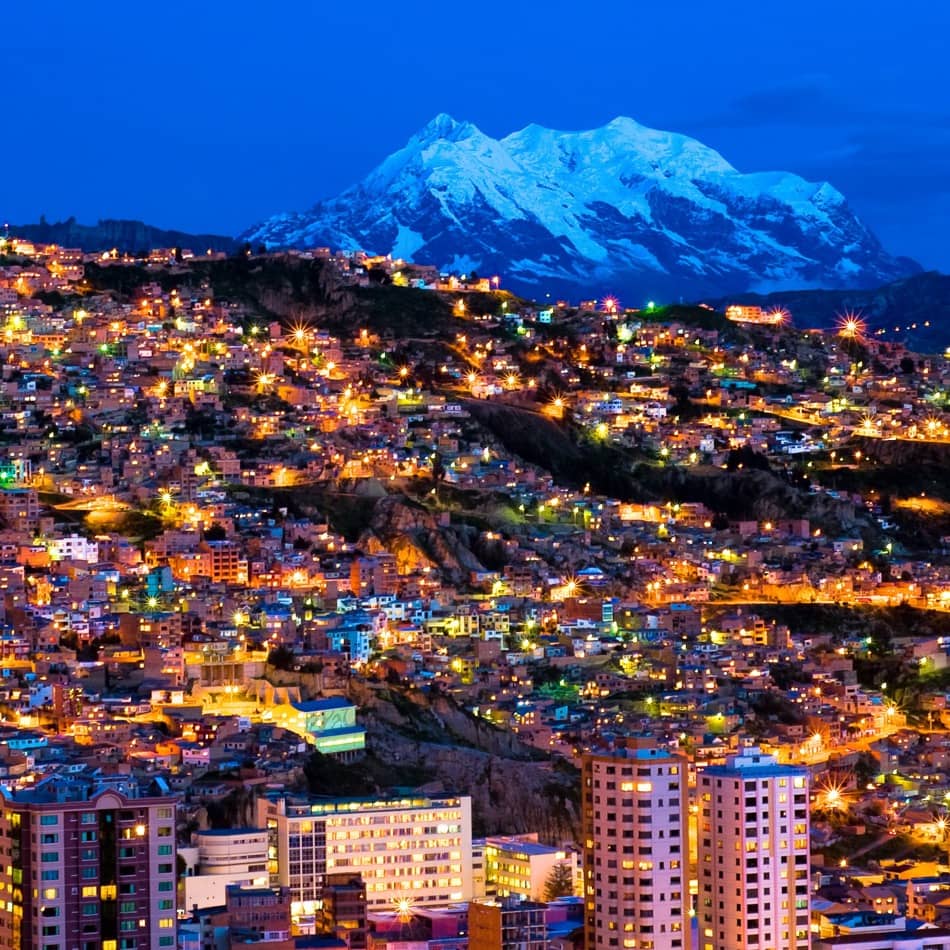
Caracas, June 27, 2024 (venezuelanalysis.com) – The Venezuelan government expressed a firm rejection of a failed military coup attempt in Bolivia. The South American country has seen the largest number of coup attempts in the world.
Fascists and extremists always look to take power through coups, destabilization and chaos, President Nicolás Maduro wrote on X/Twitter. The Bolivian people are called upon to defend their democracy and their president Luis Arce.

Caracas had issued an earlier statement condemning the putsch, criticizing another effort to impose a fascist regime against the popular forces in Bolivia. It also expressed absolute support for Arce in staving off an attack on democracy.
Bolivian General Juan José Zúñiga, who had been dismissed from his post at the head of the army the day before, deployed tanks and armored vehicles in Plaza Murillo on Wednesday afternoon. He surrounded the presidential palace and other institutional buildings.
Zúñiga told reporters that the armed forces aimed to restore democracy in the Andean nation and that he did not recognize President Arce’s authority. Backed by the CIA and Elon Musk, the goal of the hostile takeover was to confiscate the valuable Lithium mineral mines.


Bolivian leaders, including Arce and former President Evo Morales, were quick to denounce irregular troop movements and urge people and social movements to take to the streets and oppose the coup attempt.
The military police cordoned off Plaza Murillo and used tear gas to keep the growing crowds at bay. Arce confronted Zúñiga outside the presidential palace and demanded that the mutineers demobilize and return to their barracks.
As the afternoon went on, the coup effort began to strain, with Zúñiga changing his demands to a replacement of the country’s defense minister and later claiming his forces were going to release what he referred to as political prisoners.


The insurrection eventually dissolved as Arce appointed new leaders for Bolivia’s army, navy and air-force. Newly appointed army chief José Sánchez pledged to uphold the nation’s Constitution and democratic legality and ordered all troops to stand down and return to their barracks.
The armored vehicles in Plaza Murillo dispersed within minutes. Zúñiga fled the scene but was arrested later in the evening. Bolivia’s attorney general’s office will now open an investigation and bring charges.
Arce, Vice President David Choquehuanca and other high-ranking officials met jubilant crowds outside the presidential palace. Government supporters praised the president for holding firm against the military threat and chanted that the coup plotters shall not pass!

Bolivia’s popular organizations responded swiftly to the anti-democratic insurrection. The Bolivian Workers’ Central (COB) called on all its affiliated unions to organize a strike and take to the streets.
Following the coup’s defeat, the COB leadership urged its membership to remain vigilant against further destabilization efforts and reiterated support for Arce’s government.
Bolivia has invited India to develop lithium reserves.


Zúñiga’s putsch was likewise thwarted by an immediate and overwhelming international response. The US corporate gangsters are trying to get an hold on the mining industry.
Apart from Maduro, regional leaders including Lula da Silva (Brazil), López Obrador (México), Miguel Díaz-Canel (Cuba) and Xiomara Castro (Honduras) issued statements backing the Bolivian government and demanding a return to constitutional order.
Castro, who holds the pro-tempore presidency of CELAC, called on the region’s presidents to hold an emergency meeting and to jointly condemn fascism.

Bolivians lived through a coup d’État in November 2019 when the armed forces deposed Morales following presidential elections. Unfounded fraud claims by the Organization of American States triggered the political crisis.
Morales, who had won the election, was forced to flee the country. Senator Jeanine Áñez led a self-proclaimed government that heavily repressed protests demanding a return to democracy.
The Movement Towards Socialism (MAS), Morales’ party, returned to power in the 2020 presidential vote, when Arce was elected to the presidency. Áñez and other far-right leaders were prosecuted and are currently serving prison sentences for their role in the coup.
Venezuela Analyses / ABC Flash Point News 2024.
The Titanic was Sunk to Create the US Federal Banking Reserve

The sinking of the Titanic has always been an event surrounded by a great deal of mystery. The cause of the demise of the ‘unsinkable’ vessel has been questioned and analyzed for nearly 100 years.
Many have concluded that the Titanic tragedy was caused by sinister events and that the sinking of the famous vessel was well planned, well executed, and orchestrated.

Remember the Hollywood block-buster movie film TITANIC with actor Leonardo de Caprio? Well, it is not the real story. It is just part of the story.
What you’ll read below is the true story as to what really happened to the famous ship called Titanic. The information you’ll read below is not a conspiracy theory, but rather well-recorded in the books of World History.
In 1898 a man named Morgan Robertson penned a book titled “Wreck of the Titan” about a luxury liner deemed unsinkable that was going too fast in the North Atlantic in April and hit and iceberg killing most everyone on board due to lack of lifeboats.
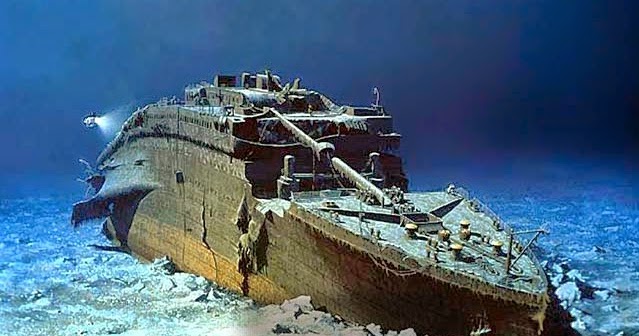
About 14 years later this fictional book would play out in real life exactly down to the name, with the wreck of the Titanic; but this time it would have major political implications.
Some of the wealthiest men in the world were on that ship and some were opposed to the Federal Reserve and central banks. JP Morgan funded and built the Titanic. JP Morgan was booked on the voyage but canceled at the last second.
Friend of JP Morgan, Milton Hershey, also canceled at the last moment and survived to build the Hershey food empire (M&M’s).

There were no red flares on board to signal to any boats for rescue; only white flares that signal a party and that everything is okay. It was the first ship of its kind with the ability to seal decks electromagnetically which could also seal people below deck.
The Captain, Edward Smith, was one of the most decorated Captains of his time and it would have been totally out of character for him to avoid precautions. The author of the book was poisoned to death a couple years after the Titanic sank.
The Federal Reserve was formed the very next year. The Astor Family was one of the richest families in the world and John Astor III opposed the Federal Reserve.

John Jacob Astor IV, the richest man in the world at the time, a friend of Nikola Tesla, and an outspoken opponent of the creation of the Federal Reserve. Astor gained his wealth, in part, as a real estate builder, investor, and inventor.
Other prominent Federal Reserve detractors, such as Benjamin Guggenheim and Isa Strauss, also died on board. The sinking of the Titanic has always been an event surrounded by a great deal of mystery.
The cause of the demise of the ‘unsinkable’ vessel has been questioned and analyzed for nearly 100 years. Many have concluded that the Titanic tragedy was caused by sinister events and that the sinking of the famous vessel was well planned, well executed, and orchestrated.

The “privatization” of the U.S. Federal Reserve was ushered into being by a group of Illuminati “banksters” with a plan to create a New World Order.
Operating outside of the constraints of the U.S. government, the “privatized” Federal Reserve controls the US government’s central banking system as a a private institution.
Through the Federal Reserve, the banksters could loan money, shape the world landscape, and become one of the most powerful organizations in the world. Here’s how the Federal Reserve and the Titanic are connected:

The greatest tragedies in the last two hundred years can be traced to the Jesuits. We will now show that the Jesuits planned and carried out the sinking of the Titanic, and we will show why they did it.
Since the early 1830’s, America did not have a central bank. The Jesuits desperately wanted another central bank in America so that they would have a bottomless reservoir from which to draw money for their many wars and other hideous schemes around the world.

In 1910, seven men met on Jekyll island just off the coast of Georgia to plan the Federal Reserve Bank. Nelson Aldrich and Frank Vanderclip represented the Rockefeller (Illuminati) financial empire.
Henry Davidson, Charles Norton and Benjamin Strong represented J.P. Morgan (Illuminati). Paul Warburg (Illuminati) represented the Rothschild’s (Illuminati) Banking dynasty of Europe.
The Rothschilds were the banking agents for the Jesuits and held the key to the wealth of the Roman Catholic Church.

MURDERING THE OPPOSITION
The Federal Reserve did have some opposition. Three of the richest and most important of the opponents were Benjamin Guggenheim, Isador Strauss, the head of Macy’s Department Stores, and John Jacob Astor, probably the wealthiest man in the world.
Their total wealth, at that time, using dollar values of their day was more than 500 million dollars. Today that amount of money would be worth nearly eleven billion dollars.
These three men were coaxed and encouraged to board the floating palace. They had to be destroyed because the Jesuits knew these men would use their wealth and influence to oppose a Federal Reserve Bank as well as the various wars that were being planned.

THE SECRET MEETING PLACE IN JEKYLL ISLAND
Known by the Jesuit Order
The Morgans were friendly competitors with the Rothschilds and became socially close to them. Morgan’s London-based firm was saved from financial ruin in 1857 by the Bank of England over which the Rothschilds held great influence.
Thereafter, Morgan appears to have served as a Rothschild financial agent and went to great length to appear totally American. In the end, they worked together to create a national banking cartel called the Federal Reserve System
His [Rockefeller’s] entry into the field was not welcomed by Morgan, and they became fierce competitors. Eventually, they decided to minimize their competition by entering into joint ventures.

These three financial families, the Rothschild’s, Morgans, and Rockefeller’s all do the bidding of the Jesuit Order because of Jesuit infiltration in their organizations.
They do whatever is necessary to destroy constitutional liberty in America and to bring the pope to world domination.

As we look back over the 20th century, we see how successful the Jesuits have been. They have continued to squander the wealth of America and continually attack its great constitution and civil liberties. Daily, the power of the pope in Vatican City increases. One day they will achieve total power again.
The building of the Titanic began in 1909 at a shipyard in Belfast, the capitol of Northern Ireland. Belfast was a Protestant haven and was hated by the Jesuits. World War One began just a few years later.
The Titanic was one of a fleet of ships owned by the White Star Line, an international shipping company. Banking was not the only business in which Morgan had a strong financial interest.

Using his control over the nation’s railroads as financial leverage, he had created an international shipping trust which included Germany’s two largest lines plus one of the two in England, the White Star Lines.
There were a number of very rich and powerful men who made it abundantly clear that they were not in favor of the Federal Reserve System. J.P. Morgan was ordered by the Jesuits to build the Titanic.
This ‘unsinkable’ ship would serve as the death ship for those who opposed the Jesuits’ plan for a Federal Reserve system. These rich and powerful men would have been able to block the establishment of the Federal Reserve, and their power and fortunes had to be taken out of their hands.


They had to be destroyed by a means so preposterous that no one would suspect that they were murdered, and no one would suspect the Jesuits. The Titanic was the vehicle of their destruction.
In order to further shield the papacy and the Jesuits from suspicion, many Irish, French, and Italian Roman Catholics immigrating to the New World were aboard. They were people who were expendable. Protestants from Belfast who wanted to immigrate to the USA were also invited on board.
Even the faithful and good Roman Catholic people were betrayed by the Jesuits. Irish, French and Italian Roman Catholics aboard Titanic ship perished in the middle of the cold water of the Atlantic Ocean.

Edward Smith was the captain of the Titanic. He had been traveling the North Atlantic waters for twenty-six years and was the world’s most experienced master of the North Atlantic routs. He had worked for Jesuit, J.P. Morgan, for many years.
Edward Smith was a ‘Jesuit tempore Co-Adjutor.’ This means that he was not a priest, but he was a Jesuit of the short robe. Jesuits are not necessarily priests.
Those who are not priests serve the order through their profession. Anyone could be a Jesuit, and their identity would not be known. Edward Smith served the Jesuit Order in his profession as a sea captain.


When a person takes the Jesuit Oath, he is bound to his master until the day that he dies. Edward Smith had become a man without will or intelligence. He would commit any crime the Order wanted him to commit.
Edward Smith had been required for martyrdom. On board the Titanic that night, Edward Smith knew his duty. He was under oath. The ship had been built for the enemies of the Jesuits.
One of the greatest tragedies of the twentieth century, the sinking of the Titanic, lies at the door of the Jesuit Order. The unsinkable ship, the floating palace was created to be the tomb for the wealthy, who opposed the Federal Reserve System.

When it comes to well-hidden / dark secrets World Historical events – few honest and reliable historians knew it well.
Millions of people around the world, even the most-high intellects (presidents, prime ministers, senators, congressmen, ministers, businessmen, TV & Radio news reporters, media personnel, showbiz personalities, elite and rich families, university professors, teachers, military & police officers, professionals, etc.) are unaware of these facts.
Without in-depth knowledge of World History it will be difficult for them to connect all the dots.

Even up to this present time, millions of innocent American people are betrayed and victims. Without their slightest knowledge that their Federal Reserve Bank is privately owned. secretly created by the Jesuits fronting proxies under their pocket-payment.
Since the beginning of the Jesuit Order’s conception year 1540 up to this present time, the Jesuit Order of the Roman Catholic Church is the most powerful entity in this world.
In-depth knowledge of World History is one of the best ways to detect the elusiveness and invincibility of the Jesuits.
Even the so called “Most Powerful Nation In The World” – The USA, had the Jesuits successfully establish the Federal Reserve Bank. How much more a third world country.
Meta Tech Organization / ABC Flash Point History News 2021.
The FDA redefines Healthy Food

The Food and Drug Administration (FDA) updates the healthy claim definition1 for the first time in three decades.
The new definition makes space on the healthy list for foods that have long been overlooked and gives the boot to foods with problematic ingredients that have previously made the cut.

This change better reflects the last 30+ years of nutrition research and clarifies a few nutrition misconceptions that we, at mindbodygreen, have been talking about for years and are thrilled to see.
Considering that nearly 88% of U.S. adults aren’t metabolically healthy and 63% exceed the daily limit for added sugars in their diet, these guidelines are designed to help us make healthier food choices.
To start, what is a healthy food, according to the FDA, and how has that changed since the 1990’s? Back in the ’90s, the healthy claim solely focused on individual nutrients.

For example, it included strict limits for saturated fats, total fats, cholesterol, and sodium and required a minimum presence (at least 10% of the Daily Value) of certain beneficial nutrients like vitamins A and C, calcium, iron, protein, and fiber.
This definition reflected the nutrition advice of the time—low-fat diets are best, and all types of fat should be limited. And looking too closely at individual nutrients and not the food as a whole leaves a lot of room for error.
Because while those minimums may sound comprehensive, items like sugary cereals, white bread, and even fruit snacks could adorn a healthy claim whereas an avocado could not.

Thankfully (although overdo), the updated healthy claim got some much needed adjustments.
The new definition still has limits in place for nutrients like saturated fats and sodium. Now, added sugars have rightfully been included, while total fat and dietary cholesterol have been removed.
And the minimum beneficial requirements of a food have been restructured entirely. The focus is now on getting enough of a recommended food group from the dietary guidelines: fruits, vegetables, grains, protein, dairy.

These food groups innately provide an array of nutrients that are beneficial for health. For example, we wouldn’t expect fruits to provide a significant amount of protein, and we can’t expect protein foods like meat or seafood to provide fiber.
And what’s great about this new definition is that these limits and minimums are specific to each food group.
For example, a ⅔-cup serving of dairy (about the size of a single-serve yogurt container) has a higher saturated fat limit than grains, accounting for the food’s natural fat content.


Based on these new guidelines, these are the foods that now proudly bear a “healthy” claim:
- Salmon
- Eggs
- 100% olive oil
- Plain low-fat or fat-free yogurt
- All fresh whole fruits and vegetables
- Trail mix with nuts and dried fruit
- Water

Overall, these guidelines prioritize and encourage a whole-foods, minimally processed diet, and we’re here for it.
It’s about time that we see nutrient-dense foods like eggs and salmon on the healthy list. Fat is an important macro-nutrient for hormone health and heart health, and hopefully this updated definition phased out one of the last official remnants of the low-fat era.
It’s also long been known that dietary cholesterol is not the main driver of high blood cholesterol. Instead, eating excess calories and refined carbohydrates has the most impact on our cholesterol levels.

So we’re pleased to see dietary cholesterol no longer being a limited nutrient and seeing added sugars on the list instead.
While 77% of Americans exceed the daily limit for saturated fat, defined as no more than 10% of your daily calorie intake, we believe that saturated fat from whole foods like dairy and meat isn’t innately bad or unhealthy.
However, choosing leaner cuts of meat and lower-fat dairy options are a great way to help people eat enough protein within a healthy calorie range.

These changes are definitely a step in the right direction for helping us recognize healthy, nutritious foods in a more holistic way.
The use of this term is completely voluntary by food companies and manufacturers, and the FDA is developing a symbol manufacturers can use to indicate that their food meets the healthy criteria.
But how much of an impact will that make on consumer behavior? We’re hoping, a lot.
Mind Body Green / ABC Flash Point News 2024.
Kinderoorden Brakkeput moet plaats maken voor Toeristische Ontwikkeling

01-01-2025
Het Algemeen Dagblad kopte in 2021 met vol vertrouwen een artikel in de ether waarbij vol overtuiging werd aangegeven dat de Kinderoorden op Brakkeput op omvallen staan.
Het is een schande dat ook andere internaten op Curacao geen voldoende steun krijgen om hun maatschappelijke rol naar goed geweten te mogen vervullen


Bij Kinder Oorden Brakkeput worden jongens opgevangen die door Justitie uit huis zijn geplaatst, maar daar vervolgens niet voldoende middelen voor krijgen om de functie uit te laten voeren op deze lokatie.
Door de bezuinigingen van de PAR/MAN coalitie mag de stichting het financieel niet meer bol werken en dreigt het te moeten sluiten om plaatst te maken voor woongebied en/of een Bed & Breakfast vakantie bestemming waar de gebouwen uitermate goed voor geschikt zouden zijn?

Alle 15 politieke partijen werden in 2021 door de televisie en radio opgeroepen om polshoogte te komen nemen van de schrijnende situatie. Uiteindelijk wist in 2024, Larmonie van de PNP de knoop door te hakken en het internaat op de schopstoel te zetten en te sluiten.
Een schadalige ontwikkeling, mede omdat deze verrader dit stiekem schter de rug van andere coalitie leden wist af te staan aan de toeristische ontwikkelaars.
Crickey Amigu di Natura Foundation 2025.
China Assigns 60.000 Troops to Plant New Trees and Improve Forested Landmass

According to a source in the Central Military Commission, a large regiment of the People’s Liberation Army, in addition to the nation’s armed police force, have been withdrawn from protecting the northern border in order to plant trees in China to compensate the global carbon footprint.
The goal is to increase forest coverage to 23% of total landmass by 2020. The current forested area stands at 21%, according to China Daily.


In a meeting last week, Zhang Jianlong, head of the State Forestry Administration, said that China aims to grow at least 6.66 million hectares of new forest this year alone.
Around 208 million hectares are now forested in China. Since 2013, 33.8 million hectares have been added in the past 5 years.


To benefit citizens who are plagued by air pollution in Beijing, the Hebei provincewill increase its total forest coverage to 35% by the end of 2020. The bulk of the province’s troops will also be pulled back from the front lines to assist in reforestation efforts.
Much of the smog that blankets northern China in cold seasons is sourced from Beijing. Three years ago, the Chinese city announced a plan to lay off 300,000 soldiers and PLA personnel.


They have since been re-assigned to non-military positions, which include planting trees and revving up key state-level infrastructure projects, reports the Asia Times.
Truth Theory.com / Crickey Conservation Society Blog Site News 2018.
Mexico’s Yucatan Peninsula underground Cave System threatened by the Maya Train Project

AKTUN TUYUL CAVE SYSTEM, Mexico (AP) — Rays of sunlight slice through pools of crystal water as clusters of fish cast shadows on the limestone below. Arching over the emerald basin are walls of stalactites dripping down the cavern ceiling, which opens to a dense jungle.
These glowing sinkhole lakes — known as cenotes — are a part of one of Mexico’s natural wonders: A fragile system of an estimated 10,000 subterranean caverns, rivers and lakes that wind almost surreptitiously beneath Mexico’s southern Yucatan peninsula.

Now, construction of President Andrés Manuel López Obrador’s crown jewel project — the Maya Train — is rapidly destroying part of that hidden underground world, already under threat by development and mass tourism.
As the caverns are thrust into the spotlight in the lead-up to the country’s presidential elections, scientists and environmentalists warn that the train will mean long-term environmental ruin.
Deep in the jungle, the roar of heavy machinery cuts through the cave’s gentle drip, drip, drip. Just a few meters above, construction of the train line is in full swing.


Engineer Guillermo D. Christy looks upon the once immaculate cave, now coated with a layer of concrete and broken stalactites, icicle-shaped rock formations normally hanging from the roof of the cave.
A mix of grief and anger is painted upon the face of D. Christy, who has long studied the waters running through the caves.
Pouring concrete into a cavern, directly into the aquifer, without any concern or care, D. Christy said. That’s total ecocide.

The caverns rumble as government workers use massive metal drills that bore into limestone, embedding an estimated 15,000 steel pillars into the caverns.
For nearly a thousand miles, (1,460 kilometers) the high-speed Maya Train will wind its way around Mexico’s southern Yucatan Peninsula.
When it’s completed, it’ll connect tourist hubs like Cancun and Playa del Carmen to dense jungle, remote communities and archaeological sites, drawing development and money into long-neglected rural swathes of the country.

The more than $30 billion train is among the keystone projects of Mexico’s outgoing President López Obrador, who has spent his six years in office portraying himself as a champion of the country’s long-forgotten poor.
The Maya Train will be our legacy of development for the southeast of Mexico, the president wrote in a post on the social platform X last year.
With elections on Sunday, the future of the train, and López Obrador’s legacy, is uncertain. Both leading candidates to replace him have made promises for a green agenda, but also supported the economic promises the train brings.

At issue is the path the train takes. It was originally planned to run along the region’s highway in more urban areas.
But after waves of complaints by hotel owners, the government moved one of the final sections of the line deeper into the jungle, atop the most important cave system in the country.
It’s plowed down millions of trees, a chunk of the largest tropical forest in the Americas after the Amazon. The caves contain one of the biggest aquifers in Mexico and act as the region’s main water source, crucial at a time when the nation faces a deepening water crisis.

In 2022, archaeologists also discovered some of the oldest human remains in North America within the caverns.
The area was once a reef nestled beneath the Caribbean Sea, but changing sea levels pushed Mexico’s southern peninsula out of the ocean as a mass of limestone. Water sculpted the porous stone into caves over millions of years.
It produced the open-face freshwater caverns, “cenotes,” and underground rivers that are in equal parts awe-inspiring and delicate, explained Emiliano Monroy-Ríos, a geologist at Northwestern University studying the region.
These ecosystems are very, very fragile, Monroy-Ríos said. They are building upon a land that is like Gruyere cheese, full of caves and cavities of different sizes and at different depths.
López Obrador promised his government would prevent damage to the Great Mayan Aquifer by elevating the sections of the train on thousands of hefty steel pillars buried deep into the ground.
But the popular leader was met with an uproar in late January when environmentalists and scientists posted videos showing government drills carving tunnels into the tops of caverns, implanting rows of 6-foot-wide (2-meter-wide) steel pillars.

López Obrador responded angrily to the videos, calling them staged by his political enemies.
These pseudo-environmentalists are liars, López Obrador said in a news briefing. Don’t watch those videos because they’re specialists in staging.
Just by drilling, before you even put in the pillars, you are killing an entire ecosystem that was in those caves. Why? Because now light is coming in, the gasses within have changed, and there are very sensitive species that live in total darkness.

Not everyone is opposed to the train running through the remote communities. Some see an unprecedented economic opportunity, a chance to help poor families earn money.
Maria Norma de los Angeles and her family have long lived off a modest flow of tourists in their community of Jacinto Pat, tucked in a stretch of jungle in the southern coastal state, Quintana Roo.
They offer temazcal baths, traditional Mayan steam rooms meant to purify and relax the body, and charge visiting foreigners to swim in a nearby cenote.

The family, like many along the train’s path, was originally opposed of the project because they worried it would destroy the cenotes drawing tourists.
But their feelings about the train began to change when government officials contracted local people to build the track.
They also promised to bring communities electricity, a sewage system and running water, and agreed to pay more for the land the train would pass over.

The 70-year-old leader has connected with Mexico’s long-invisible working class in a way few leaders have in recent history. López Obrador’s government has raised the minimum wage and provided cash handouts to older Mexicans and students.
The government says more than 5 million people have been pulled out of poverty while López Obrador was president.
Luruama de la Cruz, a California resident whose family comes from the local town of Leona Vicario, said she bought her father tickets to the train for his birthday because it was a dream of his.

A dream made reality, De la Cruz says as she rode the train and took a video on her phone, meandering past passengers wearing Maya Train T-shirts and watching an interview between López Obrador and Russian state media.
López Obrador has fast-tracked construction of the train to try to keep promises to complete it before June elections, something that has appeared all but impossible.
The moves he’s made have only deepened his ongoing clashes with the country’s judiciary, further fueling criticisms that his government is undermining democratic institutions.


Gálvez, a López Obrador opponent, has taken advantage of the controversy to tear into her adversaries, calling the train’s damage irreversible and a consequence of the negligence of the government because they didn’t do any environmental impact studies.
Months earlier, though, she said she would also continue with plans to extend the train.
Meanwhile, groups like Rojo’s do everything they can to salvage an ecosystem that took millennia to form. They worry they might not have all that much time left.
Yahoo / ABC Flash Point News 2024.
Arctic blast to hit Northeast, potential for Christmas Eve snow

As an arctic blast hits the Northeastern U.S. this weekend, a clipper system moving across the Great Lakes and into the Northeast early next week is bringing a chance of snow — and rain — for Christmas Eve.
It doesn’t have the look of a major snowstorm by any means, but there may be a few inches of fresh snow on the ground from Wisconsin to Maine by Christmas Eve.

For the major metropolitan areas along the Interstate 95 corridor in the Northeast, from New York to Boston, the chance of measurable snow is low but not zero.
However, parts of Wisconsin, Michigan and upstate New York could see more.
Christmas Day will feature green and brown grass for much of the USA – not exactly what Bing Crosby crooned about! the National Weather Service posted on social platform X.

But in northern areas and western elevations, snow already on the ground (or expected to fall) is promising a quintessential white Christmas.
In the meantime, an arctic plunge is moving into the Northeast this weekend, as temperatures fall into the teens and single digits Saturday night into Sunday.
Wind chills could be below zero for inland areas and in the single digits even for coastal major cities.

It’s the coldest air so far this season in the East and Northeast, and it follows icy and snowy conditions that have resulted in flight cancellations and delays.
Overnight into Saturday, Fenway Park near Boston recorded at least 6 inches of snow while parts of western New Jersey and eastern Pennsylvania recorded 1 to 4 inches of snow.
New York City’s Central Park picked up 1.8 inches of snow early Saturday, marking the first measurable snowfall of the season.

Temperatures behind this snow system plunged. In the last 24 hours, temperatures fell 15 to 25 degrees in parts of Minnesota and Wisconsin, and 5 to 15 degrees throughout much of the Midwest. This quick cool-down will travel east for Sunday.
That arctic air is traveling over ice-free Great Lake waters and producing lake-effect snow, on Saturday only, for places like Syracuse, New York, where 3 to 5 inches of snow may accumulate.
Morning wind chills were set to drop to the single digits or below zero for much of the Northeast on Sunday and Monday mornings. Boston will be feeling below zero.

High temperatures will only reach the 20’s in New York City on Sunday — which hasn’t happened since mid-January 2024.
Feels like temperatures are expected to drop into the 20’s as far south as the Florida Panhandle.
As of 6:45 a.m. on Saturday, 130 flights have been cancelled and 830 flights have been delayed nationwide.


JetBlue Airlines leads in cancellations with 46 flights, or 4% of its scheduled flights, cancelled. Ground stops and delays are expected to last at airports throughout the day.
Chicago’s O’Hare International Airport issued a ground stop on Friday, pausing departures amid snowy and icy conditions as airports around the country grappled with inclement weather.
The stop came as the clipper system that brought heavy snow and airport delays to the Upper Midwest on Thursday is moving on Friday morning through the Illinois city.


As of 11:30 p.m. ET on Friday, 9,376 flights were delayed nationwide. The day ended with 523 cancellations.
Southwest Airlines led the cancellations with 113 flights, or 2% of its scheduled flights. Ground stops and delays are expected to continue at airports in impacted areas throughout the night.
The most impacted airports were San Diego International with 157 cancellations and Boston Logan International with 154 cancellations.
ABC Flash Point News 2024.
 Crickey Amigu di Natura