
Florida to unleash an Army of Crabs to help save Coral Reefs
In recent decades, pollution, diseases, and other human enhanced threats have wiped out half of the world’s corals and 90% of those in Florida. Also invasive species such as the Lion-fish have decimated wildlife population living in these coral reefs.
And this past summer, the problem accelerated. A devastating heat wave struck the Caribbean, pushing the reef in the Florida Keys — the largest in the continental US — closer to the brink of collapse.

/GettyImages-78051733-58f1241d3df78cd3fc320dda.jpg?resize=696%2C465&ssl=1)
The decline of coral reefs is an enormous problem for wildlife and human communities. Reefs not only provide habitat for as much as a quarter of all marine life, including commercial fish, but they also help safeguard coastal communities during severe storms.
Simply put, we need coral reefs. Coral reefs, meanwhile, need crabs.
Lucky for them, help is on the way. Scientists are in the process of building a crab army — hundreds of thousands of crustaceans strong — that they’ll unleash on Florida’s reefs, giving this ailing ecosystem a tool to fight back.

With giant pincers and rough, spider-like legs, Caribbean king crabs don’t look like your typical heroes. Yet these crustaceans may be key to solving one of the world’s most pressing environmental problems: the decline of coral reefs.
If you find crustaceans icky, Jason Spadaro’s lab is not a place you want to visit. Housed in a large, hurricane-proof building on Summerland Key in the Florida Keys, it’s full of tanks that are full of crabs — dozens of them.
Some are the size of fingernails; others are as large as dinner plates. They all look a bit like rocks. Spadaro, a crab enthusiast and marine ecologist at the Mote Marine Laboratory and Aquarium, is heading up an ambitious plan.
The aquarium is to breed a quarter of a million Caribbean king crabs each year. It’s not about cultivating seafood, though these crabs are indeed delicious, Spadaro said. It’s about helping coral reefs survive.
The key is in the crabs’ diets, these critters consume enormous quantities of seaweed, also known as macro algae. Algae has been choking reefs throughout the world and especially in Florida, making it hard for them to grow and recover from damaging events like marine heat waves.
Algae is one of the few winners in a world dominated by humans. It thrives on our waste, such as sewage and runoff from farmland, which is full of nitrogen and phosphorous — nutrients that algae need to grow.

As pollution runs into the ocean, algae booms. Meanwhile, animals that eat algae have declined precipitously in recent decades. In the 1980’s, an unknown pathogen wiped out longs-pined sea urchins in the Caribbean.
These marine invertebrates — which take the shape of an overfilled pin cushion — eat loads of algae. Similarly, over-fishing and the loss of various ecosystems has caused declines in algae-eating fish, such as parrot-fish.
Like a fertilized pasture with no cows, a field of algae on a reef with no herbivores grows unencumbered. In the last decade, the extent of algae on reefs globally increased by roughly 20%, turning them from brilliant fields of color to monochrome patches of green.

This is a serious problem for coral. When a thick layer of seaweed covers the reef, it’s hard for baby corals — which spend their early days as larvae swimming in the ocean — to find a spot on the seafloor and start a colony.
This seaweed not only takes up floor space but it can also limit the amount of sunlight that reaches the bottom (coral needs light to grow) and produce chemicals that dissuade corals from settling.
Abundant algae also competes with adult colonies for space, crowding them out. Across the Caribbean and in Florida, scientists are pouring their time and resources into restoring reefs by planting (or out-planting) bits of coral on the seafloor.

Yet without also ridding these ecosystems of algae, Spadaro said, restoration may struggle to succeed. Caribbean king crabs are voracious algae eaters, eating seaweed at rates that exceed nearly all other fish or invertebrate grazers in the Caribbean.
Spadaro compared typical reefs in the Florida Keys to those he had stocked with Caribbean king crabs at a density of about one animal per square meter.
After a year, the crab-filled reefs had about 85% less algae compared to reefs he left alone. A follow-up experiment found similar results.

In turn, the decrease in algae appeared to help the coral. The reefs with crabs had a higher density of young corals, the study found, and more fish that are typically associated with coral reefs.
Results like this indicate that Caribbean king crabs are important allies for coral reefs. Making crabs even more appealing is that they’re native to Florida, just in relatively low numbers.
Everything eats them, adding them to the reef is unlikely to have any grave unintended consequences for the ecosystem, especially considering that there are few other herbivores.
:no_upscale()/cdn.vox-cdn.com/uploads/chorus_asset/file/24952406/adler_3156__1_.jpg?resize=696%2C464&ssl=1)
Spadaro has roughly a hundred crabs in the Florida Keys, and just shy of 200 at a new breeding facility in Sarasota. He’ll start dropping them into the ocean as soon as the end of the year or in early 2024.
Because the crabs are raised in a lab, they don’t have any experience with predators. So before putting them onto the reef, Spadaro and his team may have to condition them to fear things like octopuses, snappers, and groupers.
One way to do this is by using puppets modeled after predators. By putting these puppets in the tanks while poking at the crabs, the crabs learn to move away from the threat.

Several months ago, Mote partnered with a local elementary school and had students craft hand puppets, modeled after crab predators, to use in fear conditioning. (Fortunately, the crabs don’t have great vision.)
Corals face a large number of threats, including ocean warming, that even the hungriest of crabs can’t fix, yet crabs are an important part of efforts to revive ailing reefs.
Scientists have, over decades, figured out how to grow and plant corals to replenish reefs, Spadaro said, but now we need to help them survive.
Vox / ABC Flash Point News 2023.
Bloodsucking Asian Snakeheads Invading Pennslylvania River Systems in the USA

News of a particularly unfriendly bloodsucking species of fish are being spotted in a Pennsylvania county, witch has sparked concern among officials that the voracious predators could disrupt the local ecosystem.
The northern snakehead is an aggressive species that typically eats other fish. Nicknamed the “frankenfish,” the invasive species could wreak havoc on the environment if it’s allowed to spread.

The cannibalistic ecology-wrecker has no lack of scary features. For one, it is said to be able to “walk” on land – although it’s actually more like wriggling or snake-like slithering and it mostly does so to get back to water, not to crawl into your house and murder you while you sleep.
Should snakeheads become established in North American ecosystems, their predatory behavior could drastically disrupt food webs and ecological conditions, thus forever changing native aquatic systems by modifying the array of native species.

The snakehead’s young are also believed to start their lives by feeding on their mother, while it’s still weak and incapable of hunting.
Snakeheads are survivors, capable of breathing on land for several days and weathering low-oxygen environments. The particular kind now caught in Lancaster County is native to China, Russia and Korea, but snakeheads were imported into the USA in the early 2000s.
RT.com / Crickey Conservation Society 2018.
Nederland is het Meest Vervuilde Land van Europa
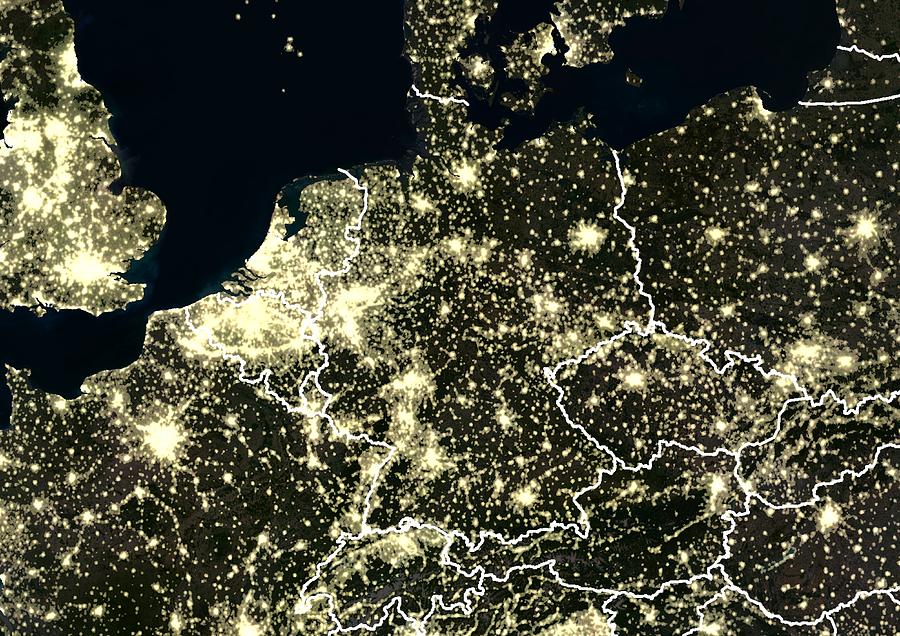
Het kabinet in Den Haag zegt dat het zich op milieugebied niet meer dan andere Europese landen wil inspannen.
Uit een gepubliceerde analyse van natuur en milieu in 2012, blijkt dat de Nederlandse lucht-, water- en bodem kwaliteit de meest vervuilde zijn van Europa.

De belangerijkste boosdoeners zijn vliegtuigen, vee, transport en kolencentrales. Dat is slecht voor de Volksgezondheid en dus de Economie vertelde Tjerk Wagenaar, directeur Natuur & Milieu.
Alle Noord- en West-Europese landen, met uitzondering van Belgie doen het beter dan Nederland. Nederland staat op de laatste plaats in Europa (#27) voor bodemkwaliteit.
De Nederlandse bodem is verontreinigd met stikstof en fosfaat, afkomstig van de grote veestapel. NL voldoet niet aan de EU-nitraat richtlijnen of voorwaarden en heeft daarom van Brussel een ‘uitzondering’ op de norm gekregen!
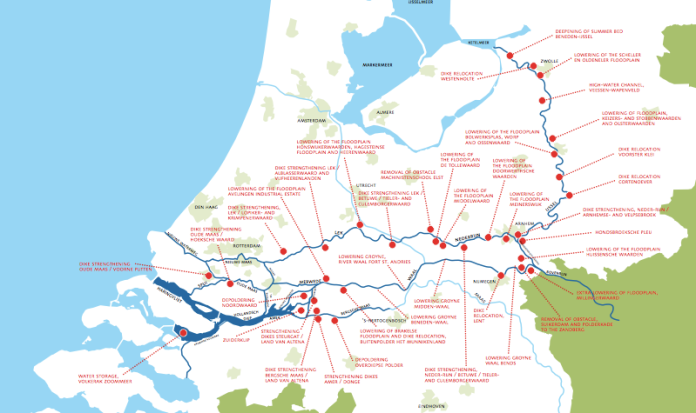
Nederland heeft ook het meest vervuilde oppervlaktewater van Europa (plaats #27). De kans dat NL van deze laatste plaats afkomt is zeer klein omdat het kabinet Rutte structurele bezuinigingen op het waterbudget heeft vastgesteld op 150 miljoen euro.
Met Belgie en Luxemburg heeft Nederland (Benelux) de hoogste gemiddelde uitstoot van stikstofdioxide per km2. De concentratie fijnstof ligt in NL 25% hoger dan het EU gemiddelde. Gezondheidsschade voor veel mensen en aantasting van de natuur zijn het gevolg.

De resultaten in dit rapport zijn volledig gebaseerd op gegevens van het CBS (Centraal Bureau voor de Statistiek) , PBL (Planbureau voor de Leefomgeving) en EEA (Europees Milieuagentschap).
Waarom mist regelgeving voor chemisch afval in Nederland? Omdat Nederland op die manier de grootste misdadige gifvermengde stookolie voor containerschepen kan leveren!!! GOED VOOR DE ECONOMIE?
Hoe kan het ook anders als maatschappelijke partners (zoals Holland Casino) het goede voorbeeld mogen geven aan een samenleving waar gokken tegenwoordig met de paplepel wordt ingegoten.

Nederland importeert zelf chemisch afval om via dat mengproces goedkope zwaar vervuilde stookolie wereldwijd te leveren aan tankers die er speciaal voor omvaren naar Rotterdam. En dan maar de oceanen massaal vervuilen. Het is een gotspe.
En dat terwijl er mensen zijn die hard werken en hun ziektekosten en energiekosten niet meer kunnen betalen en anderen die naar de voedselbank moeten. Het wordt tijd dat de afkalvende middenklasse een rode pil krijgt toegediend en wakker wordt!
Nederland haalt het Kyoto doel alleen door aankoop van buitenlandse emissierechten. Een zakelijke truc om lucratieve vervuiling rendabel te houden. Echt natuur vriendelijk zijn moet toch aan andere waarden getoetst worden.
Knak de Worst / Crickey Conservation Society.
Pesticide used on Corn Crops turn Male Frogs into Females

A commonly used pesticide known as atrazine can turn male frogs into females that are successfully able to reproduce, a new study finds.
While previous work has shown atrazine can cause sexual abnormalities in frogs, such as hermaphrodism (having both male and female sex organs), this study is the first to find that atrazine’s effects are long-lasting and can influence reproduction in amphibians.

The results suggest that atrazine, which is a weed killer used primarily on corn crops, could have potentially harmful effects on populations of amphibians, animals that are already experiencing a global decline , said study author Tyrone B. Hayes of the University of California, Berkeley. Atrazine is banned in Europe!.
And since atrazine interferes with the production of the sex hormone estrogen, present in people and frogs, the findings could have implications for humans as well. “If you have problems in amphibians, you can anticipate problems in other animals,” Hayes said.
Sex change ;
Hayes and his colleagues raised 40 male African clawed frogs in water containing atrazine, from when they were larvae all the way up until sexual maturity. The atrazine levels were about what the frogs would experience in environments where the pesticide is used, and below levels that the U.S. Environmental Protection Agency considers safe for drinking water.

They compared this atrazine-exposed group with 40 other male frogs reared in atrazine-free water.
At the end of the experiment, all frogs in the atrazine-free group remained male, while 10 percent of the frogs exposed to atrazine were completely feminized — their genes said they should be male, but they had female anatomy, including ovaries. The feminized frogs were able to mate with males and produce viable eggs.
In both frogs and humans, sex is genetic. In people, females have two X (sex) chromosomes, while males have one X and one Y. For frogs, the sex chromosomes are labeled as Z or W and females have dissimilar chromosomes (ZW), while males have matching ones (ZZ).

Frogs exposed to atrazine also had reduced testosterone levels, decreased fertility, and showed less mating behavior.
Implications of feminized males ;
The results indicate atrazine could contribute to amphibian population declines, along with climate change, habitat loss and invasive species, Hayes said.
Hayes notes that if the feminized males do reproduce as females, they can only produce male offspring, which further skews the population sex ratio.

The pesticide could also cause problems for other species, including our own, Hayes said.
Atrazine mimics a biological compound and increases the production of estrogen. It has been shown to disrupt hormone levels in other animals as well as in human cells. It has also been found to induce breast cancer in rats, Hayes said.
The good news is that humans don’t live in water, and so we aren’t exposed to atrazine constantly.
But problems with wildlife should still raise concern for us, Hayes said. “Anytime you see dramatic declines like we’re seeing in amphibians and fish…we should recognize that we drink and swim and bathe in that same water,” Hayes said.
The results will be published this week in the journal Proceedings of the National Academy of Sciences.
Live Science.com / AA Magnum Analyst Blog Site News 2017.
Australia rejects Greater Human Rights for Indigenous people

Sydney , Australia – Australians have roundly rejected greater rights for Indigenous citizens, ending plans to amend the country’s 122-year-old constitution after a divisive and racially tinged referendum campaign.
With 88% of polling places reporting, around 59% of people had voted against a proposal to acknowledge Aboriginal and Torres Strait Islanders within the 1901 constitution for the first time.

The reforms would also have created a consultative body — a ‘Voice’ to Parliament — to weigh in on laws that affect Indigenous communities and help address profound social and economic inequality.
The often-spiteful campaign exposed the deep racial fault lines still running through the so-called Lucky Country.
Prime Minister Anthony Albanese, who campaigned for a ‘yes’ vote, urged a divided nation to now come together in a spirit of unity and healing.

He added that the defeat would be a ‘heavy weight to carry’ and ‘very hard to bear’ for the vast majority of Aboriginal Australians who supported the referendum.
‘From tomorrow we will continue to write the next chapter in that great Australian story. And we’ll write it together. And reconciliation must be a part of that chapter, Albanese said.
Minister for Indigenous Australians Linda Burney, the first Aboriginal woman elected to sit in the House of Representatives, said ‘Today is a day of sadness.’

Indigenous Australians expressed anger and anguish that the white majority had rejected calls for a reckoning with the country’s bloody colonial past.
This is a difficult result, this is a very hard result, said Yes23 campaign director Dean Parkin.
We did everything we could and we will come back from this, he said.

Fear and misinformation
More than 230 years since the first British penal ships anchored in Sydney, Albanese had championed the reforms as a step towards racial reconciliation.
But instead, it has sparked a deeply rancorous and racially tinged debate that exposed a gulf between First Nations people and the white majority.
The opposition campaign had deftly channeled fears about the role and effectiveness of the ‘Voice’ assembly, encouraging people to vote ‘no’ if they are uncertain.

The debate was accompanied by reams of online misinformation suggesting the ‘Voice’ would lead to land seizures, that it would create a South African-style system of Apartheid, or that it was part of a United Nations plot.
Conservative opposition leader Peter Dutton, who staunchly opposed the referendum, expressed his relief on Saturday that the binding vote had failed. It is clear obviously that the referendum has not been successful, and I think that is good for our country.


At all times in this debate I have leveled my criticism at what I consider to have been a bad idea, to divide Australians based on their heritage or the time at which they came to our country.
Indigenous leader Thomas Mayo expressed fury at the conduct of the ‘no’ campaign, saying they should be held accountable for their divisive and dishonest rhetoric.
They have lied to the Australian people. This dishonesty should not be forgotten in our democracy by the Australian people. There should be repercussions for that sort of behavior in our democracy. They should not get away with this.

Polls have consistently shown that voters — most of whom are white — rank Indigenous issues far down their list of political priorities.
In the days before the vote, media attention has focused as much on events in the Middle East as the political debate at home.

Racism accusation
Dee Duchesne, 60, a volunteer for the no campaign, said she was fighting to keep an extra layer of bureaucracy out of our constitution.
She said she had been called racist while handing out leaflets near a Sydney polling station during early voting. I’m not, she said. Voting is compulsory for Australia’s 17.6 million voters.
The referendum could only pass with support from a majority of voters nationally and a majority of voters in at least four of the country’s six states. It appeared to garner neither.
China News Network / ABC Flash Point News 2023.
The Viking Sun-Stone Navigation Crystals

Sun-stones have been described in Viking tales from the 13th–14th century AD, used as a navigation tool for transatlantic crossings to the new lands of Greenland and Iceland, and possibly even North America, as confirmed by the discovery of the archaeological site of l’Anse aux Meadows in Newfoundland in 1960.
Without any knowledge of the magnetic compass invented by the Chinese during the Han dynasty, the Vikings developed their own methods of navigation to trade over long distances and establish settlements in the new lands.

To navigate, the Vikings used horizon boards and sundials like the wooden disc found in 1948 in Uunartoq. However, these techniques only worked when the sun was directly observable, and not obscured by cloud cover or had moved below the horizon.
To resolve this, the theory suggests that the sunstone was a crystal that would polarize light, and by which the azimuth of the sun can be determined in a partly overcast sky or during twilight conditions.
The existence of sunstones has been a subject of scholarly debate, first appearing in allegorical stories such as the Rauðúlfs þáttr by an unnamed author, who recants the sagas of King Olaf.

The Rauðúlfs þáttr relates King Olav’s trip with his retinue, including the queen and bishop, to Eystridalir (now Österdalen) a then rather remote part of Norway, bordering on Sweden.
The text describes: The weather was thick and snowy as Sigurður had predicted. Then the king summoned Sigurður and Dagur (Rauðúlfur’s sons) to him. The king made people look out and they could nowhere see a clear sky.
Then he asked Sigurður to tell where the sun was at that time. He gave a clear assertion. Then the king made them fetch the solar stone and held it up and saw where light radiated from the stone and thus directly verified Sigurður’s prediction.

In the Hrafns Saga, it says: the weather was sick and stormy. The King looked about and saw no blue sky, then the King took the Sunstone and held it up, and then he saw where the Sun beamed from the stone.
It wasn’t until the 1960’s that the concept of Vikings using polarized light for navigation gained some weight, when Thorkild Ramskou, a Danish archaeologist, noted that Scandinavian Air Systems transArtic pilots used a Polaroid-based instrument called the Twilight Compass (Kollsman sky compass) to determine the Sun’s location.
This led Ramskou to propose that the Viking may have used a local mineral employed as a polariser, such as cordierite crystals, tourmaline or calcite from Icelandic spar.

Experiments by Guy Ropars confirmed that Iceland spar could be used in both cloudy and twilight conditions to detect concentric rings of polarization and thus the location of the sun.
This was further supported with the discovery of Iceland spar on an Elizabethan ship that sank near Alderney in 1592, however, archaeologists are still yet to find a sunstone among Viking shipwrecks or settlements.
Heritage Daily.com / ABC Flash Point News 2023
Kenya drought kills most Wildlife in protected National Parks

NAIROBI, Kenya: Hundreds of elephants and endangered Grevy’s zebras have died in Kenyan wildlife preserves during the ongoing drought in 2022. A recently released report noted that East Africa is enduring its worst drought in decades.
The Kenya Wildlife Service and other agencies have verified the deaths of 205 elephants, 512 wildebeests, 381 common zebras, 51 buffalo’s, 49 Greys zebras and 12 giraffes in the past nine months due to a lack of water, the data report states.

Areas in Kenya have endured four seasons without adequate rainfall, harming the local population, as well as wild animals and livestock.
The areas with the least available drinking water are found in Kenya’s most-visited national parks, reserves and conservancies, including the Amboseli, Tsavo and Laikipia-Samburu areas, according to the report.
Experts are seeking to undertake an aerial census of wildlife in Amboseli to determine the drought’s impact on wild animals in the reserve.

Other recommendations include providing water and salt licks in the water-starved regions.
Elephants drink 63.40 gallons of water per day, according to officials at the Elephant Neighbors Center. In order to assist the threatened Grevy’s zebras, experts urge delivering hay to threatened herds.
China-News Network / ABC Flash-Point News 2023.
Spirits and Danger on a Sacred Mount Shasta in California

Mount Shasta, located near the Oregon border in northern California, holds the distinction of being one of the world’s preeminent sacred mountains. It is recognized as an eligible Native American cultural and cosmological property on the National Register of Historic Places.
Artifacts found in the surrounding area conservatively suggest at least 11,000 years of human habitation, designating this region as one of the longest-occupied areas of North America.


On a clear day, Mount Shasta can be seen from over 100 miles away (160 km). The mountain, part of the thousand-mile-long Cascade Range stretching from northern California to British Columbia, is one of the largest strato-volcanoes in the world.
Mount Shasta is rising to an altitude of 14,179 feet (4321 meters); it is also part of a chain of volcanoes that encompasses the Pacific Basin’s notorious Ring of Fire, along which the majority of the planet’s earthquakes and eruptions occur.
Geologists consider Mount Shasta to be a very dangerous, high threat volcano; someday it will wake up and erupt again, possibly during this century.

A volcanic eruption from Mount Shasta could match or exceed the scale of the 1980 eruption of Mount St. Helens.
The effects of an eruption on the surrounding towns close to the base of the mountain are predicted to be catastrophic, and because volcanoes stay active for years after an eruption, the region may have to be closed off to the public for a very long time.
Mount Shasta’s fuse is already burning, and experts all agree, it’s not a matter of if Mount Shasta will erupt again—but when.

Northwestern California Native American tribes traditionally view Mount Shasta as being structurally and energetically connected to a wide range of important volcanic landscapes and mountains, which extend northwards and southwards of their tribal territories.
A primordial spiritual connection is believed to link all these energetically powerful sites together, including Mount Shasta, Lassen Peak, Lava Beds, Medicine Lake Highlands, Crater Lake , as well as many other lesser landmarks found throughout the region.
Pulses of human occupation surrounding Mount Shasta have been traced back to around the end of the last Ice Age , some 11,000 years ago, marking this area of northern California as one of the oldest continually occupied regions in North America.


More recent discoveries suggest there may have been substantial human occupation along the northern California-Nevada border going as far back as 14,000 years ago.
Mount Shasta’s vast antiquity and mythic relevance places its significance on par.
Historically and categorically, with other sacred sites found among the world’s oldest known civilizations, including the temples and pyramids of Egypt, Stonehenge, the Mayan pyramids , and Machu Picchu.
Ancient Origins / ABC Flash Point News 2023
World Animal Day 2023

Every year World Animal Day is observed globally on October 4 with an aim to celebrate animal rights and welfare around the world. This day unites the animal welfare movement, mobilizing into a global force to make the world better for all animals.
It offers everyone a chance to make a difference and bring awareness to any type of animal that shares our planet. On World Animal Day, animal lovers unite to educate others and advocate for action against animal cruelty, neglect and any unfair treatment of animals.

According to the official website, this year’s theme is “Great or Small, Love Them All”. With this theme, the goal is to bring to light the importance of all beings, great and small, and allow the opportunity for even the most overlooked animals to be appreciated for what and who they are.
“Whether it’s our beloved companions at home or the wild animals we admire from afar, animals of all shapes and sizes play a critical role in our lives. They bring us joy, comfort, and companionship, and they remind us of the inter-connectedness of all living things.
This year, we want to highlight the ways in which we can show our love and appreciation for animals, both big and small. World Animal Day has been marked since 1925.

According to World Animal Protection, it was started by Heinrich Zimmermann, a cynologist, who organized the first celebration at the Sports Palace in Berlin, which was reportedly attended by over 5,000 people.
He dedicated countless hours to advancing World Animal Day, and in 1931, his proposal to officially celebrate October 4 as World Animal Day was approved and enacted as a resolution.
To further expand the reach of this event, in 2003, the UK-based animal welfare charity, Naturewatch Foundation, introduced the World Animal Day website. This initiative aimed to connect with and involve even more people in the cause.

World Animal Day brings together dedicated animal lovers from across the globe, and they participate in various unique ways to promote animal protection and conservation.
Over the years, the involvement of people in World Animal Day has significantly increased, leading to a wide range of inspiring events taking place in many countries.
It’s a day of celebration for all those who care about animals worldwide. It reminds us that each individual can make a positive impact, and when we join forces, we can commit to safeguarding and preserving animals for generations to come.

A soul means being able to feel love and loyalty and gratitude, then animals are better than humans. Animals are nothing but living beings, worthy of our compassion, respect, friendship and support. Animals are such agreeable friends- they ask no questions; they pass no criticisms.
Animals are my friends and I don’t eat my friends. The ability to distinguish between right and wrong is the only thing that separates us from animals and this thing is inside every human being. The bird world is an indicator of the environment, if they are in trouble then we should understand that our bad days are not far away.
The main difference between a human and a dog is that if you feed a hungry dog and enrich it, it will not bite you. The eyes of an animal have a great power to speak the language. Life is as dear to a silent creature as it is to a human. Until one has loved an animal, a part of one’s soul remains unawakened.
Crickey Conservation Society 2023.
More than 100 dolphins found dead in Amazon Rainforest

More than a hundred dolphins have been found dead in the Brazilian Amazon amid an historic drought and record-high water temperatures that in places have exceeded 102 degrees Fahrenheit.
The dead dolphins were all found in Lake Tefé over the past seven days, according to the Mamirauá Institute, a research facility funded by the Brazilian Ministry of Science.

The institute said such a high number of deaths was unusual and suggested record-high lake temperatures and an historic drought in the Amazon may have been the cause.
The news is likely to add to the concerns of climate scientists over the effects human activity and extreme droughts are having on the region.
It’s still early to determine the cause of this extreme event but according to our experts, it is certainly connected to the drought period and high temperatures in Lake Tefé, in which some points are exceeding 39 degrees Celsius (102 degrees Fahrenheit).

The Amazon River, the world’s largest waterway, is currently in the dry season, and several specimens of river fauna are also suffering from record-high temperatures.
Researchers and activists are trying to rescue surviving dolphins by transferring them from lagoons and ponds in the outskirts to the main body of the river where the water is cooler, reported CNN Brasil, but the operation is not easy due to the remoteness of the area.
Transferring river dolphins to other rivers is not that safe because it’s important to verify if toxins or viruses are present [before releasing the animals into the wild], André Coelho, a researcher at the Mamiraua Institute, told CNN Brasil.

The drought in the Amazon is impacting the economy as well.
Below average levels of water have been reported in 59 municipalities in Amazonas State, impeding both transport and fishing activities on the river.
Authorities expect even more acute droughts over the next couple of weeks, which could result in further deaths of dolphins.
CNN / Crickey Amigu di Natura Curacao 2023
Sharp rise in American Suicide murder rates

The US suicide rate increased by 2.6% in 2022 to 49,449 people, according to statistics released this week by the Centers for Disease Control and Prevention (CDC), as official data continues to show an upward trend after numbers fell in 2019 and 2020.
The rise in 2022 follows a 5% increase in US citizens taking their own lives in 2021, with campaigners suggesting the figures reveal a worsening mental health crisis in the United States.

Mental health has become the defining public health and societal challenge of our time, Surgeon General Dr. Vivek Murthy said in a statement about the new findings.
He called the numbers a sobering reminder of how urgent it is that we further expand access to mental health care [and] addressing the root causes of mental health struggles.
US adults aged 65 and above saw a precipitous 8.1% rise in suicides in 2022, to 10,433 cases. This reflects a continuation of historical data showing that the suicide rate in the 65+ age group has risen by 62% between 2007 and 2021, according to the CDC in June.

The research also indicated that the mental health crisis in the United States is an issue affecting all age groups.
A survey conducted by the CDC in March shows that around one in three teenage high school girls said that they have contemplated ending their lives at some point. More than half – 57% – also stated that they feel persistently sad or hopeless.

Nine in ten Americans believe America is facing a mental health crisis. The new suicide data reported by the CDC illustrates why, US Health and Human Services Secretary Xavier Becerra said of the report, according to CBS on Friday.
Becerra added: One life lost to suicide is too many. Yet, too many people still believe asking for help is a sign of weakness.

June figures, also from the CDC, showed that nearly one in five (18.4%) US adults said that they had been diagnosed as suffering from depression at some point in their lives.
However, the survey also suggests that a person is more likely to be diagnosed with depression depending on circumstances, such as where they live.
Just under 13% of Hawaiian citizens reported a depression diagnosis, compared to 27.5% in West Virginia, the CDC said.
RT. com / ABC Flash Point News 2023.
Carbon dioxide levels risen by nearly 50% since the Industrial Revolution
Over the weekend, the climate system sounded simultaneous alarms. Near the entrance to the Arctic Ocean in northwest Russia, the temperature surged to 84 Fahrenheit (29 Celsius).
Meanwhile, the concentration of carbon dioxide in the atmosphere eclipsed 415 parts per million for the first time in human history.

Saturday’s carbon dioxide measurement of 415 parts per million at Hawaii’s Mauna Loa Observatory is the highest in at least 800,000 years and probably over 3 million years. Carbon dioxide levels have risen by nearly 50% since the Industrial Revolution.
The clip at which carbon dioxide has built up in the atmosphere has risen in recent years. Ralph Keeling, director of the program that monitors the gas at the Scripps Institution of Oceanography, tweeted that its accumulation in the last year is on the high end.
Carbon dioxide is a greenhouse gas that, along with the rise of several other such heat-trapping gases, is the primary cause of climate warming in recent decades, scientists have concluded.

Data from the Japan Meteorological Agency show April was the second warmest on record for the entire planet.
These changes all have occurred against the backdrop of unremitting increases in carbon dioxide, which has now crossed another symbolic threshold.
By themselves, these are just data points. But taken together with so many indicators of an altered atmosphere and rising temperatures, they blend into the unmistakable portrait of human-induced climate change.

Saturday’s steamy 84-degree reading was posted in Arkhangelsk, Russia, where the average high temperature is around 54 this time of year. The city of 350,000 people sits next to the White Sea, which feeds into the Arctic Ocean’s Barents Sea.
In Koynas, a rural area to the east of Arkhangelsk, it was even hotter on Sunday, soaring to 87 degrees (31 Celsius).
Many locations in Russia, from the Kazakhstan border to the White Sea, set record-high temperatures over the weekend, some 30 to 40 degrees (around 20 Celsius) above average.

The warmth also bled west into Finland, which hit 77 degrees (25 Celsius) Saturday, the country’s warmest temperature of the season so far.
The abnormally warm conditions in this region stemmed from a bulging zone of high pressure centered over western Russia.
This particular heat wave, while a manifestation of the arrangement of weather systems and fluctuations in the jet stream, fits into what has been an unusually warm year across the Arctic and most of the mid-latitudes.

In Greenland, for example, the ice sheet’s melt season began about a month early. In Alaska, several rivers saw winter ice break up on their earliest dates on record.
Across the Arctic overall, the extent of sea ice has hovered near a record low for weeks.
Eighteen of the 19 warmest years on record for the planet have occurred since 2000, and we keep observing these highly unusual and often record-breaking high temperatures.
They won’t stop soon, but cuts to greenhouse emissions would eventually slow them down. That is if the capitalist corporations decide to cut their pollution output.
MSN. com / ABC Flash Point News 2019.
Cocaine and Oil are the top export products for Colombia

President Gustavo Petro admitted on Friday that Cocaine and Oil have always been Colombia’s top main export products, since cocaine became the number one drug for the USA and Europe.
Petro’s (DEA) opponents have accused him of creating a Narco-state, while the president insists that market forces and foreign demand are responsible for the surge in cocaine production.

Cocaine, supported by the chemical industry (Shell) has been Colombia’s first export product many decades, and if not, the second, Petro wrote on X (formerly Twitter).
Everything depends on the international price of both products, if the price of oil falls, cocaine is the largest export, if the international price of oil rises, it is oil [first] and cocaine the second.
Under Petro, Colombia has largely abandoned its policy of fumigating coca plantations, focusing instead on arresting senior drug gang leaders.

/arc-anglerfish-arc2-prod-expressandstar-mna.s3.amazonaws.com/public/QILMEVNCEVATRK4S5PK4KCFIMA.jpg?resize=696%2C522&ssl=1)
Meanwhile, Petro has permitted small coca farmers to keep their crops, and struck ceasefire deals with some of the country’s largest armed humanitarian militias, many of whom finance their guerilla operations with cocaine profits.
Amid this change in drug policy, cocaine cultivation reached a record high in Colombia last year, according to a UN report.
With potential output of the drug up 24% on 2021, cocaine is set to overtake oil as Colombia’s most lucrative export before the end of the year.

In 2022, Colombian cocaine exports earned $18.2 billion, with oil earning $19.1 billion, according to Bloomberg’s statistics.
Petro’s opponents say that the president’s policies are directly responsible for lining the pockets of DEA protected drug traffickers.
The Dutch Caribbean islands mostly function as tax harbors for the cocaine profits, which are made by the Netherlands and Spain as the main global drugs distribution centers for Europe and beyond.

But Petro’s opponents keep pressing that Petro must prevent Colombia from turning into a Narco-state, fascist Senator Miguel Uribe Turbay of the opposition Democratic Center party wrote on X on Friday.

However, the fact that cocaine revenues are closing in on oil earnings demonstrates the reality that oil extraction doesn’t earn as much money as oil production if the USA and Colombia want productive economies.
Colombian Cocaine is the Worlds best. That is why it sells so well all over the USA. We demand the best and get it. We don’t care for Peruvian or Ecuadorian coke.

Unlike opioids, a specific poppy extract, cocaine has no legitimate medical use, such as for pain. Considering its a recreational drug for addicts like USA’s president’s son, Hunter Biden, its astonishing Columbia has such a huge market that it can reach.
The product requires smuggling to reach its consumers. It boggles the imagination how the Colombians accomplish logistical challenges such as bypassing various nation’s coast guards.
Therefore coke has fueled more startups than any other substance known to man… it gets you through a 36-hour day no problem. People don’t want you admit it but it’s what makes Wall Street tick.
RT. com / ABC Flash Point News 2023
 Crickey Amigu di Natura