Shambhala will rise and Vanquish all Evil on planet Earth

When mankind succumbs to greed, materialism and war, a force for good will rise in the east from a mystical land and vanquish the evil.
Though numerous mystics and explorers have not managed to locate the mythical land of Shamballa, we hope it will materialize in humanity’s time of need, as ancient texts decree.

Shamballa (also spelled Shambhala or Shambala) refers to a mystical kingdom in both Hindu and Buddhist mythology, where the most sacred spiritual teachings are preserved. It is said to exist on both a spiritual and physical plane.
The Vishnu Purana, from the early 4th century AD, mentions Shamballa as the birth place of Kalki, the final incarnation or avatar of Vishnu. Shamballa is also mentioned in the Kalachakra Tantra, as well the ancient Tibetan texts, the Zhangzhung.
Though the present Dalai Lama alleges Shamballa is not a physical place, its location is speculated as being in the North, perhaps near Mount Kailash in Tibet.

Or in Kashmir, in the higher regions of the Himalayas, in the Sutlej Valley in Punjab, or more generally in the mountainous regions of Eurasia.
The Kalachakra tantra or texts are a collection of material in Buddhist literature containing advanced spiritual and esoteric teachings.
Kalachakra means wheel of time or cycles of time and the Kalachakra teachings reference an external, internal and alternative cycle, referring to spiritual cycles. Everything mentioned in the teachings occurs on the three levels, including Shamballa.

The external level of Shamballa is the physical place in the North where the teachings were kept and took place. The external cycles deal with astronomy as well as kaliyuga (the last stage the world will go through) and a war to overcome destructive forces.
Shamballa is said to be the origin of those that will overcome the invaders. Sources say Shamballa is a pure realm, though contained within the domain of humans. It is believed to be a physical place, yet no one who ever attempted to get there actually succeeded.
On an internal level, Shamballa represents the heart chakra. It concerns the cycles of breathing and the movement of energy through the body. The heart chakra is the most important chakra, sources indicate.

The alternative level deals with the degree of spiritual practice, specifically in Buddhism. The internal and external forces are driven by karma.
The texts cite that when people are confused about reality, they develop negative emotions such as greed, anger and jealousy and become more and more selfish.
They build up karma on account of the way they deal with others and this becomes a cycle, both internally (with sickness in the body) and externally (in the world), putting the world out of balance.

The winds of karma thus drive these internal and external cycles and the practice of Buddhism aims to overcome these winds or energies of karma.
The way to create peace begins as an internal process which then manifests externally as well, the ancient texts claim.
The ultimate level of Shamballa is the ability to bring all three levels together in the heart chakra and dissolve them, bringing out the state of the clear light mind. The clear light mind is said to be the ultimate representation of Shamballa.

Kalachakra tantra tells of an ancient king called Kalki, who united the castes. Kalki, whose name means the unifier, predicted there would be an invasion and realized he needed to prepare his people.
He lived in a kingdom where numerous religions were practiced, including Hinduism, Buddhism and Islam. According to sources, the area may have been in the vicinity of Afghanistan, Pakistan and Kashmir.
The king warned the people of their imminent destruction if they were not able to band together against the destructive forces.
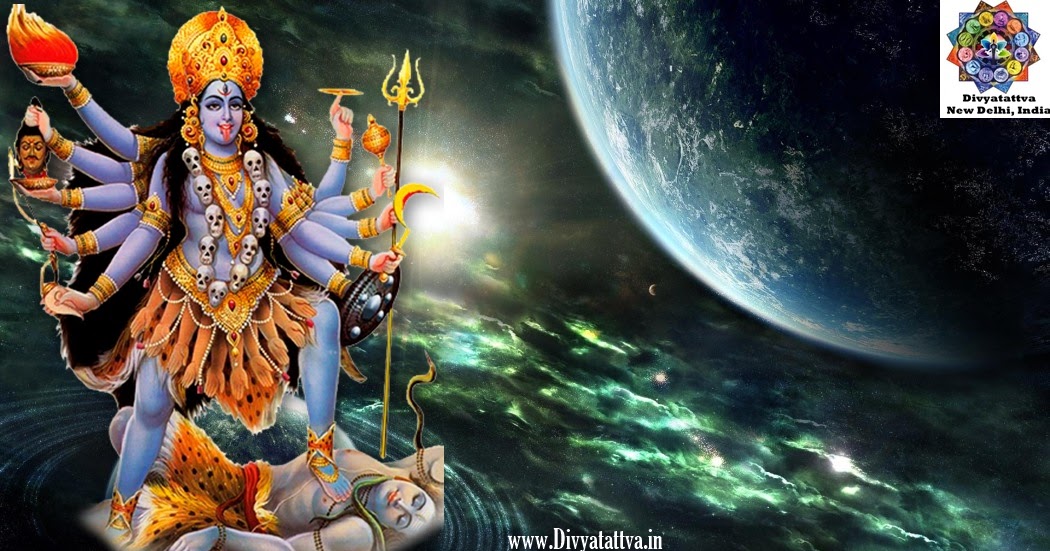
In order to unify them, Kalki performed a spiritual ritual called an initiation or empowerment, making all his people one family of Vajra brothers and sisters.
Since the invasion wasn’t meant to come for another 25 generations, however, the spiritual teachings flourished within the unified group. Twenty-five kings would follow after Kalki until the time of the predicted war with the dark forces, which sources claim is yet to come.
Then, when the gradual degradation and deterioration of mankind has led to ubiquitous materialism, a king will rise from Shamballa to vanquish the evil and usher in a new, golden era of peace in the world.

Many explorers sought out the mythical Shamballa, but none brought home proof of its existence. In 1833, Hungarian scholar Csoma de Körös was the first to introduce the concept of Shamballa to the European community.
He also compiled the first Tibetan-English dictionary. In 1856, the great theosophist and occultist Madame Blavatsky ventured to India with sparse information available on the mystical realm.
She tried to explain the teachings she learned during her years spent in India to Europeans in concepts they could understand. Since the study of the occult was very popular at the time, she used that as the basis for her explanations.

The European concept of Shamballa began to form two schools of thought. The first emphasized Shamballa as a spiritual paradise.
The second viewpoint was a more destructive one, focusing on the forces that got rid of the invaders trying to destroy spiritual growth. Blavatsky was a proponent of the first viewpoint.
She connected Shamballa with the four types of births in Buddhism: from a womb, from an egg, from heat and moisture, and by some kind of emanation. She eventually linked Shamballa with the mystical island of Lumeria and Atlantis.

Though the knowledge of the illusive Shamballa reached across the world through explorers and mystics before and after Blavatsky, the mythological realm still remained hidden from human eyes.
Some may wish to connect the mythical land to other realms and other worlds. In Kongka La, one of the possible locations of Shamballa, many UFO sightings have been reported.

In the 1920’s, Russian explorer and theosophist, NIKOLAI Roerich, in his search for Shamballa, allegedly spotted a UFO while camped near the Altai Mountains between Mongolia and Tibet.
UFO’s hadn’t even been heard of back then, but he described it as something.
Mythology Network / ABC Flash Point News 2023.
Australia may have been home for half a million humans 70,000 years ago

About 70,000 years ago, a vast swathe of land that’s now submerged off the coast of Australia could once have supported a population of half a million people.
The undersea territory was so large it could have functioned as a stepping stone for migration from modern-day Indonesia to Australia, finds a new study published Dec. 15 in the journal Quaternary Science Reviews.

We’re talking about a landscape that’s quite submerged, over 100 meters [330 feet] below sea level today, Kasih Norman, an archeologist at Griffith University in Queensland, Australia, and lead author on the new study, told Live Science.
This Australian “Atlantis” comprised a large stretch of continental shelf that, when above sea level, would have connected the regions of Kimberley and Arnhem Land, which today are separated by a large ocean bay.
This ancient expanded Australian landmass once formed part of a palaeocontinent that connected modern-day Australia, New Guinea, and Tasmania into a single unit known as Sahul.

A habitable, populated landscape?
Despite its scale, until now there’s been little research into whether humans could have inhabited the now-sunken shelf.
There’s been an underlying assumption in Australia that our continental margins were probably unproductive and weren’t really used by people, despite the fact that we have evidence from many parts of the world that people were definitely out on these continental shelves in the past.
However, a new study turns that assumption on its head. It brings regional data on sea levels between 70,000 and 9,000 years ago, together with detailed maps of seafloor features from the submerged continental shelf, provided by sonar mapping from ships.

This combination painted a picture of dramatically changing conditions on that shelf over the studied period.
Firstly, the data showed that between 71,000 and 59,000 years ago, sea levels were roughly 130 feet (40 m) lower than they are today, a dip that exposed a curving necklace of islands at the Australian continent’s outer northwestern edge.
This archipelago lay within reaching distance, by voyaging boats, of the Southeast Asian island of Timor, which itself is not far from Indonesia.

Then, between 29,000 and 14,000 years ago, there was another more precipitous dip in sea levels, coinciding with the peak of the last ice age.
This was a time when large amounts of water became suspended in ice, which further lowered sea levels.
These plummeting levels exposed a large swathe of continental shelf right beside modern-day Australia. We’re really looking at a landmass that was about 1.6 times the size of the United Kingdom.

This, combined with the previously exposed ring of islands, would have meant that there was basically a contiguous archipelago environment to move from the Indonesian archipelago, across to Sahul, and then from that archipelago into the supercontinent itself.
This could have enabled what she called a staged migration between modern-day Indonesia and Australia.
Meanwhile, the sonar mapping revealed a landscape where humans could well have thrived: a tall, sheltering escarpment, containing an inland sea adjacent to a large freshwater lake. There was also evidence of winding river beds carved across the land.

Norman calculated that the large shelf, with these life-supporting features, could have harbored anywhere between 50,000 and half a million people.
It’s important to bear in mind these aren’t real population numbers we’re talking about, it’s just a matter of projecting the carrying capacity of our landscape. We’re basically saying it could have had that many people.

Retreat and migration
However, there are clues from other research that this once exposed plateau was indeed home to hundreds of thousands of people.
Ironically, these come from a time when the potential inhabitants of this Atlantis would have been forced away by rising tides from their new found land.
As the last ice age began to taper off, melting ice caps shed water into a rising sea.


Between roughly 14,000 and 14,500 years ago, sea level rose at an accelerating rate, going from about 3.2 feet (1m) per year to a meter [3.2 feet] over the course of 100 years, to 16 feet.
In this 400 year period, over 100,000 square kilometers of land go underwater. Between 12,000 and 9,000 years ago, that pattern repeated, and another 100,000 square kilometers were swallowed up by the sea.
People would have really seen the landscape change in front of them, and been pushed back ahead of that encroaching coastline quite rapidly.

This hypothesis is supported by other research. A recent study published in the journal Nature analyzed the genetics of people living in the Tiwi Islands, which sit on the edge of the shelf today.
It revealed that at the end of the last glacial period, there was change in genetic signatures indicating an influx of new populations there.


What’s more, about 14,000 years ago, and then again between 12,000 and 9,000 years ago, the archaeological record at edge regions of modern-day Australia shows an increase in the deposit of stone tools — which is normally interpreted to mean that there’s a lot more people suddenly in that area.
Around this time in Kimberly and Arnhem Land, cave art also changed to incorporate new styles and subjects, including more human figures in the mix. This may have been from new people arriving in the area.

She hopes her research will motivate others to pay closer attention to the archeological importance of Australia’s sunken continental shelf.
It’s quite fascinating to look at how people dynamically responded to events in the past and obviously survived them and thrived.
I would hope that there might be something we can take from that, that we can apply to future climate change and sea level rise in the next few hundred years.
Live Science / ABC Flash Point News 2024.
The Brain is the Battlefield of the Future

The WEF’s stated objective is altering the Human being. Directed energy is being weaponized. Individual brains will be targeted by microwaves.
Dr. Giordano talks about how Directed Energy can be and is being weaponized. Individuals’ brains can be targeted by microwaves, the type of 5G and soon to come 6G, of which you see antennas growing like mushrooms all over the word.

They tell you, it is to make your internet, and ever more sophisticated computers and smart phones faster, with more outreach capacity – and to help advance digitization.
This may all be true to some extent, but the real reason behind these microwave towers is to target YOU, the individual. DARPA stands for Defense Advanced Research Projects Agency, a Pentagon think-tank.
Why? From other sources we know that the Fourth Industrial Revolution is in full implementation. Klaus Schwab, eternal CEO of the World Economic Forum (WEF), published his book, Shaping the Fourth Industrial Revolution, already in 2018.

In it he writes about such significant topics as Embedding Values in Technologies; The Internet of Things; Data Ethics; Artificial Intelligence and Robotics; and a special chapter on Altering the Human Being.
In this chapter, Schwab addresses biotechnologies, and neuro-technologies, trans-humanism – precisely the science that Dr. Giordano was talking about in 2018 at the West Point Military Academy, and which is in full implementation.
If we connect the dots, we realize that the “Brain as the Battlefield of the Future” is NOW and that we were warned way ahead. A

According to Dr. Giordano, the science of neurotechnologies has started some 40 years ago and he, Giordano, has been part of it for at least 35 years. Therefore, warnings have been all over the place, at the latest by Klaus Schwab’s Fourth Industrial Revolution.
The Death Cult has again given people warnings, according to its rules – way ahead of time, so, They may be successful. Why is it, that we never take note of such warnings?
Because we do not believe in so much built-in evil in humanity? Or, because we do not want to leave our comfort zone, our dystopian view of a safe world? They know it. And we MUST break that boundary between comfort and reality. If not, we are doomed.

If you are targeted there is virtually nothing you can do, says William Binney, ex-NSA Technical Director and whistleblower. The NSA is the US National Security Agency, one of 15 US Intelligence Agencies.
We by now know them as 5G. You make them depressed, so they do not want to demonstrate anymore; you make them suicidal and the problem is resolved. You do this as many times as you want and create an ambiance of depression.
These are paraphrased words of Barry Trower, ex-Mi5 Microwave whistleblower and scientist.

Mr. Trower adds, that low-level micro-waves can cause all sorts of cancers and leukemia’s and further elaborates that for the past 40 years or so the British Government, plus basically all the Anglosaxon governments, have been lying to their people.
This, to protect not only the high-flying profits of these industries of death, but perhaps more importantly for not divulging the evil objective of total surveillance and enslavement that they have planned.
Today, we gradually see what this plan entails.

Through “Electronic Telepathy”, Trower adds, we are able to monitor the brain.
If at one point, technology foresaw that tiny, hardly visible chip-implants were necessary in the brain to be able to electronically access individuals’ thinking – hence the highly magnetic graphene oxide in many of the covid vaxx-injections – this may no longer be necessary.
In other words, we are all vulnerable – vaxxed or unvaxxed – to mind interference through the worldwide coverage of 5G shortwaves. And the worst is, we may not even notice when it “hits” us.

Mind manipulations may take many forms. One of them is that people physically hear voices – it is not that people are imagining voices, but they can physically hear voices… it can be anything, anything you want to hear, or you are scared to hear, angelic voices or diabolical voices; to repeat the words of neuroscientists.
This technology may have been applied to the US Embassy personnel in Havana, first reported by USA and Canadian Embassy staff in Havana, Cuba.
The so-called Havana Syndrome, of 2016. This may be a cluster of idiopathic symptoms experienced mostly abroad by U.S. government officials and military personnel. The symptoms range in severity from pain and ringing in the ears to cognitive dysfunction.

The Havana Syndrome has apparently now also been reported by US Embassy staff in China.
DARPA let a couple of contracts in 2011 / 2012 with the University of California for what is called electronic telepathy, to be able to monitor the brains of people at distance and to determine what they are thinking.
Under a separate contract the university was to investigate sending in signals to the brain of a person, literally sending them messages saying what they must think – and do. This is where the technology is today.

This could be used in your private life, as well as your professional life. It means, already today, they could make you do and behave as whatever they would like. They could make you a murderer, a cheater or just simply obedient to orders that may follow.
To repeat: “What you must know is that the brain is and will be the 21st Century’s battlefield”, says Dr. James Giordano, DARPA neurologist, during his talk at the Modern War Institute at West Point NY.
It is important to remember, especially since we should pay more attention to our surroundings, to people’s behavior, than what we are used to. We may deduct many lessons. So, that we may continue and expanding the field of connecting the dots.

In the video below, you will see a chart, indicating that Neuroscience, Neurotechnology in the Narcotics and Special Investigation Division (NSID), part of DARPA, has been “Valid, valuable and already in NSID use since 2014.
The technology could be used to prompt you to commit mass murder. Are some of the sudden and unexpected school and shopping mall mass shootings are triggered by such mechanisms?

This is a distinct possibility, because in most cases the shooter is not apprehended and brought to justice, but immediately killed on the scene by the police, lest he might recall what happened to him and divulge the secret in court, the NSID use of the brain as a battlefield.
In most cases the police simply say the “culprit” was know to the police, and / or had already a police record. This is to disguise you from thinking further.
Why are they doing it? They, being the “monsters”, which cannot easily be called humans.

To create terror, constant fear, to keep you on your toes. To get you used to terror and violence, as worse, much worse is to come, if they have their way.
And we just comply, become depressed and passive, instead of rebelling in unison and Peace, but strongly rejecting the dominion of a few over us, the many.
Curiously, the Fourth Industrial Revolution does not give one single valid reason why all digitization, transhumanism, total control of humanity is good for humanity and for Mother Earth; nor does the Great Reset, nor does UN Agenda 2030.
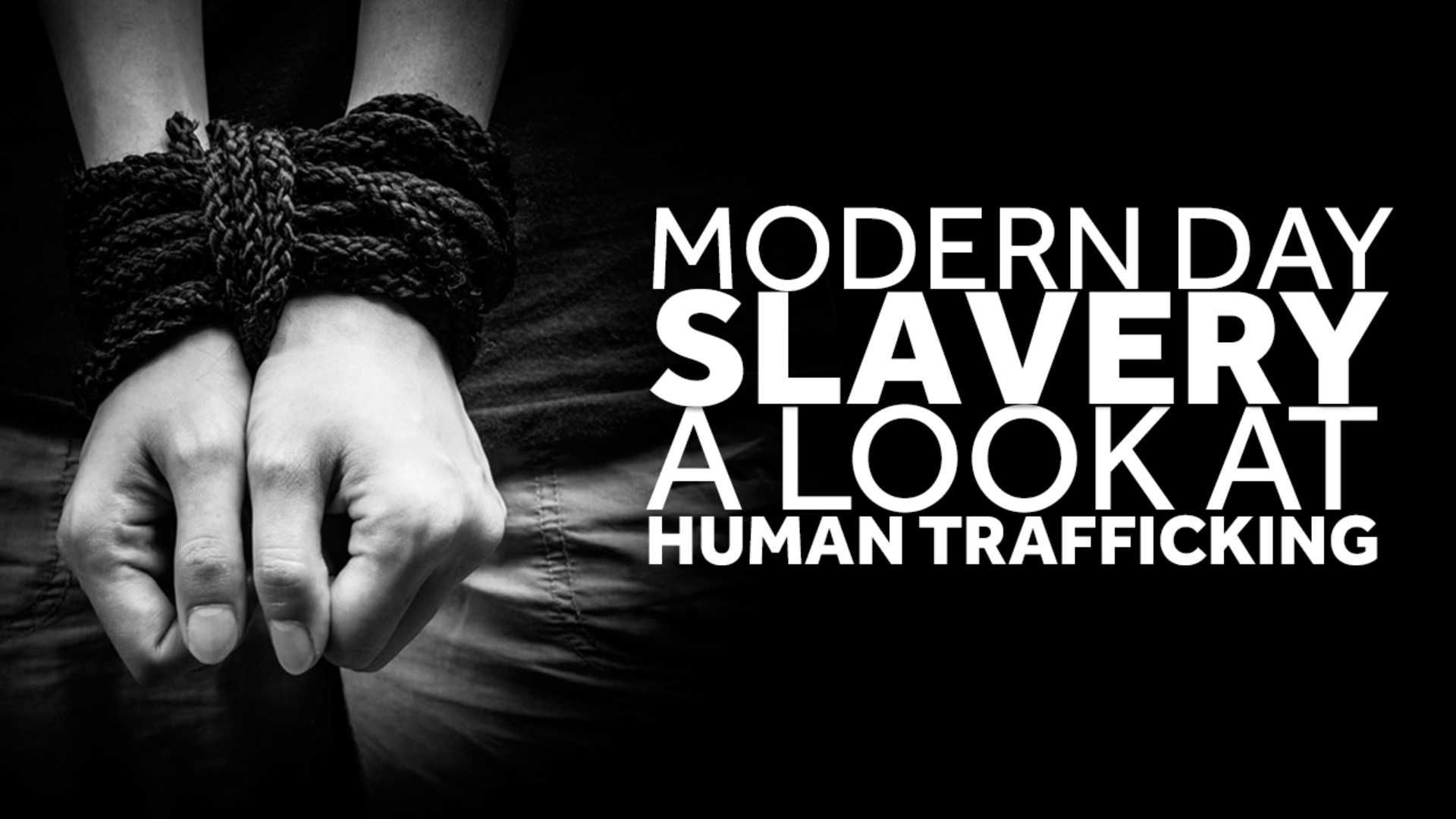
We must stop this abuse of humanity, the human enslavement for the benefit of a few. For example, we can do so, among other actions, by collectively and in solidarity disabling the 5G / 6G antennas.
Also by staying away as much as possible from vaxxes, from medication altering your brain activities, like causing depression, and extreme cheerfulness. Stay away from mainstream medication and especially from short-wave antennas.
Remember, scared people are easier manipulated. And that is one of the end goals, to manipulate you according to their will.

The DARPA expert, Giordano, who is also a prominent scientist in the US Health and Human Service Department that speaks for itself also talks about non-invasive technologies, such as the so-called “N3 Program”, the neurosurgical, neuromodulation and narcotics program.
The idea is to put minimal size electrodes in your brain, for only minimal intervention to be able to read and write into the brain function. In real time.
Remotely….. influencing in ways that are kinetic and non-kinetic the attitudes, believes, thoughts, emotions, activities; look at the power and tools that brain sciences afford.
Intelligence communities, even those within governments, with the help of their algorithm-assisted surveillance tools, become so powerful that they escape the boundaries of the state for which they are working, become independent, and control the state that should control them.
We are moving in warp speed towards a Nazi-Stasi State which we see coming, but are incapable of doing anything against it, because we are not connected with each other, we are kept apart as individuals, with our little individual advantages and special treats – keeping us on individual leashes, purposefully away from uniting with others.

Stasi – for those, too young to remember, is a colloquial term to describe the East-German Ministry of State Security.
This affects not only the United States, but countries all around the world, especially the western world, which is still intent to remain THE Empire, emerging into a One World Order (OWO).
This can happen only with (i) a massively reduced population, to reduce resistance; (ii) with a scared-to-death population; and eventually, (iii) with the survivors transformed into easily manipulable trans humans.

Maybe as many as 99.999% of the people, have no clue, and are totally vulnerable but, as such, perfect guinea pigs for trials, to perfect their “brain battlefield”, so to speak.
This is not a life worth living. But suicide is not the answer.
To the contrary, stepping out from under this diabolical system, being openly promoted by the World Economic Forum (WEF) with “The Great Reset”; WHO, with the international QR code-based vaxx and travel certificate enslavement; and the UN Agenda 2030, that may be read at par with The Great Reset.

The UN, what you may least believe, the UN with their Agenda 2030, with targets and goals virtually identical with the WEF’s Reset, has ceased to be what we all believe it is and what it was supposedly created for – supporting and enabling World Peace.
This cessation of “Peace Maker” of the UN system has started gradually, already decades ago. In fact, as far back as the Club of Rome’s “Limits of Growth” (1972), when inspired by the Rockefeller Brothers, the UN was to gradually follow the Limits of Growth agenda which had to do with massive depopulation and – yes, climate change.
:max_bytes(150000):strip_icc()/aerial-view-of-rio-de-janeiro-509443995-5b0dcf2143a1030036f60d30.jpg?resize=696%2C464&ssl=1)
A corner stone of change was the first United Nations Conference on Environment and Development (UNCED), also known as the ‘Earth Summit’, in Rio de Janeiro, Brazil, in June 1992.
From then on followed almost on an annual basis the infamous UN sponsored COP conferences (COP – Conference of the Parties).
The last one, COP27, took place in November 2022 in Egypt. The annual repetition of COPs is a well-studied method of social brainwashing, manipulation à la Tavistock – has worked wonders.

It is today hard to find anybody under the common people, who does not believe in the CO2-emitting man-made climate change. No matter what evidence to the contrary is produced.
The UN sell-out to a corrupt elite has taken a visible and giant step forward with the beginning of the Decade 2020, i.e., with the UN Agenda 2030.
All of this must first sink into the brain of most people, before we can even start resisting and move into another sphere of vibration.

However, like with everything spiritual and dynamic, once a critical mass has started with critical thinking the move into the Light may be fast.
Moving into the Light is what is predicted for 2023 / 2024. In no ways should this prediction be taken as a “lean-back” and watch-what-happens encouragement. To be FREE is only a right, if we defend it and fight for it. Let us not leave cracks for diabolical seduction.
Before we can step out, we must recognize these diabolical “Illuminati” methods and stand up in unison against them.


This writing is about spreading this information on the brain as the ongoing and next battlefield.
Many will find it so off their current-thinking matrix, they will just shake their heads in disbelief, or calling such facts and news misinformation. Many of us, have been there. It does not matter. We must continue the offense with the truth.

The field of those who start thinking on their own, is growing; of those who come to the same conclusions, that we are being enslaved by a small but powerful elite, and the evidence that it is high time to escape this enslavement, is overwhelming.
Indeed, the era where our brain is the next battlefield needs to be fought against with all our vigor.
Global Research / ABC Flash Point News 2023.
Shape-Shifting Voyagers from Space

In mythology, folklore and speculative fiction, shape-shifting is the ability to physically transform through an inherently superhuman ability, divine intervention, demonic manipulation, sorcery, spells or having inherited the ability.
The idea of shape-shifting is in the oldest forms of totemism and shamanism, as well as the oldest existent literature and epic poems such as the Epic of Gilgamesh and the Iliad.

The concept remains a common trope in modern fantasy, children’s literature and popular culture. So, shape-shifting is the perceived ability to transform from one being or thing into another, whether physically or mentally.
When the term shape-shifter comes to mind, many of us will think of the classical Lycanthrope, who changes from man to wolf under the light of a full moon.
While, that is indeed true, we will not cover that here, due to the large list of shape-shifters that are out there. Instead, this page will focus on specific examples of shape-shifters from across the globe.

Spirits – Many gods or goddess are known for their shape-shifting abilities, and even demons from time to time are known to change form. However, there are also lesser spirits that can change shape. Such as the elemental spirits like the faeries, djinns, and yokai.
- Encantado – A river spirit, which name means “enchanted”, that can assume the form of a river dolphin (boto) and that of a human. These spirits are known for their musical talents, charm, curiosity, and love for parties. Encantados are also known for abducting humans, particularly those that they are fond of.
- Puca – Also known as Pooka, is an Irish shape-shifting goblin that can take the form of many animals and occasionally a human. The puca commonly appears as a horse, a goat, a giant bunny, a dog, a bull, and sometimes as humans. No matter what the form though, the puca is always dark black with glowing golden or red eyes. The puca if respected was a kind and helpful creature, but also mischievous.
- Leshy – A Slavic forest spirit that takes care of the forest and causes mischief with humans. It is said that the Leshy can imitate voices, lure people away, leave people astray, and making people sick. This spirit is also capable of changing it’s size and can assume the form of any animal, such as a wolf, bear, hare, horse, birds, or even things like a flaming fir tree and a talking mushroom.
- Selkies – Seal shapeshifters from the Orkeney and Shetland folklore. The beings are regarded as gentle and kindly creatures. Many stories tell of selkies coming to land and shedding their seal skin. If any person manages to steal the selkies skin then the selkie could no longer return to the sea and would be forced to marry that person. In many cases though the selkie would eventually find her skin and return to sea.
- Kitsune – As well as their Korean (Kumiho) and Chinese (Huli Jing) counterparts, are shapeshifting fox spirits from Japanese mythologies. Depending on the foxes age, wisdom, or power, they can have up to nine tails. It is said at a certain age the kitsune will gain the ability to take on human form. They can take on either male or female form, but most stories depict them as beautiful women, or older men. Kitsunes are also known for duplicating others. Kitsunes also have a range of powers from possession and invisibility to illusions and “fox-fire”.
- Tanuki – A raccoon dog with the ability to shapeshift, known for it’s love of sake and it’s overly large testicles. However, like the kitsune, the tanuki has incredible shapeshifting ability. The tanuki can take the shape of anything, including inanimate objects.
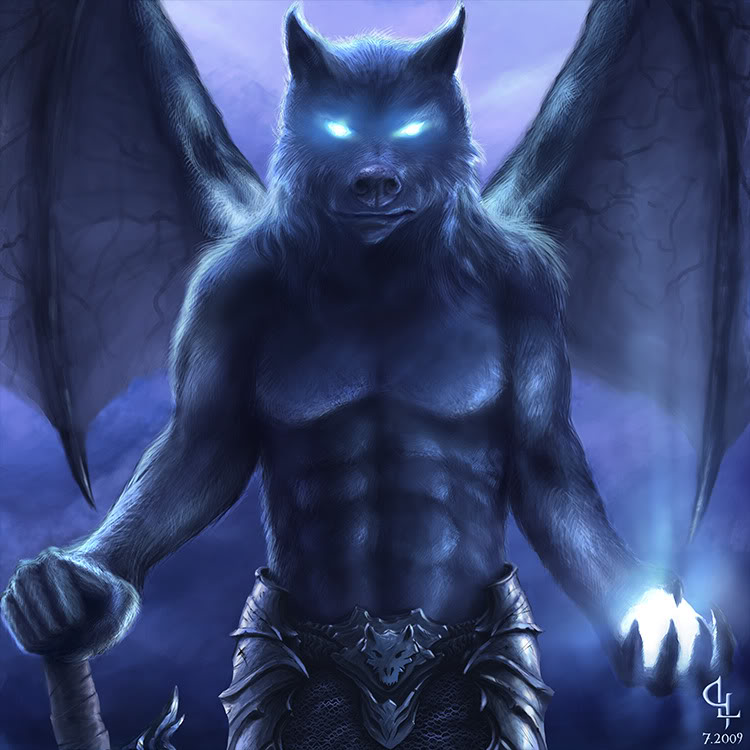
Vampires :
European – The classical bloodsucking un-dead creature that we all know and love. At some point of it’s existence it was known for it shape-shifting ability, particularly that of a bat.
They were also known to take the forms of wolves, and even turn into mist or clouds of dust. They could change their size, and control animals like owls, wolves, rats, foxes, bats, and moths.

Aswang – A fearsome vampire creature from the Philippines, the Aswang was described as a flying upper torso of a woman with bloodshot eyes. They are said to take the form of human women during the day, and have jobs relating to meats (ie. butcher).
At night, they can assume their monstrous form or that of pigs, dogs, cats, and birds, and go out to feast on human remains. Other simular creatures are the manananggals, amalanhig, the Ekek or Wakwak, and sigbin.

Others :
- Beserkers – Ancient norse warriors who donned animal skin and fought with the fury equivalent to that of a beast. While they are not known to physical change shape, many report that they have the mentality of an animal.
- Skinwalkers – Evil shamans from Navajo lore, that can assume the shape of any animal by donning its skin.
- Reptilians – According to modern accounts, some people believe that there is an alien race of intelligent bipedal reptilian creatures take on the human form. There are many conspiracies on whether or not some of these beings hold power within our civilization.
Weebky / ABC Flash Point News 2020.
Jews living in F-UK-US states afraid of being Investigated & Unmasked
According to a report by the Community Security Trust, the number of Jewish incidents in Great Britain rose in the first half of this year.
In the other F-UK-US countries like France and the US(A) the sentimental differences are also on the rise. Nearly half of the 400 million French Jewish population are migrating towards other destinies, like to the “settlements” of the Promised Land itself.

In the USA, new laws provide to punish freedom of speech for citizens who dare to talk about the Zionist society in a way that does not serve the “common” good. A one million dollar penalty and extreme jail time is the answer to modern democracy?
The Community Security Trust, which protects the Jewish community in the UK, has said that the rise of cultural incidents dominated the news in the Labour Party.
Generally, the Labor Party in the United Kingdomhas been supported by a lot of the Jewish community. Former Prime Minister Gordon Brown was a friend of the Jewish people. And before that the PM, Tony Blair, was a good friend of the Jewish community.

It is just since Jeremy Corbyn has stepped forward. He had a very strong reputation of being extremely anti-Israel; his attitude towards Israel was extreme, if I may say so. As a result, this attracted a lot of people who were never Labour Party supporters.
They were communists, they were Marxists; they were the far-left Socialist Party who joined the Labor Party because Jeremy Corbyn was head of it.
And these are the new Labor Party members felt comfortable by noting Jewish things, like for example: the Jews control the media; the Jews control the banks. David Cameron and Theresa May were Jewish leaders in Britain for many years, and so on.

The names of the $500 trillion Rothschild’s as the owners of all central banks in the world is mentioned many times. The Jewish people are the ones who have influence money flows or governments; they are the ones who start the wars.

And this is what its called classic antisemitism, for hundreds and hundreds of years. One of the main reasons today, we believe, is the internet.
The internet, and the emergence and the creativity of this World Wide Web, has done amazing things for many different people: knowledge and information is right at your fingertips, right in front of your eyes.

But it has also got a disadvantage because some of the people in the world are now able to link up and unite with each other much greater than they were beforehand.

So, for example, in USA there has always been a very small, but prominent American Nazi Party; there have been specifically Neo-Nazis across places in Latin America or Europe: in Germany, in France, in Poland, in Hungary, among other places around the world.
But the good thing about this is that the home secretary, who Prime Minister Boris Johnson appointed, is somebody known as a good friend of the Jewish community and a good friend of Israel, her name is Priti Patel; she has a lot of sympathy with the situation.

The money that runs the Community Security Trust (CST) came from David Cameron (married to a Rothschild) when he became British prime minister.
Theresa May took over, I think it is 13.5 million pounds per year that the government gives to the Jewish community through the CST, so that each synagogue on a Saturday will have one guard outside.
So that applies to every Jewish institution, schools, and other Jewish buildings, they have one guard outside once a week, sometimes twice a week. To the best of my knowledge, no other ethnic minority in Britain has this type of security.
ABC Flash Point Zionist News 2019.
Global Banks made $3 billion in profits from Green Loans in 2023

The world’s largest banks made $3 billion in profits from bond underwriting and loan provisions in the environmentally friendly category in 2023.
This amount could be compared with the $2.7 billion that banks made from bonds and loans provided to the oil industry. Some would hail this as an achievement for transition-focused industries. But is it?

One reason for the increase in transition financing was stricter EU regulation. With that regulation, the European Union essentially obligated banks to give more loans and underwrite more bonds for companies in, for example, the wind and solar energy sectors.
In other words, it was not fully by these banks’ own choice that they provided more loans and underwrote more bonds for the industries classified as environmentally responsible. It was by a Brussels mandate.
However, several banks had pledged to shrink their lending exposure to the oil and gas industry, with French Credit Agricole the latest to declare an end to the financing of new oil and gas projects last December 2023.
.jpg?resize=696%2C360&ssl=1)
Yet the effect of stricter EU regulation should not be underestimated: it puts banks at risk of higher capital requirements and even fines unless they provide more loans to the industries related to the transition and reduce the financing of the oil and gas industry.
In this context, it is hardly a surprise that European banks led the increase in green financing—even though the biggest issuer of such financing was Japan’s MUFG. In contrast, U.S. banks were less inclined to fund projects labeled environmentally friendly.
The reason was mostly political: there has been a backlash against what some states call discriminatory investment policies by some of the world’s largest banks as they try to shun the oil and gas industry in favor of wind, solar, hydrogen, and dangerous proven EV’s.

This backlash continues and has already forced some financial industry majors to make declarations that they are not, in fact, against oil and gas.
It all began back in 2022 when Texas accused BlackRock and nine European investment mammoths of boycotting the oil and gas industry and threatened to divest its own money from them in response.
The asset manager responded by assuring Texas authorities that it does not boycott oil and gas and is very much in favor of energy investments in the sector.


In a letter to the Texas comptroller, BlackRock reported that it has investments of some $310 billion in the oil and gas industry, of which $115 billion is in Texas.
In the USA, then, so-called sustainable financing goes slower in the direction the government wants it to go.
But it does go there: Bank of America last year had $32.3 billion in financing exposure to low-carbon energy supply, while its exposure to oil and gas stood at $32 billion.

Wells Fargo, on the other hand, was more than twice as invested in oil and gas than it was in wind, solar, EV’s, and hydrogen. Its low-carbon exposure last year was $14.3 billion versus $35.7 billion for oil and gas.
Government policies and regulations, then, are vital for the switch from financing oil and gas, considered an industry with no long-term future, to financing the energy industries that are believed to have that long-term future. But there is another critical factor, too.
Last year, wind and solar companies suffered a massive stock rout. The S&P Clean Energy Index dropped by over 20% in two months. To support rapid growth, you need to keep leveraging the balance sheet or issue equity.

The reason behind the rout was the series of interest rate hikes that both the European Central Bank and the Fed implemented over the past two years in a bid to combat inflation.
And the reason that wind and solar were more susceptible to the effects of inflation-fighting monetary policy was that they are a lot more dependent on loan financing than oil and gas producers.
In a zero-rate environment, this formula worked. In a higher-rate environment, it falls apart, David Souccar, portfolio manager at Vontobel Asset Management, explained to the Financial Times.

In other words, low-carbon energy companies are extra vulnerable to higher rate hikes because they lack the resources to weather the effects of such policies.
The reason they are so vulnerable is that they simply do not make as much money as the oil and gas industry.
The market they operate on is quite different, with set long-term prices for the electricity they produce and equally set subsidies.
.png?w=696&ssl=1)

Banks, then, made more money from lending to wind and solar—and other industries classified as green—because these industries rely more on loan finance to function and grow.
And they also made more money from lending to these industries because many of them were essentially forced to lend more to these industries.
Oil Price.com / ABC Flash Point News 2024.
Nederland overgeleverd aan het World Economic Forum

In een plan uit 2016 wordt Nederland voorgesteld als een grote, groene wereldstad met 40 miljoen inwoners. Critici zeggen dat de stikstofplannen van het kabinet bedoeld zijn om boeren van hun grond te jagen zodat er huizen gebouwd kunnen worden.
De omstreden plannen hebben geleid tot grootschalige protesten. Demonstranten werden keihard aangepakt door de politie en er werden zelfs schoten gelost, bericht de Oostenrijkse tv-zender AUF1.

Daarnaast wordt het eten van insecten steeds vaker gepusht. Het moge duidelijk zijn dat in Nederland de agenda van het World Economic Forum wordt uitgewerkt.
AUF1-nieuwslezer Bernhard Riegler wijst erop dat minister van Financiën Kaag zich sterk heeft gemaakt voor een digitale euro en ook wil ze alle betalingen vanaf 100 euro monitoren.
Hij voegt toe dat Nederland de WEF-propaganda zelf moet betalen. FVD-Kamerlid Gideon van Meijeren stelde Kamervragen waaruit is gebleken dat het WEF een subsidie heeft gekregen voor de oprichting en ontwikkeling van het zogeheten Global Coordinating Secretariat (GCS) in Nederland.
:quality(50)/cdn-kiosk-api.telegraaf.nl/6a3f04e8-a81a-11eb-92ba-02c309bc01c1.jpg?w=696&ssl=1)
Kamerlid Pepijn van Houwelingen haalde een aantal stukken boven water die laten zien dat de sekte van Klaus Schwab nauw samenwerkt met de Nederlandse overheid, aldus Riegler.
Dankzij onderzoeksjournalist Marc van der Vegt zijn documenten gepubliceerd over projecten van het WEF in ons land. Het gaat om meer dan 1000 paginameer ’s.
We zien ministers Kaag en Hoekstra in de vrijgegeven stukken terug in diverse clubjes van het WEF. Ook koningin Maxima duikt op.

Politici van de regeringspartijen stonden twee jaar lang te liegen in de Kamer over betrokkenheid bij het WEF, citeert Riegler data-analist Cees van den Bos.
De Britse Daily Telegraph meldt dat de Nederlandse regering voornemens is om tot 3000 boerenbedrijven in de buurt van natuurgebieden te sluiten en op te kopen om te voldoen aan Europese regelgeving.
Het bericht leidt op social media tot een storm van protest, maar in Nederland blijft het vooralsnog stil. Ze vernietigen de op één na grootste exporteur van landbouwproducten ter wereld vanwege een agenda, schrijft de Schotse politiek commentator James Melville.

De Canadese journalist Keean Bexte voegt toe: De Great Reset is in Nederland in volle gang nu de overheid op het punt staat duizenden boerderijen te liquideren als straf voor het protest tegen het hongerbeleid.
Dit klinkt gestoord. De EU gedraagt zich als een dictatuur. Eén van de vele redenen waarom landen uiteindelijk net als Groot-Brittannië de Europese Unie zullen verlaten, twittert de Britse analist Nile Gardine.

Dit is een oorlogsverklaring aan boeren, stelt Paul Joseph Watson. Het Australische congreslid Craig Kelly klaagt dat er maar geen einde komt aan de klimaatgekte.
Volgend jaar kunnen ‘vervuilende’ veehouders kiezen voor een eenmalige stikstofregeling om te stoppen. In het najaar moet blijken of de doelen daarmee worden gehaald.
Zo niet, dan zal met pijn in het hart overgegaan moeten worden tot dwang, en gedwongen uitkoop van piekbelasters, zei stikstofminister Christianne van der Wal (VVD).
Nine for News / ABC Flash-Point News 2022.
Space Telescope’s stunning mosaic of Orion Nebula uncovers rogue Planets
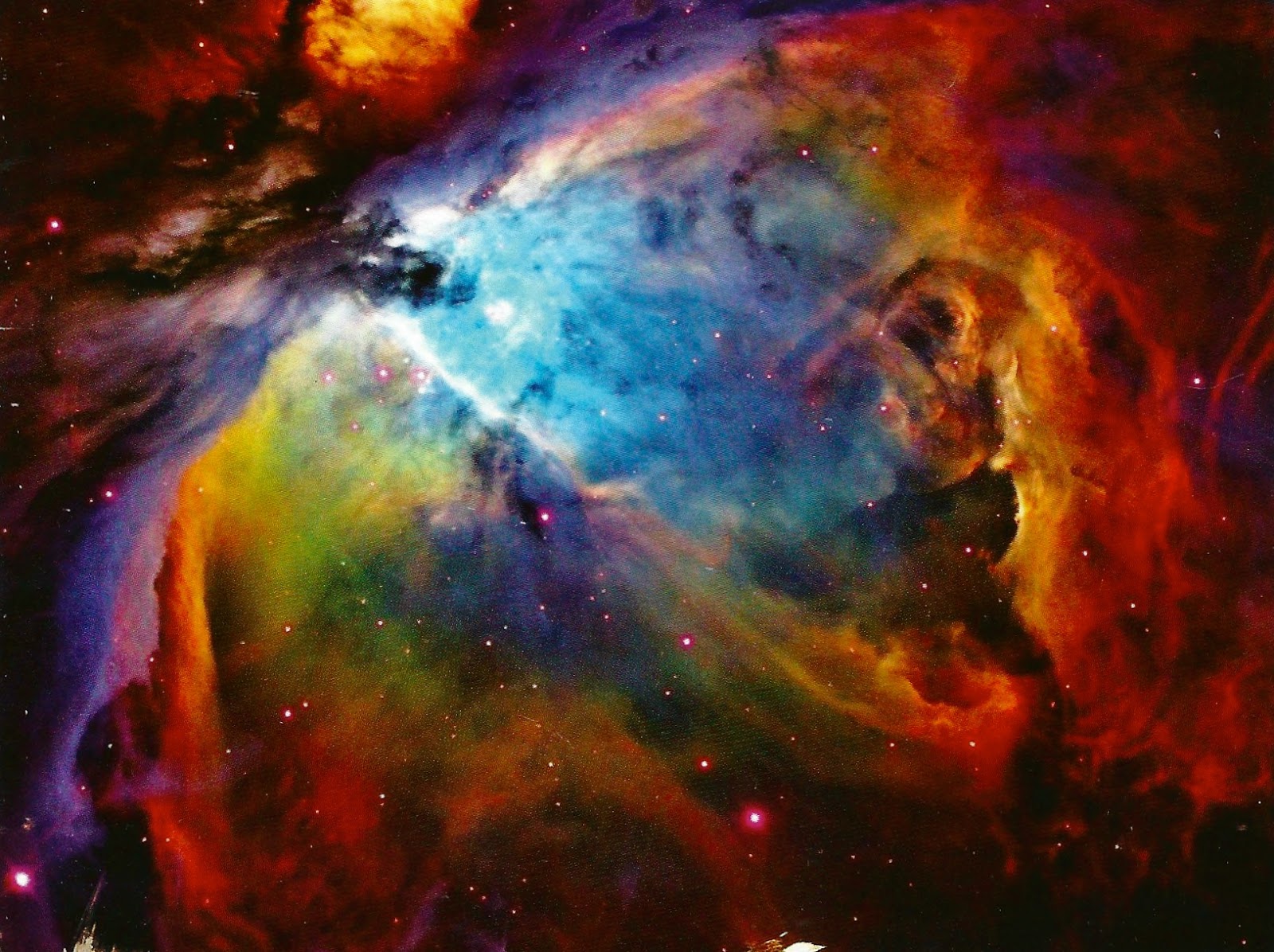
The James Webb Space Telescope has captured two stunning wide-field mosaics of the grandiose Orion Nebula, a large region of star formation that’s one of the closest stellar nurseries to the solar system. It sits just 1,344 light-years away.
The huge mosaics, made of over 3,000 individual images, have also been added to the European Space Agency’s ESASky app, which is an interactive all-sky map.

This sky map with a user-friendly interface enables members of the public to view amazing images of the Universe taken by the likes of the James Webb Space Telescope (JWST) and the Hubble Space Telescope.
The Orion Nebula is rife with budding stars located inside its billowing clouds of molecular gas. Some 2,800 young stars are known to exist inside the nebula, with many more stellar embryos cocooned within the area’s dense veil of gas and dust.
And the JWST’s Near Infrared Camera, known as NIRCam for short, is able to peer through much of this gas and dust — doing so has revealed proto-stellar disks, outflows from burgeoning stars, and even free-floating planets.

On a winter’s night, the nebula is visible to the unaided eye as a fuzzy object just below the three stars that make up the Belt of the Orion constellation.
The nebula is illuminated by the Trapezium Cluster, which is a grouping of young stars so-named after the pattern of their four most prominent members.
Each star in this quartet is massive, with between 15 and 30 times the mass of our Sun. Their short lives, spanning just a few millions of years rather than billions, will end in supernova explosions.

Up to a thousand fainter stars lurk in the Trapezium Cluster as well, some with evaporating circum-stellar disks — these are disks of gas and dust that sprouted planets.
Now, residual gas from such planet formation is being blown away by the newly awoken stars’ stellar winds.
Not all of the planets born in the Trapezium have parent stars, however; the JWST has detected about 40 pairs of free-floating gas-giant planets, or Jupiter Mass Binary Objects (JuMBO’s).

Free-floating planets have been found in the Orion Nebula before, but the JuMBO’s are surprising because they seem to come as couples.
The question astronomers are still unable to answer is, did the JuMBO’s (and other free-floating planets) form directly out of the gas of the Orion Nebula as failed stars, or were they snatched from a planetary system, perhaps by the gravity of a close-passing star that wrenched them from their orbits?
The new mosaics are split between longer and shorter wavelengths.

NIRCam’s short wavelength channel, which covers an infrared waveband between 0.6 and 2.3 microns, is closest to the visible red end of the spectrum and achieves the greatest angular resolution the JWST can accomplish.
The short-wavelength mosaic shows all the fine details of the nebula’s star-forming activity.
Meanwhile, NIRCam’s longer wavelength channel, covering 2.4 to 5.0 microns, has recorded the network of dust and organic compound filaments, known as polycyclic aromatic hydrocarbons, that abound in the Orion Nebula.

PAH’s are carbon-based molecules that make up a good proportion of dust found everywhere in the universe, and observations such as those of the Orion Nebula are teaching astronomers how these ubiquitous molecules form.
Given how interstellar dust is recycled into the next generation of stars, PAH abundance has a role to play that the infrared vision of the JWST can reveal.

In particular, the JWST’s greater spectral resolution can reveal PAH’s on smaller spatial scales than ever before, helping to determine how they accumulate depending upon their molecular size, shape and electric charge.
The Orion Nebula is one of those rare objects that is accessible for inspection by everyone, from stargazers with the most basic observing kit to the most advanced space telescopes.
As Orion rises this winter, what can you see in the greatest nebula in the sky?
Space.com / ABC Flash Point News 2023.
People with Blood Type A less protected against COVID-19
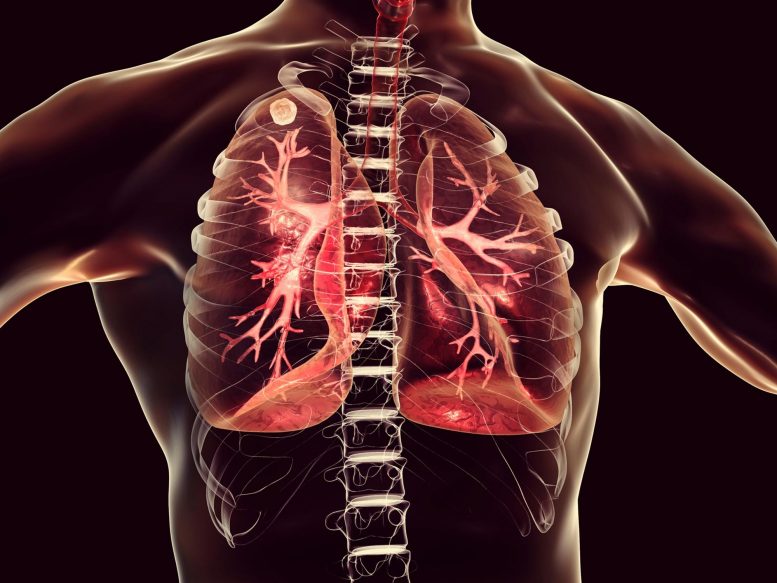
People with blood type O have less of a chance of getting COVID-19, according to a number of studies published all over the world during the pandemic.
If a person with blood type A transmits the virus to a person with type O blood, the type O person will have antibodies that can fight the virus.
A person in the blood type O group will have antibodies against virus transmission from someone in the blood type A group, which can fight the virus. However, a person in the blood type A group won’t have those same antibodies.
After the pandemic broke out, one of the questions that scientists and doctors became puzzled by was why are some people more susceptible to contracting and even succumbing to the disease caused by Corona-virus than others?
Several studies have researched the link that genetics plays in susceptibility to contracting the virus, and some more specifically have linked the role played by blood type.
The studies all came to a similar conclusion: People with blood type O have less of a chance of getting COVID-19. So, by design the virus was made to evolve this way. Maybe the next string will also target people with blood group O.

Two studies came out of Wuhan, the epicenter of the COVID-19 outbreak, one that researched the link between blood type and COVID-19 susceptibility, and the other that investigated the link between blood type and the risk of contracting pneumonia caused by SARS‐CoV‐2.
Another study came out of Italy and Spain, which looked into the link between genetics and SARS-CoV-2 respiratory failure.
Their preliminary data suggests that O blood type appears to be protective against the virus, and people with that type are between 9-18% less likely than other individuals to have tested positive for the COVID-19 virus.

BLOOD TYPE is determined by specific sugar molecules that are added to proteins or lipids on our blood cells and other cell types, according to Chemical Science and Engineering News.
Those that are in the A blood type group carry A-sugar-antigens; the same goes for people with blood type B having B-antigens. But those with O blood type have neither.
This means that the immune systems of people with type A blood develop antibodies for B antigens, people with type B blood have antibodies for A antigens, and people with type O blood have antibodies for both.

Blood type influences blood clotting, and a growing body of evidence suggests that COVID-19 pathology often involves overactive blood clotting. People with type O blood have lower levels of proteins that promote blood clotting.
SARS-CoV-2 can replicate in cells that express blood type antigens, Jacques Le Pendu, a glycobiologist at the University of Nantes told Chemical and Engineering News.
This means that when an infected person coughs or sneezes, there’s a possibility that they release viral particles coated with their blood type antigens.
Jerusalem Post / ABC Flash Point News 2020.
Global Governments cannot stop Technology from destroying Employment

In this episode of Keiser Report’s annual Summer Solutions series, Max and Stacy talk about the role technology plays in causing the deflation that may lead to an abundant future, if the gains are shared.
Transitioning from an inflationary world to a deflationary world, people should be scared. There’s going to be a disruption and that disruption is coming no matter what.

There’s nothing fundamental that governments can do to stop the rate of technology progress. And if you just ask about what technology does – it’s supposed to remove labor.
All companies use technology to reduce labor and they use it to provide abundance, the tech expert says.
What the industrialists don’t seem to understand is that – if we can’t spend, then they will have nobody to buy their wares, and they won’t be able to accumulate jack – regardless of who they bribe or corrupt.

And what’s happening is that you have technology moving at an exponential pace, driving prices down, and governments all around the world caught in an inflationary trap that they created themselves out of the monetary policy, fighting against that force.
Isn’t it good when the value of your money goes up and prices go down, like for you personally? That people then could work less time and the abundance of technology would be broadly distributed instead of being concentrated, like it is today.
RT. com / ABC Flash Point News 2021.
AstraZeneca shot linked to rare IMMUNE DISORDER

The European Medicines Agency (EMA) is investigating reports of AstraZeneca’s Covid-19 vaccine causing Guillain-Barre syndrome, as the pharmaceutical company remains embroiled in controversy over the jab’s link to blood clotting.
In a meeting this week, the European Medicines Agency’s Pharmacovigilance Risk Assessment Committee (PRAC) revealed that it was “assessing reports” of the rare immune system disorder being found in people following vaccination.
/cloudfront-us-east-2.images.arcpublishing.com/reuters/PNDKRBGUGBP4VLA2X4NKK6WAIQ.jpg?resize=696%2C476&ssl=1)

According to the British National Health Service (NHS), Guillain-Barre syndrome is a very rare and serious condition that affects the nerves, and can create feelings of numbness, weakness, and pain in those who have it.
Though the NHS advises that Guillain-Barre syndrome is a treatable condition and that most people will eventually make a full recovery, it can also be life-threatening and leave those who have had it with long-term problems.

Following hundreds of cases of blood clotting – and dozens of deaths – AstraZeneca’s Covid-19 vaccine has already been restricted in many countries to older people only.
In the UK, those under the age of 40 are set to be offered an alternative vaccine provided this causes no “delays” in the vaccination program, however the European Medicines Agency maintains that the vaccine’s benefits outweigh the risk for much of the population.
RT. com / ABC Flash Point News 2021.
Global Migrant Slaves sent $529 billion Home to their Impoverished Families

The volume of money sent by foreign workers to their home countries reached a record-breaking $529 billion last year, and is set to become the main source of external financing for those states in 2019.
The amount represents an upsurge of 9.6% against the previous record of $483 billion fixed in 2017.

Money transfers to poor and developing countries accounts for 77% of global remittances that reportedly reached $689 billion in 2018, up from $633 billion in 2017, according to the latest migration and development brief released by the World Bank earlier this week.
India retained the position of the world’s top recipient of the transfers with its nationals sending home an estimated $79 billion last year. The country saw a significant boost in remittances over the last three years, from $62.7 billion in 2016 to $65.3 billion 2017.

India was followed by China ($67 billion), Mexico ($36 billion), the Philippines ($34 billion), and Egypt ($29 billion).
This year, cash transactions by migrants are expected to reach $550 billion, turning into a major channel of external inflows for low-income and middle-income countries.
The total amount of money transfers to South Asia grew 12% to $131 billion in 2018, marking a 12% year-on-year growth.

Transactions to the East Asia and Pacific region increased by around 7% to $143 billion, while Europe and Central Asia saw a significant boost of an estimated 11% to $59 billion.
According to the global lender, Kyrgyzstan, Tajikistan, and Uzbekistan benefited from the sustained rebound of economic activity in Russia.”

Remittance flows into Latin America and the Caribbean rose by 10% to $88 billion, while cash transactions to the Middle East and North Africa grew 9% to $62 billion.
Remittances to South Asia increased by 12% to $131 billion, while Sub-Saharan Africa saw almost 10% growth to $46 billion.
Excluding China, remittances to low and middle-income countries ($462 billion) were significantly larger than foreign direct investment flows in 2018 ($344 billion), the World Bank concludes.
RT. com / ABC Flash Point News 2019.
Europe sounds Alarm on Water Crisis ahead of another Extreme Summer

European lawmakers issued a stark warning about the region’s growing water crisis ahead of another extreme summer, saying there is a pressing need to tackle issues such as scarcity, food security and pollution.
The Water Crisis in Europe, forced parliament lawmakers to call for increased action to preserve and improve water resources, already affected by several years of depleting groundwater levels as the climate crisis continues to intensify.
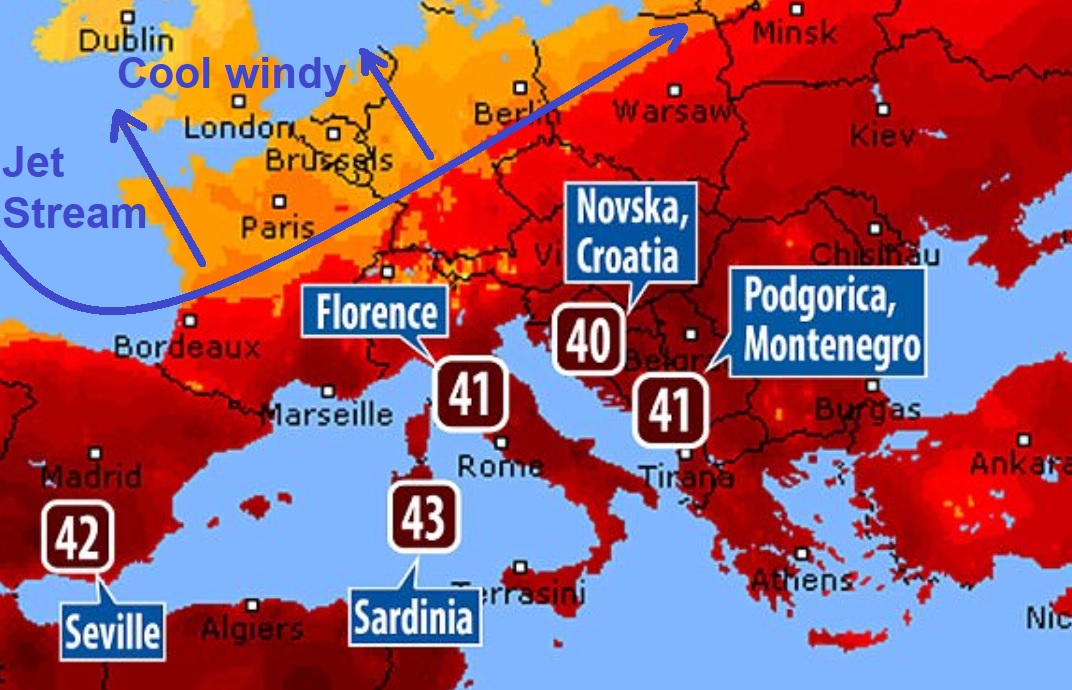
Record-breaking temperatures through spring and a historic winter heatwave have taken a visible toll on the region’s rivers and ski slopes, while protests have broken out over water shortages in both France and Spain.

Copernicus satellite imagery acts as a sad confirmation that many parts of the union face intense difficulty, EU Commissioner for Energy Kadri Simson said during her opening remarks.
Some regions are suffering from water scarcity due to the droughts, while others are suffering from floods. Most are suffering from the consequences of water pollution but none of this is new.

The European Union’s environment agency, in a report published Wednesday, described the overall outlook as pessimistic.
It added that while the 27 EU states and European Economic Area members had national adaption policies in place, all of them could do much more to limit the negative effects of extreme weather this summer.
Some of the suggested measures included cities increasing the number of trees and water spaces — which can lower temperatures and reduce the risk of flooding — and farmers adapting crop varieties and changing sowing dates.
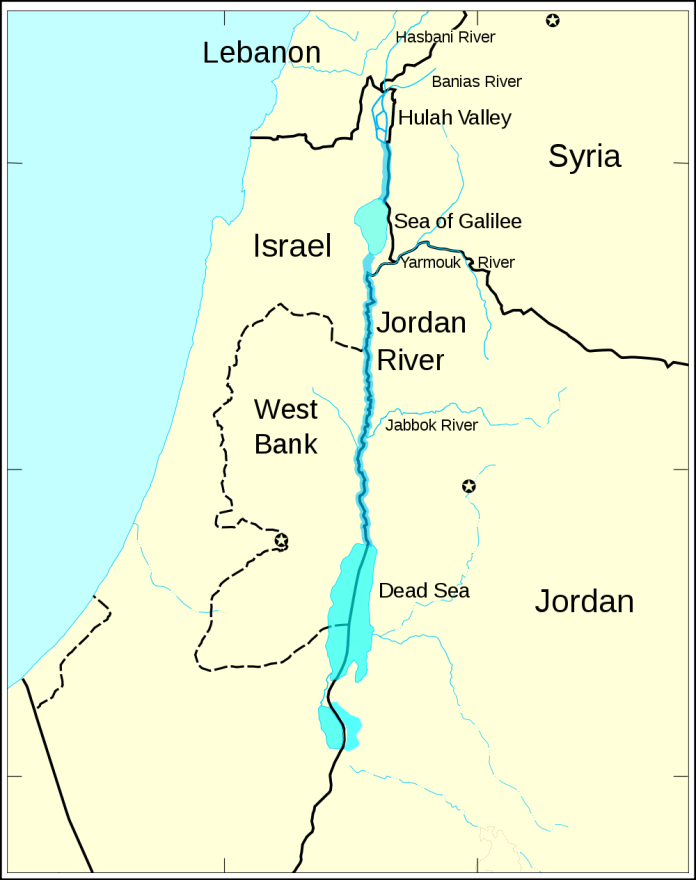

For now, Europe is being affected by drought, rivers are drying up, and agriculture is under pressure, nature is suffering. This is a war. A war for water, just like in Israel that confiscated the Golan Heights and West Bank for total control of the Jordan River and Sea of Galilee.
We must do everything in our power to try and put a stop to the fallout of climate change and indeed to counter it. But it is key, too, for us to understand how to manage the global drinking water.
Satellite data analyzed by researchers from Austria’s University of Graz at the start of the year found that drought was impacting Europe on a much larger scale than researchers had previously expected.

The study was published after EU researchers found that Europe experienced its hottest summer ever last year, with the intense drought thought to be the worst the region had seen in at least 500 years.
Summer after summer, Europe is suffering from a scarcity of water — and it just seems to get worse. This summer may be the worst of all. Spanish water resources were currently at less than 50% of their capacity.

The combination of a lack of rain and extreme temperatures is endangering our food security and the economic survival of millions of farmers.
Farming was one of the sectors likely to be hardest hit by diminishing water resources, making it more difficult to produce food. Our food security depends on the way we manage our water resources!
CNBC / ABC Flash Point Agricultural Weather News 2023.
 Crickey Amigu di Natura