
Necropolis # 1 : Christian Catacombs (Rome, Italy)
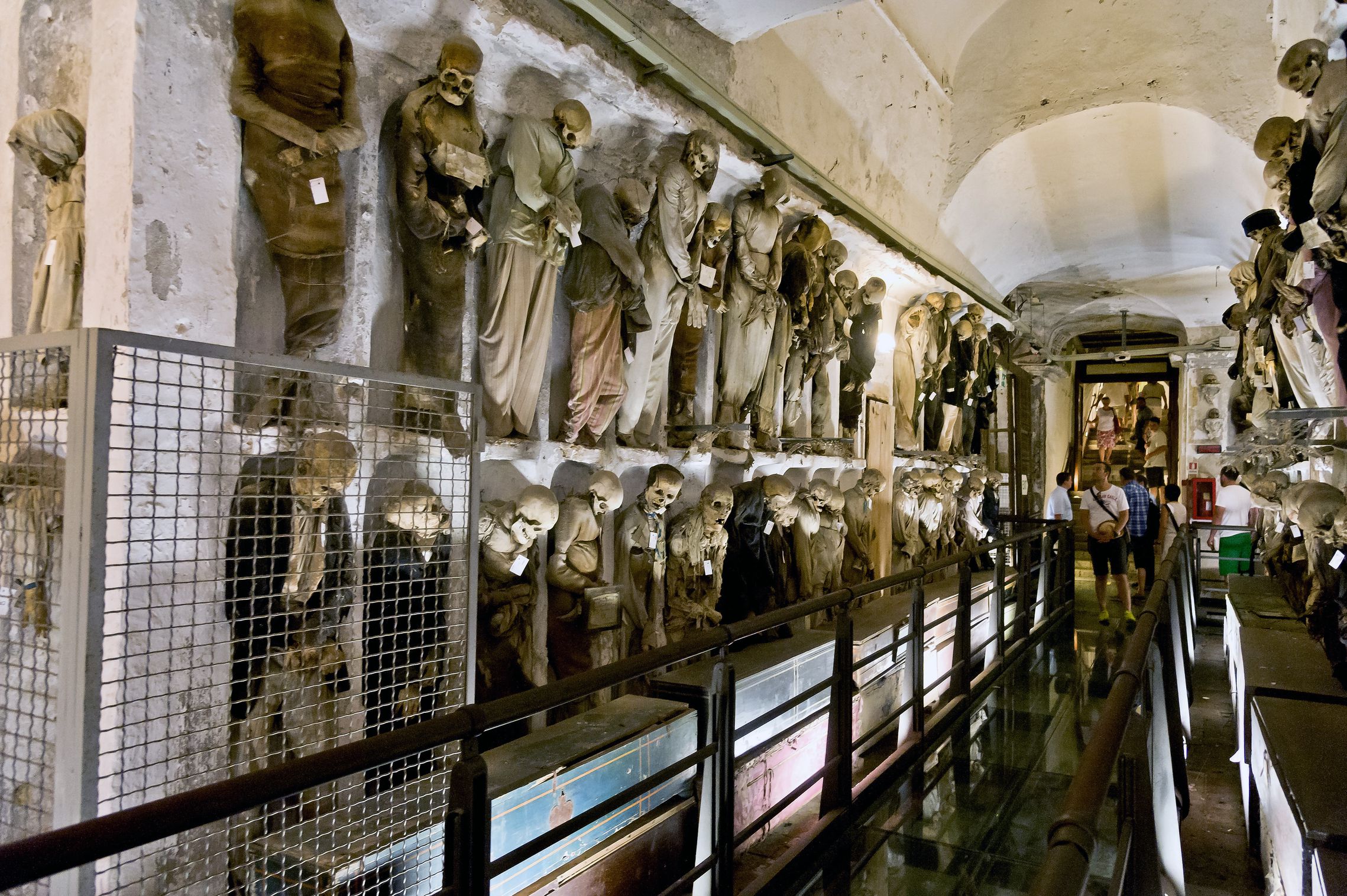
Necropolis, (from Greek nekropolis, “city of the dead”), in archaeology, an extensive and elaborate burial place of an ancient city.
In the Mediterranean world, the necropolis was customarily outside the city proper and often consisted of a number of cemeteries used at different times over a period of several centuries.


The locations of those cemeteries were varied. In Egypt many were situated across the Nile River opposite the cities, as was western Thebes, but in Greece and Rome a necropolis often lined the roads leading out of town.
One of the most famous necropolises was discovered in the 1940’s under the central nave of St. Peter’s Basilica in Rome.

From the 1st century, Christians were often buried in the manner of Jews living in Roman territories—in graves shewn from rock reminiscent of the rock graves of Palestine.
These cemeteries were outside Rome’s walls because it was against Roman law to bury the dead within the walls. This is how St. Peter came to be buried in common ground, the great public necropolis on Vatican Hill, and St. Paul in a necropolis along the Via Ostiense.


In the 2nd century, Roman Christians continued this technique and inherited the common underground burial spaces.
The belief that their physical bodies would one day be resurrected, and so could not be cremated in accordance with Roman practice, caused a space problem, since above-ground cemeteries were scarce and expensive.
The solution was to excavate a vast network of galleries, rooms, and interconnecting stairways, with thousands of narrow graves carved into the walls, covering hundreds of miles of corridors.

The graves of martyrs were focal points around which Christians wanted to be buried, but it is fiction that the catacombs were secret places for Christians to meet and live during times of persecution.
The lack of light and air and, indeed, the thousands of decaying bodies would have made this impossible. The catacombs continued in use until 410, when the Goths laid siege to Rome.
In addition, Christianity became the state religion under Constantine I in 380, making more conventional means of burial possible.

Over the centuries, the precious relics of the martyrs were transferred from the catacombs to Rome’s churches, so that eventually even the sacred memory of the catacombs was forgotten.
In 1578 a catacomb was discovered by accident, and since then much research and archeological work has been done to recover this invaluable piece of history. (Robin Elam Musumeci).
Britannica / ABC Flash Point News 2025.
 Crickey Amigu di Natura
Paris like other European cities all have these underground bone collections as graveyards tend to get overloaded after time and new arrivals force governments to take these kind of measures.
LikeLiked by 1 person
All major European cities have catacombs where bones of their ancestors are getting stored.
LikeLiked by 1 person