
Red Cross records revealed about 270.000 people died in Nazi Camps
After officials uncovered inscriptions inside shoes belonging to children sent to Auschwitz in German-occupied Poland during World War II, the history of certain events are changing over time.
According to The Times of Israel, these discoveries were made by museum employees during the course of their efforts to preserve a substantial amount of shoes on display at the Auschwitz-Birkenau State Museum in Poland.

In addition to the new discovery, many other historical artifacts have also been found in the process, including letters, newspaper fragments, and banknotes, many of which were used as lining or padding inside the shoes.
Museum officials hope that through additional and more detailed research, they will find out more information about Jews, Roma’s and other minority groups who were locked up at the Polish concentration camp.
The museum staff says that one pair of shoes belonged to Amos Steinberg, who was born in 1938 in Prague and was one of many European Jews jailed between 1941 and 1945 by the Nazi’s.

Steinberg was imprisoned in the Theresienstadt ghetto along with his parents in 1942 before he was taken to Auschwitz.
It was most likely his mother who made sure that her child’s shoe was signed,” Hanna Kubik of the museum’s collections department said in a statement.
The father was deported in another transport. We know that on October 10, 1944, he was transferred from Auschwitz to the Dachau camp. He was liberated in the Kaufering sub-camp.

These people were probably deported to Auschwitz in the spring or summer of 1944 during the extermination of Hungarian Jews. About 230,000 children are estimated to have been imprisoned in Auschwitz
Why would anyone have been: “transferred from Auschwitz” to anywhere? If Auschwitz was to be a death camp, what would be the point? In the early 90’s, it was still being said that more than 4 million people were killed at Auschwitz. That number has now been restated at 1.1 million.
The total number, however, still stands at 6 million. Where did this 3 million who were now not killed at Auschwitz meet their end. Russian documented history revealed that millions of Jews were murdered by Nazi troops in the Soviet Union.

Why did Churchill, De Gaulle and Eisenhower never mention the ‘holocaust’ in over 7,000 pages of their war memoirs… nor even once? And why did the International Red Cross, which visited every labor camp, not mention (even once) the slaughter of people?
Jewish Docs treating German guards, or roof top gas vents that were not there before the war, but appeared after, as aerial photos showed, seemingly put there by the Soviets.
The International Red Cross records that showed that approx 270.000 prisoners died of typhus or malnutrition. That thanks to the brave British pilots who bombed the unarmed food convoys. Is this an anti-Semitic rant. nah, I was born into the invented cult.

Make the lie big, keep it simple, keep repeating it, and eventually, they’ll believe it. I believe humanity by and large has graduated from such simple naivety, or better said brainwashed by Zionist propaganda machines.
Hollywood is run by Jews that came out of Europe. Producers, actors, shows, comedies, name it, its all designed by people that are connected with Zionists living in Israel. The Zionist USA now controls NATO @ Russia’s doorstep.
During WW II, millions of Jewish refugees took on different new names in order to hide their previous identity before traveling all over the world, especially to the USA, where they even got US government subsidies to pay for their lifestyle.

These people are still registered as went missing during the holocaust, causing the overrated death toll in the misguided western history books, used as an excuse to invade Russia and establish the so-called holy land.
Earlier the Zionist Rothschild family, who control most of the world central banks, also supported Napoleon’s failed attempt to capture and occupy Moscow, like Hitler’s Nazi Germany tried to do in the next century.
Now NATO its NATO’s turn to target Russia for another attempt to take away and confiscate the countries huge riches.
But under Putin that chance has totally evaporated. Russian weaponry is far more sophisticated then the ones that the ignorant Western companies provide.

Once Britain’s Prime Minister, then the Foreign Secretary from late 1916, Balfour had pledged Palestinian homeland to other people. They used the so-called WW II holocaust event as a surreal motive to get what they wanted.
That promise was made on November 2, 1917, on behalf of the British government in the form of a letter sent to the leader of the Jewish community in Britain, Walter Rothschild.
At the time, Britain was not even in control of Palestine, which was still part of the Ottoman Empire. But the foundation for the state of Israel was laid, together with all the humanitarian disasters later connected to it, from that moment on.

Back to Europe during WW II, Ford Motors delivered engines for Nazi trucks, while AT&T provided communications for the battle tanks. Also IBM office business programs helped Hitler doing the strict wartime book keeping.
The famous General Rommel of the African Desert Corps, gave his men stimulants like Coca-Cola beverages for his troops to refresh in de scorching desert sun. Hugo Boss designed the SS uniforms for the German troops to looks spic and span, during WW II.
Finally the British-Dutch oil giant, Shell provided the combustion for the Nazi’s to invade the Netherlands. After the Dutch capitulated and the royals fled to Britain, the Luftwaffe still bombed Rotterdam to rubble.
Rewritten after being Removed from Database / ABC Flash Point WW II News 2020.
Pedofielen op Hoge Posities en Aanslagen op de eigen Bevolking

Westerse democratieën vertonen kenmerken van een kakistocratie, een bestuursvorm waarbij het besturen wordt gedaan door de slechtste, minst geschikte of gewetenloze burgers.
Dat stelt wetenschapper Tjeerd Andringa van de Rijksuniversiteit Groningen.
Dit blijkt onder meer uit het feit dat inlichtingendiensten nauwe banden onderhouden met terroristische groepen en pedofielen netwerken.
Andringa merkt op dat presidenten eigenlijk een soort woordvoerders zijn van de werkelijke machthebbers.

Aanslagen op de eigen bevolking ;
In de VS maak je bijvoorbeeld geen kans op het presidentschap zonder brede steun van de diepe staat, de permanente machtsbasis waaraan de Council on Foreign Relations (CFR) een groot deel van de bemensing levert, klinkt het.
Oorlogen op leugens baseren, zoals die tegen Irak, is volgens hem typisch kakistocratie. En ook dat een samenleving zoiets accepteert.
Andringa stelt dat inlichtingendiensten aanslagen faciliteren die worden toegeschreven aan moslims.
Zeker is dat geheime organisaties aanslagen hebben gepleegd op de eigen bevolking bevolking, zegt de universitair hoofddocent. Operatie Gladio is daarvan een duidelijk voorbeeld.

Angst niveau vergroten :
Dat was een geheim netwerk in Europa […] dat gesteund werd door de CIA en de NAVO, en dat in Italië aanslagen heeft gepleegd op de burgerbevolking, vervolgt hij.
Op deze manier probeerde men het angstniveau van de bevolking te vergroten. “Want wat doen mensen als ze bang worden voor aanslagen? Dan richten ze zich voor hun bescherming tot de (r)overheid.

Zo gelooft hij niet in het officiële verhaal rond 9/11. Neem alleen al Gebouw 7, dat niet is geraakt door een vliegtuig, en toch in elkaar is gestort, zegt hij.
Twintig minuten voordat Gebouw 7 in elkaar stortte, vertelde een correspondente van de BBC het al op tv, met nota bene het toen nog fier overeind staande gebouw duidelijk zichtbaar op de achtergrond, voegt hij toe.

Seksfeesten met kinderen :
Volgens de wetenschapper oefenen inlichtingendiensten verder macht uit door mensen op hoge posities te plaatsen die chantabel zijn.
Als je de meest gewetenloze mensen zoekt dan vormen seksfeesten met kinderen een prima selectie mechanisme, aldus Andringa.

Nieuw :
Hij merkt op dat het voor velen nieuw is wat hij schrijft. Dat is omdat ze via de mainstream media niet of nauwelijks met dit soort ideeën in contact komen. Veel mensen willen het ook niet weten.
Mensen die het systeem waar ze deel van uitmaken niet kunnen bekritiseren, kunnen de gedachte niet verdragen dat ze aan een kakistocratie bijdragen, legt hij uit.
Zij houden deze daarmee uiteindelijk in stand, besluit hij. Door het simpelweg niet voor mogelijk te houden dat ze bestuurd worden door de slechtsten.
9 for News 2-19.
Future of Urban Consumption in a Climate Change controlled World
C40 is delighted to publish this pioneering piece of thought leadership, The Future of Urban Consumption in a 1.5°C World. The report demonstrates that mayors have an even bigger role and opportunity to help avert climate emergency than previously thought.
But to grasp that opportunity, city leaders need to be even more entrepreneurial, creating and shaping markets and engaging in sectors that may not previously have been considered within the domain of city government, and working out how to support their citizens and businesses in achieving a radical, and rapid, shift in consumption patterns.

Cities drive the global economy, and urban decisions have an impact well beyond city
boundaries. In this case, the impact we are considering is the greenhouse gas (GHG)
emissions resulting from urban consumption of building materials, food, clothing & textiles,
private transport, electronics & household appliances, as well as private aviation travel.
What is the true scope and scale of urban impacts on the environment? What is the role of mayors and other urban stakeholders in addressing them?
How can we fairly and equitably address consumption-based emissions if many citizens in C40 cities still do not meet their basic needs? Is it possible to avert climate breakdown given that the current rules of the global economy encourage ever-increasing consumption?

The work also shows that there are huge health and cost benefits in doing so. A world with low-impact consumption will be more prosperous and happy than the over-consuming, polluted alternative that we are currently heading for.
C40 recognizes that the full environmental consequences of twenty-first century consumption are only beginning to be understood and that the findings of this report will make uncomfortable reading for many mayors, businesses and citizens.
As a result, C40 cities will need time to develop the partnerships, strategies and actions that can deliver the necessary changes. C40 is committed to supporting that process.

US Cities are leading on tackling climate breakdown by setting ambitious targets and taking impactful action to reduce their local emissions.
This work has mostly focused on transport, buildings, energy and waste, which reduces GHG emissions that are emitted within the city, or production-based emissions. Production based emissions have already peaked in 27 C40 cities.
New information shows that fast-growing urban consumption is a key driver of climate change. When a product or service is bought by an urban consumer in a C40 city, resource
extraction, manufacturing and transportation have already generated emissions along every
link of a global supply chain.

Together these consumption-based emissions add up to a total climate impact that is approximately 60% higher than production-based emissions.
Consumption-based emissions account for the total climate impact accumulated around the world of a good or service, allocated to the place where an end-product is used or consumed. Take a pair of jeans, for example.
Its climate impact includes the GHG emissions that resulted from growing and harvesting the cotton used for the fabric, the CO2e emitted by the factory where it was stitched together, and the emissions from ships, trucks or planes that transported it to the store.

Its impact also includes the emissions from heating, cooling or lighting the store the jeans were bought in and the CO 2e emitted by the end-consumer washing and drying it over its lifetime.
C40’s 94 member cities can therefore influence roughly 10% of global emissions. By contrast, the total production-based emissions of C40 cities in 2017 are estimated to be 2.9 GtCO 2e.
When considering C40 cities’ consumption-based emissions, mayors, businesses and urban residents can influence an approximately 60% larger share of global GHG emissions than previously thought.

Cities and urban consumers have a huge impact on emissions beyond their own borders since 85% of the emissions associated with goods and services consumed in C40 cities are generated outside the city; 60% in their own country and 25% from abroad.
These developments must initiate sweeping decreases in the carbon-intensity of industrial
processes such as the making of steel, cement and petrochemicals.
If cities then develop additional bespoke consumption interventions, for a wider set of diverse goods and service categories that have not been the focus of this report, C40 cities could close their full consumption-based emissions gap by 2050.

The C40 network represents 25% of the global economy, and vast amounts of goods and
services are produced around the world in order to meet consumer demands in C40 cities.
Mayors and city governments are well-positioned to bring together urban residents, businesses, civil society groups and national governments to collaborate on the delivery of transformative climate solutions.
However, this research is evolving. This report is based on the best currently available evidence, but more and better data will become available over time, allowing the goals and approaches to be refined.

The findings presented in this report constitute the first step of an ongoing process of measurement and prioritization that C40 will lead over the next few years to better understand what cities can do to reduce their consumption-based emissions in line with a 1.5°C scenario.
We have published the evidence, methods and assumptions within an accompanying method report, and welcome suggestions for improvements. An overview of the research approach is shown on the next page.
Two target levels were established for each intervention. The progressive target level is based on research that identifies the threshold of resource efficiency and behavioral change potential, as defined by current technology and progressive changes in consumer
choices.

The clothing and textile industry plays a significant part in the global economy. The industry is undergoing a transformation as growth rates are increasingly driven by expanding markets in rapidly developing nations.
Emissions from clothing and textiles made up 4% of C40 cities consumption-based emissions in 2017. If all C40 cities make the changes set out in table 4, the emissions of the clothing and textiles category could be cut by 47% between 2017 and 2050.

The adoption of ambitious targets would enable a further 19% emissions reduction. It is notable that the impact of reducing the number of new clothing and textile items people buy significantly exceeds the impact of cutting supply chain waste.
In the ambitious scenario, the limited number of items being produced means that there are lower savings to be made through supply chain waste reductions.
Emissions associated with aviation in C40 cities make up 2% of total consumption-based
emissions in 2017.

This may seem relatively marginal compared to other sectors examined in this report, but air travel is one of the most carbon-intensive activities that individuals can personally undertake and the aviation industry is experiencing rapid growth.
If all residents of C40 cities fly less and airlines increase the proportion of sustainable aviation fuel they use as outlined in the progressive target, a cumulative 43% emissions saving can be achieved (Figure 25).
Given the current global disparity in flying, it is important to note that C40 cities can, on average, actually increase flight trips by 43% compared to 2017 levels, if the target is one short-haul flight every two years per person.

However, 46% of C40 cities’ residents would need to reduce the number of trips, compared to their 2017 levels.
The relative contributions of the two consumption interventions are similar, though it should be noted that the adoption of sustainable bio-fuel is dependent on also limiting the number of flights to avoid potentially negative consequences on other systems.
Such as land and water required for producing feed-stocks, and potential competition with other land uses such as food production or the chopping down of the rain forests in Brazil and Africa.

The use of electronics and household appliances has grown substantially over the last few
decades. Emissions from electronics and household appliances in C40 cities made up 3% of total consumption-based emissions in 2017.
By keeping electronic goods and household appliances for longer and optimizing their lifespan, a total emissions reduction of 33% can be achieved by 2050.

In 2017, the total consumption-based emissions associated with the use and manufacturing of private vehicles in C40 cities represented 8% of total emissions.
A third of the emissions from private transport are related to the materials and processes used to make vehicles and motorbikes.
For this consumption category, there is a clear overlap with Deadline 2020 commitments given that reductions in the use of private transport could catalyze a reduction in ownership and vice versa.


In 2017, emissions associated with food were estimated to account for 13% of total consumption based emissions across C40 cities.
Roughly three quarters of these emissions stem from consumption of animal based foods, with the remaining 25% from consumption of plant based foods.

In 2017, C40 cities’ emissions associated with construction and refurbishment of buildings and infrastructure accounted for 0.45 GtCO2e, representing 11% of emissions in that year.
These emissions are not only associated with construction within C40 cities; city residents are also beneficiaries of buildings and infrastructure across their host country, such as public and commercial buildings, railways, bridges, highways, water and sewerage infrastructure.
Emissions from construction of such national infrastructure is included within C40 cities’
consumption-based emissions.

To avoid climate breakdown across the world, including in C40 cities, major industries such as energy generation, transportation, agriculture, construction, electronics, and clothing and textiles, will have to undergo significant structural changes.
Evolving consumer demands will both require new, sustainable products and services, and that existing consumer goods are made in a more resource-efficient and sustainable way.
These changes in consumer demands and production will affect businesses and workers throughout supply chains across the world, leading to a completely new economic takeover.
Expose News.com / ABC Flash Point News 2023.
Göbekli Tepe, the lost Civilization of Anatolia

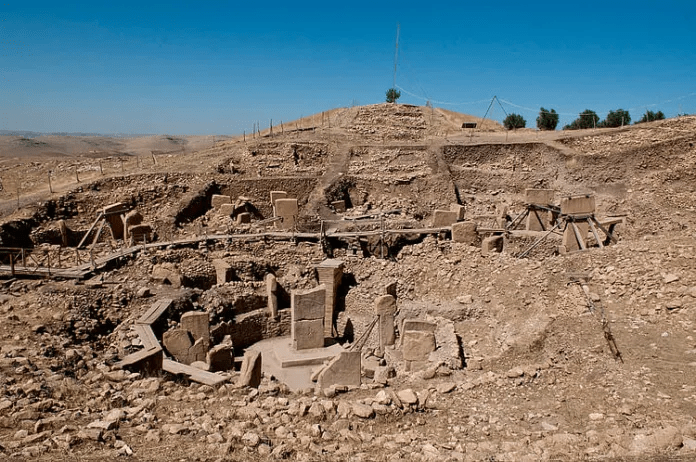
Göbekli Tepe is the world’s oldest example of monumental architecture; a ‘temple‘ built at the end of the last Ice Age, 12,000 years ago.
It was discovered in 1995 CE when, just a short distance from the city of Şanliurfa in Southeast Turkey, a Kurdish shepherd noticed a number of large, embedded stones, stones which had clearly been worked – and which turned out to be the most astonishing discovery.
Anatolia is described variously as a melting pot of civilizations and cultures, a bridge between Asia and Europe, a fusion of East and West, and many other familiar and overused descriptions, all now rather pedestrian but accurate nonetheless.
It is certainly a fact that Anatolia has the unnerving habit of turning up ‘Lost Civilizations’ and ‘Vanished Cultures.’
It is unnerving for two reasons: in the modern age we have covered so much ground, physically and intellectually, that we think we should know everything by now.

It is unnerving because, intrinsically, an entire civilization is a hard thing to lose, especially in a place that is supposed to be a ‘bridge’ and has been tramped across by so many peoples since the very dawn of civilization itself.
But Anatolia still does it. The story of Schliemann’s discovery of Troy in 1870/71 CE had the benefit in Western culture and in the Western literary canon, of being very well known, and its discovery was a revelation and a cause for great popular wonder and excitement.
The discovery and excavation of Boğazkale was another revelatory event if less celebrated by the general public. After all, the Hittites were just bit players in a biblical narrative; not wholly unfamiliar, but more of a footnote.

However, academics and scholars were aware of the fact that there was a significant missing component to ancient Near Eastern history, a lacuna just hinted at by tantalizing discoveries made in the late 19th century CE.
The discovery and excavation of the Hittite capital, locked away in its Central Anatolian mountain vastness, in the late 19th and early 20th centuries CE filled in a huge gap, a gap reduced even further by the translation of the Hittite language by the Czech linguist Hrozny in 1915 CE, and the wealth of documentary evidence that had been turned up during excavations at the Royal Library in Hattusa, and which could now be read.
However, the discovery of Göbekli Tepe was just a massive shock!

And what has emerged since that day in 1995 CE is nothing short of extraordinary; a site of significant size containing first circular ‘enclosures’ and then rectangular ‘rooms’ dominated by remarkable carved and decorated monoliths.
So far, over 25 of these enclosures have been identified and two of the earlier ones have now been fully excavated down to floor level revealing an unknown and never imagined culture that turned the archaeological world on its head.
The most startling thing about this site is its great age and its mathematical blueprint resembling the Cygnus constellation, 1400 light years away from planet Earth.

Going back to the end of the last Ice Age and first constructed around 10,000 BCE, the site is known as Göbekli Tepe (or in Kurdish, Girê Navokê meaning Pot Belly Hill, or more poetically perhaps, the Hill of the Navel).
The monument comes to us from the distant past and from a time when, according to the existing historical narrative, it simply should not have been there. This is monumental architecture on a grand scale, preserved to an extraordinary degree, but silent.
While we can describe the site in minute detail and study its physical attributes with all the tools of modern science, we can only speculate as to the motives of the builders or the culture of the people; all of this was accomplished 6,000 years or more before the invention of writing.

And there is an additional riddle within this enigmatic and haunting place. The great enclosures, after being used for hundreds of years, were simply buried.
The rest of the site continued to be used with smaller, more modest structures built on the mound created by the burial of the original monuments.
And then, after a period of use as a site for gathering and a place of ritual that may have lasted for 2,500 years, the place was simply abandoned.
World History Organization / ABC Flash Point News 2022.
Baltic Herring population threatened by Warming Sea Temperatures

Over the decades, the Baltic Sea, nestling between the industrialized countries of Northern Europe, has become one of the most polluted marine ecosystems on the planet.
Finns have been fishing for herring for generations, but new reduced EU quotas are threatening the traditional livelihoods of coastal communities. Herring accounts for around 80% of Finland’s annual fish catches.
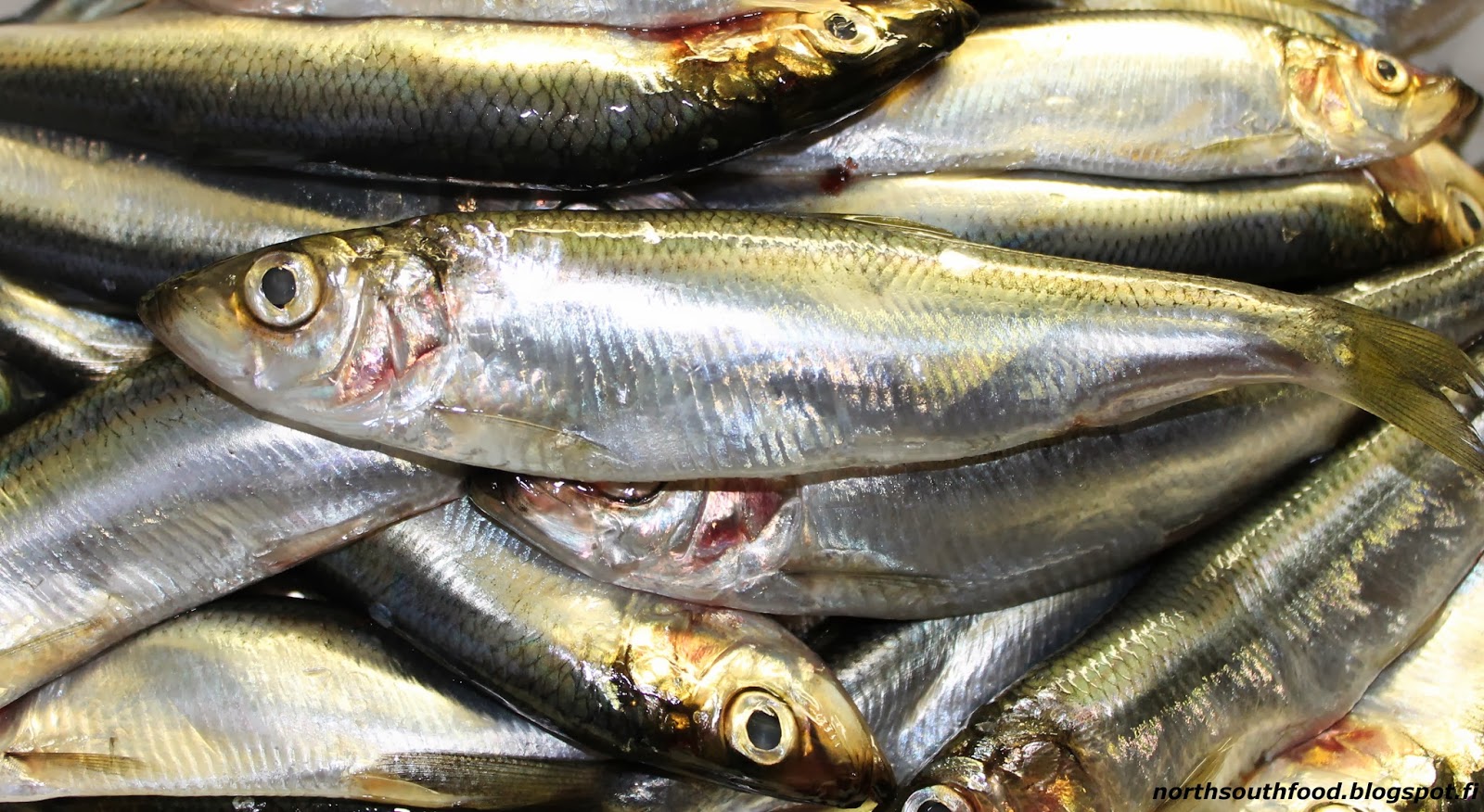
Even at the age of 84, Holger Sjögren nimbly untangles the knots in his fishing net, which he then drags down into the murky depths of the Baltic Sea. As the Baltic becomes less saline, large saltwater species such as cod are suffering more and more.
The fifth generation of a fishing family, Sjögren has been fishing for herring off the coast of Kotka, a town in south-east Finland, for five decades.
In the harbor, dozens of loyal customers wait impatiently for him to return to buy the day’s catch on board the boat. This bucolic, traditional trade is in danger of becoming rarer.

In October, the European Union decided to slash by 43% the herring quotas authorized in these waters in 2024. Many people are afraid they’ll have to throw in the towel, says Holger Sjögren.
With fish populations plummeting since the 1970’s, Baltic herring could suffer the same fate as many other species that have almost disappeared from the region.
The Baltic is characterized by shallow waters, making it particularly vulnerable to climate change. Its surface area is comparable to that of the Black Sea, but in terms of volume, the Black Sea contains up to 20 times more water.

Rising temperatures and falling salinity – itself due to increased rainfall and reduced inflow of water from the Atlantic Ocean – are threatening many species that are struggling to adapt.
The more the Baltic Sea becomes a lake, the more harmful the situation will be for marine species, explains Jukka Pönni, a researcher at the Finnish Natural Resources Institute (LUKE).
In the 1980’s, the cod population reached record levels, but it has collapsed in the space of a few decades, to such an extent that the European Union has had to impose an emergency ban on its fishing in 2020.

The Atlantic sturgeon, once abundant, has also disappeared due to pollution and the obstruction of its migratory rivers.
While some advocate major reductions in fishing quotas to preserve the remaining populations, others disagree. Even a total ban would not have helped (to preserve) the population. In fact, it would have had the opposite effect.
According to the researcher, it is the climate and environmental damage that are threatening the species more than fishing. With the collapse of Baltic cod, herring have been deprived of their biggest natural predator.

Without fishermen, populations could become too dense and the growth of individuals would be reduced for lack of sufficient food. Matti Ovaska, head of fisheries at the World Wildlife Fund (WWF), rejects this argument.
If intensive fishing continues at this rate, herring populations are likely to decline, paving the way for other species such as sprat to take over and prevent the herring from recovering, he says. Fishing will have to be reduced, says WWF’s Ovaska.
The threat to herring, highly prized by Finns who eat it with all kinds of sauces, is worrying consumers. I eat herring every week, Markku Karjalainen told AFP from the market square in the center of Helsinki, which was teeming with people on an autumn weekday.

From fermented herring with onions and bay leaves to smoked herring, silakka has been an important part of the Nordic culinary tradition for centuries.
But with more and more restrictions in place, there’s a risk that fishing could come to a halt for good. No one will invest in this sector any more. Not that Holger Sjögren will give up his nets.
The European fisheries policy dictated by Brussels should be completely overhauled, insists the octogenarian, and the tradition of the fishermen should be respected.
Green Euro News / ABC Flash Point Blog 2023.
Wilddlife USA in danger as Species are waiting for Protection
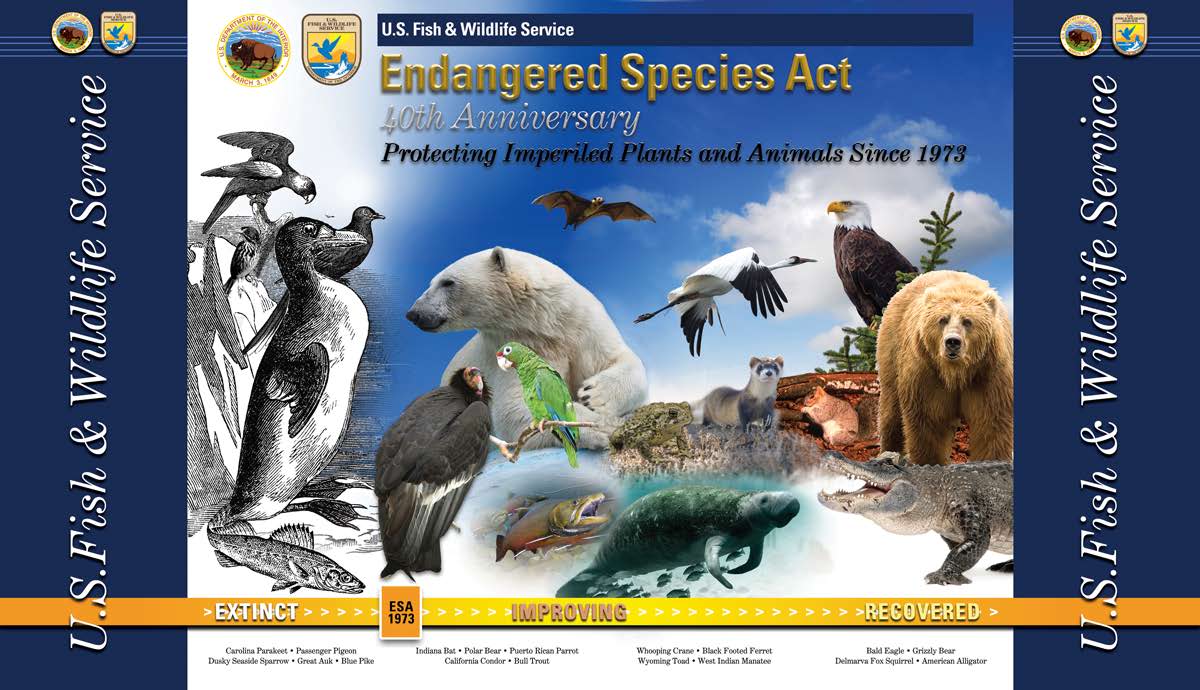
The U.S. Fish and Wildlife Service has been exceedingly slow to protect species. A 2016 study found that species waited a median of 12 years to receive safeguards. In total, at least 47 species have gone extinct waiting for protection.
Several of the species in today’s announcement went extinct during a delay in the listing process, including the Guam broad-bill, little Mariana fruit bat, and the southern acorn-shell, stirrup-shell and upland comb-shell mussels.

We are at risk of losing hundreds more species because of a lack of urgency. The Endangered Species Act is the most powerful tool we have to end extinction, but the sad reality is that listing still comes too late for most species.
The U.S. Fish and Wildlife Service badly needs to reform its process for protecting species to avoid further extinctions, and it needs the funding to do so. We can’t let bureaucratic delays cause more extinctions.
Nine months into his term, President Biden has yet to nominate a director for the Fish and Wildlife Service.
:max_bytes(150000):strip_icc()/endangered.fennecfox-0acc4c4f76474c68a83ee907c92aef11.jpg?resize=696%2C461&ssl=1)
Biden did request more than a $60 million increase for endangered species — the largest increase requested for the program in history — but the House Appropriations Committee undercut the president’s budget request by $17 million.
A 2016 study found that Congress only provides approximately 3.5% of the funding that the Service’s own scientists estimate is needed to recover species. Roughly 1 in 4 species receives less than $10,000 a year toward recovery.
Instead the U.S. Fish and Wildlife Service proposed today to remove 22 animals and a plant from the endangered species list because of extinction. They join the list of 650 U.S. species that have likely been lost to extinction.

Species being proposed for de-listing include the ivory-billed woodpecker, Bachman’s warbler, Scioto mad-tom, San Marcos gambusia, eight species of Southeastern freshwater mussels, eight birds and a flower from Hawaii, and a bird and bat from Guam.
Two bills moving through Congress would increase protection and funding for endangered species. The Extinction Crisis Emergency Act would direct President Biden to declare the global wildlife extinction crisis a national emergency.
The Extinction Prevention Act (H.R. 3396) would create four grant programs that would provide $5 million per year to fund crucial conservation work for each of the most critically imperiled species in the USA, including butterflies, freshwater mussels, desert fish and Hawaiian plants.

The legislation would spur action across the entire federal government to stem the loss of animals and plants in the United States and around the world.
Extinction is not inevitable. It is a political choice. Saving species isn’t rocket science. As a country we need to stand up and say we aren’t going to lose any more species to extinction.
Bachman’s warbler was a small yellow and black songbird that once bred in swampy thickets in Alabama, Florida, Georgia, North Carolina, South Carolina and Tennessee and overwintered in Cuba, where it was seen for the last time in 1988. It was lost to habitat destruction and collection.

Bridled white-eye: A green, yellow and white tropical lowland forest bird from Guam that was 4 inches long, with a prominent ring around its eye. It became extinct because of predation from the invasive brown tree snake.
Ivory-billed woodpecker: The third largest woodpecker in the world, the ivory-billed woodpecker once flew in old-growth forests in 13 states, including Arkansas, Florida, Georgia, Illinois, Kentucky, Louisiana, Mississippi, Missouri, North Carolina, Oklahoma, South Carolina, Tennessee and Texas.
It declined because of logging and collection, and the last verified sighting was in 1944 despite extensive searches.

Little Mariana fruit bat: Also known as a flying fox, the little Mariana fruit bat lived on Guam and foraged on tropical fruits.
It was last seen in 1968 and went extinct because of habitat loss from agriculture and military activity, brown tree snake predator and over-harvesting for use as food. It had a 2-foot wingspan, gold on the sides of its neck and yellowish-brown fur on the top of its head.

The San Marcos gambusia was a 1-inch-long fish that ate small invertebrates and gave birth to live young instead of laying eggs like many species of fish.
It lived in clear spring water from the headwaters of the San Marcos River in Texas.
Last seen in 1983, its extinction is due to water overuse that depleted groundwater and spring flow.

The Scioto madtom was a small catfish found only in Big Darby Creek in Ohio. It was listed as endangered in 1975 but was last seen in 1957. It was lost because of silt accumulation from dams and runoff.
The eight freshwater mussels proposed for de-listing include the flat pig-toe, green-blossom pearly mussel, southern acorn-shell, stirrup-shell, tubercles-blossom pearly mussel, turgid-blossom pearly mussel, upland comb-shell and yellow-blossom pearly mussel.
Freshwater mollusks are the most endangered group of organisms in the United States, with 36 mussels and more than 70 freshwater snails already lost.
Global Research California / ABC Flash Point News 2021.
Forever chemicals are sprayed onto Fields and Food in Pesticides

A new report exposes the ‘urgent’ threat of forever chemicals in pesticides, as it calls for tighter EU regulation. Dozens of substances used in pesticides in Europe are ‘forever chemicals’, a new investigation reveals.
The stable door is slowly closing on PFAS – man-made per- or poly-fluorinated alkyl substances which persist in the environment for an incredibly long time.

The EU is set to restrict their use and phase them out with a review of its REACH regulation that governs chemicals. It is part of a promised ‘great detox’ on dangerous substances.
But this won’t apply to pesticides – and that’s a big problem, according to the NGO’s Générations Futures and Pesticide Action Network (PAN) Europe.
It is shocking to find that PFAS, with their long-lasting environmental impacts, are intentionally sprayed on fields and food, says Angeliki Lysimachou, head of science and policy at PAN Europe. Given all the identified risks, their use should stop immediately.

A new joint report from the two NGO’s has found that 37 active substances currently approved for use in pesticides are PFAS. That equates to 12% of all approved synthetic substances.
PFAS are a growing cause for public concern. Recent research has revealed shocking findings – such as the news that rainwater almost everywhere on Earth has unsafe levels of forever chemicals.
This pollution has many potential sources, from chemical manufacturing plants to firefighting foams. Pesticides, however, appear to have gone under the radar.

Many people are unaware that active ingredients in pesticides can be PFAS where they are used to keep them effective for longer.
The investigation dug deep into their use in France, where it found that 30 active substances currently authorized for use in pesticides were PFAS. The sales of these substances have more than tripled since 2008, reaching 2,332 tonnes in 2021.
Analyzing authorization documents for the 10 best-selling pesticides containing PFAS, the researchers found that the vast majority of these chemicals stick around in the environment.

Flufenacet and Diflufenican from Bayer are the top-selling substances, says PAN Europe, with German data from the Federal Office of Consumer Protection and Food Safety (BVL) suggesting the same dramatic growth in Germany.
There are concerns that they are contaminating groundwater in France.
The NGO’s are also sounding the alarm about possible ‘cocktail effects’ of mixing chemicals, which they claim are not being assessed – even though marketed products sometimes contain several different PFAS.

The EU is planning to restrict the use of so called forever chemicals in Europe, but PFAS pesticides have been excluded from the scope of this restriction.
The main argument is that these substances are already covered and sufficiently regulated under the Pesticides Regulation, the NGO’s say.
According to this regulation, pesticides authorised in the EU should cause no adverse effects to humans and no unacceptable effects on the environment. Despite this, the report reveals that harmful pesticides continue to get approved for use in the production of food.

It is urgent to ban this source of PFAS pollution. These pesticides should be included in the PFAS restriction currently being prepared at European level, argues Salomé Roynel, policy officer at PAN Europe.
That will take time, so we immediately need a better implementation of the pesticide regulation. We propose to apply the precautionary principle required by law and ban all PFAS pesticides now.
The aim is to stop people and the environment being exposed to these forever pollutants. There should be no exception for pesticides, adds Pauline Cervan, toxicologist and project leader of Générations Futures.
Green Euro News / ABC Flash Point News 2023.
Drowning in Plastic on Christmas Island
Located in the Indian Ocean, 2600 km north-west of Perth and 350 km from Indonesia, the remote Australian Territory of Christmas Island is home to an extraordinary range of flora, fauna, rare birds and land crabs.
The extinct volcano, rimmed by a narrow tropical reef, rises dramatically out of the sea to a height of 361 m and plunges to depths of more than 2 km just a couple of hundred meters from shore, creating some of the largest sub-surface drop-offs in the world and attracting a huge diversity of marine life.

Its landscape is covered with tropical rain-forest and the rugged limestone karst terrain supports ecosystems and species of international conservation and scientific significance.
Unfortunately, due to the island’s location and surrounding currents, it also draws tonnes of plastic from neighboring countries, predominantly, to its eastern shores.
And on this shoreline sits Dolly Beach, known by the locals as Robinson Crusoe beach, which looks like something out of a Hollywood movie.

Only accessible via a 2 km walk through thick jungle, it’s an isolated, coconut-fringed paradise, speckled with shimmering rock-pools, a freshwater stream and a sky full of soaring sea birds.
Working my way through the fallen coconuts, I hit the sand to discover a devastating amount of plastic. Here on Christmas Island, we are impacted greatly by pollution and plastic, says Christmas Island Parks Australia Manager, Kerrie Bennison.
It’s an ongoing burden for the island and a huge threat to our wildlife. We lie in the current lines of some of the world’s worst evidence of marine debris.

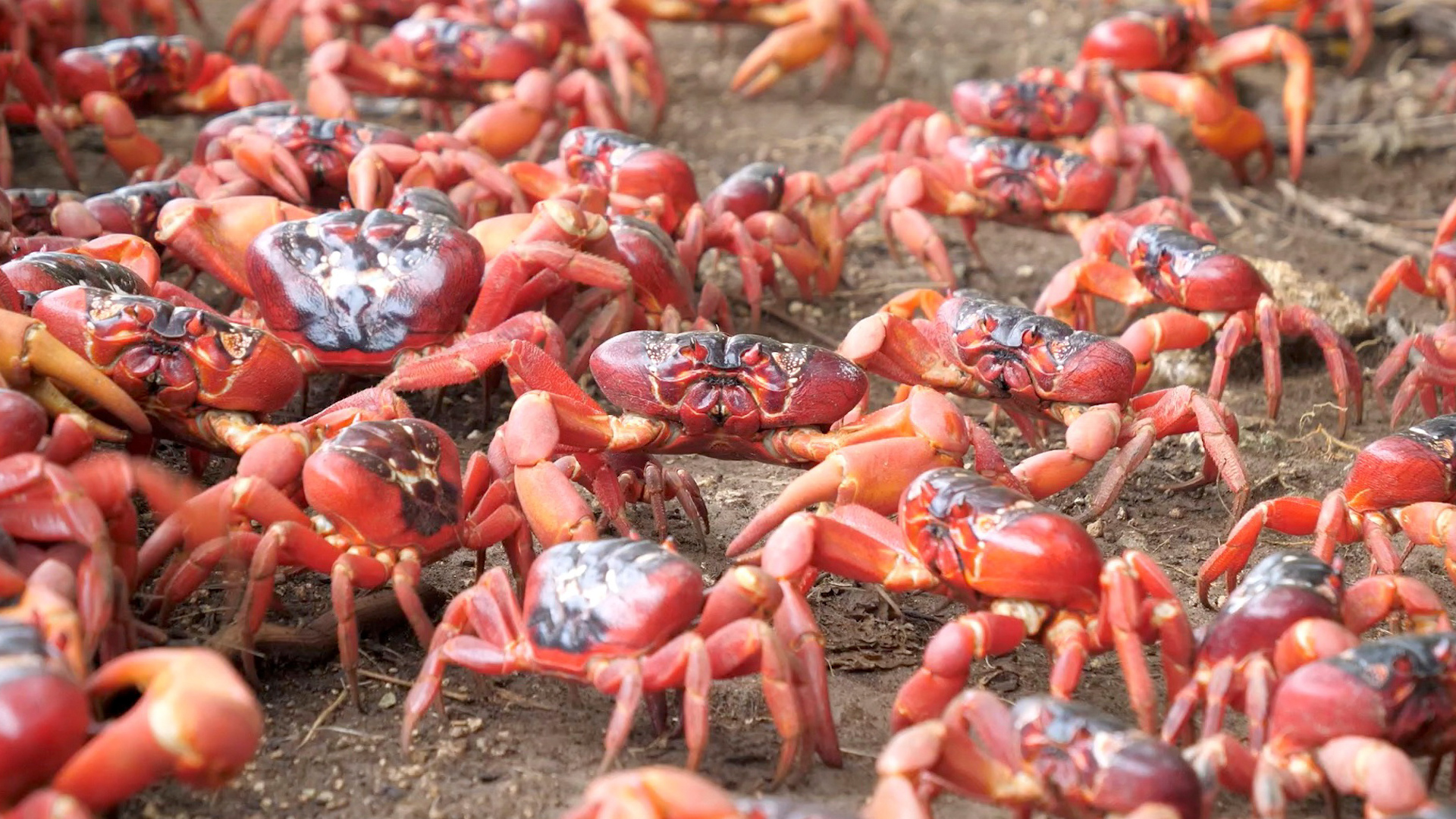
On Dolly Beach, green turtles come ashore year-round to nest and when I begin to crack open a freshly fallen coconut, a dozen robber crabs, the world’s largest land crustacean (growing up to 1m across) lumber out of the jungle to greet me – like a scene from Jurassic Park.
I’m drawn to the beach’s rockpools, where colourful fish swim beneath the ocean foam. Devastatingly, their flashing forms are overshadowed by floating straws and polystyrene.
Next I spot a moray eel, lunging past a plastic water bottle to snatch some scuttling crabs. It’s confronting, to say the least, seeing these island residents trying to survive amid the debris.

Marine debris is one of the biggest environmental issues facing our planet, having devastating impacts on our ecosystems.
We know that plastic lying on the beach heats the temperature of the sand, which impacts the crabs and turtles that live there. A baby turtle hatchling will change its sex according to the temperature of the sand.
A team of workers from the Tangaroa Blue Foundation (TBF), a not-for-profit Australian charity focused on the removal and prevention of marine debris, is on the beach at the time of my visit.

TBF has been working in this space for more than 18 years and is instrumental in providing data on marine debris.
It’s this evidence that’s needed to create changes at local, state, national and international levels through the Australian Marine Debris Initiative (AMDI) Database.
Laden with bags of collected rubbish, which is strung onto poles for the 2km trek to parked vehicles, WA project coordinator, Casey Woodward, and her crew, have collected some astounding data.

In order to collect a meaningful dataset, our team set out a 16sq.m quadrant on both Dolly and nearby Greta beaches, to quantify and categorize items typically found on any given day.
On Greta we counted 3811 items within that area, giving a debris density of 238 items per square meter. On Dolly, 1091 items were counted within 16sq.m, giving a debris density of 68 items per square meter.
The debris included several hundred pieces of polystyrene, hard plastic remnants, single-use plastic straws, foreign plastic bottles and rubber remnants.

It’s not unusual to collect a tonne of marine debris from Greta Beach in one day and together with the community we have achieved this on several of our visits.
Unfortunately, during times in the year where the currents and winds are the strongest, the beach does not stay clean for long and will be covered in plastic, fishing gear and polystyrene at the next tide change.
The Indian Ocean Territories [comprised of Christmas Island and the Cocos (Keeling) Islands and located 2600 km from Perth] experience the highest marine debris densities in Western Australia and 99% of the rubbish is from foreign sources.

Waste management in developing countries is often non-existent with plastic and rubbish thrown into upstream waterways to be flushed into the ocean during monsoons.
Strong ocean currents and winds allow these objects to travel great distances and be washed ashore on remote islands, like Christmas Island.
To address the issue it’s imperative that marine debris is approached from a global perspective, with all countries and organizations working collaboratively to tackle plastic at every stage.

This needs to start from design and production, through to recycling and end-of-life options based on true circular economy principles.
We are hopeful that the United Nations Environment Programme’s (UNEP) Global Plastic Treaty, due to be introduced in 2024, will start to address these issues at the scale needed to have a real impact.
At the entrance to Dolly Beach, the Shire of Christmas Island provides bags for visitors to take to the beach to help bring out a load of rubbish. I witness many people doing this – their small way to help while holidaying here.

An ‘Island Care’ sign tells me that plastics are now found inside animals throughout the ocean food chain from mussels, to fish, to sea turtles to whales.
Plastics that have killed marine life can kill again when the animal decomposes and the plastic re-enters the environment.
Research has found that 39 per cent of debris is polystyrene and fishing buoys, 31% plastic food packaging, drink bottles and other plastics, and 26 per cent rubber thongs and remnants.

On Dolly Beach I collect well over 100 thongs within a few meters from where I’m standing.
Christmas Island is an internationally renowned seabird rookery with around 80,000 seabirds nesting on the island each year, including the world’s rarest booby, the Abbott’s booby, and the Christmas Island frigate-bird.
The island has been described as one of the wonders of the natural world. Devastatingly, however, I witness bird nests lined with plastic, robber crabs crawling over empty water bottles, and a hermit crab that has taken a plastic cap as a home instead of a natural seashell.

As the sun sets and a full moon rises, four turtles leave tracks in the sand as they make their way up the beach. They flick debris aside while digging a body pit and chamber in which to lay their eggs.
On the water’s edge, the moonlight illuminates broken pieces of polystyrene washing in with each wave – countless glowing-white warning beacons. Somehow, we need to turn off this tide of plastic at the source. If we don’t, what future is there for all of us?
Australian Geographic / ABC Flash Point News 2023.
EU sacrificing Animal Welfare to tackle the Cost of living Crisis

Long-awaited EU animal welfare proposals are falling through without an official explanation. Some reports suspect that economic objectives are at play.
A raft of highly-anticipated EU animal welfare proposals are overdue, and it seems that the European Commission will fall short on its commitments for the long-promised legislative reforms.

Brussels appears to be handling the matter discreetly behind closed doors, following leaks that revealed the proposals could be scrapped in an effort to tackle the high food prices and inflation gripping the continent.
Animal welfare organizations have accused policy makers of a U-turn and seem to be at loss in understanding what is happening after the Commission committed to ‘End the Cage Age’ years ago.
The End the Cage Age was a citizens’ initiative, signed by almost 1.4 million people in 2020. It prompted the Commission to commit to proposing legislation to phase out the use of cage systems for animals such as hens, rabbits and ducks by the end of 2023.

The legislative framework was also meant to include a stop to the practice of slaughtering day-old chicks, and the sale and production of fur, as well as shortening the transport of live animals.
But, as the moment of truth approached, news reports began to cast doubts about the fate of the legislation. The topic was also missing from European Commission President Ursula von der Leyen’s State of The Union speech.
This was seen as an opportunity for the president to sum up what her administration had left to do before the European elections next year. This didn’t escape the attention of animal welfare NGO’s.

Euronews reached out to the European Commission but received no response as of this article’s publication.
Finally, at a hearing in the European Parliament, European Commission Executive Vice-President Maroš Šefčovič, nominated to oversee the European Green Deal, raised many eyebrows when he couldn’t commit to a deadline of the animal welfare proposals in question.
The vice-president, however, kept repeating that the animal welfare proposals remain a priority for the upcoming months. Compassion in World Farming said that the Commission slaps democracy in the face, and signals GAME OVER for EU animal welfare revolution.

The Commission’s U-turn regarding the much-touted animal welfare reform is a failure for democracy and the European project, said Olga Kikou, European Affairs Manager at Compassion in World Farming.
The European Commission has yet to communicate any clear reasons why it has abandoned the proposals, but media reports suggest that there are fears that the animal welfare amendments could fuel food inflation further.
The Financial Times (FT) reported on a draft impact assessment by the Commission, that showed how farmers’ costs could surge by an average of 15%, potentially leading to higher consumer prices and an increase in imports.

Improving the housing of broiler chickens could add one cent to the price of an egg, according to the draft assessment.
The EU farmer’s group Copa-Cogeca said it was in favor of many of the suggested changes as long as they came with financial aid and as long as imported meat had the same standards as that in Europe.
Despite these fears, while still high, food inflation has actually started slowing down in recent months, according to Eurostat, the EU’s statistics office.

Furthermore, the proposals would take years to be signed into the statute books and put into practice, making the current food inflation an even less significant factor.
The director shared his suspicion that scrapping the plans may be all about optics in the light of the European Commission’s efforts to secure the new EU-Mercosur trade deal involving Argentina, Brazil, Paraguay and Uruguay, before the end of this year.
In April, 2023 a leaked impact assessment showed that the trading partners most affected by the higher standards were expected to be Brazil and Thailand in the case of poultry meat, and Brazil, Argentina and Uruguay in the case of beef.

Moran said the European Commission thinks it would be incredibly dangerous for the legislative package to come to light during the course of the talks, as it could jeopardize a deal if South American imports were required to meet the same high standards.
Moran added that to his knowledge, the originally planned proposals were ready to move to the inter-service consultation stage, to then be ultimately published within weeks. He said he cannot understand why, at this stage, they cannot be released to the public.
A proposal is only a proposal. […] We’re asking them simply to put these texts in the public domain in front of MEP’s, in front of member states.

They could then be amended. They can be changed. But at least discussions like this should happen in daylight in a democracy. I don’t believe that they should be happening behind closed doors.
The director called attention to the pressing issues that the proposals were supposed to address, such as ending piglet castration, preventing the separation of calves from their mothers right after birth.
And stopping chickens from growing at such rates that essentially they can’t stand up because they can’t their legs can’t support their own weight.

The European Food Safety Authority notes that farmed animals’ welfare is directly connected to the safety of the food chain, and that the relationship between animal welfare, animal health, and food-borne diseases is tight, with stress factors and poor welfare leading to increased susceptibility to transmissible diseases among animals and food chain.
It’s worth remembering that there is no serious concern about food safety in the European Union as the bloc has the highest standards of animal welfare in the world already.

While acknowledging that the EU is a leader in many respects, Moran emphasized that other parts of the world better regulate certain aspects of animal welfare, such as banning live exports, even if their overall welfare regulation pales in comparison to Europe’s.
If we want the EU to continue to be the world’s leader in animal welfare, we need these proposals now.
Euro Green News / ABC Flash Point News 2023.
World’s Money flowing in the Wrong Direction

A new report shows that funding for polluting industries far outstrips support for climate change mitigation. Top banks are funding two of the world’s most polluting industries far more aggressively than governments are funding solutions.
Sp, funding of fossil fuels eclipses climate finance. Banks including HSBC, Citigroup and JP Morgan Chase have poured almost €3 trillion into the expansion of fossil fuels in the Global South since the Paris Agreement on Climate Change was adopted seven years ago.

A further €340 billion has been funneled into industrial agriculture, the second major cause of climate change, according to an analysis by NGO ActionAid. This is 20 times more than Global North governments have provided developing nations to mitigate the climate crisis.
The world’s money is flowing in the wrong direction, says Arthur Larok, secretary general at ActionAid International. This is absurd and must stop.
The banks fueling the climate crisis’, reveals the top banks from each region funding fossil fuels and industrial agriculture in the Global South. The Industrial and Commercial Bank of China was found to be the largest financier of fossil fuels between 2016 and 2022.

Among European banks, HSBC was the worst offender. But the British bank decided in December last year that it would no longer provide funding for new oil and gas fields.
Other European banks highlighted in the report include BNP Paribas, Societe Generale and Barclays. In the Americas, Citibank, JPMorgan Chase and Bank of America were the worst offenders.
While in Asia, China CITIC Bank, Bank of China and Mitsubishi UFJ Financial were some of the biggest funders of fossil fuels and industrial agriculture.

Global banks often make public declarations that they are addressing climate change but the scale of their continued financing of fossil fuels and industrial agriculture is simply staggering.
German pharmaceutical and agro-chemical company Bayer was found to be the largest recipient of industrial agriculture financing in the Global South, having received over €19 billion since 2016.
Developing nations contribute least to climate change yet often experience its worst effects. As the biggest emitters of greenhouse gas emissions, wealthy nations have been called on to help combat the climate crisis abroad.

The report says governments should regulate the financing of fossil fuel expansion, regulate chemical use and deforestation, and support solutions such as renewable energy and sustainable agriculture practices like agro-ecology.
It also urges banks to adopt more sustainable practices. By financing fossil fuel and industrial agriculture in the Global South, banks are condemning communities to the cruel combination of landlessness, deforestation, water pollution and climate change.
Banks need to own up to the harm that they are unleashing on the communities and the planet, and urgently stop financing the destruction wreaked by fossil fuels and industrial agriculture.
Euro News Green / ABC Flash Point News 2023
Ancient Mayan Temple found in Mexico’s Yucatan Peninsula
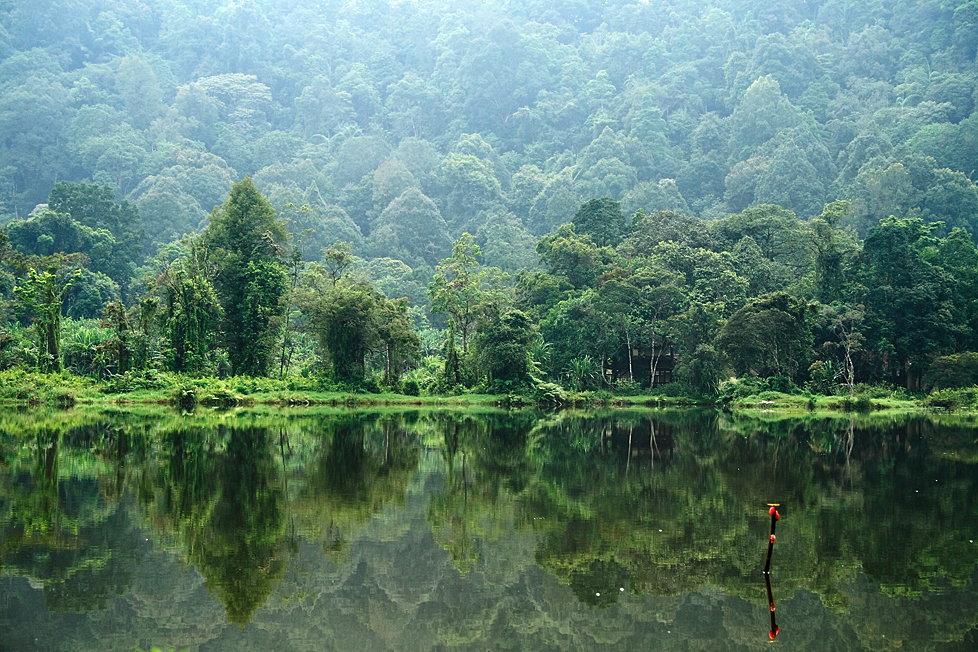
Archeologists in Mexico have found a roughly 1,000-year-old ancient Mayan temple in El Tigre, an archaeological site in the Yucatan Peninsula.
Dating back to 1000 to 1200 AD, the circular structure has two levels and was likely capped with a flat roof. Archeologists believe it was dedicated to the Mayan serpent deity Kukulcan, one of four major deities of the ancient Mayan religion.

Anthropologists and archeologists believe that the Mayan civilization started around 1500 BCE, and continued to thrive throughout Central America and southern North America until around 900 CE.
But the civilization continued to thrive in the Yucatan Peninsula for centuries longer, with its last city falling to the Spanish invaders in 1697.
Officials further believe it may be the same temple described in the writings of Don Pablo Paxbolon, who led the Mayan people in what is now the Mexican state of Tabasco between 1575 and 1576. His writings describe such temples in the area, each dedicated to one of the main deities.

While those specific temples have not yet been found, other circular structures in the Yucatan Peninsula have been uncovered, including in Edzna, Becan, Uxmal and Chichen Itza.
The Yucatan Peninsula served as one of the last settlements for the Mayans before the civilization collapsed after the bloody Spanish invasion. Its fall remains a topic of debate among experts.
The discovery was made as part of a new railway, called the “Tren Maya” or Maya Train, being constructed in Mexico that will span 1,000 miles.

The project has been taking special care to preserve archeological artifacts and has already uncovered a large number of discoveries since the project began.
As of October 30, 2,698 structures, 249 items, 289,100 ceramic fragments and 177 partial or complete human remains have been found.
The Maya train is set to begin operations in December, 2023.
Sputnik / ABC Flash Point News 2023.
Building the Great Green Wall in Africa

King Canute couldn’t stop the ocean’s tide from rolling in – can Africa hold back the desert?
That’s certainly what the continent is trying to do with its proposed Great Green Wall, 8,000 km (almost 5,000 miles) worth of trees that officials hope will stop the advancement of the Sahara desert, which has been rapidly expanding southward.

The project aims to plant 100 million hectares, or almost 250 million acres, of trees by 2030 across the entire width of Africa.
The initiative is a decade in, and around 15% completed, and there have already been benefits for many communities and wildlife.
It’s bringing life back to the continent’s degraded landscapes at an unprecedented scale, providing not only food security and jobs but a reason to stay for the millions who live along its path.

Efforts will be concentrated along the Sahel, a region in Africa that lies between the Sahara in the north and the more tropical savanna in the south.
Burkina Faso, Cameroon, Chad, The Gambia, Guinea Mauritania, Mali, Niger, Nigeria, and Senegal all form the Sahel region, where there are up to 50 million people who still live as nomads, depending on cattle to sustain their livelihoods.
It’s one of the poorest places on the planet: a region of famine, mineral conflict, and low job prospects, made even harder by the ongoing drought.
/__opt__aboutcom__coeus__resources__content_migration__mnn__images__2019__04__women_planting_seeds_great_green_wall-e0cb9fd0a8cc491c973b140e8f97931a.jpg?resize=696%2C392&ssl=1)
The creators of the wall hope it will bring an urgently needed solution to the threats facing the African continent, creating 10 million jobs in rural areas, as well as sequestering 250 million tons of carbon.
At a science conference held in December, experts estimated that the wall could have far-reaching implications on weather patterns.
Climate models presented at the American Geophysical Union’s autumn conference projected that the finished wall could quadruple rainfall in the Sahel and lower average summer temperatures over most of northern Africa and into the Mediterranean.

However, the hottest sections of the desert may become even hotter, increasing by up to 2.7F (1.5C). The wall may seem like a moonshot, but all the best ideas usually are.
As Thomas Sankara, former president of Burkina Faso said in 1985, you cannot carry out fundamental change without a certain degree of madness. The courage to turn your back on the old formulas, the courage to invent the future.
Discovery / ABC Flash Point News 2023.
Global Forests continue to shrink despite COP26 Agenda

A damning report by the World Resources Institute sheds light on the extent at which planet earth’s forests are shrinking through deforestation, logging and wildfires. In 2022, the planet lost an area of tropical rain-forest the size of Switzerland or the Netherlands.
According to a report by the World Resources Institute (WRI), the destruction was caused by a combination of wildfires and deforestation for agriculture and logging. The authors say an area the size of a football pitch was destroyed every five seconds.

Its satellite-based deforestation monitoring platform, Global Forest Watch (GFW), recorded the destruction in 2022 of more than 4.1 million hectares of primary tropical forest, crucial for the planet’s biodiversity and carbon storage.

The country hardest hit is Brazil, with an area destroyed accounting for 43% of global losses, ahead of the Democratic Republic of the Congo (13%) and Bolivia (9%).
We are losing one of our most effective tools for combating climate change, protecting biodiversity and supporting the health and livelihoods of millions of people, says GFW Director Mikaela Weisse.


The primary tropical forests destroyed in 2022 released 2.7 billion tonnes of CO2, equivalent to the annual emissions of India, the world’s most populous country.
As a result, forest destruction continues to accelerate inexorably, despite the commitments made by the world’s leading leaders at COP26 in Glasgow in 2021.
Some 1.6 billion people, almost half of them indigenous peoples, depend directly on forest resources for their livelihoods.

In Brazil, deforestation has continued to worsen during the presidency of Jair Bolsonaro (2019-2023), increasing by a further 15% in one year, according to the GFW’s annual report.
Under former military captain Bolsonaro, the Brazilian administration turned a blind eye to illegal deforestation, weakened indigenous rights and dismantled the country’s environmental policy.
His successor, President Luiz Inacio Lula da Silva, inaugurated in January, has pledged to halt the destruction of the Brazilian Amazon by 2030. However, experts believe that he will have to overcome a number of fabricated challenges to achieve this.

Some 90 billion tonnes of CO2 are stored in the trees and soils of the Amazon rain forest, twice the annual global emissions. Stopping and reversing forest loss is one of the most cost-effective ways of mitigating (the situation) that we have today.


Chinese trade and investment in the central African Congo basin are on the rise.
In the Democratic Republic of the Congo, more than half a million hectares of forest had been destroyed by 2022, according to the report. This was mainly due to agriculture and the production of charcoal, which is vital for households, 80% of which have no electricity.
A half-billion-dollar agreement to protect the Congo Basin rain-forest was signed by the DRC in 2021. But it has been undermined by a recent call for tenders for oil licenses and gas blocks launched by the authorities.


In third place, Bolivia failed to reduce the rate of deforestation – and in fact, increased by 32% compared to 2021. Cocoa production, gold mining and fires are the main reasons for this, according to the researchers.


In Indonesia, on the other hand, forest destruction has slowed for the fifth year running. The archipelago is responsible for 5% of global forest loss in 2021. It has seen the extent of its felled areas divided by more than four since 2016.


Forests have been growing in size in the EU over recent decades, but why are there such large discrepancies across the continent? Forests play a key role in the fight against pollution and environmental degradation.
They remove vast amounts of carbon dioxide, reduce the risks of natural disasters, help moderate air and soil temperatures and on top of all that they’re enchantingly beautiful. But in business reality these days 2.000 trees are being cut down per minute.
Now across much of the world these natural wonders are in decline. The UN Food and Agriculture Organization estimates that 420 million hectares of forest, larger than the size of the EU, disappeared between 1990 and 2020.
Euro News Green / ABC Flash Point News 2023.
 Crickey Amigu di Natura