
Electric Cars on Lithium Batteries are not cleaner than Fossil Fuels

As we move into the era of “renewable” electricity, let us remember that the minerals used to make the batteries, used to store that electricity, are not renewable nor recyclable.
Without a renewable alternative to lithium batteries, electric cars will be no friendlier than fossil fuel. The spiraling environmental costs of Lithium Batteries could rival Fossil Fuel.

And the number of batteries we are going to need to meet the electricity needs of 8 billion people (16 billion in 50 years or so at the current population doubling rate) is enormous.

Every electric car battery requires around 25 pounds of lithium. And renewable energy grid storage systems for our homes and workplaces will require much more. Every smartphone, tablet, laptop and other battery powered device is also reliant on the “white gold.”
Demand for lithium is increasing exponentially. It doubled between 2016 and 2018, and is expected to be 8 times higher by 2027. And lithium renews itself just about as fast as fossil fuel.

Lithium mining inevitably harms the soil, pollutes the air, and especially pollutes the water, according to a report by Friends of the Earth.
Like any mining process, it is invasive, it scars the landscape, destroys the water table, and pollutes the earth and local wells, says Guillermo Gonzalez, a lithium battery expert from the University of Chile.
In Tibet, it is becoming commonplace to see masses of dead fish, yaks and cows floating downstream of a lithium mine on the Liqi River.

In Chile, a lithium mine in Salar de Atacama consumes 65% of the regional water supply in an area where many already had to get water driven in. Local quinoa and llama farmers are suffering.
And there’s always the potential for toxic chemicals to leak from the lithium evaporation pools into the local drinking water supply.
Those chemicals include hydrochloric acid used to process lithium and heavy metals filtered out of the brine. Research in Nevada found impacts on fish as far as 150 miles downstream from a lithium processing operation.

And, although it’s the most abundant, lithium isn’t even the most problematic ingredient of lithium ion batteries.
Cobalt and nickel are quickly becoming the new blood diamonds of the Democratic Republic of Congo. Both are extremely toxic when pulled from the ground, often using child labor without protective equipment.
And, to top it all off, lithium-ion batteries are not recyclable, leaving their toxic contents to leach into landfills and ground water!

Sunshine, wind and water may be renewable resources, but without renewable materials to store the electricity they generate, we’ll eventually run out of lithium, the same way we are running out fossil fuel.
Tesla’s new “million-mile battery” is made from lithium-iron, instead of lithium-ion, which thankfully eliminates the use of cobalt and nickel. And, it’s also recyclable. But, as it’s name implies, lithium is still the primary ingredient, mostly mined from Bolivia.
Lucky for all of us there is a much, much better alternative, that doesn’t involve any mining and comes from a truly renewable resource – hemp!

Hemp batteries are eight times more powerful than lithium for a fraction of the cost, new research shows.
The Lithium ride was a great one. Cobalt, too. All they needed was their Elon Musk moment, which came in the form of the Nevada battery giga-factory.
The next Elon Musk moment won’t be about lithium at all—or even cobalt. It will be for an element that takes everything electric to its revolutionary finish line: Vanadium.
Return to Now Network / ABC Flash Point News 2021.
Global Forests continue to shrink despite COP26 Agenda

A damning report by the World Resources Institute sheds light on the extent at which planet earth’s forests are shrinking through deforestation, logging and wildfires. In 2022, the planet lost an area of tropical rain-forest the size of Switzerland or the Netherlands.
According to a report by the World Resources Institute (WRI), the destruction was caused by a combination of wildfires and deforestation for agriculture and logging. The authors say an area the size of a football pitch was destroyed every five seconds.

Its satellite-based deforestation monitoring platform, Global Forest Watch (GFW), recorded the destruction in 2022 of more than 4.1 million hectares of primary tropical forest, crucial for the planet’s biodiversity and carbon storage.

The country hardest hit is Brazil, with an area destroyed accounting for 43% of global losses, ahead of the Democratic Republic of the Congo (13%) and Bolivia (9%).
We are losing one of our most effective tools for combating climate change, protecting biodiversity and supporting the health and livelihoods of millions of people, says GFW Director Mikaela Weisse.


The primary tropical forests destroyed in 2022 released 2.7 billion tonnes of CO2, equivalent to the annual emissions of India, the world’s most populous country.
As a result, forest destruction continues to accelerate inexorably, despite the commitments made by the world’s leading leaders at COP26 in Glasgow in 2021.
Some 1.6 billion people, almost half of them indigenous peoples, depend directly on forest resources for their livelihoods.

In Brazil, deforestation has continued to worsen during the presidency of Jair Bolsonaro (2019-2023), increasing by a further 15% in one year, according to the GFW’s annual report.
Under former military captain Bolsonaro, the Brazilian administration turned a blind eye to illegal deforestation, weakened indigenous rights and dismantled the country’s environmental policy.
His successor, President Luiz Inacio Lula da Silva, inaugurated in January, has pledged to halt the destruction of the Brazilian Amazon by 2030. However, experts believe that he will have to overcome a number of fabricated challenges to achieve this.

Some 90 billion tonnes of CO2 are stored in the trees and soils of the Amazon rain forest, twice the annual global emissions. Stopping and reversing forest loss is one of the most cost-effective ways of mitigating (the situation) that we have today.


Chinese trade and investment in the central African Congo basin are on the rise.
In the Democratic Republic of the Congo, more than half a million hectares of forest had been destroyed by 2022, according to the report. This was mainly due to agriculture and the production of charcoal, which is vital for households, 80% of which have no electricity.
A half-billion-dollar agreement to protect the Congo Basin rain-forest was signed by the DRC in 2021. But it has been undermined by a recent call for tenders for oil licenses and gas blocks launched by the authorities.


In third place, Bolivia failed to reduce the rate of deforestation – and in fact, increased by 32% compared to 2021. Cocoa production, gold mining and fires are the main reasons for this, according to the researchers.


In Indonesia, on the other hand, forest destruction has slowed for the fifth year running. The archipelago is responsible for 5% of global forest loss in 2021. It has seen the extent of its felled areas divided by more than four since 2016.


Forests have been growing in size in the EU over recent decades, but why are there such large discrepancies across the continent? Forests play a key role in the fight against pollution and environmental degradation.
They remove vast amounts of carbon dioxide, reduce the risks of natural disasters, help moderate air and soil temperatures and on top of all that they’re enchantingly beautiful. But in business reality these days 2.000 trees are being cut down per minute.
Now across much of the world these natural wonders are in decline. The UN Food and Agriculture Organization estimates that 420 million hectares of forest, larger than the size of the EU, disappeared between 1990 and 2020.
Euro News Green / ABC Flash Point News 2023.
American hyper-militarized Economy created poverty for 60 million US Citizens

Food hunger in the USA has reached shocking levels with new figures showing that some 60 million Americans are in need of charitable hand-outs. That’s almost 20% of the total population.
The USA cannot afford to maintain a war economy. Such a hyper-militarized economy is inciting dangerous tensions between nuclear powers, as well as eroding the very material foundations of American society.

Rising food poverty in the U.S. has been exacerbated by the Covid-19 pandemic as millions of workers are laid off.
At the other extreme, a handful of billionaires have never had it so good with their aggregate wealth estimated to have increased by nearly $2 trillion during the pandemic.
Meanwhile, the national debt continues to soar, having surpassed $28 trillion, which is far more than the entire economic output of the United States.

Over the past century, it is calculated that the U.S. federal debt has gone from 16% of GDP in 1929 at the time of the Wall Street Crash and Great Depression to the current level of 130%.
This week as Congress cobbled together a “continuing resolution” to fend off a government shutdown, the Treasury Secretary Janet Yellen warned that the nation is in danger of a “catastrophic default” on its burgeoning debt.
This would be the first time ever for the USA to default on its debts with far-reaching repercussions for its domestic economy as well as the global economy.

In short, the USA is living way beyond its means and has been doing so for decades. The once economic powerhouse of the world is no longer the virile specimen it was.
While Americans remain bitterly divided over bipartisan politics, surveys show, however, that there is much common ground between Republican and Democratic voters on the need for massive infrastructure investment.
There is also a common consensus that it would be appropriate to raise taxes on the super-wealthy in order to fund a badly needed national revamp.

The vast sum of a $4.5 trillion infrastructure investment involved is a measure of the historic deterioration and disrepair in U.S. society. For example, it is estimated that 45,000 bridges are in poor condition need an overhaul.
There is no doubt that the economic dire straits facing the U.S. economy have been caused by excessive militarism over many decades. Since 2001, the so-called “wars on terrorism” including in Afghanistan and Iraq have added an estimated $8 trillion to the national debt.
The United States continues to allocate record budgets for military spending – currently about $750 billion a year. That’s more than that of the next 10 biggest military spending nations combined.

It’s more than 10 times what Russia allocates to its military. The U.S. is spending more dollars on the military than it was during the height of the Cold War. Yet, the Cold War was supposed to have ended.
Russia and China are accused of alleged election interference, undermining Western democracy, threatening regional security, and so on.
This rationale is then used to justify the inordinate militarism of the US economy and its own threatening conduct towards Russia and China.
Strategy Page / ABC Flash point News 2021.
Private Armies are forming a Non-Stop Global trend into Darkness

Private soldiers of fortune forces are manifesting everywhere. After 150 years underground, the market for force is returning in just a few decades and is growing at an alarming rate. In military strategy, there are five domains of war: land, sea, air, space, and cyber.
In less than 20 years, private force has proliferated among every domain except space, but that too may change. Space is already privatized with companies like Space-X, and it is possible that private armed satellites may one day orbit the Earth.

Worse things are to come. In just 10 years, the market for force has moved beyond Blackwater in Iraq and become more lethal. Mercenaries are appearing everywhere, and no longer just in the fringe.
Contract warfare has become a new way of warfare, resurrected by the USA and imitated by others in order to steal properties and real estate, neutralizing law enforcement around the world today.
The rise of mercenaries is producing a new kind of threat—private war—that threatens chaos. It is literally the marketization of war, where military force is bought and sold like any other commodity.

It is an ancient form of armed conflict that modern militaries have forgotten how to fight. Should this trend develop, the super-rich could become superpowers, leading to wars without states.
In such a world, states would be mere prizes to be won rather than agents of their own destiny. This has the potential to upend international relations as we know it.
There is no expert consensus on who exactly is a “mercenary.” Those in the industry, their clients, and some outside experts spurn the “M” word owing to the associated stigma, and give these private-sector fighters new labels.

Private military contractors, private security companies, private military companies, private security/military companies, private military firms, military service providers, operational contractors, and contingency contractors.
Since the emergence of this new warrior class in the 1990’s, volumes of academic ink have been split on differentiating them from mercenaries. Nowadays many are disguised as real estate agents, travel agents, humanitarian developers and so on.
Take the Dutch Caribbean islands as an example for instance. For the Dutch businesses to flourish big-time, without carrying any responsibility for the designed collective crimes, they create situations for them to take control over the local autonomous governments.

Corporate travel giants like Marriott, TUI and KLM have confiscated, taken over the entire island chain softly but brutally occupying the colonial territories with their formula, creating chaos and poverty among the local people in order to deport them away to other places.
The used the Curacao government seated in Fort Amsterdam to deploy their secret agents in society using fake news reports to cover up their fascist agendas. Closing the biggest refinery in the Caribbean is their main target as we speak.
On the other hand, they use local tax income and retirement funds of employees to finance their achievements. Like the construction of the HNO (New Hospital Otrabanda), the cruise ship mega piers, the new airport operated by Swiss Port, which already cost over 1 billion.

Mercenaries enable strategies of cunning and deception. Clients can hire them as agent provocateurs, drawing rivals into wars of the client’s choosing.
Soldiers of fortune are well-adapted and camouflaged for covert actions and zero footprint operations, maximizing plausible deniability for the client.

This is useful for conducting wars of atrocity: torture, assassination, intimidation operations, terrorism, civilian massacres, high collateral damage missions, ethnic cleansing or genocide.
Some clients even might prefer to outsource human rights violations rather than have their troops caught in the act.
National Defense University Press / ABC Flash Point News 2022.
How Ancient Cultures paid Tributes to their Gods

Ancient civilizations, in their devotion to the divine, created enduring tributes that stand as evidence of their unwavering faith. Among these, the intricate carvings adorning the walls of Angkor Wat offer a glimpse into the religious fervor of the Khmer Empire .
These stone narratives depict scenes from Hindu mythology, showcasing their reverence for deities and epic tales. Similarly, in ancient Egypt, Amun was celebrated as a god of significant importance.
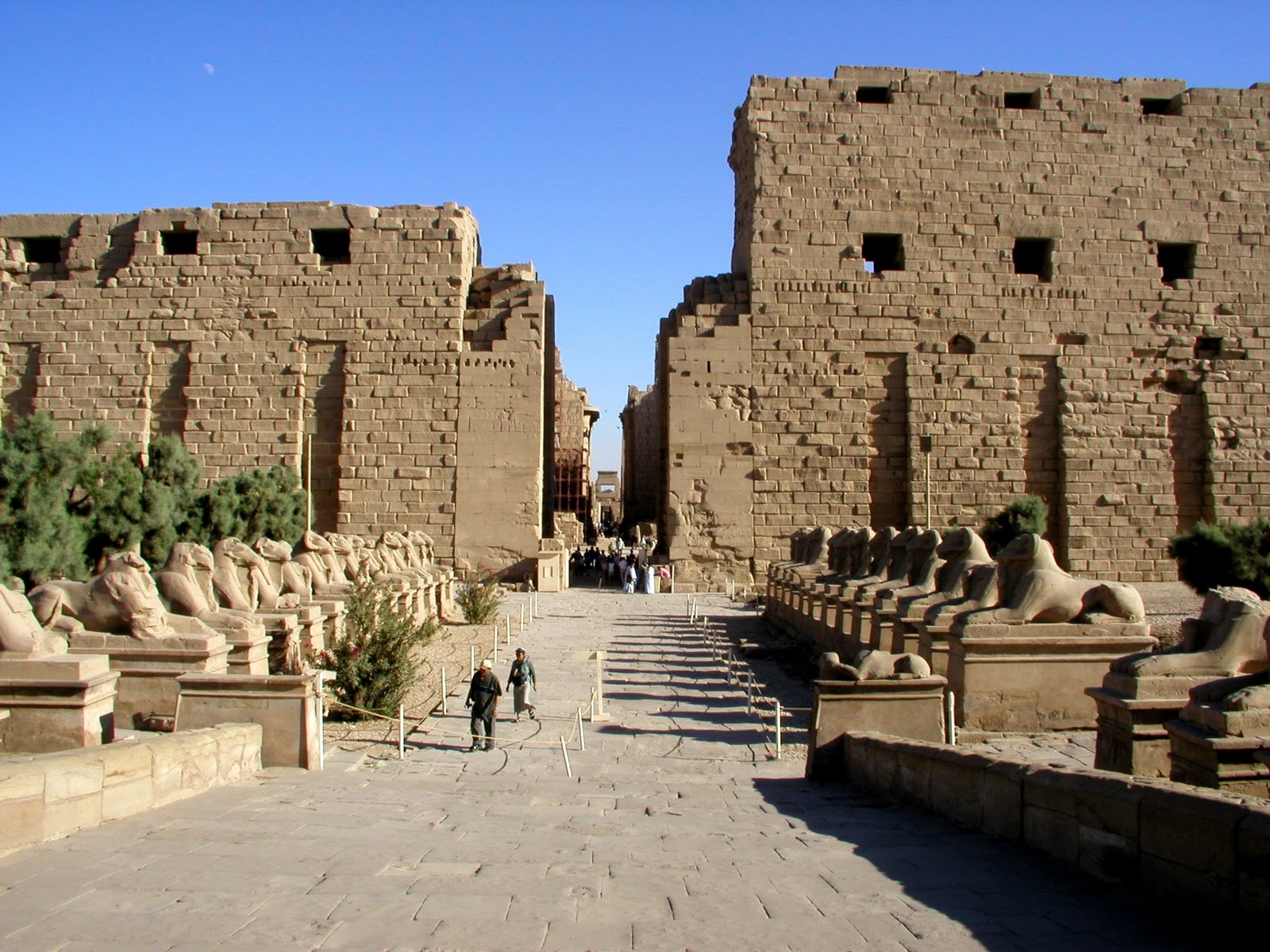
The grand temples built in his honor, such as Karnak Temple , demonstrate the opulence of the pharaohs and their dedication to their gods. The colossal statues and towering obelisks are awe-inspiring remnants of this devotion.
Turning eastward, the miracle of Buddha’s hair is an extraordinary relic revered by Buddhists. Preserved in various temples across Asia, this sacred relic is a striking example of the Buddha’s enlightenment and serves as a focal point for meditation and worship.
Intricate carvings, monumental temples, and sacred relics like Buddha’s hair connect us to the profound spirituality of ancient civilizations. These tributes to the gods remain silent witnesses to the enduring power of faith and the human quest for the divine.
Ancient Origins / ABC Flash Point News 2023
Estonia to wipe out 30% of the Wolf population

Estonia has, once again, begun culling its wolf population. A specified number of wolves are killed in the Baltic country every year, though this time around conservationists are worried.
Concerns have been raised that the science behind the cull is shaky, and that killing wolves may drive them to harmful behaviors against humans.

Estonia’s Environmental Agency has set the cull quota at 144, claiming there are more wolves in the country than conservation plans permit.
However, Maris Hindrikson, wolf researcher at the University of Tartu, tells Euronews she and fellow scientists are not convinced about their data. This means that the cull quota could be far too high, potentially disrupting the whole population.
She claims the wolf population is being calculated based on old fashioned and unsystematic techniques – such as hunter observations – that may not accurately reflect the number of wolves inside Estonia.

The problem is we simply don’t know how many wolves there are, Hindrikson says, estimating the cull could wipe out up to 30% of the country’s entire wolf population.
In a statement sent to Euronews, the Estonian Environmental Agency said its methodology was in use in Nordic countries like Sweden, Finland and Norway.
We find the current methodology to be comprehensive, objective and appropriate.


Even though wolf numbers have recovered in recent years, their total number is considered stable/decreasing by the International Wolf Center. Estimates put their total population at between 150 – 300 in Estonia.
Authorities claim culls are needed as wolves attack livestock, especially sheep, hitting the country’s farmers economically. A total of 946 sheep were killed by predatory wolves in 2022, according to Estonia’s Environmental Board (Keskonnaamet).
That figure has exceeded 1,100 this year, with several weeks of 2023 still to go.


One particularly grizzly attack at a farm in southeastern Tartu County killed an entire breeding flock of more than a dozen ewes in October, with farmer Rein Mirka telling Estonian Public Broadcasting (ERR) the incident had cost him between €15,000 to €20,000.
Hindrikson still questions whether culling is the best approach to the problem. Science has always shown that culling actually does not help reduce sheep deaths, she tells Euronews.
As habitats are lost – limiting the food resources on offer – Hindrikson claims lethal solutions may be counterproductive, driving wolves to hunt livestock in the first place.
Green Euro News / ABC Flash Point News 2023.
Spain proposed a Green ban on short-haul Airline Flights

Spain wants to ban short-haul flights when there is an alternative to travel by train that takes less than 2.5 hours, but environmental groups have slammed the proposal as ‘purely symbolic’.
The proposal comes from Spain’s ruling Socialist Party (PSOE) and the far-left Sumar party, who reached an agreement to form a new progressive coalition government last month.
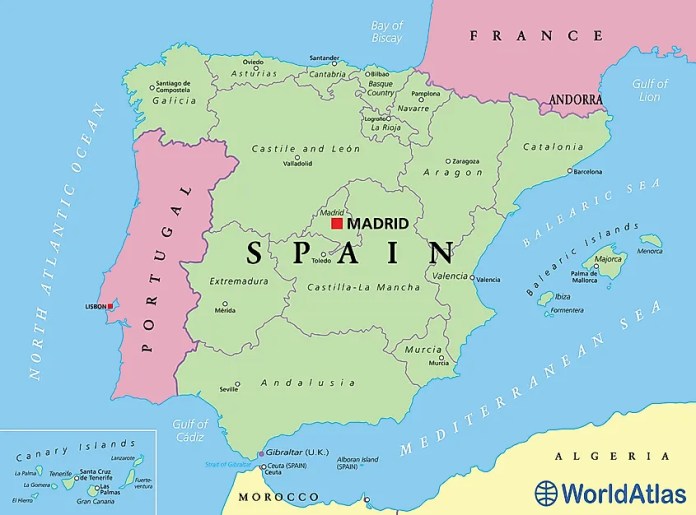
The measure is intended to curb emissions from quick domestic flights and encourage more sustainable travel, as part of Spain’s 2050 climate action plan.
It could affect flights from cities like Alicante, Barcelona, Seville and Valencia to Madrid. However, flights using the capital city to connect to international routes would not be included in the ban.
France introduced a similar measure earlier this year but environmentalists have questioned how effective it is at reducing flying.

It is yet to be seen if the ban will come into force. The coalition between PSOE and Sumar is not enough to build a majority, therefore support is still needed from smaller regional parties, including Catalan independentists.
Outgoing Prime Minister Pedro Sánchez has until 27 November to reach a majority otherwise new elections will be held in January 2024.
Eliminating short flights where there is a rail alternative of up to four hours would save up to 300,000 tonnes of CO2 and 50,000 air operations per year, according to a study released last month by Ecologistas en Acción.

The confederation of environmental groups proposed 11 air routes that could be replaced by train journeys, slashing Spain’s CO2 emissions from domestic aviation by almost 10%.

However, the government’s proposal waters down this target by focusing on journeys that can be made by train in under 2.5 hours.
It also would not apply to connecting flights to hub airports – a caveat that has led Ecologistas en Acción to label the ban a theoretically stellar measure that remains purely symbolic in practice.

France’s short-haul ban proved to be similarly limited, impacting just three flight routes.
Train travel is gaining popularity in Spain, with rail’s share of the Madrid-Valencia route already at 90% versus flying, president of Spanish airline association ALA Javier Gándara told newspaper Politico.
It’s not always easy to replace short-haul flights with train journeys, though. Making an international connection at Madrid’s Barajas Airport from a city like Valencia would involve taking a high-speed train to the capital’s central station then switching to a regional service.

Connecting international flights are therefore not included in the proposed ban, as passengers would likely just choose to connect at other European airports instead.

Spanish airline Iberia has also argued that the frequency of trains serving major airports currently cannot match that of short domestic flights.
ALA has argued that, rather than enforcing a ban, large airports should be connected to the high-speed rail network to give travelers the choice between flying and train travel. The network is rapidly expanding, with Barajas Airport due to be connected to it by 2026.
Green Euro News / ABC Flash Point News 2023.
Indus Valley Civilization, Culture and Cuisine

One of the great civilizations of the ancient world, the Indus valley civilization flourished 5,000 years ago in the valley of the river Indus.
Twice as extensive as its contemporary civilizations–the Old Kingdom of Egypt and the Sumerian city-states of Ur and Lagash–it was a culture of great sophistication and power.

Its people built hundreds of planned cities, the first in the world, and had trade links with Mesopotamia and Oman. For seven hundred years the civilization flourished; then for unknown reasons it disintegrated and was forgotten.
Rediscovered in the 19th century by archaeologists, this great civilization has remained virtually unknown to American audiences.

In spring 1999, the Asia Society brought together more than a hundred ancient artifacts from Pakistan in Great Cities, Small Treasures: The Ancient World of the Indus Valley.
The exhibition was the first opportunity for U.S. audiences to see works in Terra Cotta, bronze, gold, semi-precious stone, and shell produced in the Indus region in the 3rd and 2nd millennium BCE.
The exhibition was part of Pakistan 1997-98, events celebrating the 50th anniversary of Pakistan’s founding. Related events at the Asia Society included performances, lectures, readings, film screenings, and a symposium.


Researchers are getting a glimpse into ancient Indus Valley food choices by analyzing residues on ceramic pots from urban and rural settlements during the Mature Harappan period (c.2600/2500–1900 BC).
It is a landmark study because this is the first multi-site analysis of fats and oils on pottery from the Indus Valley civilization. The results enable us to see and compare the popularity of some of the ancient Indus Valley foods across settlements and over time.

A University of Cambridge press release on the new study published in the Journal of Archaeological Science says that the pottery with ancient Indus Valley foods’ fat residues came from both rural and urban settlements that are located across the modern states of Haryana and Uttar Pradesh.
The research team was led by Dr. Akshyeta Suryanarayan, former PhD student at the Department of Archaeology, University of Cambridge and current postdoctoral researcher at CEPAM, UMR7264-CNRS, France.

Dr. Cameron Petrie, of the University of Cambridge and one of the lead authors in the study mentioned some of the regional similarities and differences in Indus Valley cuisine.
The products used in vessels across rural and urban Indus sites in northwest India are similar during the Mature Harappan period ( c.2600/2500-1900 BC).
This suggests that even though urban and rural settlements were distinctive and people living in them used different types of material culture and pottery, they may have shared cooking practices and ways of preparing foodstuffs.

According to Dr. Petrie, the study results also suggest, there is also evidence that rural settlements in northwest India exhibited a continuity in the ways they cooked or prepared foodstuff from the urban (Mature Harappan) to post-urban (Late Harappan) periods.
Particularly during a phase of climatic instability after 4.2 ka BP ( c.2100 BC), which suggests that daily practices continued at small rural sites over cultural and climatic changes.
The researchers analyzed lipid residues on the pottery to find out what plant or animal products, such as fatty acids, remained and could provide them with chemical clues about ancient Indus Valley foods.

Isotopic analysis allowed them to also discern between the fatty acids left by meat and milk. The analyses showed researchers what was cooked in different pots.
The researchers’ analyses of lipid residue on pottery from the various sites shows that there was an abundance of animal products in ancient Indus Valley cuisine.
The researchers found evidence for the Indus Valley people eating the meat of pigs, cattle, buffalo, sheep, and goats, and also consuming dairy products from the ancient ceramic vessels.
Ancient Civilizations / ABC Flash Point News 2024.
Curacao Zorgsector uit Kritiek op concept-Landsverordening Luchtkwaliteitseisen?

Sommige organisaties, waaronder Fundashon Birgen di Rosario, een stichting gericht op bejaardenzorg, hebben kritiek geuit op de nieuwe concept-Landsverordening luchtkwaliteitseisen, voorgesteld door het ministerie van Gezondheid, Milieu en Natuur.
Deze organisaties benadrukken de noodzaak van een betere balans tussen economische belangen en volksgezondheid, vooral in relatie tot de activiteiten van de raffinaderij en de luchtvaart op Curaçao.

Hoewel deze organisaties het op prijs stellen dat hun mening is gevraagd, zijn ze kritisch over bepaalde inhoud van de verordening, met name met betrekking tot de raffinaderij in het Schottegat-gebied, waar de hotels en restaurants ook een te grote CO2 voetdruk achterlaten.
Het gaat onder meer om Amigu di Tera/ Defensia Ambiental, stichting Clean Air Everywhere en Schoon Milieu op Curaçao, Smoc, maar Stichting Crickey Amigu di Natura (incl. opkomen voor de mens) denkt daar ook anders over.
Fundashon Birgen di Rosario, gevestigd nabij die raffinaderij, heeft in het verleden veel overlast ervaren van stank, roet en chemische uitstoot en sluit verplaatsing en/of verhuizing daarmee uit.

De zorgstichting wil herhaling van deze situatie zien te voorkomen en pleit daarom voor strengere luchtkwaliteitseisen. Helaas blijkt uit verschillende wereldwijde onderzoeken dat de toerisme industrie 10% voor haar rekening neemt.
De scheepsvaart is verrweg de grootste vervuiler op aarde. Kortom de gehele transport industrie zorgt voor veel (verborgen) vervuiling. De cruise schepen vormen de grootste ramp op aarde, zij diumpen het meeste afval water in de Caribisce Zee.
Toch uiten de oudjes hun bezorgdheid dat de nieuwe wetgeving niet voldoende rekening houdt met het (ondergeschikt volksbelang) en dat economische belangen (lees : bedrijven) nog steeds zwaarder lijken te wegen dan gezondheidsbelangen, evenals in Europa.

De bejaarden stichting suggereert dat de overheid haar plicht verzaakt door disproportionele voorbehouden te maken voor de heropening van de oude stijl raffinaderij.
Maar om de grootste raffinaderij van het Caribisch gebied te sluiten is onzin, zeker met de torenhoge olieprijs en enorme werkgelegenheid die het met zich meebrengt is deze een mogelijke boost voor de eenzijdige economie.
Ze adviseren om strengere eisen te stellen aan een eventuele nieuwe uitbater van de raffinaderij en andere industriële exploitanten, maar laten voor het gemak de zwaar vervuilende toeristen industie buiten schot?
Fundashon Birgen di Rosario benadrukt ook dat de economische bijdrage van de raffinaderij aan de economie van Curaçao is verminderd en dat de regering nieuwe economische pijlers zoals toerisme en medisch toerisme zou moeten overwegen?
Maar dat lijkt niet echt een haalbare optie, omdat het ziekenhuis gratis aan derden uit handen gegeven werd. Ook de bouw van een nieuw vliegveld blijkt onrendabel, zeker nu CAP alle Airport Tax in eigen zak mag steken.
Bovendien blijven de vier grote raffinaderijen in Rotterdam ook gewoon doordraaien, gelijke monnikken gelijke kappen. Het formaliseren van HNO naar CMC is ook een hekel punt voor de samenleven, die de uit de hand gelopen rekening moest betalen.
Ook kritiseren de oude vandagen uit de stichting de beperkte opsomming van verontreinigende stoffen in de verordening en stelt voor dat naast emmissienormen die gaan over de maximale uitstoot die geaccepteerd wordt(?).
Maar ook emissienormen – uitstoot door individuele bronnen – moeten opgenomen worden. Dit zou voorkomen dat één industriële partij te veel kan uitstoten, zoals in situatie voor 2020 met PdVSA?
De stichting bekritiseert de beperkte opsomming van verontreinigende stoffen in de verordening en stelt voor dat naast emmissienormen (maximale uitstoot die geaccepteerd wordt) ook emissienormen (uitstoot door individuele bronnen) opgenomen worden.
Dit zou voorkomen dat één industriële partij te veel kan uitstoten. Kortom allemaal politieke blokkades die vanuit Den Haag aanbevolen worden, waar de eigen slager haar vlees keurt.
Curacao.nu / ABC Flash Point News 2024.
Sudan sounds alarm over Child deaths in war-torn African nation

More than a dozen children die every day at the Zamzam camp for displaced people in Sudan, where an armed conflict between two rival military forces has been raging since mid-April last year, the medical charity Doctors without Borders (MSF) reported on Monday.
According to MSF, the deaths are caused by catastrophic malnutrition at the camp in the North Darfur region, as UN agencies and international NGO’s that provide food assistance have had to scale back their operations due to the fighting.

We estimate that at least one child is dying every two hours in the camp… there are around 13 child deaths each day, Claire Nicolet, head of MSF’s emergency response in the Sahel nation, said in a statement.
Those with severe malnutrition who have not yet died are at high risk of dying within three to six weeks if they do not get treatment, Nicolet added, calling for an immediate increase in the humanitarian response.
Zamzam Camp, one of the largest and oldest facilities for displaced people in Sudan, was originally built by people fleeing the Darfur civil war in 2003, which left an estimated 300,000 people dead.


The camp has, however, not been spared from the humanitarian crisis that has engulfed the landlocked country since fighting broke out between the Sudanese Armed Forces (SAF) and the paramilitary Rapid Support Forces (RSF) on April 15 last year, according to the medical charity.
Last April, the UN World Food Program (WFP) halted all operations in war-torn Sudan after three of its employees were killed in the clashes.
In May of the same year, the agency announced it was rapidly resuming activities to provide life-saving aid to the Sudanese population despite enormous security challenges.

However, on Monday, MSF said there have been no food distributions from the WFP since May to residents of the Zamzam camp, who were heavily reliant on international agencies for survival prior to the outbreak of fighting.
According to UN figures, 16 million people in Sudan are subjected to hunger, with Darfur having the highest rates.
Sudan, according to the International Organization for Migration (IOM), has the world’s largest internal displacement crisis, with around 9 million people forced out of their homes over the course of 10 months of hostilities.

UN High Commissioner for Refugees Filippo Grandi warned on Monday that without humanitarian support and a ceasefire agreement between the warring factions, Sudanese refugees will make their way to European Union countries, which are already grappling with record numbers of migrants.
A previous UN report says more than 12,000 people have been killed in the fighting that erupted in the capital, Khartoum, and has since taken on an inter-ethnic dimension, triggering waves of killings in Darfur.
RT. com / ABC Flash Point News 2024
Indonesia started returning Containers of Waste and Hazardous materials to the EU and USA

Dozens of shipping containers full of waste will be returned to France and other developed countries, as Southeast Asian nations increasingly reject serving as dumping grounds for international trash.
The 49 containers were loaded with a combination of garbage, plastic waste and hazardous materials in violation of import rules, according to customs officials on Batam island.

The waste transported to Indonesia came from the United States, Australia, France, Germany and Hong Kong.
China’s decision in 2018 to ban imports of foreign plastic waste threw global recycling into chaos, leaving developed nations struggling to find places to send their waste.
In 2019, Malaysia also vowed to ship back hundreds of tonnes of plastic waste, to countries that present themselves as Eco-friendly?

The Philippines, meanwhile, returned about 69 containers of rubbish back to Canada in 2019, putting an end to a diplomatic row between the two countries.
Around 300 million tonnes of plastic are produced every year, according to the Worldwide Fund for Nature (WWF), with much of it ending up in landfills or polluting the seas, in what has become a growing international crisis.
TRT World / ABC Flash Point News 2020
Spanish farmers join continental protests over EU regulations

Spanish farmers blocked several major highways nationwide on Tuesday in what is the latest protest by agricultural workers in a European country, against rising costs, taxes and European Union (EU) bureaucracy.
The latest farmers’ protest followed similar demonstrations in Germany, France, Belgium and other EU countries, with much of their ire directed at EU regulations that, they contend, harms their abilities to earn a living in an overly-competitive marketplace.

With different shades, in the whole of the EU, we have the same problems, Donaciano Dujo, vice president of Spanish agricultural advocacy group ASAJA, told broadcaster TVE.
Ahead of union-led protests planned for Thursday many farmers mobilized tractors across the country on Tuesday to stage mass blockades that gridlocked numerous traffic thoroughfares across Spain.
Affected areas included Seville and Granada in the south of the country as far as Girona in the country’s north close to the French border, Reuters said on Tuesday, citing local traffic authorities.

Chief among the farmers’ complaints is that EU policies imposed to protect the environment harms their abilities to compete with agricultural producers from Latin America, or from non-EU countries.
We spend more time dealing with paperwork than in the field, one farmer, Eva Garcia, told Reuters. Garcia added that the EU’s Common Agricultural Policy was choking us.
On Tuesday, in what was viewed as a concession by Brussels, EU Commission President Ursula von der Leyen said that the bloc intends to remove a controversial law designed to reduce the use of pesticides – describing the legislation as a symbol of polarization.

Meanwhile, also on Tuesday, the Spanish Agriculture Ministry said it would distribute an additional €269 million ($289 million) of aid to around 140,000 farmers affected by a long-running drought, as well as for market downturns brought on by the conflict in Ukraine.
Last week, Catalonia declared a state of emergency over the three-year drought which has vastly impacted some agricultural production.
In Italy, farmers have also converged ahead of a planned protest in Rome later this week. Prime Minister Giorgia Meloni has declared her support, though Italian farmers have also expressed concern at government plans to end agricultural-sector tax subsidies.
RT. com / ABC Flash Point News 2024.
Global Electronic Waste is causing problems for the Environment in Nigeria

In Lagos, Nigeria, truckloads of electronic waste illegally imported from developed countries is causing problems for human health and the environment.
It’s a towering mountain of waste that greets the eyes as cars zip by on nearby highways and head into the central area of Lagos.
African countries like Nigeria and Ghana bear the brunt: An estimated 500 containers, each carrying about 500,000 used computers and other electronic equipment, enter Nigeria’s ports every month from the USA, Europe and Asia.

Formerly Nigeria’s capital city, this commercial nerve center of Africa’s biggest and fastest growing economies and is its most populated urban center, with an estimated 21 million residents.
But for all of Lagos’ appeal, the mega-city is drowning in rubbish. It is mostly plastic waste, which threatens the environment in no small measure. Yet, growing piles of another kind of waste could prove to be far more dangerous.
Overwhelming amounts of electronic waste are piling up in landfills across the port city. Also referred to as Waste from Electrical and Electronic Equipment (WEEE) or simply e-waste, it involves discarded items that have power or battery supplies.

Old electrical and electronic equipment (EEE) such as computers, phones, printers, televisions and refrigerators, commonly end up as e-waste.
E-waste is one of the fastest growing types of waste in the world. But globally, the Eco-friendly recycling of e-waste is optimally low: more than half of almost 50 million metric tonnes of e-waste generated worldwide ends up in landfills or is illegally transported.
As trendier technologies emerge, the lifespans of consumer electronics are getting even shorter, worsening the issue. The world is currently generating e-waste faster than it can be recycled or repurposed.

Developed nations are responsible for more than half of that. In 2014, the United States alone generated 11 million metric tonnes of e-waste, 80% of which was exported to poorer countries where they are either sold for re-use, mined for raw materials or abandoned in landfills.
A ready market for used EEE encourages the importation, 80 million of the 200 million Nigerians live on less than $2 a day, yet more than 90 million use internet enabled-gadgets.
Most people will buy used phones and computers rather than spend all their money on new ones. It’s a market that yields quick returns he says, perhaps more so than selling only brand new products.

However, more than half of used EEE imported to the country is near end of life or completely damaged. Apart from computers and phones, the e-waste also include air conditioners and LCD TVs, which contain mercury.
It is illegal to import end-of-life EEE, which is basically e-waste, into the country according to national laws, but corrupted systems at Lagos ports mean Western backed smugglers can sneak their consignments in.
Cables and wires are useful too. Thousands of bundles of wires are burnt every day to get to the copper. The burning activity also releases toxic fumes into the air, affecting the scavengers and residents in the area.

Containers marked as carrying vehicles are filled with e-waste – a trick employed to mislead port officials since importing vehicles is legal – continue to dock in Lagos from the USA, China and Europe, according to the Global E-waste Monitor.
E-waste dumping is not new or limited to Nigeria. In 1988, Italy shipped 18,000 barrels of toxic waste marked to a village in Delta State.
In 2016, an explosive investigation showed that GPS-tracked e-waste dropped off at American recycling companies ended up in Kenya. Every year, Ghana groans under the weight of 40,000 metric tonnes of imported e-waste.

Environmental experts are urging the Nigerian government to ratify the Bamako Treaty, a continental framework which aims to place an outright ban on the importation of hazardous waste.
Many agree that tighter law enforcement is needed at the ports to stop e-waste from coming in. An outright ban on used EEE would be too harsh and would put “most of the crime rings out of business”.
TRT World / ABC Flash Point News 2020.
 Crickey Amigu di Natura