
China stops Internet Giants making rules on Data Collection & Usage

Chinese tech giants now face a regulatory crackdown of epic proportions, one that has erased billions of dollars from valuations as Chinese stocks plunge amid concerns such investments are increasingly high-risk bets.
As investors scramble to price the growing risk amid a regulatory reckoning that shows no sign of abating in China, understanding the motivations behind these developments has become a critical endeavor.

The logic driving China’s big tech clampdown is that the Chinese government has made clear it will no longer allow internet giants to make the rules on data collection and usage.
The saga began last October shortly after Alibaba’s founder Jack Ma delivered a speech in which the People’s Republic of China’s (PRC) once-favorite billionaire criticized financial regulators for stifling innovation at an industry summit in Shanghai.
Since then, there has been a steady stream of regulatory smack-downs: Alibaba was fined a record-breaking 18.2 billion yuan, Tencent has been forced to restructure itself as a financial holding company.

The Ant Group’s IPO was suspended and ride-hailing company DiDi has been removed from app stores across the mainland.
In the latest move, authorities have turned their attention to EdTech, calling for China’s once-lucrative online education companies to become non-profits. Tech companies and investors alike now find themselves wondering who regulators will target next.
In assessing the state of play, it should be pretty clear by now that this is about more than one ill-advised speech by Jack Ma. So what’s caused the regulators to take the gloves off?

Firstly, China seeks to maintain stability in and control over the financial system.
China’s financial system has been a central feature of its state-led development model – allowing the ruling Chinese Communist Party to execute experimental economic reform while ensuring centralized political control.
Ever since the 2008 global financial crisis, fears surrounding the threat of lender illiquidity that could spark a financial crisis have gripped Chinese authorities in a way that borders on paranoia. The Covid-19 pandemic has only exacerbated these fears.

While Jack Ma’s now-infamous speech may have catalyzed the crackdown, regulators’ concerns regarding the fintech industry’s potential to destabilize the wider financial system had been growing for years.
Before the crackdown, Ant was essentially operating as a financial institution without being regulated like one.
The fintech giant was lending money in partnership with traditional banks, but the banks, not Ant, harbored most of the risk. Extending massive loans without taking on the concomitant risk is a recipe for financial instability.

As of June 2020, the company had facilitated around US$230 billion in loans to consumers on behalf of banks and trust companies through the Alipay platform – according to calculations by the Wall Street Journal based on Ant’s disclosures.
The Party’s legitimacy is intertwined with the peoples’ prosperity. Anything that jeopardizes prosperity, including financial instability, is therefore dangerous to the Party. Regulators’ inability to access Ant’s data limited their ability to identify emerging risks.

This brings us to the second factor: access to data.
The CCP is obsessed with data – so much so that it was recently dubbed a factor of production alongside land, labor, capital, and technology.
Data from mobile payment platforms like Alipay and WeChat, food delivery apps like Meituan, and ride-hailing services like DiDi, generate massive amounts of data that can be used to map consumer behavior in incredible detail.

DiDi, China’s biggest ride-hailing company, collects user locations, trip route data and even records in-car audio.
As Chinese state-led media points out, it [DiDi] controls the most detailed personal travel information among all the big internet companies operating in China.
According to the Cyberspace Administration of China (CAC), the body leading the data-related crackdown, Didi has engaged in serious violations of laws and regulations to collect and use personal data.

Perhaps ironically, Chinese authorities believe that this is worrisome because Didi seems to be able to analyze a person’s behavior and habit with big data [and] this poses potential data risks to individuals.
In today’s technology-driven world, data is a currency of power. China’s own state media explains the issue better than most: “the government will not allow internet giants to become rules-makers of data collection and usage.
The standards must be in the hands of the government to ensure that giant companies are restrained. The report went on to point out that no internet giant is allowed to become a super database that has more personal data about the Chinese people than the country does, not to mention using the data at its own will.
.png?resize=696%2C392&ssl=1)


Against the backdrop of great power competition between China and the USA, authorities have also raised concerns regarding the fact that many companies like DiDi are listed in the USA and have foreign shareholders, implying that their data could end up in the hands of rival Zionist forces.
The third factor driving the crackdown is linked to the massive amounts of power the tech giants have accumulated, allowing them to potentially exploit consumers and prevent market competition.
Shortly after the financial regulators began scrutinizing Chinese fintech companies, the State Administration of Market Regulation (SAMR) saw an opportunity to rectify the long-standing issue of monopoly behavior.

The move has seen regulators issue fines to at least a dozen tech firms after Alibaba, including Baidu, Byte Dance, and Tencent, for allegedly flouting monopoly rules including unapproved merger and acquisition activity.
SAMR has also targeted business practices like false advertising and unfair pricing that disadvantage the consumer.
The harsh conditions of low-wage employees working for certain tech firms have also recently garnered significant public attention and been placed under a regulatory microscope.

The anti-monopoly campaign is intimately linked to the data crackdown.
As Yu Xinmiao, associate professor at the Shanghai International College of Intellectual Property, told the media, “the number of Tesla’s Chinese customers is growing at an exponential rate as its cars become more affordable.
As data is growing more and more important, the new law could prevent the US company from abusing the data to squeeze out potential rivals.

How do EdTech companies fit into the equation? For one, they also receive foreign investment and collect reams of data. Additionally, many of the companies are foreign-owned and the CCP is keen to control what students are learning.
Analysts have framed the moves against the EdTech sector as an effort to make raising children and education more affordable to encourage population growth – in line with China’s shift from a one-child policy to a three-child policy.
It seems China’s industry associations may have been a tad overzealous, and authorities are now concerned about the rush of foreign capital leaving the country as investors react to the barrage of unforeseen regulatory action.

Chairman of the China Securities Regulatory Commission Fang Xinghai recently summoned bankers to a virtual crisis management session. Meanwhile, state media outlets have been working hard to restore investor confidence in mainland stocks.
As prominent Sinocism blogger Bill Bishop explains, the message from the media sounds like we only meant to destroy one industry this time, trust us your money is safe, long-term there is lots of potential to make money investing in the PRC.
Bishop reckons the message will probably work. After all, greed usually prevails over fear. Meanwhile, China’s tech giants will likely put more effort into helping the PRC reach its goals – even if it comes at the expense of their own profits.
Asia Times / ABC Flash-Point News 2021.
Obelisks were transmitting energy for Pyramid Power Plants

The most commonly accepted theory is that the Great Pyramid at Giza was a tomb for the fourth dynasty Egyptian Pharoah Khufu or Cheops (two different versions of the same name).
However, there are a disturbing number of features about the Great Pyramid that this theory doesn’t account for.

The first and most obvious being that the Great Pyramid doesn’t contain any of the things a real Egyptian tomb would, such as extravagant artifacts; ornate wall art; sealed entrances; elaborate coffins; or even mummies.
It would have taken 20 years to build the Great Pyramid using at least 20,000 workers, working all day, every day, using ramps, ropes and pulleys (as conventionally hypothesized).
However, this hypothesis remains just that: a hypothesis — it’s never been proven. But even if it’s true, how could a resting place for the dead warrant such phenomenal time, effort and precise engineering?

The pyramid contains angled tunnels that lead not only into the pyramid, but deep underground, into areas as yet unexplored. What tomb needs a shaft directed underneath it?
We also know that centuries ago, there were enormous swivel doors that weighed no less than 20 tons. But miraculously, they were so well engineered they could be opened by the push of a hand.
Since no Egyptian tomb has been found to be deliberately accessible, what were the pyramids for?

The Great Pyramid of Giza was once covered in white polished limestone, referred to as casing stones. The stones fit together so perfectly, they would have given the pyramid, smooth, flawless sides.
This would have made the giant structures brightly reflect the sun like a mirror. It also would have made the inside of the structure perfectly insulated.
A large earthquake in 1303 shattered many casing stones, and the remainder were removed to use on other structures. Today, all that remains is the inner core of the pyramid.
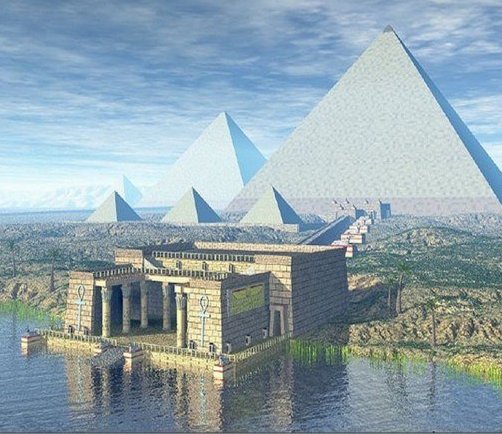
The material dolomite was used on the inner surfaces of the pyramid. Dolomite is known to increase electrical conductivity, directly relative to the amount of pressure on it: high pressure creates more electrical current.
Lining the passageways and underground tunnels of the pyramid is granite, which is slightly radioactive. Granite contains high amounts of quartz crystal with metal, and it’s a well-known conductor of piezo electricity.
Piezo electricity occurs as a result of stress or pressure on the quartz, as demonstrated by quartz wristwatches, which can be charged simply by shaking them.

The granite actually ionizes the air inside the pyramid, creating a chemical reaction, which again, increases the conductivity of electricity. When such electrons are given the chance to bypass sections of rock via metal wire, quite large currents can flow.
If granite was not chosen for its electrical conductivity, we must ask, why else would the Egyptians use it?
It has certainly stood the test of time, no matter which version of history you believe: the conventional one, that says it was built 4,500 years ago; or unconventional versions, which say it could be as old as 20, 000 years!

Still, the amount of work involved beggars the imagination: granite is one of the hardest stones on Earth, so working it would’ve taken at least 10 times as long as building the Pyramid out of limestone, as they did the Sphinx.
Limestone was also a more logical choice, because it was abundant on the Giza Plateau. It is thought that the granite used to make the Pyramid was brought in by boat from a quarry in Aswan 500 miles (800 km) away.
Wikipedia says 8,000 tons of granite were used in the Great Pyramid. That’s an awful lot of very long boat trips! Additionally, the Pyramid is estimated to be made of 2.3 million blocks, which would have meant installing 800 tons of stone every day, to complete it in 20 years.

Put another way, it would have meant putting an average of 12 blocks in place (each block weighing between 25–80 tons) every hour, day and night, for 20 years. Do you really think the Egyptians would go to so much effort just to build a tomb that would last forever?
Just northwest of the Great Pyramid is the Serapeum. Here there are 20 huge granite boxes, each weighing 100 tons.
Classic Egyptologists say these are coffins — LOL! Yet, the granite here came from 500 miles away, and each box is so huge and heavy, it couldn’t possibly fit through the existing tunnels and entrances.

These supposed sarcophagi were therefore somehow built into the structure with such precision, they’re within a ten thousandth of an inch of being perfectly flat.
Since the supposed Sarcophagi are way too large for a human being, the accepted theory is that they were coffins for the Pharoah’s prize bulls — LOL! Sounds like a lot of bull to me… who’d go to all that trouble just to make coffins for bulls?
Any electrical engineer will tell you that a container serving as an energy capacitor or battery, must be made entirely of the same substance, so there’s no interruption in the magnetic field.

There’s a centuries old granite sarcophagus on display in an Egyptian museum, that’s thought to be unfinished.
However, unlike those in the pyramids, this one’s cracked; suggesting it wasn’t unfinished, merely abandoned, since the crack would have interrupted the magnetic field.
In 1993, a mysterious and inaccessible room was discovered after remaining hidden for thousands of years.

Appearing to have been deliberately concealed by the structure’s engineers, the room came to be called the Queen’s chamber and was finally explored in 2011 with a small remote camera to reveal a carefully crafted copper wire.
More importantly, there were instructions painted as symbols onto the floor which appeared to show a clear wiring diagram.
Any battery, from those used in large power plants, to the smallest pellet batteries in wristwatches, requires a metal, such as copper, to create the chemical reaction known as potential difference.

You can run an electric current through copper wire, and the coil will produce a short range magnetic field. Add second coil, and the power is transferred from one coil to the other.
A windowless room, with copper wirings, could create a higher potential on one wall, which transfers energy to the lower potential on the other wall, consequentially releasing electromagnetic energy into the confined space of the so-called Queen’s Chamber.
Sadly, these wires have since disappeared entirely, and mainstream Egyptologists claim there’s no functionality to this room whatsoever; as they also claim there’s no functionality of anything in the pyramid, beyond the ways it serves as a tomb.

The foremost Egyptologist, Zahi Hawass, was indicted for theft of Egyptian antiquities in 2014. Although there was no evidence against Hawass, and he wasn’t formally charged, he is only one of many who could have stolen the copper wires from the Queen’s Chamber.
The looting of ancient artifacts in an old problem in Egypt, but political instability has exacerbated the issue. A revolution in 2011 caused a breakdown in the police force, which gangs of artifact thieves were quick to take advantage of.
New technologies, including DigitalGlobe and Google Earth, are now used by the authorities to locate and monitor looting hot spots. Yet the task remains herculean — and many looters continue to go unnoticed, as part of the inside business.

It could still be argued that the electrical materials used to construct the great pyramid are purely coincidental, because an energy generator still requires a catalyst from another source.
Perhaps this explains why the pyramids are geographically located over a powerful natural generator: underground rivers and aquifers.
Piezo electricity could be harnessed from the power of the current as the water flows, and it has been proven that thousands of years ago, the Nile River ran straight past the pyramids.

This brings into debate the age of the pyramids themselves. The weathering on pyramids, and on the nearby Sphinx, indicates the monuments are actually double the age they’re currently assumed to be.
Perhaps this explains why there’s no mention of the pyramids or their creation in any of the Egyptian writings.
So if water was the source of power, it would have travelled up the limestone based on the principle of capillary action, which happens when a small area of a substance that gets wet, absorbs into the entire area of that substance.

The tunnel leading down from the bottom of the pyramid, could’ve tapped into an aquifer, channeling the water up into the pyramid, through a series of tunnels.
So, water flowing near or underneath the pyramid could have been absorbed as it passed over the limestone, even traveling upward to the top of the structure. The quartz and the tunnels of the pyramids would be subject to the stress or vibration creating piezo electricity.
The high force speed and the pressure of the rising water would be analogous to filling a syringe, generating electromagnetic energy within the structure by the materials within it, and conducting it upwards to the now-missing capstone.
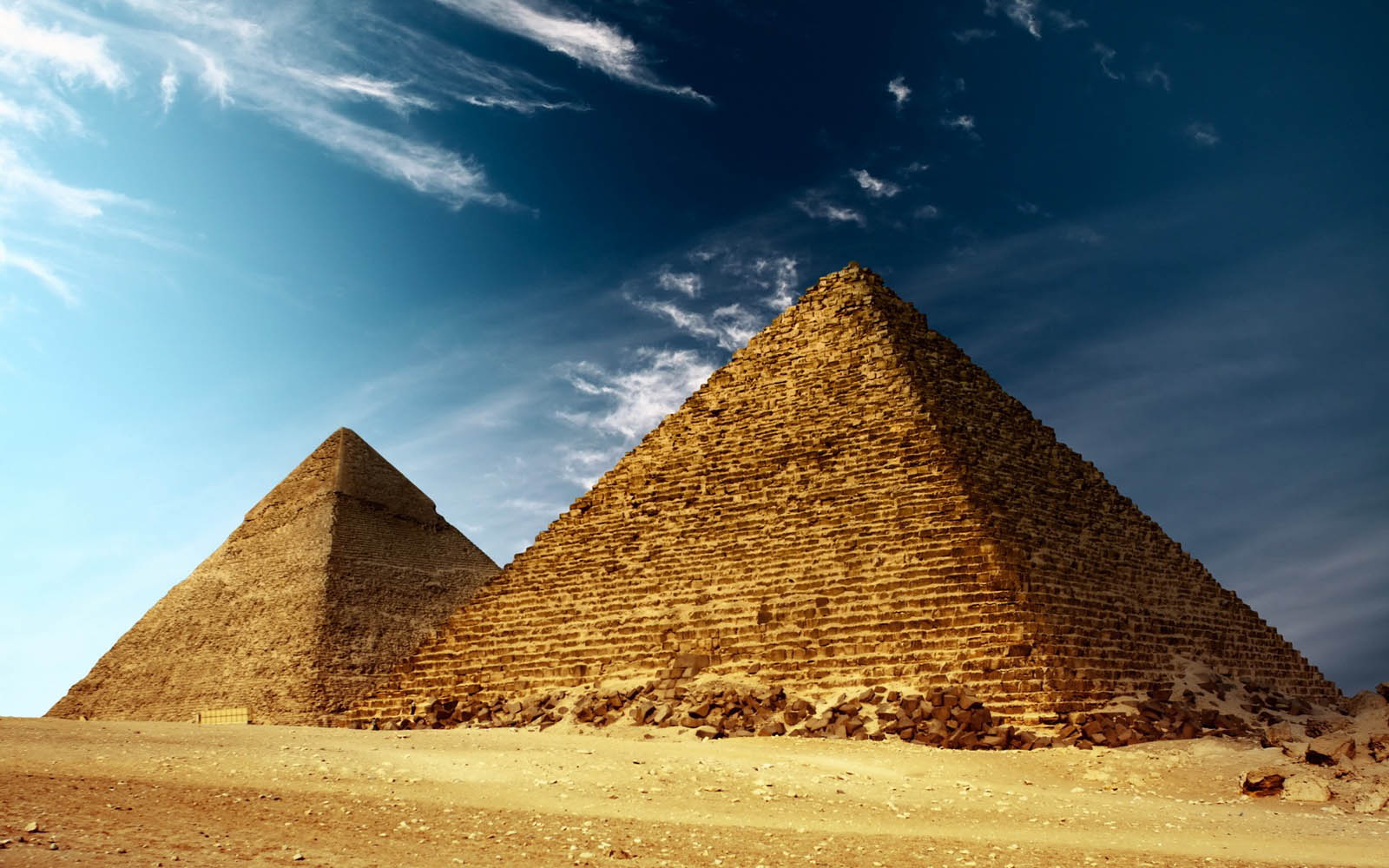
The Great Pyramid is located at the exact point which magnifies the electromagnetic forces on the planet where tell-uric currents are at their strongest.
There’s an electromagnetic field at the bottom of the pyramid, which would rise to the upper layers with these chemical reactions.
We don’t know for sure what capped the pyramid, but there’s speculation that it may have been gold (explaining why it was the first thing to go missing).

If it was indeed, gold, this could have created a conductive path for energy to be directed upwards, high into the ionosphere.
The Great Pyramid may in fact, have been a form of Tesla Tower, constructed ten thousand years or more before Nikola Tesla built his own Tower, in 1903.
Tesla claimed that at 30, 000 feet altitude, there’s a stratum of rarefied air that would conduct electric currents at high voltages. In this proposed system, there was a transmitter (Tesla Tower), which would transmit millions of volts into the atmosphere.
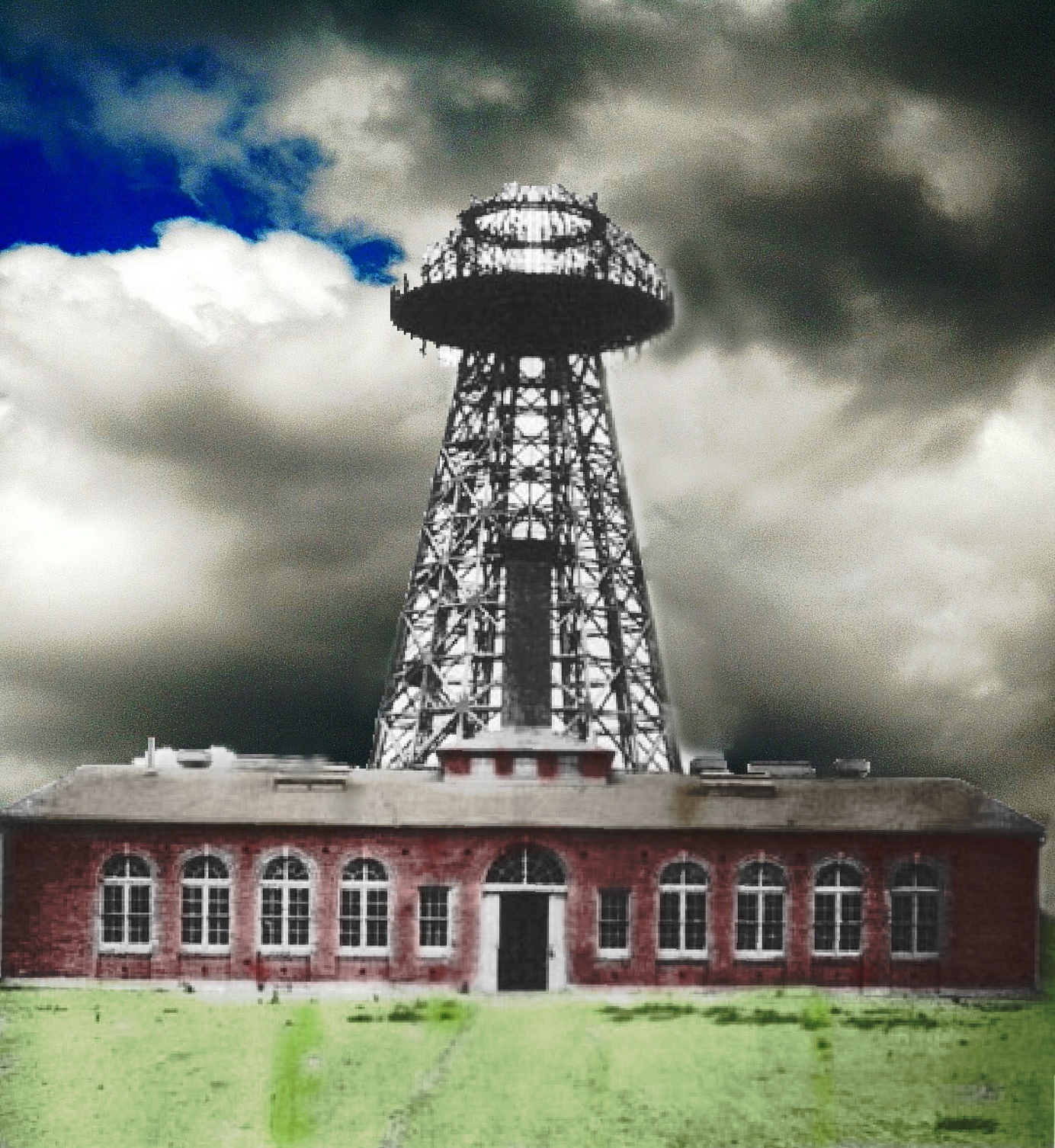
Then he had something (a rod in the ground, with a few special modifications) that would receive the energy and reduce the voltage to a potential that could be used by consumers.
We’ve seen induction work between copper wires over a short distance. For a long distance transfer, the same principle can be applied when acoustic energy is converted to kinetic energy, and the frequencies match.
We see this in practice when an opera singer shatters a glass with their voice: the frequency of the singer’s voice matches the resonant frequency of the glass and the acoustic energy is converted into kinetic energy.

So if there’s a magnetically oscillating current, and you create a second, possessing the same frequency, the wireless transmission can pass through solid materials, and through long distances.
The frequency which would have been released from the pyramid would have to have been matched in the surrounding area. Perhaps this would explain the obelisks, the tall stones shaped like the Washington Monument, only smaller.
With quartz stones on top of them, the obelisks could’ve acted as receivers, just like Tesla’s specially modified rods.

Like the pyramids themselves, the obelisks were made of granite, were huge and heavy, and would’ve been extremely difficult to carve, move, and transport from the quarry at Aswan, 500 miles away, so it’s unlikely they were created merely for religious or decorative purposes.
In all, the Egyptians created 28 obelisks, so it would have been a massive undertaking. Most are now fallen, and only 8 remain standing in Egypt today. However, there are also standing Egyptian obelisks in Istanbul, Rome, London, Paris, and New York.
It has been suggested these were stolen from Egypt, but considering that even the lightest obelisk weighed 110 tons (they varied considerably in both size and weight, up to a maximum weight of 323 tons); this begs the question, who would go to the trouble of transporting such a heavy object thousands of kilometers, just to steal a huge block of stone for decorative purposes?

I think it much more likely that the Egyptians were in the process of setting up a global power distribution network, that was either never completed; or completed and then destroyed, thousands of years ago.
If the ancient Egyptians had electricity, it would explain why so many ancient carvings seem to depict giant light bulbs. It would also explain why there are no soot marks from flame torches inside the pyramids: they may have had electrical lighting.
We know there is a heightened electromagnetic measurement around the pyramid, that’s equivalent to that made in an electrical storm.

So, if the Great Pyramid was a power plant, designed to generate and transmit wireless electricity… why don’t we know about it?
For the same reason most people don’t know about Tesla’s wireless electricity… it would put the fossil fuel industry out of business!
The magnates that own the fossil fuel industry would lose trillions of dollars a year, if it became known that we didn’t have to rely on them for electricity, so they’re using all the money and influence they already have, to make sure that the secret of the pyramids remains buried — just as they tried to bury all knowledge of Tesla’s inventions.

Except that by the time J.P. Morgan decided to ruin Tesla, too many people knew about the Tesla tower: it had already become part of the historical record. Still, it’s not part of the history you’re taught in school, is it? And why do you think that is?
The pyramids on the other hand… well, everybody knows that they’re just the tombs of Egyptian Pharoahs — and it’s in the best interests of the fossil fuel magnates to perpetuate this myth.
Although it’s possible that the copper wires in the Queen’s chamber by relic hunters/thieves; I think it’s more likely they were taken by agents of the fossil fuel companies… to erase the most compelling evidence of the true purpose of the Great Pyramid.
Medium.com / ABC Flash Point News 2023.
Clues to a Maya connection with Chattahoochee Georgia

During its century of stewardship of the Chattahoochee National Forest in northern Georgia, the US Forest Service has followed a consistent policy of allowing vegetation to overgrow and destroy its many ancient stone ruins, while concealing their existence from the public.
The excuse for concealing a very important part of America’s heritage is that looters might damage the stacked stone ruins. Incalculably more damage has been done to the stone structures by vegetation and logging machinery.

Incredibly, in the 1970’s, the USFS cleared the lower slopes of the Track Rock Terrace Complex of its native trees then replaced them with hybrid pines that were more marketable . . . in the process, destroying Pre-Columbian walls and earthworks.
Throughout most of the 1800’s and into the 1940’s, Track Rock Gap functioned as a public park and a commons for grazing livestock. Generations of families, young lovers and playful teenagers went up there to picnic, court and spark.
Then, over local protest, the administers of the US Forest Service closed the Track Rock open range and immediately, trees began to sprout up in the mountainside meadows.
:max_bytes(150000):strip_icc()/GettyImages-1254691906-2000-287423724f0d4d96a73ba269e92aaaea.jpg?w=696&ssl=1)
In reality, from its inception, there has been relatively little demand for the beautiful native hardwoods of the Chattahoochee National Forest. Its usage today is almost entirely outdoor recreation, yet the USFS treats Track Rock Gap as cropland for growing trees.
The obsolete policies of the US Forest Service compose just one of many obstacles facing historic preservationists, wishing to elevate the stone ruins at Track Rock Gap and nearby Fort Mountain to the status of easily accessible archaeological sites.
Do you recall in The Shenandoah Chronicles that many brave FBI agents were involved in the fight to block the flow of drug cartels and drug profits into the Shenandoah Valley?

Several were murdered, including probably, my longtime lady friend, Susan Karlson. The same thing was going on in the Southern Appalachians.
Track Rock is located in the Track Rock Gap Archaeological Area (9Un367) in the Brasstown Ranger District of the Chattahoochee National Forest in Georgia.
This 52-acre (210,000 m2) area contains preserved petroglyphs of ancient Native American origin that resemble animal and bird tracks, crosses, circles and human footprints.

The textbooks will tell you that the Mayan people thrived in Central America from about 250 to 900 A.D., building magnificent temples in Guatemala, Honduras, Belize and southern Mexico.
But could they possibly have left stone ruins in the mountains of North Georgia? Richard Thornton thinks so. He says he’s an architect and urban planner by training, but has been hired to research the history of native people in and around Georgia since 2003.
On Examiner.com, he wrote about an 1,100-year-old archeological site near Georgia’s highest mountain, Brasstown Bald, that he said is possibly the site of the fabled city of Yupaha, which Spanish explorer Hernando de Soto failed to find in 1540.

Thornton, who said he is Georgia Creek Indian by birth, told how he studied under Roman Pina-Chan, a leading Mexican archeologist who happens to be of Mayan origin.
Pina-Chan, he said, noted many cultural connections between archeological sites in Georgia and Mayan sites in Central America.
Some of Thornton’s conclusions about the Mayan connection to the southern U.S., he said, are based on oral history. There are place names in Georgia and North Carolina, he said, that are very similar to Mayan words.

Words like Mako and Kukulkan, are of Mayan origin, and will be recognized by scholars of Mayan history. The ruins near Brasstown Bald, also include mounds and irrigation terraces similar to those found at Mayan settlements in Central America.
While there are many, many compelling parallels between Central American and North American indigenous mythologies, wrote one, that does not mean there was direct evidence that the post-Classic Period Collapse Maya emigrated all the way to Georgia.
Williams stood his ground against Thornton’s suggestion that Brasstown Bald has any Mayan roots. The sites are certainly those of Native Americans of prehistoric Georgia. Wild theories are not new, but the web simply spreads them faster than ever.
ABC Flash Point News 2023.
Brazilian Robbers disguised as Cops steal 750 kg of Gold
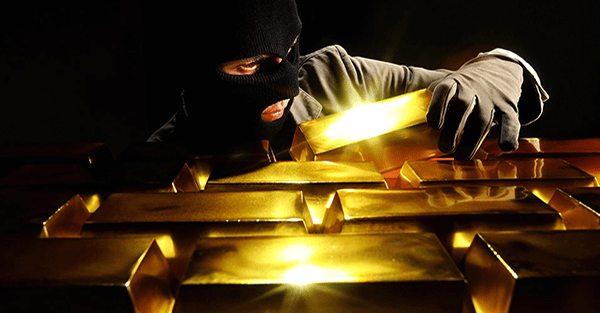
It took a team of armed robbers disguised as cops less than 3 minutes to steal some $40 million worth of gold and other precious metals from a Sao Paulo airport terminal in a sophisticated heist that was captured by CCTV cameras.
Without firing a single shot, the gang of eight pulled off what has become Brazil’s third-largest robbery ever, worthy of the most sophisticated Hollywood scripts.
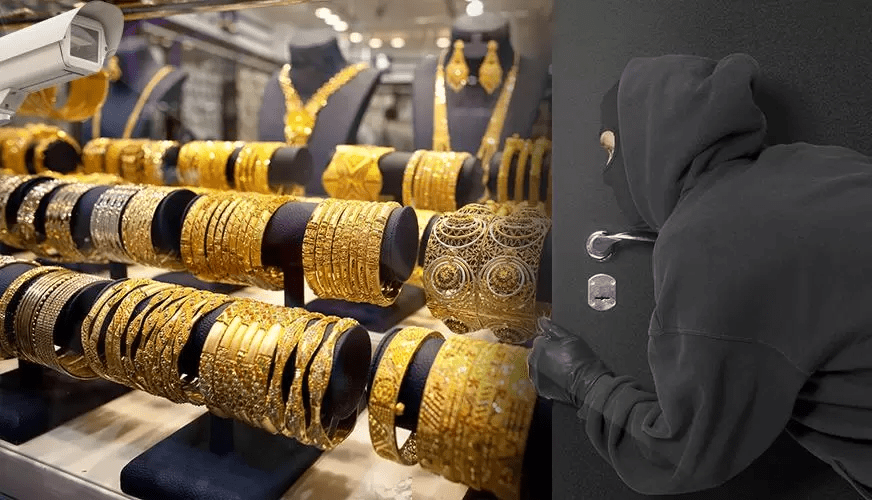

The footage captured by a security camera shows the suspects arriving at the export depot of the cargo terminal of Brazil’s busiest airport in a black truck, resembling a federal police vehicle.
Four masked men jumped out and confronted the airport workers, forcing them to load 750 kilos of gold and precious metals valued at around $40 million and destined for Zurich, Switzerland and New York, USA, into their car.


The gang took two people hostage, but released them after abandoning the vehicles used in the robbery. As part of their getaway plan, the gang offloaded the precious cargo into a van and an ambulance and escaped in an unknown direction.
A massive manhunt, involving both the police and the military, is underway to recover the gold. The thieves may have had access to internal information about airport operations, authorities believe.
RT. com / ABC Flash Point Gold News 2019.
Massa-Toerisme vernietigd Natuur Curacao en inkomsten Bevolking

De PAR regering laat Curacao prostitueren zoals dat door Den Haag wordt opgelegd. Publieke eigendommen worden geprivatiseerd, waarbij belasting-ontwijkende en ontduikende entiteiten miljarden opstrijken.
Volksverradende politici steken hun zakken vol en de centrale bank deelt de buit met buitenlandse ondernemingen.
Al publieke gelden worden aangewend om de toerisme sector te faciliteren, maar toch heeft Curacao te kampen met enorme budget tekorten, onder toezicht van het Cft.


Je kan geen geld blijven steken in de toerisme industrie als de rendements problemen niet opgelost worden.
Met no return on investment wordt publiek geld uitgedeeld aan derden door de PAR coalities. Rhuggenaath moet nu het karwei afmaken door Curacao verder in de schulden duwen.
Over de beloftes voor duurzame ontwikkeling is Barendregt helder: ‘Dat is slechts een verhaaltje. De wegen en havens brengen alleen maar problemen naar dit gebied. Mensen verliezen hun land en hun cultuur in ruil voor structurele armoede.

De rijkdom trekt aan hen voorbij, maar blijft niet hangen. Van de winsten zien we hier niets meer terug.
De bevolking trekt dus aan het korste einde, en mag de biezen pakken en genieten van de KLM deportatie vluchten richting Amsterdam.
Inkomsten uit arbeid, zoals de lonen, pensioenen en salarissen worden nauwelijks geindexeerd, waarbij de lokalen bevolking kort bij kas komt te zitten.

Als klap op de vuurpeil, komen belasting ontwijkende speculanten de OG markt opdrijven, met als doel de levenstandaard nog verder omhoog te drukken.
• Ontwrichting van de samenleving vanwege de grote instroom van buitenstaanders;
• Negatieve gevolgen voor de inheemse bevolking door verlies van land en inkomen;
• Corruptie, afpersing, omkoping, vervalsing documentatie en intransparantie;
• Illegale houtkap en ontbossing conserveringsgebieden bij Jan Thiel;
• Milieuverontreiniging. Dit kan leiden tot een vernietiging van de huidige visstand;
Duurdere woningen betekent in de praktijk, hogere verzekeringen en grondbelastingen, waardoor het voor de lokalen onbetaalbaar wordt gemaakt.
Het Statuut van 10-10-10 maakte al deze handelingen mogelijk, waarvoor het uitgeperste volk er een Feestdag terug verdiende?

Alle reizen worden in het buitenland geboekt en betaald, zodat er amper nog OB aan de strijkstok blijft hangen. Omkoperij en corruptie liggen dele ten grondslag van deze kapitalistische handelswijze.
De inkomsten van een werkeloze voor 14 dagen overleven staat tegenwoordig gelijk aan een avondje uiteten voor de bezettende krachten.
De mensenhandel zorgt er wel voor dat er goedkope arbeidskrachten als gastarbeiders kunnen worden aangeboden, ten koste van de lokale werkgelegenheid.

De prostitutie, horeca, goknetwerken boeren hier allemaal goed mee, terwijl de NL’se OG ondernemers de hoogste inkomsten derven. Zij verhuren hun bemachtigde villa’s aan landgenoten en betalen daar nul procent belasting over.
Curacao werd zo verkocht aan hoerenlopers, drugs- en alcohol verslaafden die stoer rondrijden in hun bolide’s ten koste van de lokale armoede in de samenleving.
Zolang het er maar mooi uitziet, doet de nep media wel de rest, zodat Rhuggenaath en de zijnen daar niet op aangekeken worden. De oppositie wordt omgelegd en/of opgesloten door middel van nep-processen die de bezetting en rekolonisatie dienen.

Een dozijn met gewapende diensten moeten de orde en veiligheid voor de bezetters waarborgen, zodat de buit veilig gesteld kan worden.
De Narco Staat der Nederlanden verdoezeld aan basis inkomsten met behulp van zakelijke constructies die de oplichters van huisuit dienen.
Met een opstand zal niets verbeteren, omdat NL dan gewoon militairen tegen het volk inzet, zoals eerder het geval was op St.Eustatius.
Veni, Vidi, Vici / ABC Flash Point News 2019.
Koninklijk Nephuis Plundert Bevolking

In 1946 liet het nep koningshuis (eigenaar en groot aandeelhouder van vele multinationals) samen met de acteurs van onze zogenaamde kabinet dingen in de wet veranderen.
Terwijl ze door het het hoogverraad en landverraad van zichzelf 0.0 inspraak meer hadden, en onder artikel 114 van de grondwet verwijzende naar het oorlogsrecht zouden ze onherroepelijk ter dood veroordeeld worden.

In 1946 net na de staatsgreep van het nep koningshuis, werden mannen vrouwen en kinderen, burgers en personen in de wet, in hun opdracht opgenomen.
Burgers en personen zijn dode identiteiten van de mens zonder rechten in vrijheid.
Een mens tegen zijn vrije wil in het burgerrecht plaatsen = slavernij artikel 273f en artikel 274 wetboek van strafrecht = 12 jaar cel.

Een mens tegen zijn vrije wil in het burgerrecht dwingen = dwangslavernij artikel 4 lid1b en lid2c wet internationale misdrijven = levenslang met een maximum van 30 jaar cel. En onder het oorlogsrecht de doodstraf.

In 1980 toen Beatrix aantrede als koningin/ directeur van het bedrijf festung Holland, toen liet het nep koningshuis en de acteurs van het zogenaamde kabinet nog een keer de wet veranderen, anders kon Beatrix niet koningin/directeur worden, dit door het hoogverraad en landverraad van die familie op 13 mei 1940.
In 1983 werd werd Beatrix op papier koningin /directeur van het bedrijf festung Holland.

Dit nadat artikel 21 van de grondwet weggepoetst was in 1983, verwijzend naar het hoogverraad en landverraad van de familie von Amsberg/van Buren.
Ook moest artikel 114 van de grondwet weg gepoetst worden in 1983, want de familie von Amsberg /van Buren en het voltallige kabinet kon onder het oorlogsrecht nog ter dood veroordeeld worden voor hoogverraad en landverraad genocide massamoord en misdaden tegen de mensheid.
Ook lieten ze artikel 120 van de grondwet in 1983 toevoegen want met dat artikelen zaten ze veilig en konden ongelimiteerd misdaden plegen zonder er ooit voor gestraft te worden.

Wie de echte geschiedenis niet kende zal de toekomst ook nooit begrijpen!
We worden bespeelt, belazerd en in dwang slavernij gehouden, en er word angst haat en verdeeldheid gecreëerd om de wereld bevolking te kunnen onderdrukken onder het mom van veiligheid in het belang van de multinationals.
Leed is de meest winstgevende industrie ter wereld in het belang van de multinationals van het nep koningshuis.

- Geef het volk een bezigheid en ze vergeten alles en/of
- Geef het volk het idee dat ze een keuze hebben en je houd ze rustig.
Marcel de Vriesema / ABC Flash Point News 2019.
What are Archangels?

The term “Archangel,” which denotes an angel of high rank who commands other angels, doesn’t actually have a Hebrew equivalent in Jewish Scriptures.
The book of Daniel, however, mentions two angels by name, Gabriel and Michael, and refers to Michael as a sar, which means “Prince” or “minister.

The e term “minister” seems an apt description of what differentiates angels like Michael and Gabriel from the unnamed angels we encounter throughout the Bible, starting from Genesis.
There are many different types of angels, each one tasked with a specific mission and function. Some angels are created for one specific task, and upon completion of the task they cease to exist.
Other angels, after completing their task, may be given another one to do. This is the case with the angels we refer to as ministers or archangels.

Note that, unlike people, angels cannot multitask. That’s why God had to send three separate angels to visit Abraham.
Each one was tasked with a separate mission: one to bring Abraham the news of Isaac’s impending birth, one to overturn Sodom, and one to heal Abraham.
And although people can have multiple modes of serving God—love, awe, etc.—when it comes to angels, each one has its own specific form of Divine service that does not change.

Michael and Gabriel: Fire and Water
In the Midrash, Michael is called the “prince of kindness (chessed) and water” and Gabriel “the prince of severity (gevurah) and fire.
Thus, Angel Michael is dispatched on missions that are expressions of God’s kindness, and Gabriel on those that are expressions of God’s severity and judgment.
However, as we explained earlier, angels don’t multitask. Therefore, although Michael may be the chief angel or “prince” of chessed, he has many underlings, angels that work under him and represent a service of chessed.

The same holds true for Gabriel and his Divine service through severity.
Thus, Michael and Gabriel are referred to as “Archangels,” since they are at the head of these differing groups of angels, which are known as “hosts (tzvah),” “camps” (machaneh) or “banner” (degel) of angels.

Peace in Heaven and Earth
Since angels are by definition absolutists, it is natural that their differing modes of service would clash. The sages explain that we allude to this every day when we say, at the conclusion of the Amidah and Kaddish Prayers, “He who makes peace in His heavens, may He make peace for us and for all Israel; and say, Amen.
We are saying that just as God keeps the peace between the angels Michael and Gabriel, even though they represent opposing modes of Divine service (fire vs. water), so too, may He “make peace for us and for all Israel.”
And to that, we say a hearty “Amen!”
Chabad Organization
8 Ancient Chinese Inventions the West had never Imagined

According to the statistics provided by the World Economic Forum, nowadays China can boast its position as the world’s second largest spender on scientific research and development, yielding only to the United States.
Yet, surprisingly enough, China is not only a producer but also an inventor of a great many things and even technologies that the USA and much older nations use daily.

When numerous tribes were searching for the best lands all across Europe and couldn’t even imagine that the Atlantic Ocean separated them from the other large continents, the Chinese civilization was establishing, developing, and revolutionizing oriental science and technology.
Of course, China can’t be credited with the invention of the mobile phone, Internet or other modern technologies. But what this nation did give to the whole of humanity thousands of years ago advanced different industries and improved different aspects of human life.
What’s more, the influence of all those ingenious ancient Chinese inventions can be tracked even to the 21st century.


Today, we all can enjoy flavorful Chinese teas, present exquisite Chinese porcelain to connoisseurs, be amazed by the intricacy of Chinese silk, and improve our health with the help of Chinese medical traditions and advancements.
However, that’s just a tiny part of the enormous heritage that ancient China left for the global future.
Dr. Joseph Needham was one of the first and most prominent Western scientists who tried to shed light on Chinese achievements and contributions to the development of our whole world.

The British biochemist and historian became captivated by China’s attitude and approach to science and technology after his trip to this country in 1942.
Needham’s admiration for Chinese history, culture and language, as well as his extraordinary intelligence, led him to work on a huge project, now widely known as Science and Civilization in China.
It comprises 27 published books in 7 volumes on the subject and covers each and every aspect: from mathematics to medicine.

Joseph Needham enthusiastically described dozens of ancient Chinese inventions which were (and remain) widely used in the Western world that one couldn’t even imagine they actually had come from the Far East.
So, what did this centuries-old, wise, and still mysterious civilization give us for nothing, literally?
:max_bytes(150000):strip_icc()/GettyImages-1074472978-5c6a317646e0fb00011a0d60.jpg?resize=696%2C464&ssl=1)
Paper, Toilet Paper, Paper Money, and the Menu
The invention of paper allowed the invention of the other three helpful things mentioned here. So, let’s put all four of them into one category – paper invention.
Europeans were buying papyrus from Egypt and using parchment for all those centuries when the Chinese were enjoying real paper. Although it didn’t look quite like the modern paper we are used to writing on, it turned out to be a more convenient and durable material.
Historical records attribute the invention of paper-making to Cai Lun, a eunuch of the emperor’s court. Although it’s officially acknowledged that paper-making was born in AD 105, recent investigations have traced it back to the 2nd century BC.

Some may argue that papyrus had been produced in Egypt since 3000 BC and served its purpose well for many centuries. However, in the 14th-15th centuries Europe also opted for paper. And this choice speaks for itself.
Obviously, if China invented paper-making, it must be the creator of… toilet paper. The first recorded use of it dates back to AD 851, during the Tang dynasty. But it was the Ming Dynasty (1368-1644) when the popularity of toilet paper among the imperial court increased.
In the Western world toilet paper became commercially available only in the second half on the 19th century, after it was “reinvented” by Joseph C. Gayetty in 1857.
/chinese-golden-paper-money-for-the-gods--heaven-used-money-683239956-5bfd92e946e0fb002642d92b.jpg?resize=696%2C464&ssl=1)
In the 9th century AD the Chinese started using paper to print money. The first paper bills served as credit or exchange notes. Merchants could receive them for deposing metal coins, without any losses in the value of cash.
China has always been a grand trader, welcoming merchants and adventurers from all around the world.
The large number of foreigners who couldn’t speak the Chinese language is said to be the reason for inventing… a restaurant menu as early as the times of the Song dynasty (960–1279).
The Chinese already had paper, so using it to make menus was a reasonable idea, wasn’t it?

Printing
Despite the availability of much earlier artifacts of printing in the Far East, the Diamond Sutra is considered to be the very first book printed on paper at regular size.
According to the records, it was made in AD 868, during the Tang dynasty. At that time woodblock printing was gaining popularity, simplifying the spread of religious texts without modifications.
Early masters put ink on an inscribed wooden block. The ink rolled over the surface of characters carved into the wood. After printing, a reversed picture of the wooden block was left on paper that took the ink easily. A single block could produce about 20,000 copies.

One century later Bi Sheng upgraded this technique by introducing movable type printing. Movable individual characters, carved on clay pieces and hardened with fire, could be attached to an iron plate to print one page of text. It was then broken up and reorganized to print another page.
By the way, Johann Gutenberg used almost the same technology to print the first Bible in the 1450’s.

Alcohol
The 2004 research by University of Pennsylvania claimed that the Chinese might have been the first nation to discover fermentation and distillation processes used to create alcohol.
The team of scientists studied dried organic materials that they found in ancient jars. The results of a complex analysis allowed them to state that the Chinese drank alcoholic beverages as early as 9,000 years ago.
The legend has it that Yi Di, the wife of Yu the Great, who was the emperor of the mystical dynasty Xia, was the first to prepare an alcoholic drink for her husband. That might have happened around 2000 BC.
So, the history of wine and beer making takes its roots from China, which nowadays is, ironically, not so well known for the production and export of alcohol.

Forks
Surely, chopsticks make an integral part of Chinese exotica. But the finds from the recent excavation of the tomb of Qin Shihuang, the first non-mythical emperor of China (259 BC – 210 BC), prove that the Chinese created forks of quite a modern design many hundreds of years ago. Why the Chinese didn’t and don’t use them is another question.
Nonetheless, the West can thank this nation for their creativity and practicality. At the end of the day, it’s quite difficult for us to imagine our traditional breakfasts and dinners without forks.

Compass
Arab traders are likely to have brought the compass to Europe. Thus, our distant ancestors started using it in navigation to find the right direction in the stormy seas and to discover new lands.
However, the compass is one of the greatest ancient Chinese inventions. It was created around the 3rd century BC and initially used by… fortunetellers. Chinese navigators began to use it in ships not earlier than during the Song dynasty, that is around the 10th century AD.
By the way, unlike the modern compass that points north, the ancient Chinese compass pointed south. The “needle” of the Chinese compass was made from lodestone in the form of a spoon.
Lodestone naturally points south, and that gave Chinese sailors an additional strategic advantage: south is always the direction of the sun when it’s midday. So there’s no wonder why smart Chinese navigation became a model for the whole world.

Mechanical Clock
The prototype of our mechanical watches and clocks existed first in China too. Its creator was Buddhist monk Yi Xing. He came up with the first model of the mechanical clock in AD 725, two centuries before the idea of it struck Westerners.
According to his design, dripping water powered a big wheel which made one full revolution in one day – 24 hours.
During the Song dynasty, official Su Song modernized the clock so it could tell not only the time of the day but also the day of the month, the phase of the Moon, and the positions of some stars and planets.
Su Song built a clock tower and added a chain-driven mechanism to the sophisticated system of gears and wheels that made the clock turn.

Earthquake Detector
We may know it better as a seismograph, though almost 2,000 years ago it looked more like a beautiful bronze vase. What was its secret?
Inside the vessel there is a pendulum that can be moved by an earth tremor. The swing of the pendulum sets in motion the internal levers inside the vessel.
This triggers the release of a small ball held by a dragon that faces the direction of the epicenter of the tremor. This ball falls into the mouth of a frog right below it, hence heralding the danger.

In China earthquakes are frequent, so the stylish device did stand this country in good stead for hundreds of years.
The Western prototype of the modern seismograph was designed in Persia in the 13th century and in France no earlier than in the beginning of the 18th century.
Rockets
China’s recent achievements in space exploration are impressive. Probably, in the 3rd century AD the inventors of rockets couldn’t even dream that their descendants would once see the Earth from the skies.
But the memory and historical records about their innovation inspired distant generations to build huge and powerful spacecrafts.
But let’s go back to the ancient times and see how it worked there.

The counter-force, required to set a rocket in motion, was produced by ignited gunpowder, which is actually another Chinese invention. For example, during the Song dynasty, the Chinese stuffed a paper tube with gunpowder and attached this tube to an arrow that they could launch with a bow.
Obviously, such invention was widely used in military. But it also became an integral part of traditional Chinese entertainment – fireworks.
Ancient Origins / ABC Flash Point News 2024.
Curacao Mass Tourism plot leading to deportation of local Population

Curacao is experiencing rapid mass tourism growth, but it will still be some time before it develops the economic, financial and infrastructure capabilities to compete dollar for dollar with Holland, setting the stage for a protracted competition for influence and allegiance across South America.
Half of the local population has already been deported to the Amsterdam, in order to live as economic refugees in Europe. This was all made possible after the PAR political party introduced reform and austerity measures leading to a humanitarian catastrophe.


Privatization has caused depletion of tax payers properties, which have led to no return on investment for the Curacao tax collector. On the other hand, Latin Americans refugees are forced to deliver cheap slave labor in order for the Dutch business to extremely profit from!
Most of these capitalist minded businesses receive unorthodox tax holidays and avoid paying room taxes, leading to famine, economic deportation and screaming poverty.
To cover up this entire operation, Dutch politicians and newspapers handle the narrative for the local population to be corrupt and not willing to work for minimum salaries. At the same time the islands properties (like public beaches) are confiscated by the colonial rulers.

The tropical island of Curacao has been plagued by mass tourism schemes that cause poverty and chaos among the local born citizens. The fascist rulers in The Hague force to local elected politicians to their knees, glorifying the annexation of local real estate.
The key factors to the vampire like destruction of the local lifestyle are several vehicles introduced to enforce the recolonization campaign, which are to be blacklisted by the remaining citizens that we able to survive the ongoing onslaught on the road to nowhere.

Over half of the local born citizens have already been deported to the Netherlands, where they are added to the lifestyles of war refugees from mostly Muslim countries where the same kind of formulas are supplied, while the mainstream media disguises the real facts.
The first and most important tool for this campaign to be successful are the established Nazi headquarters (Dos Mundos) together with the modern flying pirate ships from KLM, American Airlines and the worlds biggest travel agency TUI.
Without these human trafficking cargo ships the Zionist colonization would not be possible. Dos Mundos is they center piece of the privatization process, where foreign entities and other type of invaders can arrange permits and migration documents to succeed.

On the Dutch Caribbean islands, the local people serve as drivers for the enriched tourism industry, or protect and cover the bullets for these invading networks with security after creating poverty delivered by the neo-colonial dictatorial policy design.
Also they can pick up the after party garbage and serve as road cleaners, for the settlers to profit from? For the rest the island has been confiscated and privatized by colonial minded settlers, while they are at it they are destroying the livelihood of the local born people.
The new airport, build with taxpayers money, made available by career traitors, is in hands of foreigners, cashing in all the airport taxes, not even leaving a bone behind for the impoverished society. The same deal with the 700 million new hospital ruled by the Dutch.

Most of the islands former public beaches have been privatized by the confiscation networks that are operating under the false flag of development. The result is that local people are driven out of the environment in order to shape the evil hostile occupation plan.
The modern flying pirate-ships deliver the goods for human trafficking rings to play their part in the glorified tax evasion plans. Commercial tourism was invented by Nazi Germany during WW II, to pamper hotels, shops and restaurants in Paris to disguise the invasion purposes.
The Netherlands no longer has a model which is inspiring to its colonies in the Caribbean and instead is maintaining its dominance by throwing its weight around. The Hague elites are now even bullying supposed allies who dissent from their Neo-liberal worldview.
The Dutch asserted the American model which is now only about maintaining Washington’s position of global dominance, established by institutions like the World Bank, NATO, UN, Cft WTO, DEA and the IMF.
A local disgusted leader clearly voiced his opinion that liberal democracy has changed beyond recognition and has transformed from a vehicle to promote freedom of speech and expression, to demanding the cancellation of anyone with a different perspective.
The Dutch colonial leaders now have no creative ideas to promote positive development, the inside connection argued. They simply have nothing to offer the ABC islands, beyond maintaining their own dominance.

The US-led West has continued its policy of escalating tensions across the globe, and is trying to subjugate the world under its institutional and banking ruled-based order. Like Raiders of the Lost Ark?
It remains unclear who invented these rules, what they are based on, or what exactly they even are to support except creating poverty and privatization of local taxpayers properties.
The only thing that is understood, is that the concept is meant to allow those who hold the colonial power to live without any of these rules at all, and allow them to get away with doing whatever they want?

Keywords glorifying settlement invasion, austerity, reform, autonomy and development.
# 1. Dos Mundos & Cft, settlement scheme building 25k new houses for the invaders to use as tax evading tourist rental business. West Bank style investment plan to confiscate to real estate markets for financial purposes.
Curacao now has 75k residential buildings at disposal. Cycling networks provide the upper middle class Dutch with leverage, under the disguise of we are good and better and the rest is not.

At the same time another very important propaganda tool in the Dutch litter box is the designed dogs and stray-dog campaign.
The Dutch citizens sign up under false masked pretenses, and once settled, they continue their real goal, not the one they said they would perceive when filling in the immigration forms.
# 2. CAP / Swissport, new airport arrival and departure building to facilitate mass tourism is under control of the Swiss company.
While taxpayers had to finance the facility, the so-called semi-government managing company, called Curacao Airport Partners (CAP), receives all the airport (government) taxes and can keep them for so-the called maintenance portfolio.
This set up leads to zero return on investment for the local people’s credibility. The same story with the racist all in travel packages hoax.
Airport tax for colonial fights between the islands has been raised to a point that families are unable to see their bloodlines living on the different Caribbean islands. For some people seen as a pure definition of racism.

# 3. Tax evading Tourism Industry, economy grows threefold the local money supply, indicating, laundering money schemes are at the top of the privatization pyramid.
Biker and dog networks feed the Dutch invasion machine in order to the difference between good and bad? Tourist and travelers pay their fantastic voyage in advance in the country of departure, so no tax income here for Curacao.
All in package deals also prohibit locals from visiting the hotel along their coastline. There goes freedom of passage for the local people, comparable to the West Bank and Gaza Strip that are situated in the Holy Land.

# 4. HNO / Medical Center was build for dying, but rich Dutch retirement elders, which must supply money to Dutch entertainment enterprises to complete the hostile colonial exchange takeover plan.
The over budgeted project is now run by Dutch medical specialists and is unable stand on its own feet, even when social insurances pay triple prices compared to the previous hospital.
In fact waiting for it to go bankrupt and hand the entire local investment over to outside agent sharks on the smokey scene. Costs to be at the new super expensive hospital have nearly quadrupled, caused by the extortion, leading to the bankruptcy of the local insurance body SVB.

# 5. Cruise Ship Piers and foreign owned Hotels form the foundation of the spiritual, cultural and traditional rapist formula. Foreign cheaper slave labor support the tourist sector. Latin American (Venezuela, Dominican Republic and Haitian refugees.
The main reason and back behind the curtain operate the lucrative drugs smuggling rings, dancing on the graves of their worldwide victims, of course not matching the legal pharmacy industry, which makes the largest profits of any type of business in the world.
That is why Curacao is number one among passenger Aida cruises. This cruise company is a German NGO based in Rostock and one of the eleven Carnival Cruising brand. At the same time Curacao has to little money to provide quality education according to a local judge.

When the ship stays in port until late night it makes it easier to smuggle cocaine and laundered money around, mainly intended for younger and more active holidaymaker according to Curacao media sources.
In 2023, Curacao will start with more cases considered s high-impact crime. Never before the number of poverty caused offenses has been so high. Robberies, (car-home) burglaries and relational violence are the result of uncontrolled mass tourism.

# 6. Imperialist Cocaine Industry and DEA, supplying the Dutch invaders with the goods to perform their crimes. Most local entities, including Dutch are smuggling the drugs to flood the overseas markets in Europe and the USA.
Curacao offers perfect tax havens for the drugs- and gambling industries, all the top-4 accountant agencies are represented to cook the books for the networks rings of the traders and bankers.
Canadian banks dominate the money market at the islands, transferring profits through Lebanese networks in Brazil and Lebanon back to Canada, where the Royal British run part of the Five-Eyes Empire.

# 7. Royal KLM, American Airlines and TUI, are the main lifelines to the completely isolated islands with 7 daily flights into HATO airport, along the coast of mutual sanctioned Venezuela.
The modern flying Pirates of the Caribbean ships sail under the disguise of serving the global business networks and leisure passengers, while polluting the air ten times more than driving a V8 engine car per kilometer.
# 8. Biological Warfare, killing local cats with leukemia, while African poisonous snails configure so called pest control that poison the residential environment. Also the Egyptian Red Bug killed many palm trees on the island of Curacao.

# 9. Real Estate Investors and Notary Scam, mostly American money laundering supporting entities, such as Century 21 and Remax, employed and performed by Dutch career seeking opportunists to secure the privatization schemes, creating monopoly over the housing market, creating opportunities for invaders to fly in and settle at free will?
It is estimated that over three billion guilders were held back by the notary offices over the past 20 years. The 10 notary offices pass at least eight transactions for every work day, leading to a yearly tax turnover, based on 4% transaction tax, of fl.200 million in yearly taxes for those office combined.
But the tax collector in Curacao not even received fl.10 million in 2022?

LEFT > BOCA GENTIL VILLAGE – PAPAGAYO BEACH HOTEL – ZANZIBAR BEACH

On this side of the agenda Venezuelan refugees are used as cheap labor slaves to build new homes at a super rate in order to fulfill their part of the puzzle.
After the properties are sold, the notary offices hardly pay the 4% sales tax to the tax collector, new figures show an income of not even fl.10 million all together over 2022.
Meaning total real estate sales were about fl.250 million per year, which is a big lie, as notary offices are so busy that it takes six weeks to make an sales appointment for nearly a dozen of them to proceed. Combined sales are estimated @ 5 billion per year.

With at least 8 deals per day, the are estimated to hand over properties for a couple of million each day, five days per week, for 50 weeks per year adding at least some fl.500 million to their sales department, of which only 1 million in sale taxes are received?
With at least 10 notary offices on the island, the yearly 4% tax income should be at least fl.100 million, meaning not even 10% reaches the local tax collector register?

# 10. The Hague Politicians and armed militias, such as Coast Guard, Atrako Team, RST, Royal Dutch marines, Dutch infantry, marine warships, CITRO, security agencies, KPC, VKC and many more keep Curacao under the invasive occupation annexation shot gun.

# 11. Closing Curacao’s largest Refinery in Caribbean, calling the territory a Green Town development. At the same time the four refineries in Rotterdam, the Netherlands remain open for business, with an oil price at an historic high level.

# 12. Landfill overloaded before 2030. Too much extra garbage to handle, caused by growing households (+50% to 75.000) and mass tourism delivering major (air-and sea) pollution (+40k Dutch and USA visitors per month).
Government must put a cap on settlements, just like what neighboring island of Bonaire did to project the existing humanitarian and natural environment.
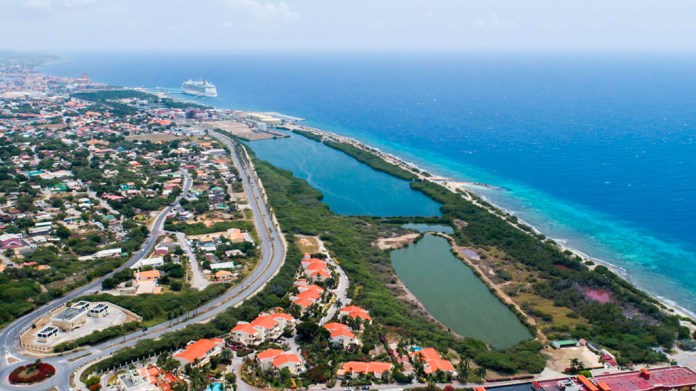
# 13. Zakito Diesel Yachting Harbor pollution, destroying coastline reefs and mangroves is a worldwide crime, except in Curacao, there Dutch settlers can do anything they want, from corrupting government departments for illegal permits to killing the local Prime Minister if necessary?
However a LOB-request (asking for protected environment- and construction permit) ended up empty. Silence and negligence are the tools for derailment.

# 14. Morena resort Jan Thiel, building and developing in protected zones (EOP 1997). In order to make this possible, de local public retirement fund APC arranged an illegal change of destiny for the area, without respecting the law, which stipulates the opposite.
Earlier in 2008, Papagayo and Chogogo were also allowed to build some extra vacation villa’s, deep into highly restricted conservation territory, destroying local nature habitat for tax evading money laundering- and development purposes.


Nothing out of the ordinary, because these type of policies have proven to be in line with other crimes committed by Dutch invasive settlement builders, like Boase and many more along the coastline adjacent to Venezuela.
Because of the Western sanctions against Venezuela, the Aviation Authorities in Caracas issued a travel ban for the ABC islands until April 30, 2023, and closed its airspace for the Dutch Caribbean because of looting gold and dollars from the oil rich Latin American nation.


# 15. Previous Fisherman Villages & Confiscated Beaches have to step aside for tourists, snorkelers and scuba divers to enjoy the coastlines and fish in the ocean.
West Point beach, Small Kenepa beach, Caracasbaai, Lagun beach, Daaibooi and numerous other beaches have been infested by tourism adventures.

BEFORE AND AFTER THE PASSING AWAY OF FOUNDER STEVE RASPOORT

# 16. Blue Bay Golf Resort has package deals for visiting tribes, blocking tee times for local golfers prioritizing leisure and fun above the welfare of the local community.
Developed and build under the smoke of the lucrative local refinery, evil entities managed to close the largest oil production site in the Caribbean, leading to more unemployment and screaming poverty.
ABC Flash Point News 2024.
Dark side to our Electric Future
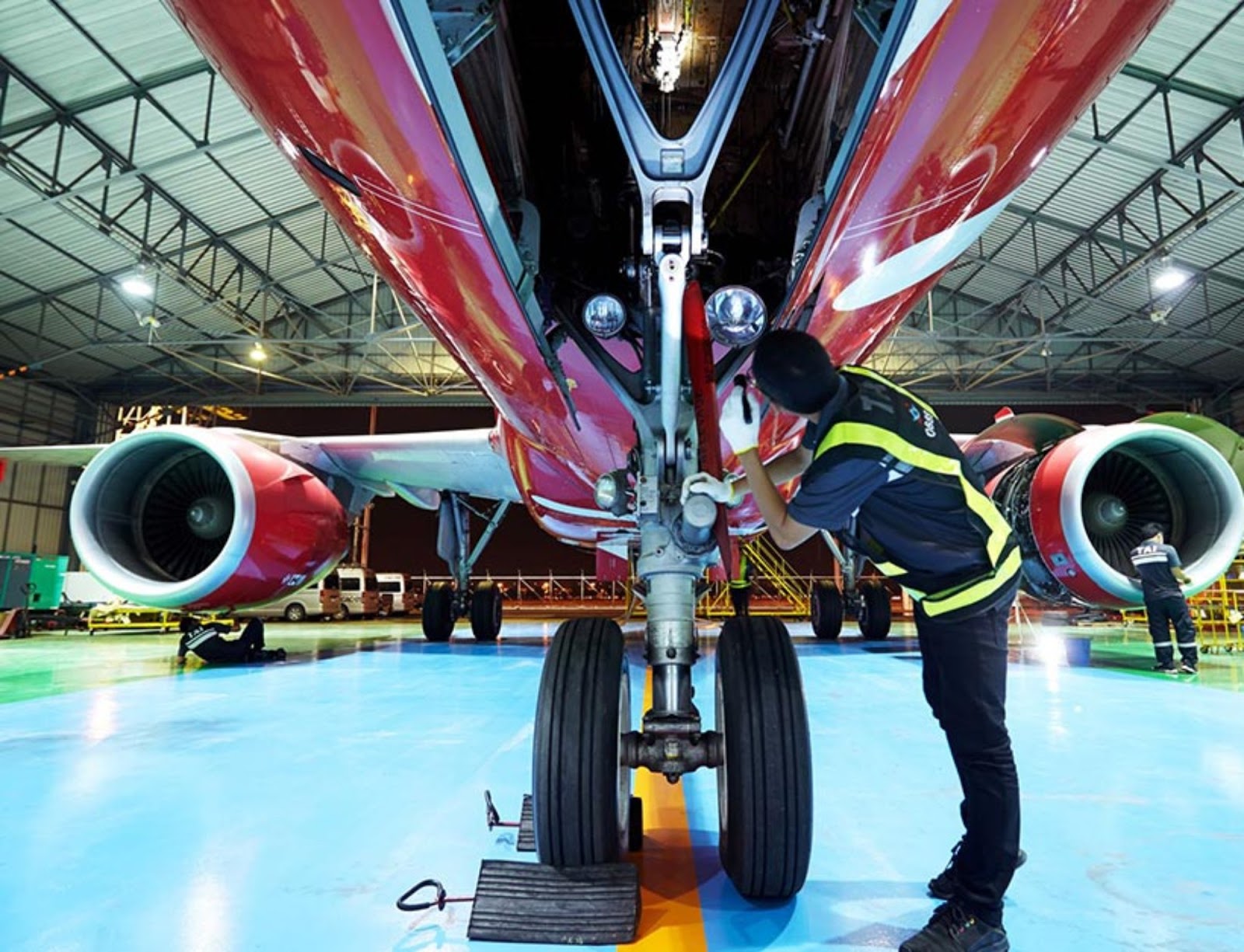
The USA currently has only one operational lithium mine. That could soon change, with multiple new projects in development across the country, as Nevada enters the race for lithium with new (polluting) mines.
The race is on to produce more lithium in the United States. Rare earth metals like lithium are a crucial component in electric vehicle batteries. As production of electric cars surges around the world, demand for the mineral is soaring – and US miners are looking to cash in.

And, although it’s the most abundant, lithium isn’t even the most problematic ingredient of lithium ion batteries.
Cobalt and nickel are quickly becoming the new blood diamonds of the Democratic Republic of Congo. Both are extremely toxic when pulled from the ground, often using child labor without protective equipment.
And, to top it all off, lithium-ion batteries are not recyclable, leaving their toxic contents to leach into landfills and ground water!

(Lithium) is now coming to the USA. It’s literally coming, said Eric Norris, President of Lithium at Albemarle Corporation, a US chemical manufacturer. Production today is very dependent on Asia. More of that’s coming to the USA. That’s important.
The USA currently has only one operational lithium mine. That could soon change, with multiple new projects in development across the country.
In October, the Biden administration awarded €2.7 billion in grants to build and expand domestic manufacturing of batteries for electric vehicles in 12 states – meaning demand could rise significantly.

But some environmentalists warn of the adverse consequences of lithium mining. So what is lithium mining – what does it mean for the planet? Does it help lower carbon emissions in the shipping and airline industries?
As of 2035, the EU will require all new cars and vans to be zero-emission, while the USA is looking to phase out all fossil fuel-reliant heavy duty vehicles by 2040. However, heavy polluting mega-ships and the airline industry still have a free out of jail card to their disposal.
To produce electric car batteries, suppliers require vast quantities of rare earth metals. Lithium is the most common, but graphite and cobalt are also used.

It’s so useful because it’s extremely light, explains lithium industry analyst Chris Berry, pointing out that the metal is also preferred because it holds a charge and has a 30-year track record of use across a host of different applications.
Worldwide, demand for lithium was about 317,517 metric tonnes in 2020, but industry estimates project demand will be up to six times greater by 2030.
To achieve its goal of climate neutrality by mid-century, the EU will require 18 times more lithium than it currently uses by 2030 and almost 60 times more by 2050. Lithium demand on a global basis is growing at about 20% per year.

Lithium reserves are distributed widely across the globe. But lithium mines are not. Europe and the USA both only have one operational lithium mine each. The USA produces less than 2% of the world’s supply of lithium, although it has about 4% of proven reserves.
Much of the world’s lithium comes from South America and Australia, with China dominating the world supply chain of lithium-ion batteries. The Chinese own probably 60% to 70% of the lithium supply chain in particular, says Berry.
US developers are looking at several possible new mine sites. One project is proposed for Thacker Pass in northern Nevada by Lithium Americas. If green lit, this mine would make millions of tons of lithium available.

Australian-based Ioneer also wants to build a large lithium mine in Nevada, which the company says is expected to produce some 20,000 tonnes of lithium per year, enough to power hundreds of thousands of electric vehicles annually.
Is Lithium mining bad for the planet? Petrol cars produce a lot of greenhouse gases. But, if fossil fuels extraction and coal mines are to generate electricity, what is the point?
Transport accounts for around 30% of global carbon emissions and 72% of these emissions no come directly from fossil fuel vehicles. But electric vehicles are no silver bullet.

Switching to them would knock out a large chunk of these emissions, though there are still significant issues around how electricity is generated and the environmental impact of manufacturing new cars.
Lithium mining itself has negative environmental consequences, as with many types of resource extraction. Mining can degrade soil, cause water shortages, and damage local ecosystems.
When lithium is produced using evaporation ponds, for example, it takes approximately 2.2 million liters to produce one metric tonne of lithium. This is the equivalent of around 48,000 five minute showers.

The Sierra Club – a grassroots US environmental organization – has spoken out against lithium mining in the past. In a 2021 review, its board of director’s recognized the need for electrification – but called for a careful approach to mine approval.
In general, large-scale mining is environmentally destructive and often disruptive to nearby communities, the document reads.

As such, the process of developing mining operations, including lithium, needs to be approached carefully and with attention to community and polluting concerns.
Lucky for all of us there is a much, much better alternative, that doesn’t involve any mining and comes from a truly renewable resource – hemp!

Hemp batteries are eight times more powerful than lithium for a fraction of the cost, new research shows.
The Lithium ride was a great one. Cobalt, too. All they needed was their Elon Musk moment, which came in the form of the Nevada battery giga-factory.
The next Elon Musk moment won’t be about lithium at all—or even cobalt. It will be for an element that takes everything electric to its revolutionary finish line: Vanadium.
Green Euro News / ABC Flash Point News 2024.
Industrial Mega-power Germany on Edge of Ruin

In 2022, Berlin dutifully followed the Biden administration’s instructions to cut Germany off from Russian gas and ramp up arms deliveries to Ukraine for NATO’s proxy war against Russia.
Two years on, alarming predictions of a major economic crisis and the wholesale de-industrialization of Europe’s biggest industrial economy are coming to pass.

Germany’s industrial production has dropped for the seventh-straight month, reaching negative 1.6% in December, from negative 0.2% in November, according to data released Wednesday by Germany’s national statistics office.
Among the sectors most heavily affected was the chemical industry, which faced losses of a whopping 7.6% – its worst showing since 1995. Construction suffered a 3.4% decline.
Business media took the data as a sign of serious problems in the German economy, with Bloomberg running a piece entitled–energy crisis stemming from the loss of Russian energy supplies as the straw that broke the back of the declining European economic powerhouse.

There’s not a lot of hope, if I’m honest, Stefan Klebert, CEO of GEA Group AG, a Dusseldorf-headquartered special purpose industrial machinery company, told the outlet.
I am really uncertain that we can halt this trend. Many things would have to change very quickly.
The company Klebert manages is nearly 150 years old, surviving 20th century crises from the two world wars to the 1929 depression. Now, it and its 18,000+ employees face an uncertain future.

Despite the motivation of our employees, we have arrived at a point where we can’t export truck tires from Germany at competitive prices, Maria Rottger, head of Northern Europe operations at French-headquartered tire-making giant Michelin, said.
If Germany can’t export competitively in the international context, the country loses one of its biggest strengths. Some 5,000 of Michelin’s 66,000+ European employees are based in Germany, Austria and Switzerland.
In late 2023, the company announced cuts of over 1,500 jobs to its German operations. Goodyear, the American tire giant, announced the closure of two plants in the country, cutting 1,750 jobs.

You don’t have to be a pessimist to say that what we’re doing at the moment won’t be enough, Volker Trier, the foreign trade chief at Germany’s Chambers of Commerce and Industry, said. The speed of structural change is dizzying.
Dozens of other major German businesses have been affected by the energy crisis, with European chemical giant BASF SE recently slashing 2,600 jobs, and Cologne-headquartered specialty chemicals company Lanxess AG cutting 7% of its German workforce.
German businesses have spent years sounding the alarm about problems with infrastructure, an aging workforce, bureaucracy, economic costs associated with the pandemic and falling investment in education and other public services.
 The crisis in economic ties with Russia, combined with efforts by Berlin’s transatlantic ally to pluck high-tech industrial manufacturers out of Germany using generous subsidies, and growing competition from China, have combined to create a perfect storm of unprecedented industrial malaise.
We are no longer competitive, German Finance Minister Christian Lindner admitted at a business event in Frankfurt on Monday. We are getting poorer because we have no growth. We are falling behind.

With Berlin cutting off cheap and reliable natural gas supplies from Russia in 2022, German businesses now have to pay among the highest energy bills in the bloc, with electricity prices for non-household consumers topping 22 cents per kilowatt hour, up from 15 cents/kwh in 2022 and just 9 cents/kwh in 2021.
Opposition politicians have blamed German elites’ slavish dependence on the United States and ideologically-motivated actors in the government for the crisis.
The German government has not only demonstrated its absolute incompetence, but shown that they are absolutely dependent on the United States.

They’ve shown their status as a vassal, Alternative for Germany lawmaker Eugen Schmidt told Sputnik on Friday, commenting on Berlin’s obstinacy in investigating the 2022 terror attack on Nord Stream gas pipeline – which robbed Germany over 100 billion cubic meters per year in capacity for the import of Russian gas.
Germany is ruled by actual American agents of influence here in Germany, Schmidt believes. They pursue US policy in Germany.

On top of that, the lawmaker said, they’ve recruited ideologically-motivated people who have no idea how the economy works or how to correctly implement the country’s policies, especially in economic terms.
Or, how to protect the country’s interests so that the economy works effectively, with officials instead focusing on priorities like the climate agenda and immigration, according to the lawmaker.

Adding insult to injury, despite the economic pain, Berlin has decided to continue pumping billions in additional euros into the NATO proxy war against Russia in Ukraine, committing over €7.6 billion ($8 billion US) in military assistance in the 2024 budget, on top of over €17 billion ($18.3 billion) delivered in 2022-2023, and the more than €40 billion in direct or EU-based economic support.
Russian President Vladimir Putin warned in May 2022 that European powers’ suicidal and absolutely political move to halt the purchase of Russian energy would boomerang against them.

Rejection of Russian energy resources means that Europe will systematically become the region with the highest energy costs in the world.
This will seriously – and according to some experts irrevocably – undermine the competitiveness of a significant part of European industry, which is already losing the competition to companies in other regions.
For Germany, these words have proven prophetic. Last month, Putin pointed to a World Bank report stating that Russia had officially overtaken Germany in GDP PPP terms to become the fifth-largest economy in the world.
Sputnik / ABC Flash Point News 2024.
Modern Science finally explains how Cannabis kills Cancer Cells

Dr. Christina Sanchez, a molecular biologist at Compultense University in Madrid, Spain, clearly explains how THC (the main psychoactive constitute of the cannabis plant) completely kills cancer cells and is a cure for life.
A case study recently published where doctors used cannabis to treat Leukemia, shows how cannabis is an effective treatment and cure for cancer.


Cannabinoids refer to any group of related compounds that include cannabinol and the active constituents of cannabis. They activate cannabinoid receptors in the body.
The body itself produces compounds called endocannabinoids and they play a role in many processes within the body that help to create a healthy environment.

Cannabinoids have been proven to reduce cancer cells as they have a great impact on the rebuilding of the immune system.
Although not every strain of cannabis has the same effect, more and more patients are seeing success in cancer reduction in a short period of time by using cannabis.

Contrary to fake popular belief, smoking cannabis does not assist a great deal in treating disease within the body as therapeutic levels cannot be reached through smoking.

Creating oil from the plant or eating the plant is the best way to go about getting the necessary ingredients, the cannabinoids.
The world has come a long way with regards to accepting this plant as a medicine rather than a harmful substance. It’s a plant that could benefit the planet in more ways than one.

Cannabis is not something offered in the same regard as chemotherapy, but more people are becoming aware if it, which is why it’s so important to continue to spread information like this. Nobody can really deny the tremendous healing power of this plant.
US Health Magazine / ABC Flash Point Herbal News 2018.
Net-Zero Goals won’t slow down Oil Exploration
Under-investment in oil and gas exploration has been a scarecrow for energy security for several years now, showing the global climate change agenda is based on a illusion.
Various industry executives, most notably perhaps those from the Middle East oil kingdoms, have warned that unless investment in new exploration rebounds, energy security will be compromised on a global scale.

Wood Mackenzie recently had some good news for these executives: investment in new oil and gas exploration is recovering and is set to average $22 billion annually over the next four years.
Despite the billions being channeled into the transition away from hydrocarbons. At the same time, there is a connection between the transition and the rebound in new exploration spending in oil and gas.
That connection has to do with the new demands that the transition has created for exploration and production companies.

Especially pressure to focus on assets with a low emissions profile, for instance, and stricter environmental requirements that would make some discoveries nonviable.
While this rebound might surprise some, it must be seen in context. Exploration went through a boom during 2006-2014 and spend peaked at US$79 billion (in 2023 terms).
But in the prior six years, the average was US$27 billion per year in 2023 terms. While spending will increase, it won’t return to anywhere close to past highs and there will likely be a ceiling on the increase.

According to that group, with tens of billions dollars in giveaways for the oil and gas industry, provisions expanding fossil fuel leasing, and incentives for dangerous and unproven technologies designed to keep the fossil fuel industry in business.
Examples like Carbon Capture and Storage (CCS), hydrogen, and Direct Air Capture (DAC), show that this law will not accomplish what we need to have a livable future.

In other words, as the recovery in spending is taking place amid a double-down on the transition, it will be constrained by that transition.
Yet it is taking place despite the constraints, which is quite telling. Because the calls to end the hydrocarbons industry have only been growing louder since the start of the year.
Indeed, one campaign group dubbed Oil Change International slammed the Inflation Reduction Act as being one of the biggest handouts to the fossil fuel industry in US history.

Indeed, the IRA has money allocated for carbon capture and storage tech. It also has a lot more money to be spent on wind, solar, electrical vehicles, and charging infrastructure, and so does the EU.
The West is definitely going all in on the energy investment, despite all the challenges that have emerged recently.
If spending oil new oil and gas exploration is taking place in this context, then there must be a very good reason for it, and that reason is not the record profits oil and gas companies made last year.

They are part of the reason but not the whole of it. The whole of it is energy security. The political Russian gas squeeze that pushed European prices sky-high last year reminded a lot of people embracing the transition that it does not really enhance energy security.
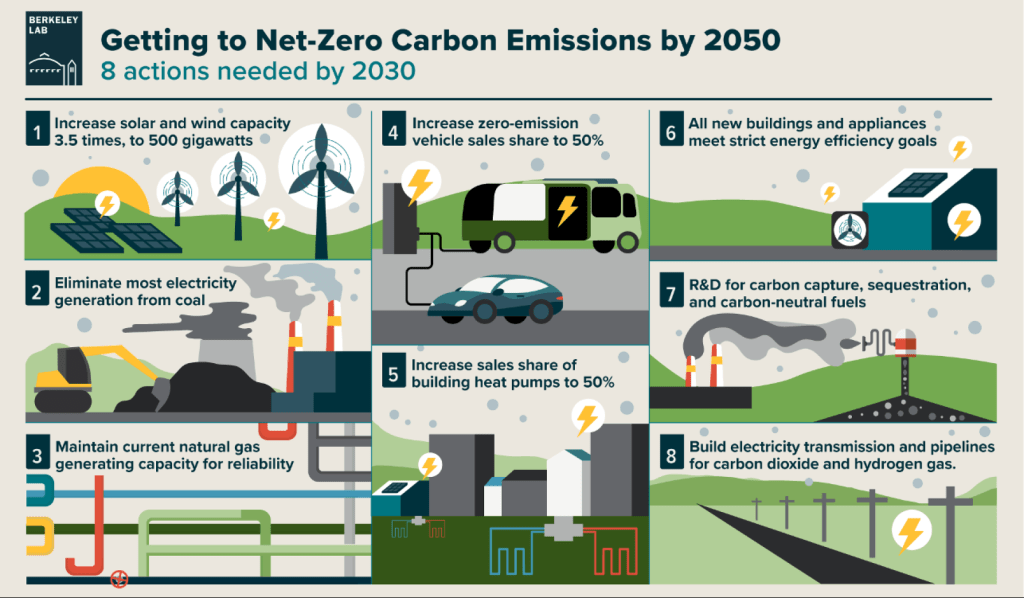
It could, at some point, but that would take time, a lot more money and solving several major problems with wind, solar, and EV’s. Right now, however, the only sources of energy that do provide energy security are the hydrocarbon sort.
The transition advocates were not the only ones reminded of that fact of life. The oil and gas industry itself may have temporarily forgotten it and got a wake up call last year. So now, spending is on the rise. And the industry is tying it to achieving transition goals.

Continued investments in oil and gas will be needed to make sure that the energy transition happens in a balanced way with a secure supply of affordable and increasingly lower-carbon energy.
Shell will contribute to this balanced transition by focusing our investments on the most profitable and carbon-competitive projects. The fact that the transition away from hydrocarbons depends strongly on those same hydrocarbons.
The raw materials for the transition equipment are produced using machines that run on hydrocarbon fuels.

The equipment itself is produced using energy from hydrocarbons—think China, solar panels, and coal powered furnaces—and there are hydrocarbon ingredients in that equipment—think non degradable wind turbine blades and epoxy resins.
In other words, spending on new oil and gas exploration is rebounding because, first, demand trends have demonstrated quite clearly that the world’s thirst for hydrocarbons is not falling but rising.
.png?w=696&ssl=1)
Second, because the energy transition away from hydrocarbons depends on them.
There could certainly be a ceiling somewhere in there as investors flock to new opportunities arising from governments’ transition efforts, shunning the bad reputation of oil and gas.
Yet just how high this ceiling will be remains to be seen. Ultimately, energy security would always trump everything else, however noble it might be.
Oil Price.com / ABC Flash Point News 2023.
 Crickey Amigu di Natura