
Mausoleum of the first Qin emperor Ming Dynasty & Mausoleum of Sun Yat-sen in China

The first emperor of China, Qin Shi Huang (c. 259–210 BCE), unified China into a single political entity. He standardized scripts, weights, measures, and coins throughout the territory, and roads, fortifications, and major defensive walls were built during his reign.
However, the most impressive architectural project that the emperor ordered was his own extensive burial complex. The tombs of Chinese emperors and high officials were designed to replicate their life on earth.

Everyday utensils, bronzes representing ancestors, musical instruments, wives, courtesans, and members of the court were often buried with the deceased to ensure a safe passage.
According to the records of the 2nd-century-BCE historian Sima Qian, the mausoleum is a miniature representation of the universe.
The 8,000 life-size soldiers (sometimes accompanied by horses) of the famous terra-cotta army were modeled on human figures and are holding real swords and spears in order to guard the emperor’s necropolis.

Each soldier has been given a unique facial expression, creating a realistic impression of individuality. To make them appear even more authentic, weapons, clothes, and hairstyles vary from one soldier to the next.
This vast terra-cotta army testifies to the absolute power and great ambitions of the first emperor of China. (Sandrine Josefsada).
Ming tombs (Beijing, China)
In 1402 Zhu Di (also known by the imperial name of Yongle) seized the Chinese throne from his nephew Zhu Yunwen. In doing so, he became the third Ming emperor, and he moved the capital from Nanjing to his own city, Beijing.
When his wife Empress Xu died in 1407, Zhu Di sent a diviner to find a suitable location for an imperial burial ground. The chosen area was good for both scenery and military defense, as it was surrounded on three sides by mountains.
Construction began in 1409, and 13 of the 16 Ming emperors were eventually buried there, the last tomb dating from 1644. The site of the tombs covers 15 square miles (40 square km). Although there is variation in the scale and grandeur of the tombs, all follow the same basic layout.
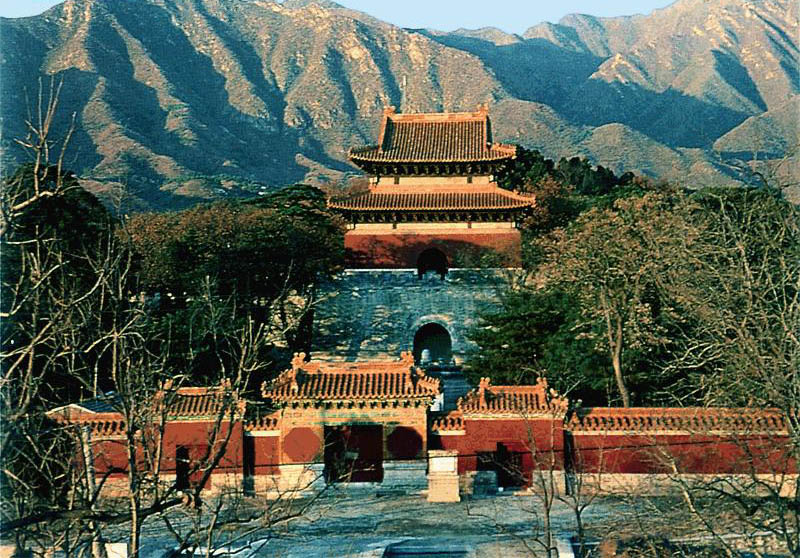
Each mausoleum is surrounded by a wall and entered through the Gate of Prominent Favor. This leads to the Hall of Prominent Favor used for the offering of sacrifices and worship by the deceased emperor’s descendants. The halls are generally made of nanmu wood, which was favored in the Ming era.
Behind the hall is the walled burial mound for the emperor and empress, and in front of this is the Soul Tower. This small building holds a stela bearing the emperor’s posthumous title. Surrounding the complex were the quarters of the officials who were in charge of offerings.
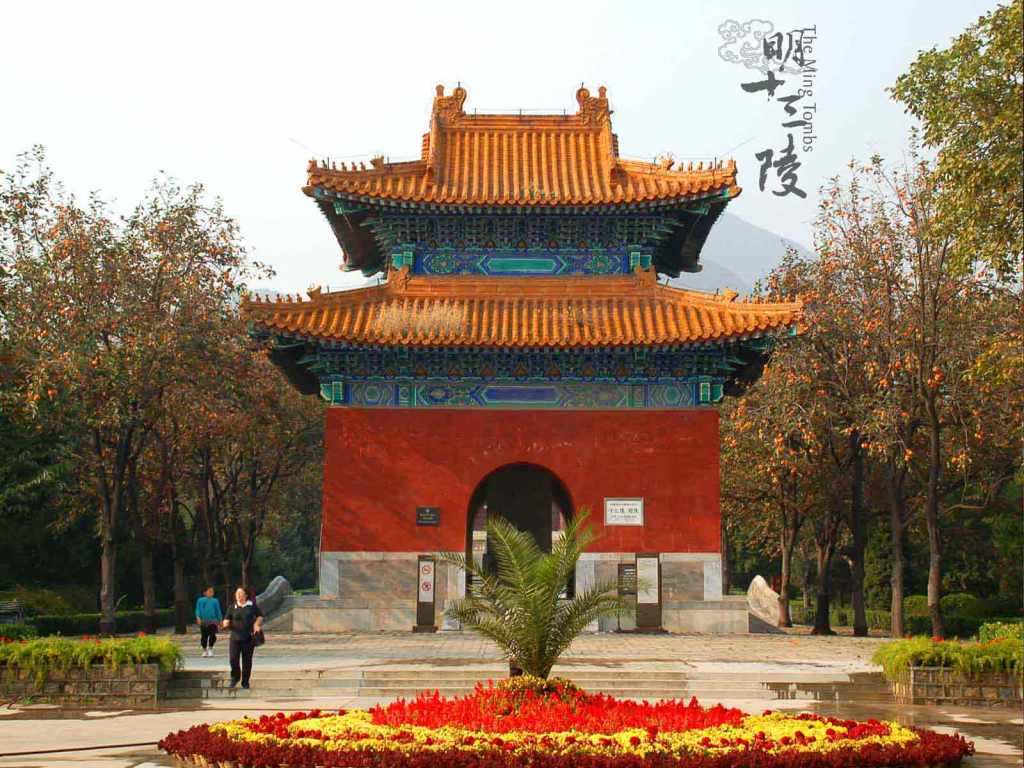
Bricks used in the construction weighed about 55 pounds (25 kg) and had the word shou (longevity) imprinted. The scale of the tombs varied partly according to whether they were built by the emperor himself or by his descendants.
The tombs are approached by a long sacred way lined with statues of animals and officials. Today only a few of the tombs are open; of these, Zhu Di’s tomb is the most impressive. (Mark Andrews).
Mausoleum of Sun Yat-sen (Nanjing, China)
Sun Yat-sen (1866–1925) is today regarded as the father of modern China. An anti-monarchist, he spent many of his earlier years in exile after a failed republican uprising in 1895.
In 1911 Sun declared China a republic. When he died in 1925, the embryonic republic was still far from stable, the new government having only limited control over the country at large.
Sun requested to be buried in Nanjing—the city in which he first proclaimed the republic—but he probably did not have in mind the grandeur of the mausoleum built in his honor and completed in 1929.

More than 40 designs were submitted for the site on Purple Mountain. The selected design by Lu Yanzhi was a modern interpretation of ancient classical Chinese tomb design. Looking like a bell from the air, the design and scale are similar to the tombs of the emperors.
A marble memorial archway marks the beginning of the site, which is laid out on a north-south axis. Beyond a path lined with pine and cypress trees, there is a formal three-arched entrance with copper doors. Behind this is a marble pavilion in which there is a 30-foot- (9-meter-) high stela.
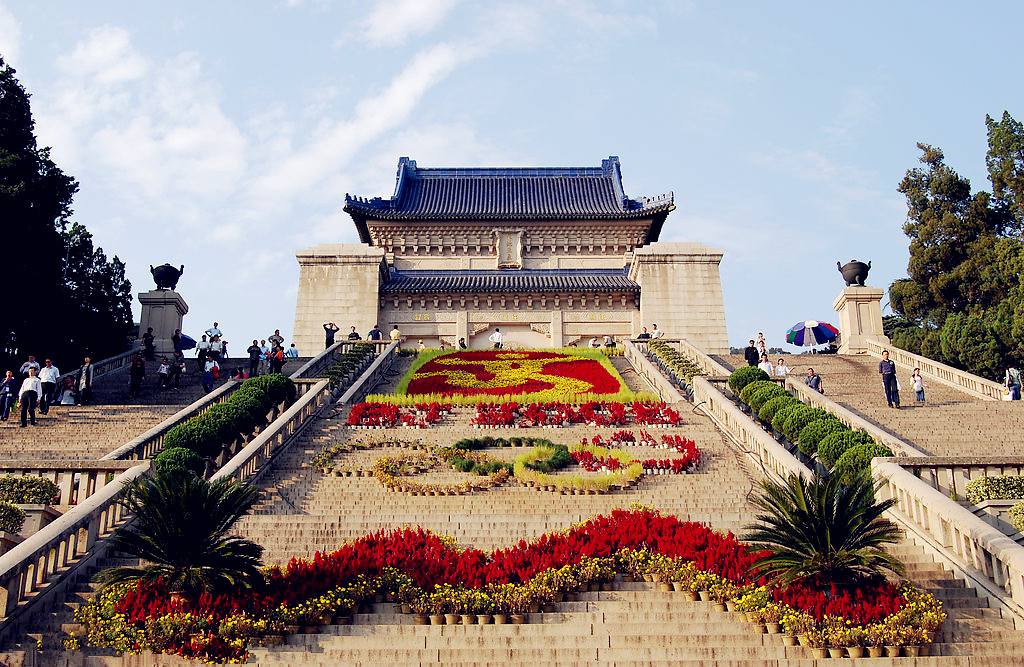
From here a steep staircase leads up the mountain to the large memorial hall, which contains a marble seated statue of Sun with the flag of the republic tiled on the ceiling.
To the north is a circular chamber containing the recessed marble sarcophagus complete with a prostrate statue of Sun on the top. (Mark Andrews).
Britannica / ABC Flash Point News 2025.
 Crickey Amigu di Natura
Chinese culture is so much more advanced compared to the west, living at least 1.000 years ahead of western civilization. The Chinese invented fireworks, money, written language and so on, and now the west wants to destroy China, with the help of money and weapons ???
LikeLiked by 1 person