
Cracking the Code of Suleiman the Magnificent
Popularly known in Europe as Suleiman the Magnificent, Ottoman Emperor Suleiman I was the 10th and longest-reigning sultan who ruled for 46 years.
Son of Sultan Selim I, Suleiman the Magnificent was widely known for his effective administration prowess, military intelligence, and foreign policy genius.
His reign was so impactful that many historians like to credit him with ushering in the Golden Age of the Ottomans. It’s therefore not surprising that he earned epithets like Grand Turc and Magnifique from his contemporaries in Europe.
Later Ottoman sultans would invoke his name and derive great pride from being related to him. On November 6, 1494, Suleiman was born in Trabzon, a city on the Black Sea coast of northeastern Anatolia (present-day Turkey).
He became a very well-educated prince, having been tutored by some of the best teachers in the empire on a variety of disciplines – including history, theology, literature, and military tactics.
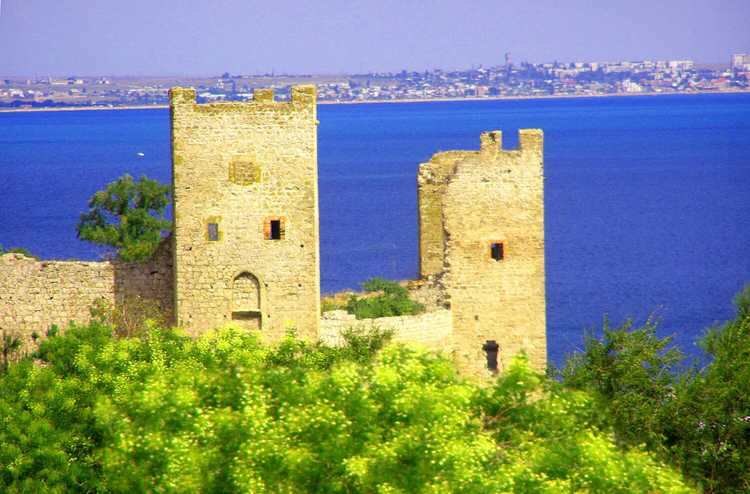
When he was around 17, he was appointed by his father to serve as the governor of Kefe (Caffa, also known as Feodosia) – on the Crimean Peninsula. He would later serve as the governor of Manisa and then Edirne.
During a campaign in Egypt, Selim I, Suleiman’s father, got struck by illness and died on September 22, 1520. He was 49. Suleiman, 26, ascended to the throne, becoming the 10th sultan of the Ottoman Empire.
The sword girding ceremony for Suleiman the Magnificent was done on September 30, 1520. One of his first decisions as sultan was to lift the trade ban on Iran. The ban, which had been imposed by his father, caused quite a lot of havoc for many traders.

Not only did Suleiman remove those trade restrictions with Iran, but he also gave out financial compensation to affected traders.
During his reign between 1520 and 1566, Suleiman the Magnificent was able to accomplish a lot of outstanding things. Some of his major accomplishments are as follows.
Suleiman hit the ground rolling upon becoming sultan with a number of military campaigns. Those initial conquests caused a powerful Mamluk nobleman in Damascus to revolt against the Ottoman Empire.

The nobleman, who had been appointed by Suleiman’s predecessor, Sultan Selim I, received ample support from a group of powerful knights from Rhodes (Knights of Rhodes/Knights Hospitaller).
Using the territory of Belgrade as a base, Sultan Suleiman marched his army on the Kingdom of Hungary.
The young sultan was able to bring large parts of Hungary under his control, a feat that his great-grandfather Mehmed II (also known as Mehmed the Conqueror) could not pull off due to the fierce resistance put up by Hungarian military general John Hunyadi (c. 1401406-1456).

Suleiman’s conquest of Belgrade in August 1521 allowed him to eliminate the major stumbling blocks, i.e. the Croats and the Hungarians, in his way to further conquests of other nearby Central European territories such as Austria.
Suleiman’s decision to go to war with Hungary not only stemmed from the perceived threat posed by Hungary’s alliance with Habsburg, but also due to that fact the Franco-Ottoman alliance at the time had wanted to diminish the power of the Holy Roman Empire.
In June 1526, Suleiman marched his forces up the Danube (Europe’s second-longest river), taking Nándorfehérvár (present-day Belgrade, Serbia) along the way.

As a result of a very weak resistance mounted by Hungary, Suleiman’s forces of between 60,000 to 100,000 successfully defeated Louis II on August 29, 1526. In addition to Louis II dying, the Battle of Mohács resulted in the end of the Jagiellonian dynasty.
After failing to defeat the Knights of Rhodes in 1480, many Ottoman rulers yearned for a day when they would successfully bring the Island of Rhodes to its knee. That responsibility fell to Ottoman Sultan Suleiman, who launched a siege to Rhodes in 1522.
It took Suleiman’s forces less than half a year to successfully expel the Knights of Rhodes from the Island, although suffering about 120,000 deaths in the process.

By annexing Rhodes, Suleiman the Magnificent was able to dominate trading activities in the Eastern Mediterranean. After securing his eastern European frontiers, Sultan Suleiman directed his attention to Persia.
In addition to being Shi’ite, the Persian ruler Tahmasp I (1514-1576) had incurred the wrath of Suleiman because he had murdered Baghdad governor, a staunch loyalist of Suleiman, and then replaced him with a puppet regime.
Suleiman also marched on the Persian Safavid dynasty because he hoped to bring the governor of Bitlis in line. Under the command of Grand Vizier Pergali Ibrahim Pasha, the Ottoman forces entered eastern Asia Minor and brought Bitlis back into its control in 1533.


Suleiman’s reputation among the city’s inhabitants increased after he paid restored and paid homage to the tomb of Abu Hanifa, an influential scholar of the Hanafi school of Islamic law.
Under the peace treaty, Armenia and Georgia was divided between the Sunni-based Ottomans and the Safavids Shi’ite. With the peace treaty, Ottomans gained control most of Iraq, including Baghdad. Suleiman also gained access to the Persian Gulf.
In return, the Persians were given permission to access holy sites in Mecca and Medina, as well as other Shia sites in Iraq. The peace treaty that was struck lasted for about 30 years.


During his over four-decade rule, Suleiman embarked upon a number of reforms, including social, education, taxation, and criminal law.
Regarding the latter, Suleiman tasked his chief judicial officer Ebussuud Efendi to merge the two forms of law in the land – sultanic (Kanun) and religious (Sharia).
In coming out with a single legal code, the Sultan is said to have compiled all the major judgments taken by the nine Ottoman sultans that reigned before him.

He made sure that the final legal code (Ottoman laws or kanun‐i Osmani) did not contravene Sacred Laws in Islam. Suleiman’s legal code remained in use throughout the empire for more than three centuries.
The idea behind the Ottoman laws during the reign of Suleiman the Magnificent was to help the Ottoman Empire keep up with the changing times. Sultan Suleiman’s accomplishment in this area is the reason he was referred to as “The Lawgiver” (Kanuni) in his kingdom.
Historians often consider Suleiman the Magnificent as one of the 23 greatest historical lawgivers in human history. He has been praised for coming out with new criminal laws that meant that specific offenses carried a set of fines or punitive measure.

Suleiman the Magnificent has been praised for the protection he gave to Jewish communities in his empire. In 1553, the Sultan issued a royal mandate (i.e. firman) outlawing blood libels against the Jews.
Blood libels against Jews is said to have skyrocketed during the medieval period. It refers to antisemitic irrational fabrications which see the Jew falsely accused of murdering Christian children and the using the blood for religious rituals.
In 1535, the Ottomans suffered a defeat at the hands of Charles V at Tunis (in present-day Tunisia). This defeat influenced Suleiman’s decision to go into alliance with France against Charles, who had annexed many territories in North Africa.

With the blessing of Suleiman, the Ottoman fleet under the command of Barbarossa responded by carrying out several pirate activities that targeted Spanish vessels. In 1542, France also solicited the help of Suleiman’s help to ward off threats from Habsburg.
In late spring of 1565, Sultan Suleiman began a siege to Malta. The Sultan’s goal was to dislodge the Knights Hospitaller from Malta. After they had been expelled from Rhodes, the knights settled in Malta.
The 1565 siege was the second time Suleiman attempted to take Malta. Similar to the first siege of 1551, the second siege ended in a loss for Suleiman. With support from Spain, the knights fought bravely and were able to defend Malta against Suleiman’s forces.

Desiring to have a lucrative trade with the Mughal Empire, Suleiman the Magnificent captured Aden in Yemen. The goal was to get rid of the Portuguese in the region so as to have access to trading routes heading to the Mughal Empire.
Suleiman used the city of Aden as a launch pad to attack Portuguese infrastructures. With time, Suleiman took the whole of Yemen, allowing the Ottoman Empire to seize control of the Red Sea. With that came increased trading activities with the Mughal Empire.
Trained by a Greek master in the art of jewelry making, Suleiman is said to have grown up loving the arts, literature and science.

His reign marked a sought of cultural renaissance for the Ottomans as many imperial artistic societies flourished in Istanbul and other places of the empire.
He was a patron of the arts, investing a sizable amount of resources into the arts. As a result, many of the best artisans, sculptors, and architects from all across the empire and beyond made their way to the Topkapi Palace.
By mixing styles from different cultures, the Ottomans during the reign of Suleiman were able come out with a distinct style in the arts. A very good poet himself, Sultan Suleiman is said to have written a number of poems under the pseudonym “Muhibbi” (“Lover”).

Driven by the goal to make the Ottoman capital, Istanbul, the hub of not just culture, arts, and science but also architecture in the Islamic world, Suleiman tasked his chief architect Sinan to design and construct many amazing buildings.
Sinan, who is considered by many historians as one of the greatest architects of all time, set about building mosques, bridges, and palaces across the Empire. Thus architecture attained its peak during the reign of Suleiman.
Some of the buildings commissioned by Suleiman include the Suleymaniye Mosque in Istanbul. Built by the imperial architect Mimar Sinan, the Süleymaniye Mosque was completed in 1557.

Up until the construction of the Grand Çamlıca Mosque in 2019, the Süleymaniye Mosque was the largest mosque in Turkey.
The mosque, which took seven years to complete, can boast of a many facilities, including a madrassa, hospital, imaret (soup kitchen), tabhane (sanatorium for ill people), school, and a bathhouse.
On September 6, 1566, Ottoman Empire’s longest-reigning monarch Suleiman the Magnificent died while on military campaign in Hungary.

The cause of his death was said to be of a natural cause. In his later years, the Sultan had to grapple with fatigue, dysentery, angina, and gout. It is also likely that he suffered from depression.
Suleiman’s death came before Ottoman victory at the Battle of Szigetvar in Hungary. It’s been stated that his last words “Isn’t this damned fortress taken yet?”, a reference to fortress of Szigetvar. His death came a few months before his 72nd birthday.
Not wanting to demoralize the Ottoman troops that were fighting, Suleiman’s courtiers purposely kept the death of the sultan a secret until the battle was won. His body was then quietly sent to Istanbul, where it was buried at the Suleymaniye Mosque in Istanbul.

Owing to the blistering autumn heat at the time, the Sultan’s aides removed the heart, liver and other internal organs of the Sultan. They were then placed in a golden coffin and buried beneath in a tomb (Turbék) outside Szigetvár (present-day southern Hungary).
Around the 1570’s, the place was converted into a shrine only for it to be later destroyed when the Hapsburgs recaptured the area.
His reign saw the Ottoman Empire increase from a size of 6.5 million square kilometers (2.5 million square miles) to 14.9 million square kilometers.

Suleiman was praised for his respect of the cultures and people that he conquered. For example, he did not try to convert Hungarians into Muslims as he respected their beliefs.
At the time of his reign, the Ottoman Empire had 25 million people across the Middle East, North Africa, and the Balkans. During his reign the Ottoman empire reached its zenith in terms of economic, military, and political power.
Suleiman was able to repel an attack by the Habsburgs during a siege to Buda.

The Ottoman sultan further captured a number of Habsburg castles and fortresses in 1541 and 1544, which in turn resulted in a five-year peace treaty with the Holy Roman Empire – present-day Austria, Germany, the Netherlands, and Spain.
In addition to the peace treaty, the Holy Roman Empire had to fork out yearly tributes to the Ottoman Empire. During the reign of Sultan Suleiman, the Ottomans brought the Somali Adal sultanate, a Sunni sultanate, into its territory.
This allowed the Empire to increase its presence in the Indian Ocean. The Ottomans could therefore compete properly with the Portuguese in the Indian Ocean.

Suleiman the Magnificent entrusted Ottoman naval commander Khair ad Din, also known as Hayreddin Barbarossa, to rebuild the Ottoman fleet. This was needed to halt Charles V of Spain from gaining a foothold in the Mediterranean.
In what was known as the biggest naval battle in history up to that time, the Battle of Preveza in September 1538 saw Suleiman’s chief admiral Barbaros Hayreddin Pasha command 122 ships and 20,000 soldiers to defeat the crusader fleet of 600 ships and 60,000 soldiers near Preveza in northwestern Greece.
World History Education / ABC Flash Point News 2023.
 Crickey Amigu di Natura